Curling Leaves on Marble Queen Pothos: Causes, Checks &
Quick answer
Curling leaves on Marble Queen Pothos most often mean the plant is conserving water — usually underwatering, low humidity, or heat stress, and sometimes overwatering with root damage on this slow variegated grower. First step: check moisture 3–5 cm down; if dry, water deeply once, then move the pot out of direct sun and dry airflow.
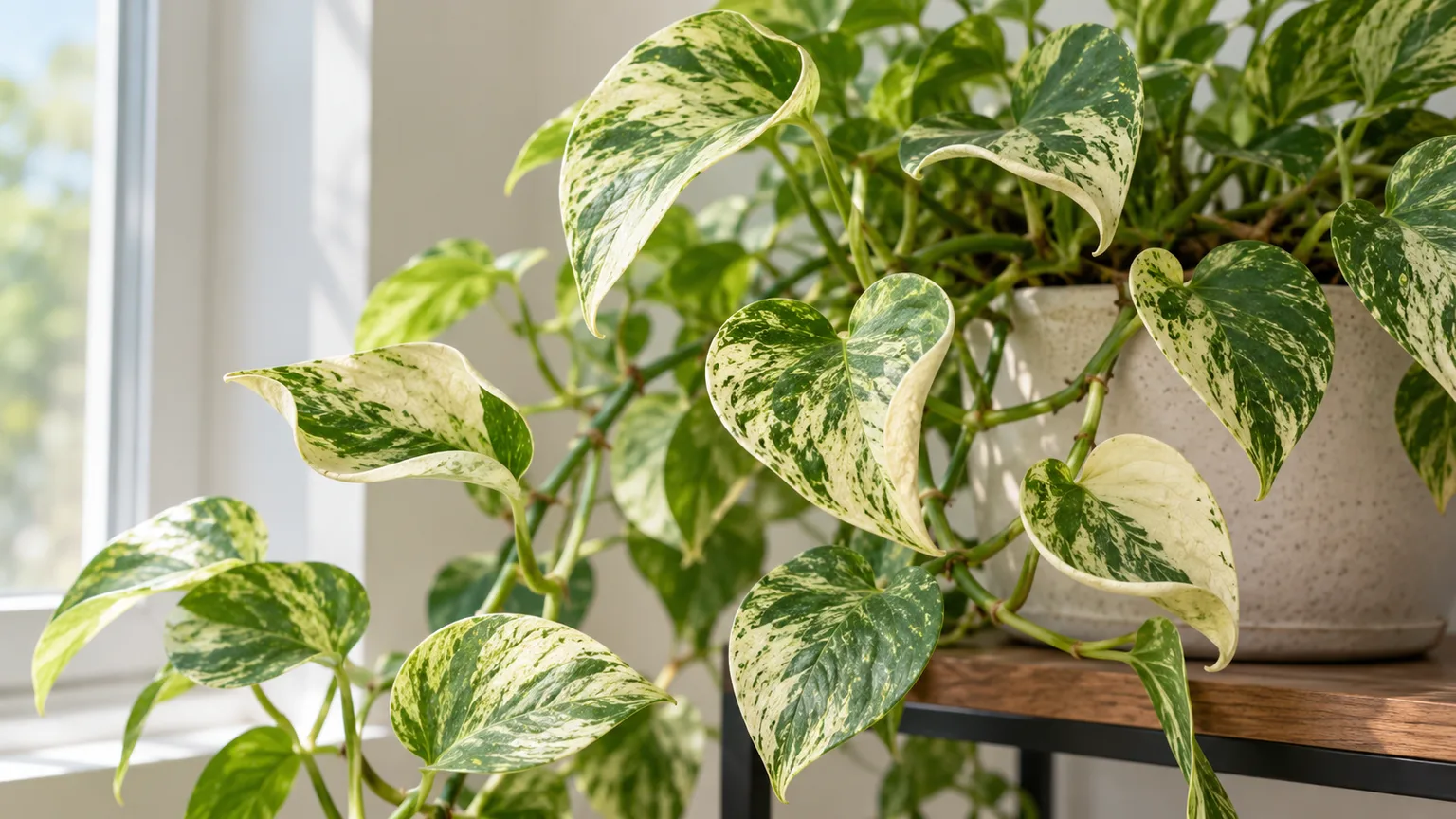
Curling Leaves on Marble Queen Pothos: Causes, Checks & Fixes
This guide covers curling leaves on Marble Queen Pothos. See also the general Curling Leaves guide, watering, and light pages for this plant.
Curling Leaves on Marble Queen Pothos: Causes, Checks & Fixes
Quick answer
Curling leaves on Marble Queen Pothos (Epipremnum aureum ‘Marble Queen’) are usually the plant narrowing its leaf surface to slow water loss. The most common trigger is simple thirst — the top centimetres dried out faster than this slow, white-variegated grower could keep up with. Dry heat, low humidity, too much direct sun, and being root-bound cause the same inward cup. Downward curling with heavy, wet mix is the opposite signal: roots sitting in soggy soil cannot deliver water, so leaves curl even though the pot feels damp.
First step: check moisture 3–5 cm down with a finger, then water deeply only if it is dry. If dry, soak until water drains freely and empty the saucer. If wet, do not water — move the pot into bright indirect light, out of sun and vent airflow, and let it dry before the next check. For why leaves roll and cup in general, see our curling leaves guide — the rest of this page is what curling means specifically on Marble Queen.
What curling looks like on Marble Queen Pothos
On this cultivar, curl shows first on the pale marbled zones. Expect heart-shaped leaves rolling inward along the edges, cupping upward like shallow spoons, or tipping downward at the leaf tip. White and cream sections may feel papery while green zones stay supple. New leaves sometimes unfurl smaller or ruffled when stress hits during expansion.
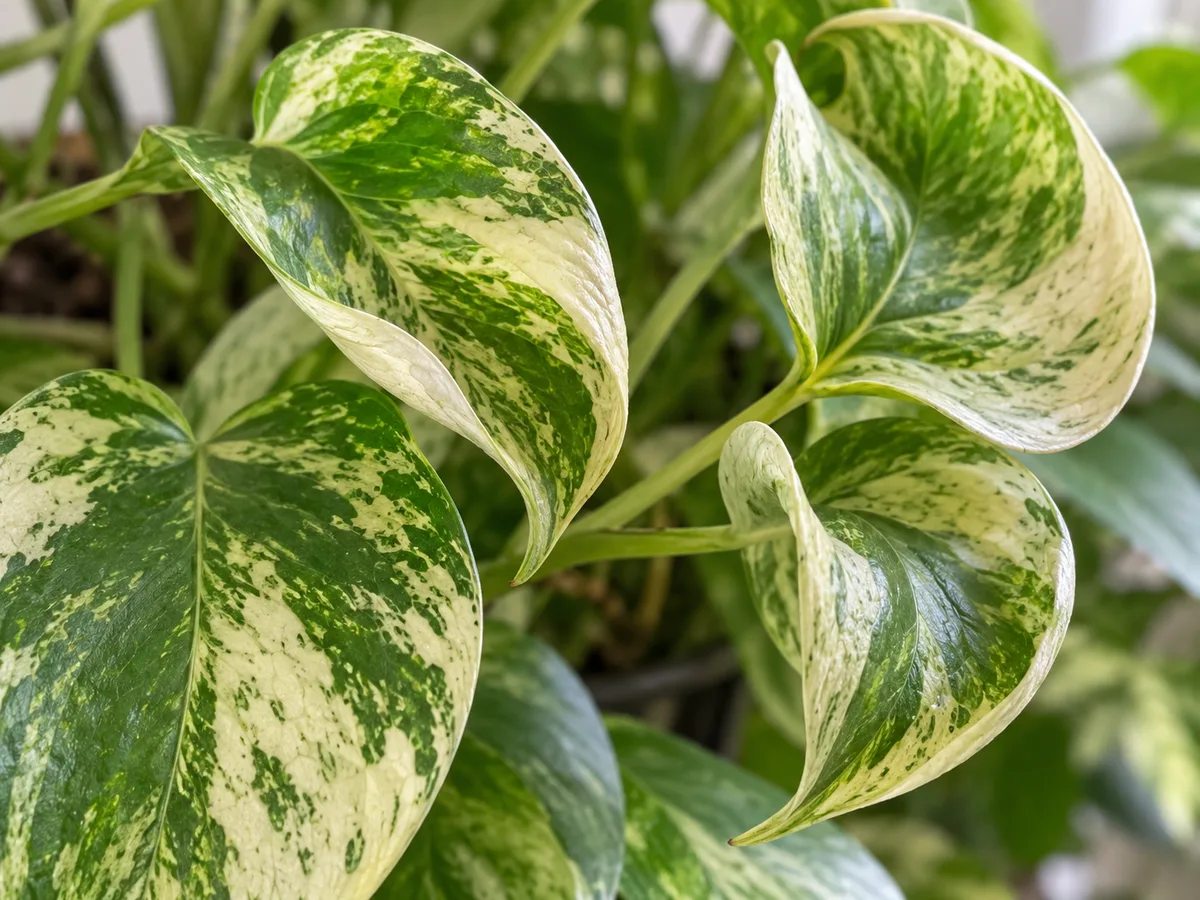
Curling-leaf detail on Marble Queen Pothos — compare cupped and distorted blades with flat healthy tissue on the same vine.
Typical Marble Queen curling pattern:
- Inward or upward cupping on several leaves at once, often after a missed watering or a hot week
- Dry, light pot with mix pulling from the pot edge when thirst is the cause
- Downward curl with limp vines and heavy, damp mix when roots are stressed
- Worse on the sun-facing or vent-facing side, with inner leaves flatter
- Firm stems and clean new tips in mild cases; soft nodes or blackened tips when rot or pests are involved
Marble Queen leaves carry large white patches with little chlorophyll, so each leaf has less photosynthetic reserve than a solid-green pothos leaf. That is why curl appears faster here after the same missed watering — the plant protects its most expensive tissue first. One curled leaf on the oldest node of a long trailer can be age or a brief draft; five or more curling together is a care signal.
Why Marble Queen Pothos curls: white leaves, slow roots, trailing vines
Three traits of this cultivar shape every curling episode.
White-variegated leaves run a tighter water budget. The cream marbling that makes Marble Queen attractive also means less chlorophyll per leaf and slower regrowth than Golden Pothos. Marble Queen requires more light than other pothos varieties to hold that marbling, yet its pale tissue scorches and transpires quickly in direct sun or hot airflow. Inward rolling is self-shading: less exposed surface, less water loss.
Slow growth means slow dry-down forgiveness. Marble Queen uses water more slowly than green pothos on the same shelf. A calendar schedule that suits a vigorous Golden Pothos can leave Marble Queen alternating between soggy and bone-dry. Both extremes curl leaves — drought curls them to conserve moisture, while root rots with brown or absent roots are most often due to overwatering, which then curls leaves because dead roots cannot draw water.
Trailing vines amplify local stress. Hanging baskets and high shelves place foliage in the warmest, driest air near ceilings and vents. A vine tip near a south window or radiator can cup while the pot-level leaves stay flat. Long vines also develop root crowding sooner in small pots, so water runs through or pools unevenly and leaf expansion turns ruffled.
Heat adds a compounding layer: pothos prefers roughly 65–85°F (18–29°C) conditions, and foliage near hot glass or reflected afternoon sun curls downward at the tips as moisture loss outpaces uptake.
How to confirm the cause
Work in this order before changing anything. Each check eliminates one major cause.
- Finger and weight test — Push a finger 3–5 cm into the mix and lift the pot. Light pot with dry mix throughout fits underwatering. Heavy pot with damp mix days after watering fits overwatering or compacted soil. See the Marble Queen Pothos watering guide for the full dry-down rhythm.
- Curl direction — Inward or upward rolling with dry soil means conserve-moisture curl. Downward limp curl with wet soil means root-zone curl. Twisted, puckered new leaves with normal soil point toward pests rather than water.
- Light and heat audit — Note distance to the nearest window, whether afternoon sun hits the leaves, and whether a vent, radiator, or cold glass touches the vine. Leaves curling toward the light suggest too little light; leaves curling away with bleached patches suggest too much. Pothos does best in filtered light and suffers in direct sun and drafts.
- Humidity reading — If heating or air conditioning is running, check a hygrometer near the plant. Persistent readings below 40 percent with crispy white edges support dry-air curl; confirm against low humidity on Marble Queen Pothos.
- Underside pest inspection — Hold leaves to the light and check undersides, veins, and unfurling tips for stippling, fine webbing, cottony clusters, or sticky residue. Pothos in homes is occasionally hit by mealybugs and scale, and spider mites can follow dry heat. Isolate and treat before assuming water alone explains twisted new growth.
- Root and pot check — If the pot dries within a day, roots circle the surface, or water runs straight through, the plant is root-bound. If mix smells sour and stems soften at the soil line, suspect rot and read root rot on Marble Queen Pothos before watering again.
Confirmed thirst or heat curl: dry mix, firm stems, pest-free leaves, curling worst near sun or vents, newest growth otherwise clean.
Suspected root or pest curl: wet heavy mix with limp vines, sour smell, soft nodes, webbing or honeydew, or new leaves emerging distorted despite correct moisture.
First fix for Marble Queen Pothos
Water deeply once if the mix is dry at 3–5 cm, then move the pot into bright indirect light away from sun and vents.
Soak until water flows from the drainage holes, wait ten minutes, soak once more lightly, then empty the saucer completely. Return the plant to a spot with bright indirect light — a few feet from an east window or behind a sheer curtain — with gentle airflow but no direct vent blast. Wisconsin Extension advises to allow plants to dry out slightly and water only when the soil surface is dry; for Marble Queen, verify at depth rather than the surface because its slower roots keep the middle damp longer.
Do nothing else that day. No fertilizer, no repotting, no leaf shine, no heavy pruning. Mild thirst curl often relaxes within hours once turgor returns, and you need a clean before-and-after read.
If the mix is already wet, skip the soak entirely. Let the top 3–5 cm dry, keep the plant in bright indirect light, and inspect roots if vines stay limp after dry-down — that is a root problem wearing a water mask.
Step-by-step recovery
Once the first correction is in, support the plant in this order:
- Stabilize placement for 48 hours — Keep the vine out of direct afternoon sun and off hot glass. The Marble Queen Pothos light guide shows placements that protect white sections without starving the plant.
- Restore even moisture — Resume the finger-and-weight check before every watering, not a fixed weekday. The Marble Queen Pothos soil guide covers airy mixes that prevent the soggy-then-dry swings behind repeat curl.
- Raise humidity if air is dry — A pebble tray or small humidifier holding 40–60 percent steadies white-edged leaves through heating season. Misting alone evaporates in minutes and wets foliage without fixing room air.
- Treat pests only if confirmed — Rinse leaf undersides, wipe with a damp cloth, and use insecticidal soap for mites per label, repeating as directed. Raising humidity helps prevention but does not clear an established infestation.
- Flush salts if fertilizer is suspect — White crust on the surface plus brown tips and downward curl after recent feeding suggest excess salts; blackening of leaf margins can come from excess fertilizer through salt buildup. Water deeply until excess drains, then pause feeding until new leaves look clean.
- Repot only for confirmed crowding or rot — Move up one pot size for root-bound plants, or trim black mushy roots and repot in fresh airy mix for rot. Hold feeding for two to three weeks after either procedure.
Recovery timeline
- Hours after a thirst soak: Inward cupping softens; leaves feel supple again.
- One to two weeks: Curling stops spreading; existing mild curl may flatten fully.
- Three to six weeks: New leaves unfurl flat with clean marbling in growing season — the real success signal.
- Longer after rot or pest rescue: New roots and clean tips must regrow first; expect a month or more before normal unfurling resumes.
Permanent damage: Leaves distorted by sap-feeding pests, salt burn, or scorched white patches do not reshape. Prune only fully ruined blades once new growth is moving; each remaining leaf still funds recovery on this slow cultivar.
Worsening signs: spreading yellow leaves on wet soil, soft or blackened nodes, sour mix smell, stippling with webbing, or every new leaf emerging twisted — re-diagnose toward roots or pests rather than repeating water fixes.
Lookalike symptoms
| Pattern | Leaf look | Soil and pot | Likely cause | Next step |
|---|---|---|---|---|
| Inward cupping, dry crispy edges | Rolling up, papery white zones | Light pot, dry at depth | Underwatering or dry heat | Deep soak once, then dry-down rhythm — underwatering |
| Downward limp curl, soft vines | Drooping tips, dull surface | Heavy wet mix, slow to dry | Overwatering or early rot | Stop watering, inspect roots — overwatering and root rot |
| Crispy margins, flat centers | Brown tips on white zones, firm stems | Normal moisture | Low humidity or vent blast | Raise room humidity — low humidity |
| Twisted puckered new leaves | Ruffled unfurling, stippling | Any moisture | Thrips, mites, aphids, or mealybugs | Inspect undersides — spider mites and mealybugs |
| Bleached patches curling away from window | Pale scorched faces | Usually dry fast | Too much direct sun | Filter light — sunburn |
| Pale green new leaves, long gaps | Small all-green blades, leggy | Any moisture | Too little light | Brighten placement — not enough light |
| Uniform wilt on long trailers | Whole vine limp, older leaves yellow | Any moisture | Natural vine age plus stress | Compare with drooping leaves and yellow leaves |
Mistakes to avoid
- Watering on a calendar without checking depth — Marble Queen dries unevenly by season and pot size. Always verify at 3–5 cm; the watering guide explains the seasonal shift.
- Drowning a root-stressed plant — Limp leaves in wet mix need air and inspection, not another soak.
- Fertilizing curled leaves to “perk them up” — Salts worsen downward curl on white sections. Feed only once new growth is clean and active.
- Moving between extremes in one day — Do not combine repotting, hard pruning, and spraying. One correction, then observe.
- Blasting sun onto a thirsty vine — Direct sun on dehydrated pale tissue scorches before it helps. Recover in filtered light first.
- Ignoring the white-section warning — Crisping confined to cream marbling with firm green zones is an early dryness or light signal, not proof the whole plant is dying.
Marble Queen care cross-check
Curling fixes hold only when the baseline matches this cultivar:
- Light: Bright indirect light holds marbling; low light can cause loss of variegation and slows water use, compounding curl. See the Marble Queen Pothos overview.
- Water: Top 3–5 cm dry before watering, roughly every 7–14 days by season and pot size.
- Soil: Airy, well-draining mix with perlite; soggy centers mimic drought above ground.
- Temperature: Comfortable near 18–29°C; keep vines off hot glass, radiators, and cold drafts.
- Humidity: Aim for 40–60 percent; group plants or run a humidifier in heating season.
- Feeding: Monthly half-strength balanced feed in spring and summer only; this slow grower burns easily.
How to prevent curling next time
- Check moisture at depth and pot weight before every watering; empty saucers the same day.
- Keep hanging baskets out of ceiling-vent streams and off south-facing glass in summer afternoons.
- Refresh compacted mix and repot one size up when roots circle — see compacted soil if water sheets off a hardened ball.
- Wipe leaves occasionally so dust does not dim an already light-hungry variegated plant.
- Inspect nodes, unfurling tips, and leaf undersides monthly; node cuttings root readily, so a healthy tip can restart a vine that curled badly.
- Browse all Marble Queen Pothos problems when a new pattern appears instead of applying generic houseplant advice.
Marble Queen Pothos contains insoluble calcium oxalates and is toxic to cats and dogs; wear gloves if sap irritates skin and keep trailing vines away from pets while you handle the plant for diagnosis.
When to worry
Treat curling as urgent when:
- Stems soften, blacken, or turn translucent at nodes while soil stays wet
- Curling spreads across the plant within days with yellowing and leaf drop
- New leaves emerge repeatedly twisted with stippling, webbing, or sticky residue
- Mix smells sour or swampy, or roots are brown and mushy on inspection
- White crust plus spreading brown margins follow recent heavy feeding
Those patterns point to active root failure, pest takeover, or salt injury — not simple thirst. A firm vine with slow inward cupping and clean new tips is low urgency: correct water and placement, then give it two weeks.
Conclusion
Curling on Marble Queen Pothos is the plant’s moisture ledger made visible: inward cupping usually means the pot, the air, or the sun took water faster than white-variegated leaves could afford, while limp downward curl in wet mix means roots need air, not more water. Finger-test at 3–5 cm, water deeply only when dry, rest the vine in bright indirect light away from heat and vents, and judge success by the next flat, cleanly marbled leaves.
When to use this page vs other Marble Queen Pothos guides
- Marble Queen Pothos watering guide — Use for routine dry-down rhythm before deciding curling is a pest or light problem.
- Marble Queen Pothos problems hub — Browse all diagnosed issues on this species when curling overlaps with other symptoms.
- Drooping Leaves on Marble Queen Pothos — Use when whole vines go limp rather than individual blades cupping.
Related Marble Queen Pothos guides
- Marble Queen Pothos overview — full care baseline: light, water, soil, and feeding rhythm
- Marble Queen Pothos watering — the 3–5 cm dry test and seasonal rhythm
- Marble Queen Pothos light — placement that protects white variegation
- Marble Queen Pothos soil — airy mixes that prevent soggy-then-dry swings
- Underwatering on Marble Queen Pothos — dry-soil wilt and soak recovery
- Overwatering on Marble Queen Pothos — wet-soil limpness and dry-out steps
- Root Rot on Marble Queen Pothos — rescue when roots have failed
- Low Humidity on Marble Queen Pothos — dry-air edge crisping vs curling
- Marble Queen Pothos problems — browse every diagnosed issue for this plant