Purple Leaves on Marigold: Causes, Checks & Fixes
Quick answer
A purple cast on older Marigold leaflets can fit a phosphorus-uptake problem, but distinct purple or dead spots may be leaf spot disease. First, hold extra fertilizer while you inspect the leaf pattern, soil moisture, drainage, and pH; a soil test is the safest way to confirm a nutrient shortage.
Purple Leaves on Marigold: Causes, Checks & Fixes
This guide covers purple leaves on Marigold. See also the general Purple Leaves guide, watering, and light pages for this plant.
Purple Leaves on Marigold: Causes, Checks & Fixes
Quick answer
A purple cast on older Marigold leaflets can fit a phosphorus-uptake problem, especially when the undersides or veins color first and new leaves stay small; those are documented signs of phosphorus deficiency. On Marigold, sharply defined purple spots or purple-rimmed dead spots point toward a different possibility: leaf spot disease. Color alone cannot confirm either diagnosis, so first hold extra fertilizer and check the leaf pattern and root zone. UC IPM notes that apparent nutrient shortages often come from root or soil conditions that limit uptake, even when nutrients are present (nutrient deficiency guidance).
For the general pattern across houseplants, see our purple-leaves symptom guide. This page narrows the checks to African marigold (Tagetes erecta), whose finely cut foliage makes an even color cast look quite different from isolated lesions; the Marigold overview covers the plant’s normal growing conditions.
What purple leaves look like on Marigold
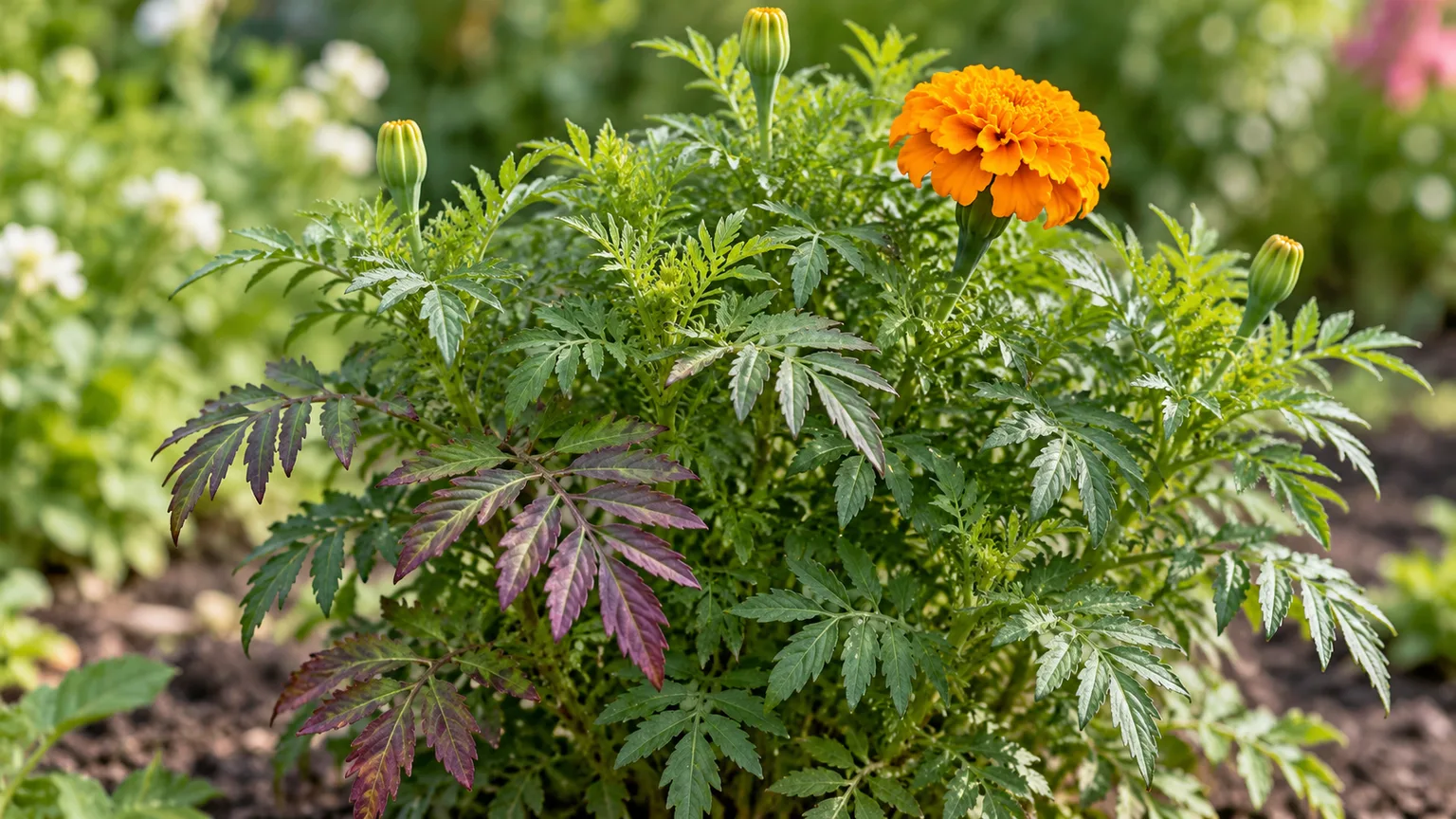
Marigold’s fernlike leaves are made up of many narrow leaflets and are normally dark green, as Clemson Extension describes. A nutrient-related color shift tends to wash across several leaflets or follow veins, while a disease lesion stays localized as a spot with dead tissue. That pattern distinction matters more than the shade of purple itself.

A diffuse tint across older leaflets is a reason to check the root zone; distinct dead spots need a leaf-spot check.
Look at several leaves before deciding. If the tint is diffuse and older foliage is more affected than the newest tip, nutrition or root uptake deserves a closer check. If you see separate circular or irregular dead areas, especially with purple edges, use the differential below rather than treating the whole plant as phosphorus-starved.
Why a warm-season Marigold can turn purple
Phosphorus may be low or unavailable to the roots
Phosphorus deficiency is one possible cause when older leaves develop a broad purple tint, the veins or undersides color, and new growth is reduced in size (UC IPM symptom guide). Those signs support a hypothesis; they do not prove that the soil itself lacks phosphorus. UC IPM explains that nutrient symptoms commonly trace to adverse soil conditions, poor drainage, unsuitable irrigation, high pH, or injured roots that cannot take up nutrients normally (causes of nutrient symptoms).
Marigolds are warm-season annuals, and NC State recommends setting African marigolds out after frost (plant profile). When they are planted before the soil warms, or a container stays cold and waterlogged, root growth and nutrient access can slow; a cold, wet root zone is a reason to correct conditions and observe, not to pour in a stronger fertilizer dose. A practical cold-soil phosphorus overview describes how cold, saturated soil can restrict root growth and nutrient uptake.
Purple spots can be Marigold leaf disease
Marigold has leaf-spot diseases that can create purple coloring without a whole-plant nutrient problem. Penn State Extension lists purplish spots on leaves and stems for Alternaria leaf spot and small dead spots with purple margins for bacterial leaf spot. If the damage is discrete, enlarging, or scattered across multiple leaves, follow the plant-specific black-spots guide and avoid overhead watering while you identify the cause.
Bronze speckling is a different clue
Do not confuse an even purple cast with bronze speckles. Clemson Extension reports that Marigold leaves can develop a bronze-speckled appearance when soil pH falls below 5.5, associated with manganese or iron toxicity (Marigold pH guidance). If the foliage is speckled rather than broadly tinted, check pH before adding phosphorus; the Marigold soil guide explains the plant’s preferred soil range and drainage.
How to confirm the cause before feeding
Start with the oldest affected leaves and compare them with the growing tip. Broad color across older leaflets, purplish veins or undersides, and small new leaves fit the phosphorus pattern better than a few sharply edged dead spots. Spots with purple margins, spreading tissue death, or lesions on stems fit Penn State’s Marigold disease descriptions more closely.
Next, check the root zone. Press the soil a few centimeters below the surface and lift the pot: a mix that is still cold, wet, and heavy several days after watering points toward slow drainage or low light, not a proven fertilizer shortage. African marigold grows best in full sun and evenly moist, well-drained soil according to the University of Wisconsin Extension marigold guide; compare the placement with the Marigold light guide and adjust watering using the Marigold watering guide.
Finally, review the fertilizer history and test the soil or container mix if the purple cast persists. A soil test can show whether phosphorus is low and whether pH is outside Marigold’s preferred range; the University of Wisconsin Extension marigold guide gives a pH range of 6 to 7. If the plant has soft, dark roots or the mix remains saturated, address drainage first and see the Marigold nutrient-lockout guide for symptoms caused by nutrients the roots cannot access.
First fix for Marigold purple leaves
First, pause extra phosphorus or bloom-booster fertilizer until you have checked the pattern and soil. UC IPM advises confirming a deficiency before supplementing because unnecessary nutrients can create mineral-excess and salinity problems (nutrient management guidance). A quick dose cannot repair chilled, waterlogged, or damaged roots.
If the mix is saturated, empty standing water and restore drainage before changing the feed. If the soil test confirms low phosphorus, follow its recommendation and the product label rather than using a guessed dose. If phosphorus is already adequate, correct the root or pH condition identified by the test. For containers, repot only when the mix has failed to drain or roots are rotting; otherwise, adjust the watering interval and let the existing root system recover.
If leaves show expanding purple-edged dead spots, do not use fertilizer as a treatment. Keep foliage dry when watering and seek a local extension or plant-clinic diagnosis if lesions continue to spread. Penn State’s Marigold disease guidance distinguishes Alternaria from bacterial leaf spot and recommends avoiding overhead irrigation for both; a confirmed bacterial leaf spot may require removing the infected plant.
What not to do
Do not add bone meal, superphosphate, or a high-phosphorus “bloom” feed just because one leaf looks purple. More phosphorus will not fix restricted roots or unsuitable pH, and excess fertilizer can create a second problem. The Marigold fertilizer guide is the better next step after you know what the soil and plant need.
Do not repot a firm, freely draining Marigold just to chase a color change, and do not spray fungicide on a diffuse tint without disease evidence. The narrow leaflets can make lesions look like general discoloration from a distance; examine both sides of a leaf first. If the plant was chilled or frosted, the Marigold cold-damage guide is a better match than a nutrient treatment.
Recovery timeline for a Marigold
Purple tissue usually remains discolored even after the cause is corrected. UC IPM notes that adding nutrients does not restore foliage already damaged by other causes (nutrient deficiency guidance), so judge the result by the next flush of leaflets rather than by old leaves turning green. Healthy new growth should be larger and greener, while the purple cast or spots stop appearing on additional leaves.
If the next leaves are still small and purple after the root zone has warmed and drained, revisit the soil test and pH instead of increasing the dose. If spots continue to enlarge, stems begin to darken, or the whole plant wilts while the mix is wet, reassess for disease or root damage promptly. Marigold is a warm-season annual, so a badly collapsed plant late in its season may not be worth repeated rescue attempts (NC State plant profile).
Prevent another flush of purple leaves
Plant Marigold in a sunny place with drainage, and water the root zone when the surface begins to dry rather than following a fixed schedule. The University of Wisconsin Extension marigold guide recommends full sun and well-drained soil; Bob Vila’s marigold care guide also cautions that cold, wet beds can contribute to fungal problems. Avoid planting into cold, saturated ground, especially after a wet spell.
Use soil-test results to guide fertilizer and pH changes. Keep a short note of when the purple color appeared, which leaves changed first, recent cold or wet weather, and the last feeding. That record helps distinguish a one-time root-zone setback from a persistent nutrient problem before the next planting.
When to use this page vs other Marigold guides
Use this guide when older Marigold leaflets develop a broad purple tint or purplish veins. If the main issue is dead, purple-rimmed lesions, go to black spots on Marigold; if the plant became discolored immediately after a cold snap, compare cold damage on Marigold. When new leaves are pale or growth is distorted but not purple, Marigold nutrient lockout is the more useful diagnosis.
Related Marigold guides
Use this page for a broad purple tint; use the Marigold overview for baseline care and the Marigold problems hub when the symptom is instead a spot, wilt, or another localized issue. The Plant Problem Diagnosis Tool can help narrow the cause when the pattern is still unclear.