Cold Damage on Marigold: Causes, Checks & Fixes
Quick answer
Cold damage on marigold shows as water-soaked, limp leaves and flowers that turn brown-black within a day or two after temperatures near freezing. First step: move pots to shelter and wait 48-72 hours before pruning, then cut only clearly dead tissue and keep the plant warm and on the dry side until new growth resumes.
Cold Damage on Marigold: Causes, Checks & Fixes
This guide covers cold damage on Marigold. See also the general Cold Damage guide, watering, and light pages for this plant.
Cold Damage on Marigold: Causes, Checks & Fixes
Quick answer
If your marigold went limp overnight after a cold snap and the leaves look glassy or water-soaked, that is classic chill. Flowers collapse first, then the soft pinnate leaflets darken to brown-black over the next day or two.
First step: get potted plants under shelter and do nothing else for 48-72 hours. Do not water heavily, fertilize, or prune on day one. Marigold is a tender annual native to Mexico and Guatemala, so it has no real frost defense — but light-frost damage on outer tissue often looks worse than it is until thawed tissue declares itself.
For how cold injury works on houseplants and garden annuals in general, see our cold damage symptom hub. On marigold, the rest of this page is about the marigold-specific pattern: fleshy flower heads, fast annual growth, and the replant-or-rescue decision.
What cold damage looks like on marigold
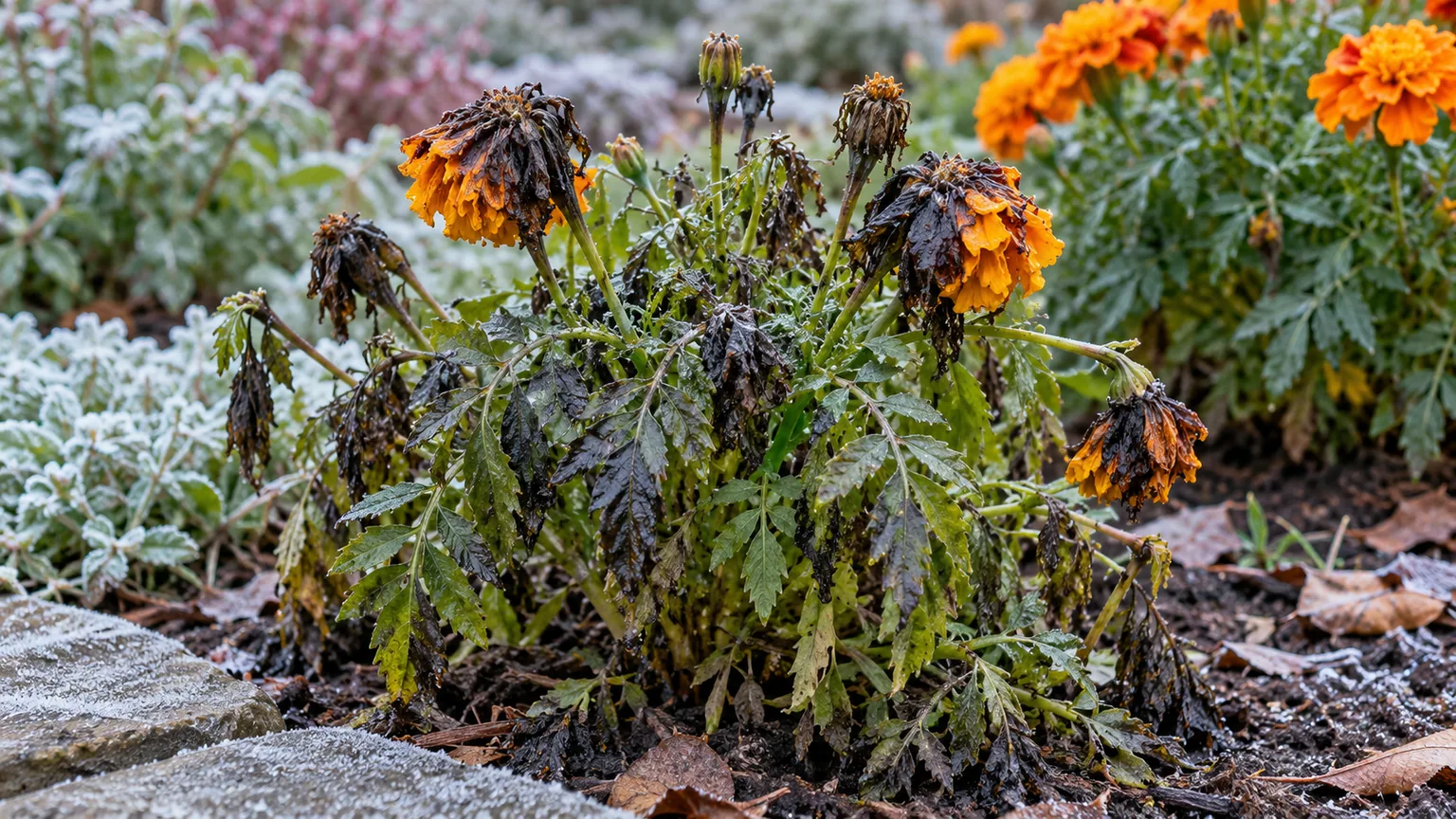
Marigold cold injury is fast and top-down. After a night near freezing you will see limp flower heads that do not perk up by midday, water-soaked patches on petals and upper leaves, and leaflets that feel soft and translucent rather than crisp-dry. Within 24-72 hours those patches turn brown, then black and papery.

Water-soaked limp leaflets and collapsed petals after a cold night on marigold — blackened tissue will not green up again.
Typical marigold pattern:
- Flowers fail first — heavy African marigold heads (Tagetes erecta) nod and turn mushy while stems below still feel firm
- Upper and outer leaflets show glassy water-soaked spots; lower sheltered leaves may stay green
- French types (T. patula) with smaller leaves often show tip blackening across the whole mound at once
- Stems stay green and firm after light frost, but turn dark and watery after a hard freeze
- Seedlings laid out too early collapse entirely — thin stems have no reserves to wall off injury
This differs from drought or heat: wilting from dry soil perks up after base watering, and heat stress bleaches or crisps tissue in hot sun rather than leaving it waterlogged after a cold night.
Why marigold gets cold damage
Marigold is built for warm-season speed, not cold storage. It is grown as a seasonal annual, not an overwintered perennial, with bloom running June to frost. Growth is best around 65-80°F, flowering in 6-8 weeks from seed, and stalling hard below about 50°F.
Three marigold-specific vulnerabilities stack up:
Tender-annual physiology. Unlike hardy perennials, marigolds do not build cryoprotective sugars or proteins. When ice forms between cells it draws water out of cells and ruptures membranes, so thawed tissue leaks and turns mushy-black. One freeze can end the plant because there is no woody crown to resprout from.
Flowers and soft stems as frost magnets. The big double heads hold water and sit exposed above the foliage. They freeze before the lower stems do, which is why a marigold can look dead from the top while basal buds are still alive. Tall African types also snap or lodge in wind-driven cold rain, and the wound then rots.
Timing mistakes. The two classic exposures are planting out before the last frost date in spring and leaving autumn beds or pots out for “one more week of flowers.” A light frost around 32-34°F only spots outer foliage, but a hard freeze below about 28°F ruptures cells and is usually fatal to the whole plant. Pots are hit harder than beds because roots have no ground heat buffer.
In North India, where marigold is a winter annual sown September-October for cool-season bloom, late frost pockets can still nip buds even though days look mild. In summer-sown regions, February sowings set out early are the ones that get caught by a late spring dip.
How to confirm the cause
Check in this order before you cut or feed anything:
- Night temperature. Was there a night below 40°F, frost on cars or roofs, or a cold windowsill and open door? Chilling injury starts well above freezing on this species.
- Texture, not just color. Cold leaves feel limp, water-soaked, and translucent. Dry brown crispy leaves from underwatering feel papery from the start.
- Stem firmness. Pinch stems from tip toward base. Firm green stems under blackened leaves mean light frost. Soft, watery stems to soil level mean hard freeze.
- Soil and smell. Lift the pot. Cold-damaged soil is usually normally moist with no sour rot smell. A heavy, sour pot with mushy base points to root rot or overwatering instead — or in addition, if cold followed chronic wetness.
- Pattern across plants. Only the plants near glass, in low spots, or left uncovered are hit while sheltered ones are fine. Uniform yellowing across all plants including warm spots leans toward yellow leaves nutrition or watering issues.
If new growth emerging a week later is green and normal-shaped, the diagnosis was chill and the plant is already recovering. If new shoots are distorted with mottling that spreads, compare with mosaic virus rather than assuming more frost.
First fix for marigold
Move pots to a sheltered spot above 50°F and wait 48-72 hours before pruning.
That single pause matters more than any spray or feed. Thawed cells need time to show which tissue is truly dead, and cutting too early removes buds that would have pushed. Keep the plant in bright indirect light, out of cold drafts, with soil just lightly moist. Marigolds want full sun and moderate to regular water in active growth, but a chilled plant uses almost no water until it resumes growth — so do not soak it “to help it recover.”
Step-by-step recovery
Work through these in order once the waiting period passes:
Light frost — firm stems, spotted outer leaves:
- Snip off mushy flowers and blackened leaflets with clean scissors, leaving any green tissue.
- Stake tall African stems if heads are dragging — heavy wet heads snap easily.
- Water at the base only when the top 3-5 cm is dry, per the watering guide. Keep overhead water off wounded tissue to avoid gray mold.
- Hold fertilizer for 2 weeks. Resume only when new buds show, following the fertilizer guide at half strength first.
Hard freeze — whole top collapsed but base firm:
- Cut soft stems back to firm green tissue. If the base is firm, leave 5-8 cm of stubble — new shoots often break from leaf axils.
- Move the pot to full sun once nights stay above 50°F. Good airflow matters because wounded marigolds invite powdery mildew and botrytis in still damp air.
- Thin to one strong shoot per stem if several sprout, so energy goes to flowers not a thicket.
Seedlings or mush-to-the-crown plants:
Compost them if stems are translucent to soil level, roots are brown and slimy, or the whole plug smells sour. Seed is cheap and fast — resow after the frost date rather than nursing a stemless plug for a month. See seeds not germinating and damping off if your restart also struggles indoors.
Recovery vignette: balcony pots caught by early frost
Two 25-cm pots of African marigolds on an exposed balcony saw 34°F overnight with clear skies. Morning showed nodded heads and glassy upper leaves; lower leaves stayed green and stems felt firm. The grower moved pots against a south wall, shook off no water, and waited three days. Dead heads and five blackened leaflets per plant were then trimmed, base watering resumed when the top 3 cm dried, and new buds appeared in about 12 days. Full rebloom took roughly 3 weeks — no fungicide, no repot, no feed until buds returned.
Mistakes to avoid
- Pruning on day one. You cannot tell live from dead while tissue is still waterlogged. Wait, then cut.
- Heavy watering to “revive” limp leaves. Limp from ruptured cells is not limp from dry soil. Extra water pushes wounded stems toward crown rot and mold on soil.
- Fertilizing a chilled plant. Salts burn damaged roots. Hold feed until new growth is clearly expanding.
- Covering with plastic touching foliage. Plastic conducts cold to the exact tissue it touches and traps condensation. Use fleece or row cover tented on stakes instead.
- Bringing a frosted outdoor plant into a hot dark room. A cool bright porch above 50°F beats a 75°F dim corner. Marigold needs light to power regrowth — see the light guide.
- Assuming every black spot is frost. Spotted but firm leaves in warm humid weather fit black spots or blight better. Frost needs a cold timeline.
Recovery timeline
Light frost on firm stems: stopped spread within 3-5 days, new buds in 1-2 weeks, rebloom in 2-4 weeks in warm sun. Pinch spent heads per the pruning guide to redirect energy.
Hard freeze with base survival: 1 week of ugly trimming, 2-3 weeks for axillary shoots, 4-6 weeks to meaningful flowers — only worth it early in the season. Late-autumn freeze on an annual bed is the natural end; replant next season.
Watch for decline instead: spreading softness down stems, sour soil, or gray fuzz on wounds means rot is following frost. In that case treat per root rot or discard, because no amount of warmth revives ruptured cells.
When to use this page vs other marigold guides
- Heat stress — wilting and bleaching in hot sun with dry-crisp edges, no cold night involved.
- Wilting and drooping leaves — multi-cause wilt triage when watering, not temperature, is the suspect.
- Overwatering and root rot — heavy sour pots with soft bases even in warm weather.
- No flowers and bud drop — bloom failure without the overnight water-soaked collapse described here.
- Powdery mildew — white coating in warm humid stillness, not post-frost blackening.
- Marigold overview and all marigold problems — season rhythm, sun, and soil baseline once acute frost care is done.
How to prevent it next time
Plant timing beats rescue. Sow or transplant only after the frost risk passes, and harden off seedlings over 7-10 days of increasing outdoor hours rather than moving them straight from windowsill to bed.
Before a forecast frost, water the soil lightly in the afternoon — moist soil holds day heat better than dry dust — then tent fleece, row cover, or buckets on stakes so fabric never touches petals. Site beds near walls or on south slopes, and favor the soil guide free-draining mix so cold plus soggy never combine. Bring small pots indoors for the night; a garage or porch above 45-50°F is enough. In frost-pocket gardens, grow the earliest and latest crops in containers you can move, and keep row cover by the door from the first forecast onward.
When to worry
Treat frost as urgent when the whole plant collapses to a translucent mat, stems are watery to the base, or several pots fail together after a hard freeze. Those plants rarely repay weeks of nursing in a short season.
It is less urgent when only outer leaf tips and open flowers spot while stems stay firm and nights are back above 50°F. Trim, give sun, and let the annual do what it does fast — regrow. If you are unsure whether limp leaves are cold or wet-soil wilt, run the watering skewer test and the smell check before you act; the fix for each is opposite.
FAQs
How can I confirm cold damage on my marigold?
Match limp, water-soaked leaves or collapsed flowers to a cold night within the last 72 hours, with firm stems below the damage. If pots are heavy and sour with soft bases and no cold timeline, use the root rot or overwatering guides instead.
What temperature hurts marigolds?
Expect stalled growth below 50°F, chilling spots near 40°F, blackening at 32°F frost, and usually plant death below 28°F. Because Tagetes is a tender annual, frost ends the season rather than just pausing it.
Should I prune cold-damaged marigold leaves right away?
Wait 48-72 hours, then remove only mushy or papery tissue with clean scissors. Leaving borderline stems avoids cutting buds that can still push, and reduces rot entry points.
Can a frost-hit marigold recover or should I replant?
Light frost with firm stems often regrows and reblooms in 2-4 weeks of warm sun. Replant when stems are mushy to the crown, roots are brown and slimy, or the season is nearly over and seed is faster.
How do I prevent cold damage on marigolds?
Set plants out after the last frost, harden off seedlings, and tent fleece or row cover on stakes before forecast frosts. Site in full sun with free-draining soil and move pots to shelter for the night.
Related marigold guides
- Marigold overview — sun, water, and season rhythm baseline
- All marigold problems — full problem hub for this plant
- Watering — base-watering rhythm while wounds heal
- Light — full-sun placement for regrowth
- Soil — free-draining mix so cold never pairs with soggy
- Fertilizer — when to resume feeding after injury
- Pruning — deadheading and pinch-back after frost trim
- Wilting — wilt triage when watering is the suspect
- Drooping leaves — turgor loss vs frost collapse
- Heat stress — opposite-temperature injury for comparison
- Root rot — sour-soil rot that follows or mimics freeze
- Overwatering — heavy-pot pattern to rule out first
Related tool
Use the Plant Problem Diagnosis Tool to narrow causes for cold damage on this plant before changing multiple variables at once.