Heat Stress on Marigold: Signs, First Aid & Recovery
Quick answer
Heat stress on Marigold often looks like leaflets drooping or curling during the hottest part of the day, sometimes followed by crisp margins. Give it temporary light afternoon shade first, then check the root ball and water only if it is dry; Marigold is a full-sun annual that still needs evenly moist, well-drained soil.
Heat Stress on Marigold: Causes, Checks & Fixes
This guide covers heat stress on Marigold. See also the general Heat Stress guide, watering, and light pages for this plant.
Heat Stress on Marigold: Causes, Checks & Fixes
Heat Stress on Marigold: Causes, Checks & Fixes
Consider heat stress when Marigold leaflets lose firmness during the hottest hours; wilting and rolled foliage are common plant responses to prolonged heat. If leaflets firm again as the day cools, heat and water demand become more plausible, but that pattern alone does not confirm the cause. First, give the plant temporary light afternoon shade. After that, check the root ball before watering: a marigold in dry mix needs water, while one in wet mix needs its roots protected from further stress.
Marigolds are warm-season, full-sun annuals, so a hot day alone does not mean the plant is being harmed; North Carolina State Extension’s plant profile identifies African marigold as a tender annual, and Gardenary includes marigolds among heat-tolerant summer flowers. Look for a repeatable pattern: the time the wilt begins, which leaves are affected, how quickly the soil dries, and whether leaves remain limp the next morning. The general heat-stress guide covers the wider symptom pattern; this page focuses on what those clues mean for African marigold (Tagetes erecta).
What heat stress looks like on Marigold
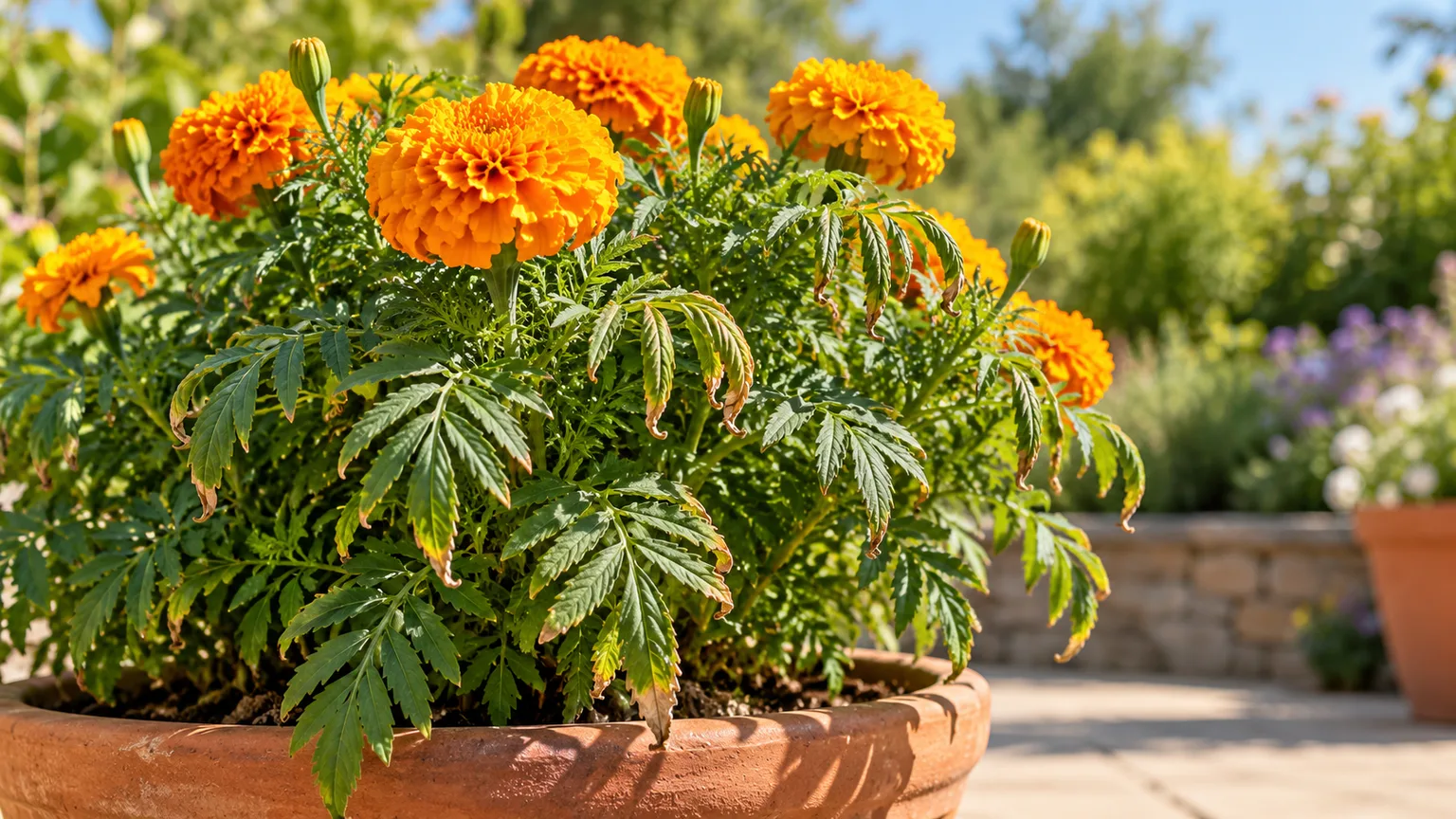
On Marigold, early heat stress usually looks like soft, drooping leaflets or leaf clusters during the afternoon. If the plant repeatedly faces intense sun or hot reflected light, exposed margins may later turn pale, tan, and crisp; direct sunlight can burn leaf tissue even when the surrounding air is comfortable, according to NC State Extension.

Marigold leaflets may droop or curl during hot afternoons; established brown edges will not regain their green color.
Do not diagnose from one drooping flower head. Spent marigold heads can be heavy enough to snap stems, so a single fading bloom may simply be spent. Heat stress becomes more likely when several leaves also lose firmness, the pattern recurs on hot afternoons, or damage appears on the most exposed side of the plant.
Why a sun-loving African marigold can still wilt at midday
Marigold is adapted to bright growing conditions, but “full sun” does not make its roots immune to heat. North Carolina State Extension describes African marigold as a full-sun plant that appreciates light afternoon shade and prefers evenly moist, well-drained soil. That combination is useful during heat: keep the plant bright overall, but reduce the harshest afternoon exposure when it is wilting repeatedly.
A pot changes the equation. Its limited mix can warm and dry faster than garden soil, especially when the pot is small, dark, or standing on hot paving; root-zone heat and drying are affected by container color and size. Container marigolds may need more frequent watering than plants in the ground. Check the actual mix rather than assuming every wilted plant is thirsty.
Flowering also depends on the type of marigold and the season. The UF/IFAS marigold guide reports that in Florida large-flowered African marigolds are best for spring, while French marigolds can perform year-round. In a hot climate, a pause or faster fading of blooms can therefore occur while the foliage remains viable; it is not, by itself, proof of severe heat injury.
Check the Marigold before giving it more water
Use the root ball, not the leaf posture alone, to decide whether watering is needed. Push a finger or wooden skewer below the dry surface near the plant’s roots, then lift the pot if it is container-grown. If the mix is dry through that zone and the pot feels light, water the soil slowly until the root ball is evenly moist and excess drains away. If the mix is already moist, do not add more water just because the leaves are limp.
Next, map the damage. Leaflets that droop across the plant during the hottest hours suggest temporary heat and water demand. One-sided, sharply defined bleaching or papery patches point more toward direct sun injury; direct sunlight can burn leaf tissue even when the surrounding air feels comfortable. Check whether the plant was recently moved from shade into stronger sun.
Finally, inspect the stem base and drainage. A marigold that remains wilted in damp mix or develops yellow lower leaves may have root trouble instead of simple heat stress; NC State Extension lists yellowing and drying foliage among the signs associated with fungal root rots. If those clues fit, use the Marigold root-rot guide before changing the watering routine again.
The first fix: give a heat-wilted Marigold afternoon relief
First, reduce the peak-afternoon heat load while keeping the plant in bright light. Move a portable pot to bright shade for the hottest hours, or use temporary light shade over an in-ground marigold. Marigold tolerates full sun and may appreciate a little afternoon protection, so this is a short-term relief step rather than a reason to leave it in deep shade.
Once the exposure is moderated, water only if the root ball is dry. Water at soil level, let the container drain, and do not leave the base sitting in runoff. If the mix is moist, give it time to cool and reassess the plant the next morning instead of repeating irrigation.
Look-alikes that can mimic Marigold heat stress
| What you see | More likely explanation | Use this Marigold guide when… |
|---|---|---|
| Soil is dry below the surface and the pot is light | Water stress is contributing to the wilt | See Marigold water stress if the plant repeatedly dries faster than your watering routine allows. |
| Limp foliage persists on a cooler morning | Drooping has another cause or needs broader diagnosis | Use the Marigold drooping-leaves guide if the leaves stay down after the heat has passed. |
| Bleached or crisp patches are strongest on one exposed side | Direct sun scorch is more likely than general heat wilt | Use Marigold sunburn and scorched leaves when localized patches dominate. |
| Mix stays wet and lower leaves yellow | Root damage may be preventing normal water uptake | Check Marigold root rot before watering again. |
| Only an old flower head is fading while leaves stay firm | A spent bloom is more likely than whole-plant heat stress | See Marigold faded flowers if flowering is the only change. |
Recovery means new Marigold growth, not perfect old leaves
A lightly wilted plant may regain firmness after the afternoon heat drops, but a browned edge or papery patch will remain damaged. Mark the edge of any scorch or take a photo, then compare it the next day. A stable outline, firm stems, and leaflets that stay upright through the following morning are better signs than expecting old foliage to look new again.
Watch the growing tips and unopened buds over the next week or two. New leaflets that hold their shape and no fresh scorch suggest that the exposure and moisture balance are improving. If the plant continues to collapse in moist soil, inspect for root damage rather than increasing water, fertilizer, or pruning.
Marigold is usually grown as an annual, as the UF/IFAS marigold guide describes for Florida gardens. If heat arrives near the end of its flowering season, the plant may make fewer attractive blooms even after you correct the immediate stress. Keep it if stems and new growth remain healthy; if most roots and stems are dead or the season is ending, replacing it may be more practical than trying to restore damaged tissue.
Prevent repeat heat stress in Marigold pots and beds
Keep Marigold in strong light, but avoid a small dark pot baking on a west-facing balcony or beside sun-heated paving. During a heat wave, move a container to a spot with morning sun and light afternoon shade, or shade the pot itself without blocking drainage. An in-ground plant can stay in its normal sunny bed unless repeated afternoon wilt or scorch shows that temporary cover is needed.
Check container mix more often during hot weather because pots dry faster than beds; water thoroughly when the root zone is dry, then allow excess to drain. For routine moisture checks and seasonal care, use the Marigold watering guide. Avoid fertilizing a heat-stressed plant as a quick fix: feeding will not restore scorched tissue or repair roots that are struggling in wet soil.
Related Marigold guides
Use the Marigold overview for normal light, soil, and seasonal care, and the Marigold problems hub when a symptom does not fit this heat-linked pattern. Use this page when wilt or leaflet curl tracks hot afternoons; the water-stress guide fits when the root ball repeatedly dries, drooping-leaves guide when leaves stay limp after temperatures fall, sunburn guide for fixed exposed patches, and faded-flowers guide when only blooms decline. Choose the watering guide for routine moisture questions; use the root-rot guide linked above if the mix stays wet as lower leaves yellow.
Related tool
Use the Plant Problem Diagnosis Tool to compare heat stress with watering, sun injury, and root problems before changing several parts of Marigold’s care at once.