Wilting on Marigold: Causes, Checks & Fixes
Quick answer
Wilting marigolds need a moisture check first - dry soil means underwatering; wet soil means root rot or overwatering. Water deeply if dry; stop watering and inspect roots if the pot is heavy and soggy.
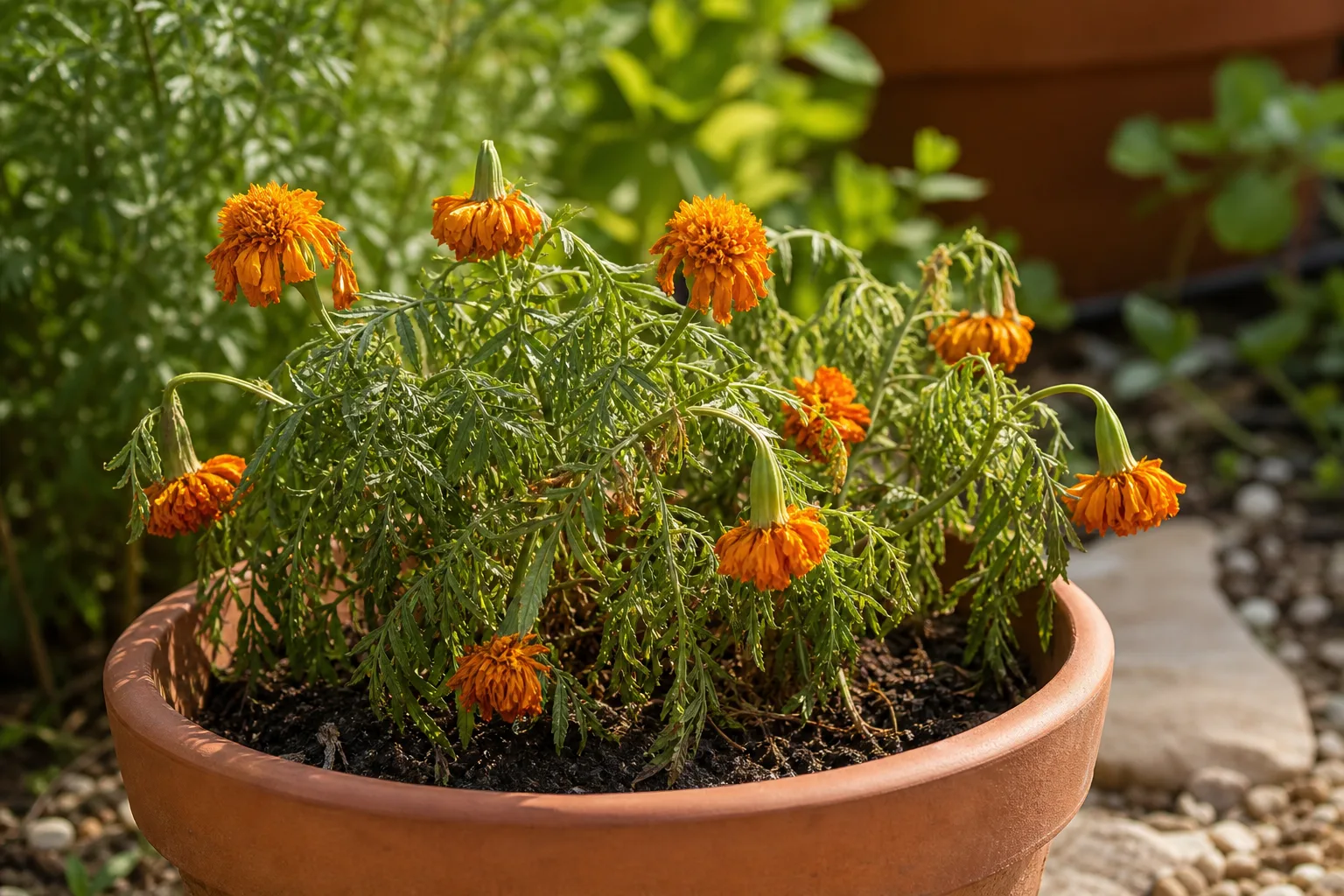
Wilting on Marigold: Causes, Checks & Fixes
This guide covers wilting on Marigold. See also the general Wilting guide, watering, and light pages for this plant.
Wilting on Marigold: Causes, Checks & Fixes
Quick answer
Wilting on Marigold always starts with one question: is the soil dry or wet? Dry soil plus wilt means underwatering on Marigold - water deeply at the base. Wet soil plus wilt means damaged roots - stop watering and inspect before adding more moisture.
What wilting looks like on Marigold
Wilting shows as drooping leaves and flower heads, sometimes only at midday in heat. Drought wilt pairs with dry, light pots. Rot wilt pairs with heavy wet pots, yellow lower leaves, and failure to recover after watering.
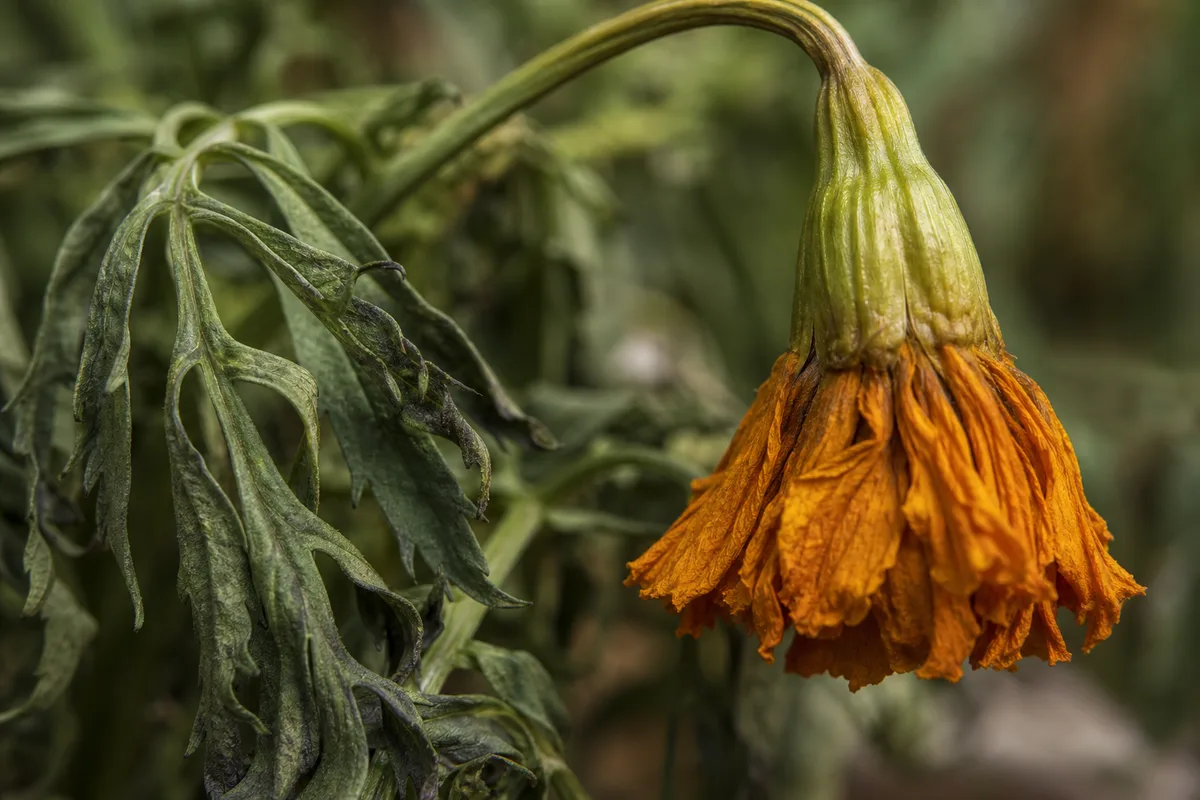
Wilting symptoms on Marigold - compare with healthy tissue on the same plant.
Leaves turn yellow and wilt with marigold root rot - the classic wet-wilt pattern extension services describe for Tagetes in poorly drained soil.
Why Marigold wilts
Underwatering in full sun all day causes midday transpiration loss faster than roots can supply water - especially in small containers.
overwatering on Marigold and root rot destroy root function so plants wilt despite wet soil - disease favors cool, wet soil with poor drainage.
Heat stress on adequately watered plants may show temporary midday wilt that recovers evening - distinct from all-day collapse.
How to confirm the cause
- Soil moisture at 3 cm - Dry vs. soggy splits the diagnosis immediately.
- Pot weight - Light vs. heavy.
- Recovery overnight - Perked up morning after dry soil → drought; still wilted on wet soil → roots.
- Stem base - Softness indicates advanced rot.
- Smell - Sour odor from mix supports rot.
First fix for Marigold
If dry: water deeply at the base until excess drains; empty saucers.
If wet: stop watering, unpot if wilt persists, trim mushy roots, repot into fresh draining mix. Marigolds tolerate drought better than wet feet - err slightly dry during recovery from rot, not wet.
Step-by-step recovery
Drought path: Deep water → check daily in heat → mulch lightly if needed.
Rot path: Dry-down or repot → trim decay → full sun with airflow → resume water only when top 3 cm dries.
Recovery timeline
Drought wilt: hours to one day. Rot wilt: one to three weeks if caught early; days to death if crown involved.
Causes to rule out
- Transplant shock - Temporary wilt after planting; roots firm when checked.
- White mold - Branch wilt with fluffy white growth in humid weather.
- Stem breakage - Physical damage on tall staked African marigolds.
African vs French marigold wilt patterns
African marigolds (Tagetes erecta) grow tall with heavy double flower heads. In small containers, the top weight alone can make stems droop on hot afternoons—a physical wilt that recovers overnight when roots are healthy. Staking or a larger pot prevents this cosmetic droop.
French marigolds (Tagetes patula) stay shorter and wilt more often from true moisture stress or rot because their smaller root systems dry out and saturate faster. French types in dense bedding rows also trap humidity at the base, which favors root dysfunction in cool wet soil. Match your diagnosis to the variety you are growing.
Fusarium and vascular wilt
Less common in home gardens but worth knowing: Fusarium wilt causes one-sided yellowing and wilting that does not recover after watering. Unlike drought wilt, affected stems show brown streaks when split lengthwise, and the problem spreads up the plant over weeks. There is no home cure—remove infected plants and avoid replanting marigolds in the same bed spot for a season. This is rare in containers with fresh mix but appears in ground beds with history of the disease.
Seasonal watering adjustments
Marigolds in full sun need more frequent checks in July and August than in cool spring weather. A pot that needed water every three days in May may need daily attention in a heat wave. Conversely, marigolds in partial shade during rainy weeks stay wet longer—stretch watering intervals and watch for wet-wilt instead of assuming every droop means thirst.
In fall, as growth slows, reduce watering before rot develops in cooling soil that no longer dries as fast as summer mix.
What not to do
Do not water every wilt automatically. Do not leave wet wilted plants soaking “to help.” Do not overhead water in humid evenings on stressed plants.
How to prevent it next time
Top 3 cm dry test. Water at the base. Well-draining mix. Full sun with good airflow. Empty saucers always.
Marigold care cross-check
Wilting is a symptom router, not a diagnosis. Match full sun needs and drainage before treating every wilt as thirst.
When to worry
Overnight wilt on wet soil with soft stems - repot or replace immediately.
Conclusion
Split wilt into dry-soil drought vs. wet-soil root failure before acting. Marigolds recover fast from drought in heat; wet wilt needs drainage and root rescue, not more water.
When to use this page vs other Marigold guides
- Marigold watering guide - Use for routine moisture checks before assuming wilting is the main issue.
- Marigold problems hub - Browse all 20 common issues on this species.
- Underwatering on Marigold - Different entry point when symptoms overlap with wilting.
- Overwatering on Marigold - Different entry point when symptoms overlap with wilting.
- Root Rot on Marigold - Different entry point when symptoms overlap with wilting.