Crown Rot on Marigold: Causes, Checks & Fixes
Quick answer
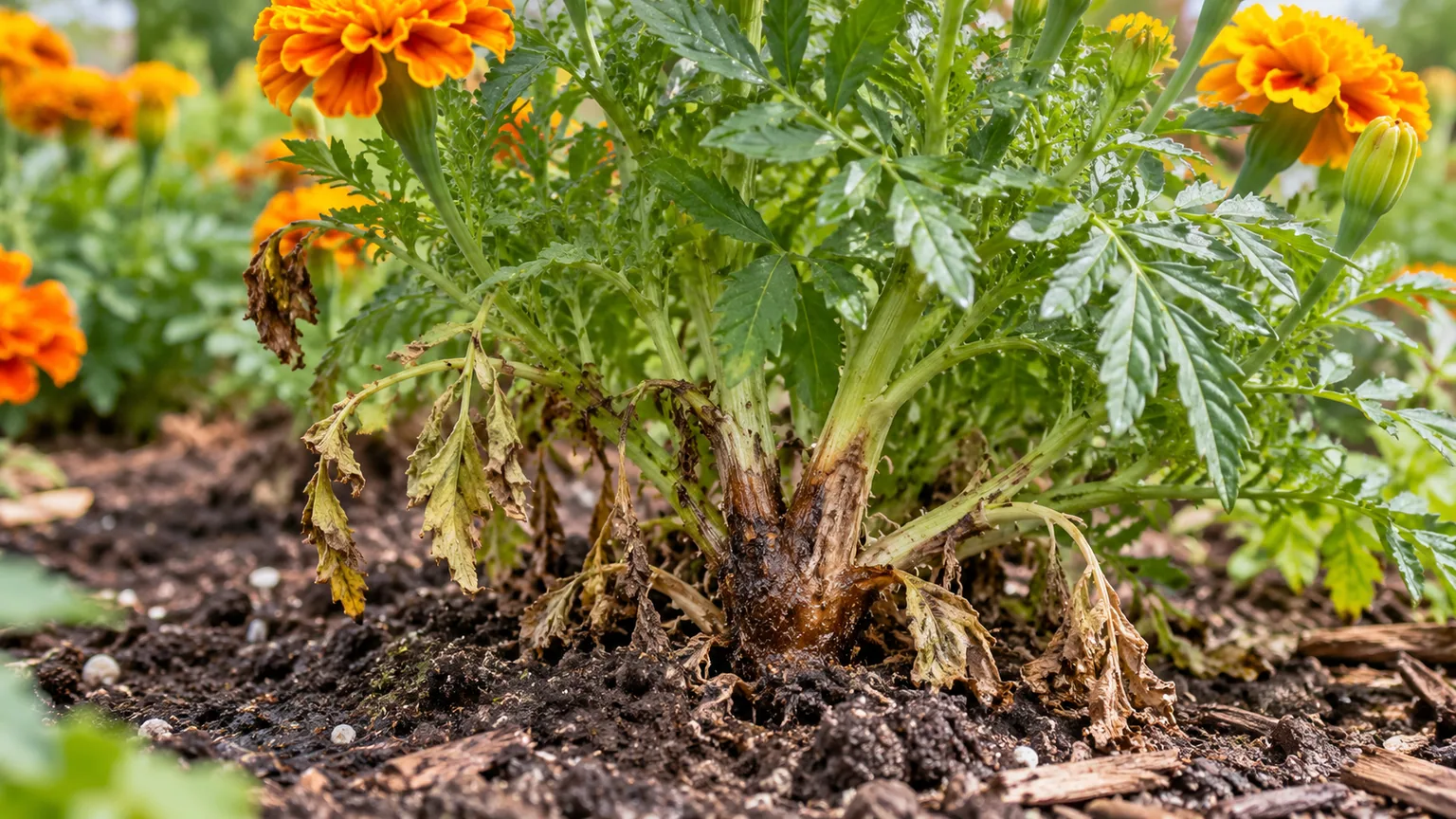
Crown rot on marigold shows as a brown to black, soft or dry-rotted band on the lower stem right at the soil line, followed by wilting even though the soil is moist. First: stop overhead watering, pull mulch and soil back from the stem base, and let the crown dry in full sun and airflow. If the stem is girdled all the way around or mushy inside, the plant will not recover — pull it, discard it, and fix drainage before replanting.
Crown Rot on Marigold: Causes, Checks & Fixes
This guide covers crown rot on Marigold. See also the general Crown Rot guide, watering, and light pages for this plant.
Crown Rot on Marigold: Causes, Checks & Fixes
Quick answer
Crown rot on marigold is a soil-borne fungal attack at the point where the stem meets the soil. The lower stem turns brown to black and goes soft or dry and papery, and the whole plant wilts even though the mix is damp. First, do one thing: pull mulch and wet soil back from the stem base and stop all overhead watering so the crown dries in sun and air. For the general mechanics of how wet crowns fail, see our crown rot disease guide — on marigold, the pattern that follows is distinctive, and the rest of this page covers exactly that.
What crown rot looks like on marigold
On African marigold (Tagetes erecta), the earliest sign is a tan to dark-brown band circling part of the lower stem right at the soil line. The band may look dry and sunken on one side while the rest of the stem still looks green — rot often starts on one side or one lateral branch before spreading around the stem (dry rotting at or near the soil line). Leaves above the damage wilt in daytime heat and may yellow or take on a dull reddish cast, yet the soil feels moist. That mismatch — wilt plus wet soil — is the signature clue.
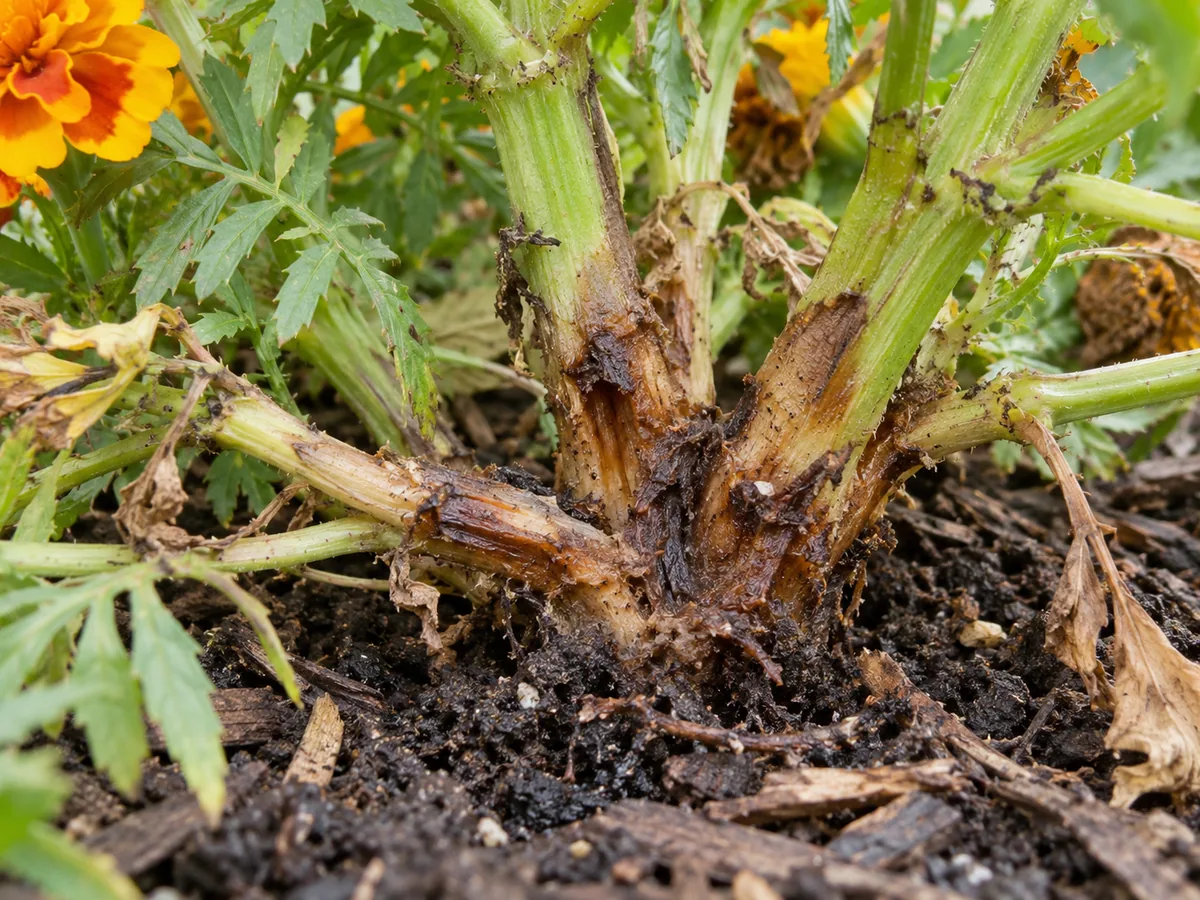
Close-up of the soil line: brown, softened bark on one side of the stem base with healthy green tissue above. Check all the way around the stem.
Advanced cases are unmistakable: the stem base turns mushy or stringy, sometimes with a sour or foul smell, the plant flops at the base under the weight of its own heavy flower heads, and lower leaves collapse. Bacterial soft rots in particular are often accompanied by a foul smell. By this stage the stem is usually girdled — the pathogen has encircled it — and wilting becomes permanent because water can no longer move upward.
Why marigold crowns stay wet
Marigold invites this disease through a combination of habit and handling. It is a fast-growing, bushy annual with a dense canopy of fragrant foliage and heavy blooms that shade its own stem base, so the soil line stays damp long after the top of the pot looks dry. Its fibrous root system spreads wide and shallow rather than deep, which means the critical zone is exactly the top few centimeters of mix that alternate between soaked and baked in summer beds and containers. Overhead watering, rain splash, and mulch piled against the stem keep that zone wet for hours, and wet conditions and heavy soils are precisely what soil-borne crown-rot fungi need.
Cool, damp spells are the other trigger. Marigolds want heat — cool, damp conditions can encourage fungal diseases and root rot — so late monsoon stretches, crowded nursery trays, or a week of rain on a poorly drained bed can start an outbreak even in plants that looked perfect in hot weather. NC State’s plant profile lists phytophthora, botrytis, leaf spot, and other rots among the documented disease problems of Tagetes erecta, and notes that cultivar resistance varies widely — some lines such as ‘Antigua Yellow’ show excellent resistance to Phytophthora while others are notably susceptible.
The African marigold planting-depth question
African types are often planted deeper than they grew in the cell pack — lower leaves stripped and the bare stem buried so the tall plant roots firmly and does not topple. That advice works, but only in freely draining soil, and it directly raises the stakes for crown rot when the bed is heavy or the pot has no drainage. Pathogens enter through wounds and abrasion at the soil line, and a deeply buried stem keeps far more tissue in the pathogen zone.
Follow the safer rule from general crown-rot prevention: plants should only be planted to the depth of their rootball, with the crown at or just above the surface. If you do plant an African marigold slightly deep for stability, compensate deliberately: use a gritty, fast-draining mix, keep mulch 2–3 cm away from the stem, and water at the base only. Never combine deep planting with daily overhead watering — that pairing is how most container cases start. See the soil and watering guides for this plant’s preferred mix and rhythm.
How to confirm the cause
Work through these checks in order before you treat anything:
- Expose the crown. Brush soil and mulch away from the stem base all the way around. Firm, pale tissue means the plant may be wilting from something else — compare with wilting and drooping leaves. Brown-to-black, soft, or papery tissue at the soil line confirms crown involvement (tissue may turn brown to black in the localized area around the soil line).
- Test the girdle. Check whether the discoloration wraps all the way around. Partial damage on one side can sometimes be managed; a fully encircled stem will not recover, because the pathogen has cut off the whole vascular ring.
- Smell and squeeze. A sour or rotten smell and mushy bark point to active soft rot. Dry, sunken, tan bark with no smell is more typical of an early or arrested lesion.
- Lift and look at roots. White, firm, fibrous roots mean the damage is still confined to the crown — a hopeful sign. Brown, slimy roots spreading upward into the stem mean root and crown rot together; compare with root rot.
- Review the water history. Daily overhead watering, rain splash, saucers left full, pots without drainage holes, or compacted beds that puddle all support the diagnosis. Fungi behind this disease thrive in warm environments with wet, soggy soil and poor drainage.
The first fix to try
Pull soil and mulch back from the stem and let the crown dry. Clear a 2–3 cm ring of bare, dry surface around the base, move the plant or pot into full sun with open airflow, and water only at the soil edge — never on the stem — after the top 3–5 cm of mix has dried. Marigolds need full sun and well-draining soil, and containers must have drainage holes with fast-draining mix since the plants will not tolerate soggy soil.
Then wait and read the plant for three to four days. If wilting eases in the evening and new growth stays firm, the lesion may be partial and the plant can compartmentalize it. If the plant stays limp in cool morning air, the stem flops, or discoloration keeps climbing, skip further treatment and remove the plant — continued watering only feeds the pathogen.
Step-by-step recovery
- Isolate. Move affected pots away from healthy marigolds and bedding plants. Spores and sclerotia travel in splash and on tools, and some crown-rot fungi can remain dormant in the soil for years.
- Dry the crown, as above. This is the only intervention every case gets.
- Trim for airflow, not for cure. Deadhead spent blooms and remove collapsed lower leaves so the base gets light and air. Do not cut into the rotted stem itself — stem surgery on a soft annual stem rarely helps and opens fresh wounds.
- Decide: keep or pull. Keep only plants with firm tissue on at least half the stem circumference and healthy roots. Pull plants that are girdled, foul-smelling, or collapsed; bag and trash them rather than composting, and do not replant marigolds in the same bed soil the same season.
- Sanitize. Wash pots, stakes, and tools with soap and hot water, then disinfect (a 1:9 household-bleach-to-water soak for tools, rinsed and dried) before reuse. Empty drip trays rather than letting pots sit in them.
- Hold the fertilizer. A stressed, half-defoliated marigold cannot use extra nitrogen, and excess nitrogen pushes soft foliage at the expense of the firm growth you need. Resume light feeding only when new growth is clearly clean — see the fertilizer notes for this plant.
Fungicide drenches such as captan or Aliette are sometimes used against crown rot, but they work as protectants and are usually ineffective once disease has completely taken hold. On a cheap, fast annual like marigold, replacing the plant and fixing drainage beats spraying in nearly every home-garden case.
Recovery timeline
- Days 1–4: Wilting should stop worsening once the crown dries. Evening recovery after morning wilt is the first good sign.
- Weeks 1–2: The lesion edge dries and hardens; new leaves emerge clean and upright. If instead the brown band widens or the stem softens further, remove the plant.
- Weeks 3–4: A surviving plant resumes budding. Expect a smaller plant than its neighbors — energy went into defense, not flowers.
Damaged stem tissue never turns green again. Judge recovery entirely by new growth and a stable, dry crown, not by the old scar fading.
Lookalike symptoms
| What you see | More likely | How to tell |
|---|---|---|
| Wilt in midday heat, recovers by evening, stem base firm and pale | Underwatering or heat stress | Soil is dry; crown is clean. See wilting and heat stress. |
| Yellow lower leaves, black roots, sour mix, but stem base intact | Root rot or overwatering | Damage centers on roots, not a band at the soil line. |
| Seedlings keel over at the base in trays within days of germination | Damping-off | Affects seedlings, not established plants; whole tray often fails at once. |
| Sudden whole-plant wilt with milky bacterial ooze from cut stems, no crown lesion | Bacterial wilt | Vascular browning inside the stem without the soil-line rot band. |
| Grey fuzzy mould on spent blooms spreading downward in cool wet weather | Botrytis blight | Starts in flowers, not at the crown; see blight. |
| White crust on mix surface, leaf-tip burn, stunted growth | Salt build-up or fertilizer burn | Crust and tip burn without stem softening. |
What not to do
- Do not water overhead “to perk it up” — wetting the crown is what started this.
- Do not pile mulch or soil higher around a wilting stem for support; burying the lesion deepens the rot zone.
- Do not apply fungicide as a first move on a collapsed plant. Removal plus drainage fixes protect the rest of the bed; spray does not resurrect girdled stems.
- Do not fertilize a plant with an active crown lesion.
- Do not compost pulled plants or reuse their soil for seedlings. Rest the bed or rotate crops every couple of seasons where this disease has appeared.
Deadheading and spacing as prevention on a fast annual
Because marigold is grown as a seasonal annual, prevention is mostly about the few months it is in the ground. Space plants so air moves between them — crowding plus wet foliage is the classic outbreak setup. Water through ground-level soaking early in the day so leaves and crowns dry before nightfall, and always allow at least the top inch or so of soil to dry out between watering intervals. Deadhead spent blooms promptly: heavy, rotting flower heads snap stems and drape wet petals onto the crown, and each wound is an entry point. At season’s end, clear debris rather than digging it in where next year’s seedlings will sit. In beds with a history of Phytophthora, pick resistant cultivars and give marigolds a fresh spot — rotating away from last year’s location is standard practice for soil-borne disease.
When to use this page vs other marigold guides
- This page: brown/black band at the soil line + wilt despite moist soil.
- Root rot: root damage without a distinct crown lesion; whole root ball brown and slimy.
- Overwatering: yellow lower leaves and soft growth but the stem base is still firm — fix water before it becomes this page.
- Damping-off: seedlings collapsing in trays, not established plants.
- Bacterial wilt: sudden wilt with vascular ooze and no soil-line rot.
- Mold on soil: surface fuzz with a healthy stem underneath — improve airflow before it escalates.
- Start from the marigold overview or the problems hub if you are unsure which pattern matches.
Related marigold guides
- Marigold overview — light, water, and soil baseline for the whole plant.
- Marigold problems hub — browse every diagnosed issue on this plant.
- Watering marigold — base-watering rhythm that keeps crowns dry.
- Marigold soil — fast-draining mixes and drainage fixes.
- Root rot on marigold — when the damage is below the crown.
- Overwatering on marigold — the earlier, reversible stage.
- Damping-off on marigold — seedling collapse vs adult crown rot.
- Wilting on marigold — sorting water stress from stem disease.
- Bacterial wilt on marigold — the vascular lookalike.
- Mold on soil on marigold — surface moisture warnings.
Related tool
Use the Plant Problem Diagnosis Tool to narrow causes for crown rot on this plant before changing multiple variables at once.