Blight on Marigold: Causes, Checks & Fixes
Quick answer
Blight on marigold is usually Botrytis gray mold starting on spent flower heads as water-soaked brown petals with gray fuzzy spores in humid weather. First step: pick off every brown or fuzzy bloom plus dead leaves, bag them for the trash, and switch to watering at the base only.
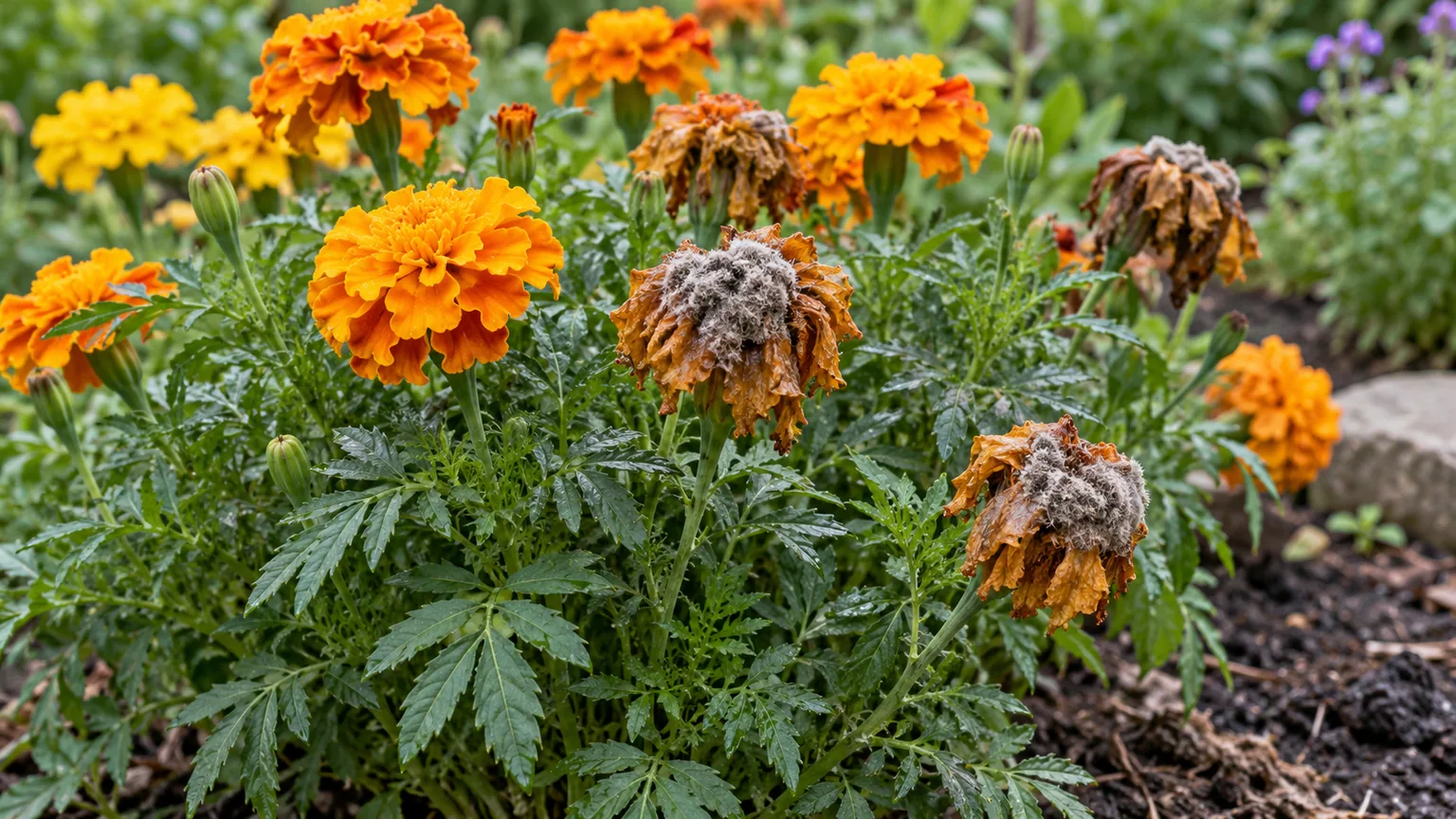
Blight on Marigold: Causes, Checks & Fixes
This guide covers blight on Marigold. See also the general Blight guide, watering, and light pages for this plant.
Blight on Marigold: Causes, Checks & Fixes
Quick answer
Blight on marigold (Tagetes erecta and Tagetes patula) is usually Botrytis gray mold, a fungus that starts on spent or damaged flower heads and spreads fastest in cool, humid weather. Petals turn water-soaked and brown, then grow the gray fuzzy spore masses characteristic of Botrytis on marigold. Leaves develop soft brown spots after wet nights, and whole blooms can collapse within days.
Botrytis cinerea colonizes dead, dying, and wounded plant parts first, then attacks healthy tissue from those infections. On marigold that means one faded pompom left on the plant can seed an outbreak across the whole bed after rain.
For how blight spreads on wet foliage in general, see our blight symptom hub. On marigold, start every diagnosis at the oldest open blooms — that is where Botrytis almost always enters before it touches leaves.
First step: pick off every brown, water-soaked, or fuzzy bloom and dead leaf, seal them in a bag for the trash, and water at the base only from now on.
What blight looks like on marigold
Botrytis blight on marigold begins on the flowers. Petals develop water-soaked lesions that turn brown and die, with gray spore masses forming on the dead tissue in wet conditions. An infected pompom looks soggy and dark instead of crisp, and a gray fuzz becomes visible on damp mornings. Entire petals or whole flower heads may go at once while neighboring fresh buds still look fine.
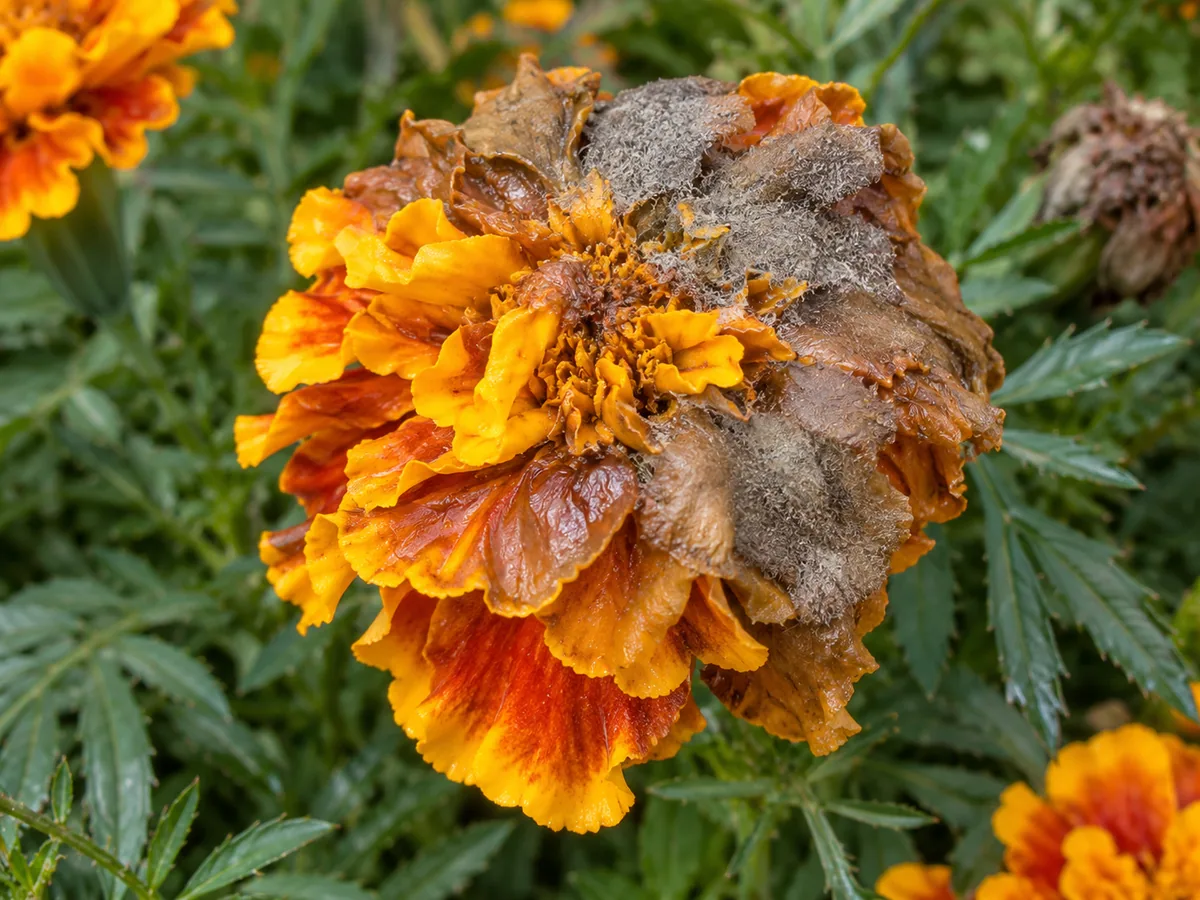
Water-soaked brown petals with gray fuzzy sporulation on a spent marigold bloom — the classic Botrytis entry point before leaves are affected.
Leaves are attacked second. Soft brown spots appear on lower foliage after cool damp spells, matching the soft brown spotting on leaves, stems, and flowers that follows cool damp periods. Senescent lower leaves near the soil go first. Stems can rot at the base in crowded, wet beds, and the plant wilts even though the soil is moist.
Alternaria blight, the other common marigold blight, looks different: firm brown or dark spots with yellow halos that dry out rather than turning to mush, and leaves drop while petals stay mostly intact. That distinction decides the whole response, so confirm fuzz versus firm spots before treating.
Why marigold gets blight
Marigold flower heads are built from dozens of tightly packed petals, and that density traps moisture exactly where Botrytis wants it. A pompom that stays damp overnight after rain or overhead watering becomes a spore factory, and wounded or weakened plants are particularly susceptible — every faded bloom is wounded tissue by definition.
The plant’s seasonal habit compounds the risk. Marigolds bloom heaviest in humid months and in dense bedding displays where air barely moves between plants. The fungus spreads quickly when humidity is high or moisture sits on plant tissue, so a tightly planted border of African marigolds after a rainy week is close to ideal conditions for an outbreak.
Common triggers on marigold:
- Spent blooms left on the plant through wet weather
- Overhead watering or rain that wets petals and keeps them wet overnight
- Crowded beds with no airflow between bushy plants
- Fallen petals and dead leaves rotting on the soil surface
- Cool damp spells in the 60–75°F range during peak bloom
- Plants already stressed by overwatering or poor drainage
How to confirm the cause
- Bloom-first check — Open the oldest flower heads and look inside the petal layers for brown soggy tissue or gray fuzz. If damage starts on blooms and leaves look fine, Botrytis is likely.
- Morning fuzz test — Inspect suspect blooms early in the day while dew is present. Gray sporulation shows on necrotic tissue during wet conditions and may be invisible by dry afternoon.
- Firm-spot comparison — Press a spotted leaf gently. Mushy water-soaked tissue points to Botrytis; firm brown spots with yellow halos that drop leaves point to Alternaria leaf spot instead.
- Base-stem check — Follow suspect stems down to the soil line. Soft brown stem bases with wilting above mean the infection has moved beyond salvageable blooms.
- Weather match — Blight that appears within days of rain, heavy dew, or overhead watering fits Botrytis, which normally enters through wounds or infects stressed plants, especially under humid conditions.
- Neighbor scan — Check adjacent marigolds and bedding plants for matching brown petals. Botrytis has a wide host range and jumps between touching blooms.
The first fix to try
Remove every spent, brown, or fuzzy bloom and all dead leaves on and around the plant, bag them for the trash, and keep all future water at the base.
Removing dead and dying plant parts, particularly blossoms, is the core cultural control for marigold Botrytis — it eliminates both the food source and the spore source in one pass. Do not compost infected blooms; spores survive home compost and return to next season’s beds. Make this single correction first and watch for three dry days before deciding whether anything stronger is needed.
Step-by-step recovery
- Deadhead aggressively: cut every open bloom showing any browning, plus all fully spent heads, back to the first healthy leaf joint.
- Clear the bed surface of fallen petals and dead leaves, following marigold soil hygiene so debris does not sit on damp mulch.
- Switch to morning watering at the base only — avoid overhead irrigation, or time it so plants are not wet for extended periods.
- Space plants for good air circulation, thinning to roughly 12 to 18 inches between plants so foliage dries after rain.
- Hold fertilizer until fresh buds open clean — feeding a diseased plant pushes soft growth that Botrytis colonizes faster. Cross-check marigold fertilizer timing before resuming.
- If spots keep expanding after a week of dry foliage and clean deadheading, consider a labeled ornamental fungicide per label directions, or pull the worst plants to save the bed.
Recovery timeline
Mild Botrytis limited to a few blooms usually stabilizes within one to two weeks once spent flowers are gone and petals stay dry. Judge recovery by fresh buds opening crisp and clean — old browned petals never heal, so ignore them and watch the new growth. Leaf spots stop expanding when humidity drops and infected foliage is removed.
If stem bases are already soft and brown, or whole plants wilt despite moist soil, recovery is unlikely. Compare against root rot and bacterial wilt before assuming blight alone is the cause, since all three collapse plants from the base up.
The pompom deadheading routine that stops Botrytis
African marigold (Tagetes erecta) heads are the worst Botrytis traps in the home garden: big, dense, slow to dry, and held upright to catch every drop of rain. French types (Tagetes patula) dry faster but still catch it through faded single blooms. Either way, the fix is the same weekly habit.
Walk the bed once a week in peak bloom and snap off every flower past its prime, cutting back to a leaf joint so no soggy petal stub remains. During rainy spells, check twice a week — one rain-soaked pompom left for five days can sporulate and seed the whole row. This deadheading habit doubles as bloom encouragement, since removing spent heads pushes the bushy growth habit to set new buds instead of seed.
African versus French marigolds and bed spacing
Tall African varieties packed shoulder-to-shoulder in a bedding display hold humidity between their bushy canopies long after the sun is up. That trapped air is why blight so often starts in the center of a bed while edge plants stay clean. Dwarf and French types with smaller blooms and airier habits dry faster and show measurably less gray mold in the same bed.
If blight returns to the same bed every season, replant at 12 to 18 inches apart and favor French or dwarf varieties there. Wide spacing plus morning sun on the foliage does more for prevention than any spray, because Botrytis cannot establish on petals that dry within a few hours.
Base watering through rainy and humid spells
Marigold wants steady moisture at the roots — roughly every few days in warm weather, checked at a few centimeters deep per marigold watering — but its blooms must stay dry. The practical split: soak the soil in the morning so the surface dries by evening, and never spray from above or run sprinklers late in the day.
In monsoon or long rainy stretches, skip scheduled watering entirely and let rainfall cover the roots while you focus on drainage and deadheading. Pots need saucers emptied after every downpour; beds need fallen petals cleared so spores cannot splash back up. Growers who follow high humidity precautions — morning sun, open spacing, dry foliage by nightfall — see far less gray mold even in wet seasons.
Lookalikes to rule out on marigold
| Sign | Likely cause |
|---|---|
| Brown soggy petals with gray fuzz on damp mornings | Botrytis blight (this page) |
| Firm brown spots with yellow halos, leaves dropping | Black spots or Alternaria leaf spot |
| White powdery coating, leaves intact | Powdery mildew |
| Petals browning and crisping without fuzz in heat | Flowers turning brown or heat stress |
| Sudden wilt with moist soil, brown vascular tissue | Bacterial wilt |
| Wilting with mushy roots and sour soil | Root rot |
| Yellow lower leaves, wet dense soil | Overwatering |
| White cottony seedlings collapsing at soil line | Damping-off |
What not to do
- Do not mist blooms or hose plants from above while any browning is present — surface moisture speeds Botrytis spread across petals.
- Do not compost infected blooms or leaves — bag and trash them so spores do not overwinter in the pile.
- Do not fertilize a blighted bed to “push through it” — soft forced growth is more susceptible, not less.
- Do not crowd replacements into the same bed without thinning; tight spacing recreates the exact conditions that caused the outbreak.
- Do not stack heavy pruning, transplanting, and spraying on the same day — make the deadheading and watering correction first, then read the plant’s response.
How to prevent blight next time
Deadhead weekly, water at the base in the morning, and keep beds open enough that foliage dries within hours of rain. Clear fallen petals and leaves from the soil surface through the whole season. Rotate marigold beds yearly rather than replanting Tagetes into soil holding last season’s debris, and give plants full sun so morning light burns dew off petals fast.
Start new plantings from clean seed or inspected transplants, and quarantine nursery seedlings for a few days before setting them among healthy beds. Where gray mold recurs yearly, plant French or dwarf varieties and keep African pompoms to containers you can move under cover during long rains.
When to worry
Treat as urgent when gray fuzz covers multiple blooms at once, stem bases turn soft and brown, or spots jump from plant to plant within days of rain. Pull and bag whole plants whose stems have rotted at the soil line — they will not recover and they endanger the rest of the bed.
Lower urgency: one or two browned blooms on an otherwise vigorous plant during a humid week, with fresh buds still opening clean. Deadhead, dry the foliage, and monitor.
Conclusion
Blight on marigold is manageable when you treat spent blooms as the front line: remove them fast, keep petals dry, and give beds the airflow dense pompoms need. Check oldest flowers first during weekly care, and cross-check browning petals and spotting pages before reaching for a spray.
When to use this page vs other marigold guides
Use this page for fast-spreading brown soggy petals or leaves with gray fuzz in humid weather. Use flowers turning brown for dry crisp browning in heat without fuzz. Use powdery mildew for white powdery coating. Use bacterial wilt for sudden whole-plant wilt with moist soil. Use root rot when stems are firm but roots are mushy and soil smells sour.
Related Marigold guides
- Marigold overview
- Marigold problems hub
- Marigold watering
- Marigold light
- Marigold soil
- Flowers turning brown
- High humidity
Related tool
Use the Plant Problem Diagnosis Tool to narrow causes for blight on this plant before changing multiple variables at once.