High Humidity on Marigold: Causes, Checks & Fixes
Quick answer
High humidity hurts marigolds by keeping blooms and foliage wet, which invites botrytis flower blight and leaf spots on Tagetes. First step: pick off spent and browned blooms, stop wetting flowers and leaves, and open up sun plus airflow so plants dry fast after rain or watering.
High Humidity on Marigold: Causes, Checks & Fixes
This guide covers high humidity on Marigold. See also the general High Humidity guide, watering, and light pages for this plant.
High Humidity on Marigold: Causes, Checks & Fixes
Quick answer
Marigold is a sun-loving annual that wants the opposite of a steamy still corner. It performs best in full sun and evenly moist, well-drained soil, and trouble starts when heavy blooms and dense foliage stay wet for hours in humid, windless air. Petals brown, gray fuzz appears, and lower leaves spot while the roots may still be fine.
First step: pick off every spent, browned, or fuzzy bloom plus fallen petals, then keep all future water at the base so flowers and leaves dry fast. For how humidity drives disease across houseplants and bedding plants in general, see our environmental humidity guide. On marigolds specifically, deadhead-and-dry beats spraying because the heavy double flower heads of African types trap moisture long after the air feels merely muggy.
What high-humidity damage looks like on Marigold
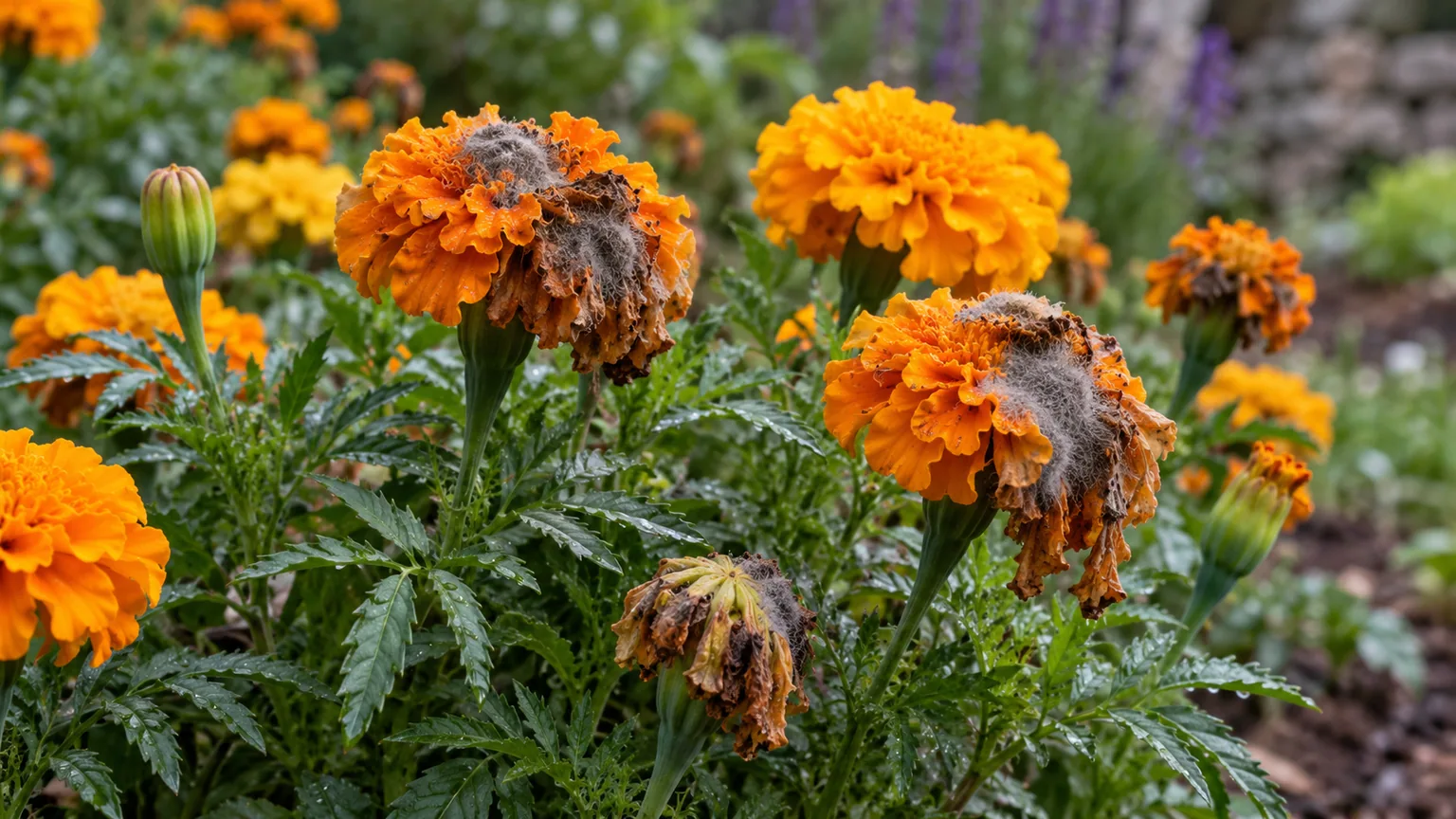
On marigolds the signature is flower blight first, leaves second. Penn State describes the pattern exactly: flower parts brown and die with gray masses of spores forming on infected tissue when wet. Expect browned petal edges on the big pom-pom heads, buds that stall and never open, and a gray fuzzy coating visible on damp mornings.
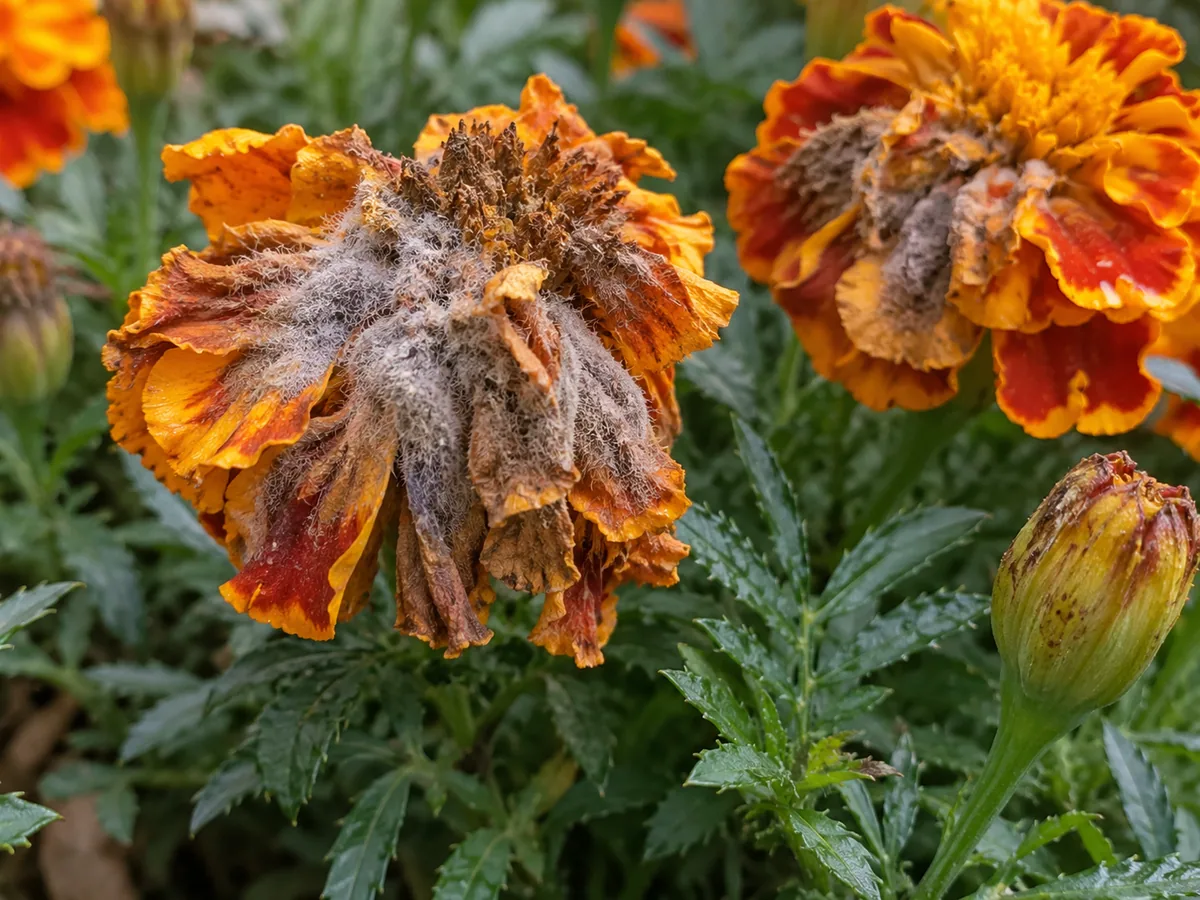
Gray mold on a marigold bloom after humid weather - compare with healthy tissue on the same plant.
Lower leaves follow with purplish or gray-black spots that spread upward during rainy spells, and crowded bedding rows can look scorched almost overnight. Stems stay green at first, which separates early humidity blight from crown and root rots where the base softens first. Because African marigolds carry large domed heads high on the stem, they show bloom damage before French types, whose denser low foliage spots earlier in still air.
Why Marigold suffers in humid, still air
Three traits stack against this plant when the air turns saturated.
Heavy double blooms hold water
The big African marigold heads that gardeners prize are moisture traps. Petal layers stay damp inside for hours after rain, dew, or overhead watering, and Missouri Botanical Garden lists Tagetes as susceptible to Botrytis with prompt deadheading as routine care. One fading bloom becomes the infection bridge that lets gray mold move into neighboring healthy buds touching it.
Bedding-canopy crowding slows drying
Marigolds are planted close for color, and that closed canopy is exactly what gray mold wants. Still air between touching plants keeps leaf wetness high after every rain, and shaded lower foliage never dries. Nurseries and monsoon-season beds in India show the same pattern: tight six-pack spacing plus daily rain equals blight season.
Overhead watering keeps the wrong tissue wet
Marigold roots tolerate even moisture, but the flowers and leaves do not tolerate staying wet. Sprinklers, hose-downs, and evening watering that wets the heads recreate the prolonged leaf wetness that triggers infection, even when the soil itself drains well. This is why bloom rot can appear in gardens whose watering rhythm looks correct at the root zone.
How to confirm stagnant humidity is the cause
Work through these checks before treating anything:
- Bloom-first pattern: Are flowers browning and molding while stems are still firm and green? That points to humidity blight, not root failure.
- Wetness duration: Do blooms and leaves stay visibly wet for hours after rain or watering? UC IPM notes gray mold spores germinate after plants are continuously wet for 6 or more consecutive hours or relative humidity higher than about 90% for 6 or more hours.
- Airflow audit: Are plants touching, backed against a wall, or shaded under overhangs with no breeze? Poor circulation plus shade is the classic blight corner.
- Spent-bloom load: Are faded heads still on the plant? Old petals are the food base new infections start from.
- Root check: Lift or probe the root zone. Firm white roots with normal-smelling mix mean the problem sits above the soil line, so see root rot on marigold only if roots are dark and mushy with a sour smell.
- Weather timing: Did damage follow several rainy, overcast, or dew-heavy days? Humidity blight tracks wet spells; heat wilt tracks hot afternoons instead. Compare with heat stress on marigold and drooping leaves on marigold.
First fix for Marigold
Deadhead everything spent and dry the canopy. Remove all faded, browned, or fuzzy blooms plus fallen petals from the soil surface, bag them for trash rather than compost, and switch every future watering to the base of the plant. NC State’s field guidance for marigold blight centers on exactly this: regular inspection and sanitation with removal of faded flowers, wider spacing for air circulation, and never working plants while they are wet.
Do this on a dry morning so fresh cuts and remaining blooms face hours of sun. Do not spray fungicide as the opening move; on seasonal marigolds, sanitation plus drying usually decides the outcome, and sprays cannot save blooms that are already brown.
Step-by-step recovery
- Deadhead all spent and diseased blooms into a bag and clear fallen petals off the soil.
- Thin the planting so neighboring plants barely touch, and stake tall African types so heads sit in moving air.
- Shift containers to the sunniest open position available; marigold wants full sun to dry fast and keep blooming.
- Water only at the base in the morning, and avoid overhead sprinkling on taller plants so heads go into the night dry.
- Check that pots drain freely and saucers empty; review the marigold watering rhythm and the soil mix if the mix itself stays soggy.
- Scout new buds every two to three days and remove any fresh browning immediately so one head cannot seed the next round.
- If lower leaves yellow from prolonged wetness, compare with overwatering before changing fertilizer; hold all feeding until clean new buds form.
Recovery timeline
Fresh gray fuzz on picked-over plants usually stops appearing within a week once blooms stay dry and airflow improves. Clean new buds opening within two to three weeks is the real success marker during the growing season. Browned heads never recover, so judge progress on new flowers and unspotted upper leaves, not on tissue you already removed. If blight keeps jumping to new buds through a full dry week, suspect crowded spacing or nightly overhead wetting is still in play.
Lookalikes to rule out first
| What you see | Likely issue | Key differentiator |
|---|---|---|
| Brown blooms with gray fuzz in wet weather | Humidity-driven botrytis blight | Follows rainy spells; worst on spent heads first |
| White dusty coating on leaves, dry weather | Powdery mildew | Dry powder, not wet gray fuzz; see powdery mildew on marigold |
| Circular dead leaf spots with purple margins | Bacterial or septoria leaf spot | Leaf-centered, not bloom-centered; overhead splash spreads it |
| Mold only on the soil surface | Surface mold from wet mix | Growth sits on media, not petals; see mold on soil on marigold |
| Whole plant wilts, base soft, sour mix | Root or crown rot | Roots dark and mushy; see root rot on marigold |
| Fine stippling and webbing in hot dry spells | Spider mites | Opposite weather trigger; see spider mites on marigold |
| Buds abort without mold after transplant | Bud drop from shock | No spores or spots; see bud drop on marigold |
Note that gray mold needs free standing moisture to infect, so damage appearing after a dry windy week with no wet foliage points toward a different cause than humidity.
What not to do
Do not mist marigold blooms to raise humidity; this plant never needed the pebble-tray treatment, and wetting the heads invites the exact blight you are fighting. Do not compost diseased blooms beside the bed or leave them on the soil, since spores overwinter on debris. Do not overhead-water in the evening, crowd new transplants for instant color, or fertilize heavily while blight is active; soft nitrogen-pushed growth spots faster. And do not stack repotting, hard pruning, and spraying on the same day for a seasonal annual already under disease pressure.
How to prevent it next time
Build the bed for drying from day one. Give African types room to hold their heads in moving air, and pinch young plants for bushy but open structure rather than a solid wall of foliage. Prune or stake plants to provide optimal air circulation around stems and heads, especially in enclosed courtyards where still air lingers. Water at the base, and follow the trusted-practice rule to avoid overhead watering and water in the morning so any moisture on foliage dries under the sun. Deadhead weekly through peak bloom so spent heads never sit long enough to mold; the routine doubles as the plant’s normal bloom-boosting care. For bed planning, align with the marigold overview and browse the full marigold problems hub before each season.
Marigold care cross-check
Humidity damage rarely travels alone. Low light slows dry-down, so confirm heads actually get direct sun most of the day. Dense or waterlogged mix keeps the whole canopy humid from below, so recheck drainage if the surface never dries. Fungus gnats hovering over damp media warn that the bed stays wet too long overall; compare notes with fungus gnats on marigold. Slow or stalled blooming after blight cleanup may simply be the plant rebuilding buds, so see slow growth on marigold and faded flowers on marigold before assuming a second disease.
When to worry
Move fast when gray mold crosses from spent heads onto green buds and stems across many plants in a few days, or when stems brown and collapse at the soil line. Those patterns mean blight or accompanying stem rot is outpacing sanitation, and for a seasonal annual, replacing badly collapsed plants with fresh stock in a sunnier, wider-spaced position is often the practical call. If browned blooms show no fuzz but drop with spotted leaves after storms, read it as the leaf-spot side of wet weather rather than simple aging; see blight on marigold and flowers turning brown on marigold.
Conclusion
Marigolds do not ask for humid air; they ask for sun, moving air, and dry blooms. Keep spent heads picked, water at the base, and give each plant breathing room, and humid spells pass as a brief deadheading chore instead of a bed-wide blight event.
When to use this page vs other Marigold guides
- Marigold watering guide - Use when the soil itself stays soggy or the plant wilts from the roots up.
- Root Rot on Marigold - Use when roots are mushy and stems collapse at the base rather than blooms molding first.
- Blight on Marigold - Use when leaf and stem lesions dominate the picture beyond bloom rot.
- Powdery Mildew on Marigold - Use for dry white powder on leaves in warm dry spells, the opposite weather trigger.
- Marigold problems hub - Browse all common issues on this species when symptoms do not fit one page.