Flowers Turning Brown on Marigold: Causes, Checks & Fixes
Quick answer
Brown marigold flowers usually mean one of three things: dry papery spent blooms that need deadheading, wet brown mushy petals with grey fuzz from botrytis blight, or crisp scorched edges after heat and missed watering. First step: feel one brown head — dry and papery on firm stems means deadhead, while wet and slimy with fuzz means strip it and keep petals dry.
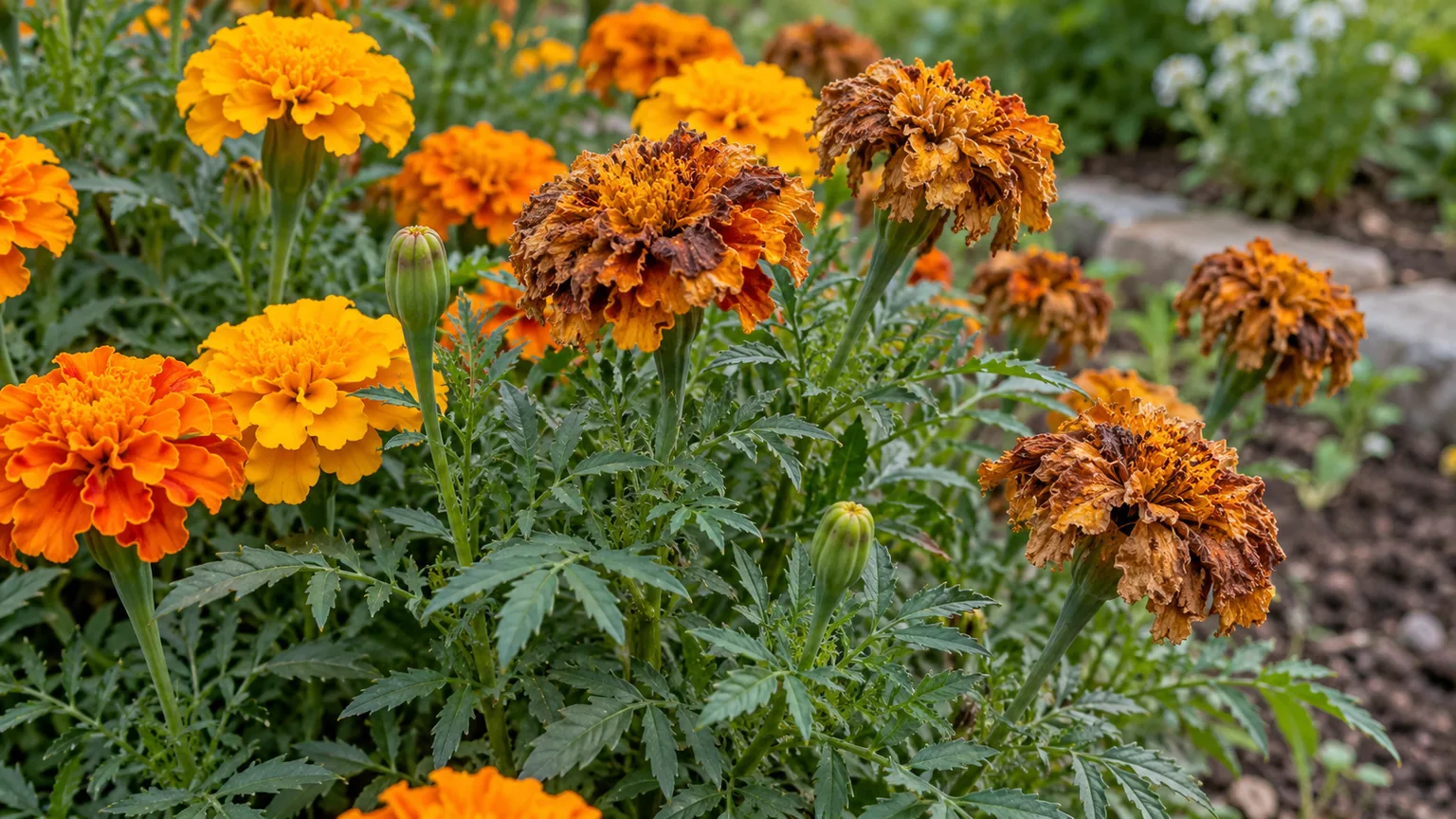
Flowers Turning Brown on Marigold: Causes, Checks & Fixes
This guide covers flowers turning brown on Marigold. See also the general Flowers Turning Brown guide, watering, and light pages for this plant.
Flowers Turning Brown on Marigold: Causes, Checks & Fixes
Quick answer
Brown flowers on marigold mean open blooms discoloring before their normal fade window closes — edges crisping, centers collapsing, or whole heads going mushy while new buds may still look fine. On Tagetes erecta (African marigold) and Tagetes patula (French marigold), three patterns explain nearly every case:
| Pattern | What you see | Petal feel | First action |
|---|---|---|---|
| Spent-bloom browning | Even browning from outer petals; bloom fully opened days ago | Dry, papery, crisp | Deadhead to next leaf pair |
| Botrytis flower blight | Brown patches spreading fast; inner petals first; possible grey fuzz | Wet, mushy, slimy when humid | Strip infected heads; dry the canopy |
| Heat or drought scorch | Crisp brown edges after hot afternoons; heads droop then dry | Dry and brittle with wilted leaves | Deep base watering; deadhead ruined heads |
First step: feel one brown head before you spray, feed, or shear the plant. Dry and papery on a firm stem means routine deadheading. Wet and mushy with grey fuzz after rain or evening overhead watering means botrytis, not aging. Crisp brown edges with afternoon wilt and dry soil mean heat and drought scorch.
For how browning differs from general bloom failure across houseplants, see our flowers turning brown guide. On marigold, the pattern usually shows up as spent African doubles rotting in humid weather or French singles crisping on dry railings — not a whole-plant collapse.
What browning looks like on marigold
Browning diagnosis on marigold is about where the brown starts, how fast it spreads, and what the stem does underneath.
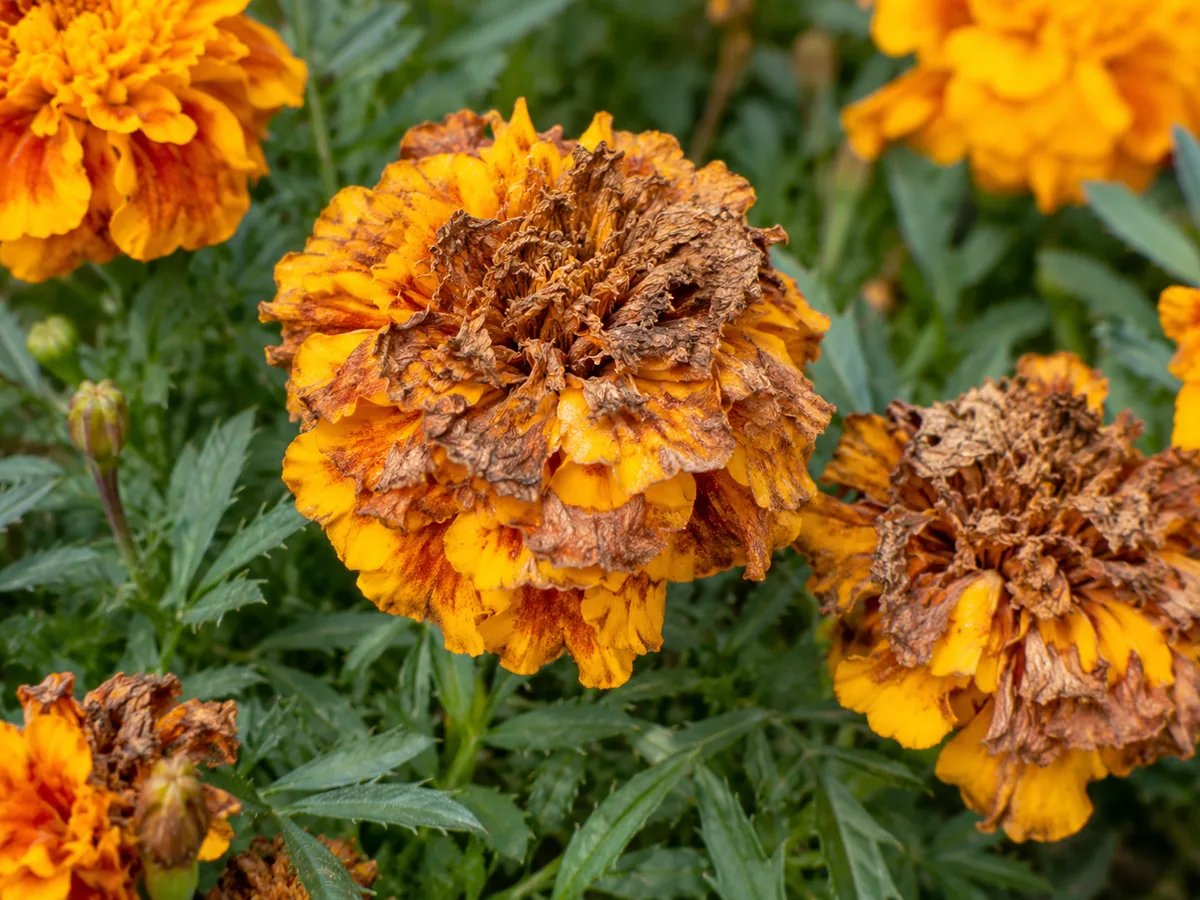
Brown marigold petals in close-up — compare dry papery aging against wet mushy blight on the same plant.
Spent-bloom browning (most common):
- Browning starts on the outer petals and moves inward over several days
- Petals feel dry, thin, and papery; edges curl as color dulls to rust-brown
- A seed pod swells at the flower base if deadheading was skipped
- Stems stay firm and leaves stay turgid through afternoon sun
- Lowest open heads brown first while new buds swell above them
Botrytis flower blight browning:
- Flower parts brown and die, and grey masses of spores form on the infected tissue when wet
- Brown water-soaked patches start on inner petals, wounds, or fading tissue — browning on inner petals first points to botrytis rather than normal aging
- Petals feel wet and mushy, not crisp, and may carry visible grey fuzz on humid mornings
- Often follows rain, evening overhead watering, or crowded humid porch corners
- Large double African heads trap moisture and go first; neighbors brown within days in still air
Heat and drought scorch browning:
- Petal margins crisp to tan-brown after hot dry afternoons, sometimes within a day
- Heads droop on limp stalks before they dry; leaves wilt at midday and recover overnight
- Pot feels light and the top 3 cm of soil is bone dry
- Common on west-facing railing pots and shallow containers in peak summer
- High summer temperatures can temporarily check growth and bloom even on sun-loving marigolds
Lookalikes to rule out:
- Thrips or mite rasping — silvery speckling plus deformed buds rather than uniform browning; shake a bloom over white paper to check for tiny moving insects, and cross-check thrips response on marigold patterns before treating for disease
- Whole-plant wilt — when every leaf collapses with the flowers, the driver is roots or water, so work through wilting on marigold instead of deadheading alone
- Faded but not brown — evenly pale washed-out petals without brown tissue belong on faded flowers on marigold rather than this browning page
Why marigold flowers brown
Marigolds are heat-loving annuals bred for continuous bloom in full sun with well-drained soil. Each open bloom has a finite display life, and the plant constantly cycles from flower to seed to rebloom. Browning is what that cycle looks like when aging, moisture, or heat intervene.
Spent blooms left on the plant. An open bloom that is not deadheaded diverts energy into seed and its petals brown and dry. Promptly deadheading spent flowers keeps display beds reblooming instead of seeding. Removing spent blooms helps the plant produce more flowers rather than seed, and this is the single biggest lever on healthy container marigolds.
Botrytis cinerea on dying petal tissue. Botrytis colonizes fading petals first and then bridges into healthy tissue under humid conditions. Their blooms tend to rot easily in humid conditions, which is why spent heads left through a rainy spell turn from papery brown to mushy brown almost overnight. French marigolds are more tolerant of rainy conditions than African doubles, but no type is immune when petals stay wet through warm humid nights.
African doubles vs French singles. African marigolds produce large double flowers that hold color longer before seed set, yet those dense pompon heads hold rainwater and stay wet long after a storm. French marigolds produce smaller blooms that shed water faster and rebloom steadily, so browning on French types more often traces to missed watering or heat scorch than to trapped-petal rot. Signet types drop spent flowers quickly and rarely sit brown on the plant.
Drought and heat on open blooms. Open flowers transpire hard on hot afternoons. When container mix dries through the top 3 cm, heads droop and petal margins crisp even though marigolds tolerate drought better than chronic sogginess. Boom-bust watering — soaked one day, dust-dry the next — browns successive flushes all summer on sunny balconies.
How to confirm the cause
Work in this order; the answer usually appears before any spray bottle comes out:
- Petal texture test — Pinch one brown head. Dry and papery means spent bloom or scorch. Wet, brown, and slimy — especially with grey fuzz in humidity — means botrytis.
- Browning origin — Outer-petal-first browning matches aging; inner-petal-first browning points toward blight. Note it before you remove the head.
- Stem and leaf turgor — Firm stems with turgid leaves support spent-bloom or early petal blight. Limp stems with midday wilt point to drought or root stress; detour to overwatering on marigold if soil is soggy, or underwatering on marigold if it is dust-dry.
- Soil check at 3 cm — Press soil beside the stem. Bone dry with wilt confirms scorch. Constantly wet and heavy with a limp plant suggests root-zone trouble rather than flower disease.
- Weather and watering log — Evening overhead watering, recent rain, and humid porch nights cluster with botrytis; missed watering days during heat cluster with scorch. Avoid overhead irrigation is the extension baseline for marigold flower disease.
- Pest shake test — Hold white paper under a damaged bloom and tap it. Tiny dark slivers that move indicate thrips; fine webbing with stippled leaves indicates mites. No movement and no webbing keeps botrytis or aging as the working diagnosis.
If petals are dry-papery, stems are firm, and soil moisture is reasonable, spent-bloom browning is the working diagnosis — deadhead before anything else.
First fix for marigold
Feel one brown head, classify it, then deadhead the spent ones — or water deeply for scorch, or strip and dry for blight.
Spent-bloom path: Pinch or cut each brown head down to the next healthy leaf pair, removing the seed pod base. That one maintenance pass on a turgid plant is the correct first response — no spray, no feed. Full pinch-point detail lives in the marigold pruning guide.
Scorch path: When the top 3 cm is dry and heads crisp with afternoon wilt, soak at soil level until water runs from container drainage or penetrates beds deeply. Water at the base, never over the blooms, then deadhead only the heads that will not rehydrate. Follow the marigold watering rhythm so the next flush does not crisp the same way.
Blight path: Strip every mushy or fuzzy head plus nearby spent blooms immediately, improve airflow around the pot, and switch to morning base watering only. Remove rotting flowers and keep the soil surface clean to limit spore spread. Do not compost infected heads in humid climates, and do not reach for fungicide first on home containers — removal plus dry petals resolves most porch outbreaks.
Do not stack deadheading, deep watering changes, and sprays on the same day. One classified fix first, then read the plant for three to five days.
Step-by-step recovery
Branch by what you confirmed:
If spent-bloom browning:
- Deadhead every brown head including the seed pod base — scissors for heavy African doubles, fingers for small French blooms.
- Protect swelling buds just below spent heads; do not cut into green bud tissue.
- Repeat every two to three days through peak season.
- Judge recovery on fresh full-color buds within one to two weeks in warm sun.
If heat or drought scorch:
- Stabilize moisture with the top-3-cm test per the marigold watering guide.
- Deadhead crisped heads that will not recover; leave partially green heads that may still open cleanly.
- Give containers one to three days of light afternoon shade only above 38°C — not permanent shade, which costs future buds per the marigold light guide.
- Expect new buds within one to two weeks once moisture stays even.
If botrytis blight:
- Remove all mushy, fuzzy, or brown-water-soaked flowers and fallen petals from soil and foliage.
- Thin slightly or re-space crowded pots so air moves between heads on humid porches.
- Water at the base in the morning only; keep petals dry through the evening.
- Watch pedicels and stems for a week — if browning climbs into stems, escalate aggressively and review blight on marigold and root rot on marigold before replanting the same container.
Recovery timeline
| Browning type | First improvement sign | Full display recovery |
|---|---|---|
| Spent blooms | New bud swell 3–7 days after deadheading | Fresh blooms in 1–2 weeks in warm sun |
| Heat scorch | Morning turgor returns after deep watering | New blooms in 1–2 weeks once moisture is even |
| Botrytis blight | No new fuzzy growth after stripping and dry culture | Clean buds after 1–2 weeks of dry flower surfaces |
Brown petals never re-color. Recovery always means new flowers, not revived ones.
What not to do
- Do not leave brown seed heads on display plantings if continuous color is the goal — the plant slows new buds.
- Do not overhead water in humid evenings; wet petals overnight invite botrytis on spent and open blooms alike.
- Do not mistake wet mushy blight for dry aging — fuzzy heads need stripping and dry culture, not a light deadhead.
- Do not fertilize browning flowers as a first fix — excess nitrogen pushes leaves over blooms on stressed plants.
- Do not let blight-infected heads sit on the plant or in the compost in humid weather.
How to prevent it next time
- Deadhead on rhythm every two to three days in peak summer — deadheading helps marigolds stay clean in humid weather when rotting heads would otherwise invite disease.
- Water at the base when the top 3 cm dries; morning irrigation keeps petals dry through humid nights.
- Grow in full sun with airflow between pots (Missouri Botanical Garden culture), especially for heavy African doubles.
- Match type to site — French marigolds tolerate moist soils better than tall African types, which need staking, deadheading, and shelter from beating rain.
- Clean after rain — strip spent heads promptly so one wet bloom does not seed the next outbreak.
Marigold care cross-check
Browning is usually flower maintenance plus weather, not a dying plant — unless blight or root stress underlies it. Baseline care that keeps blooms orange: full sun, even moisture via the top-3-cm test, and regular deadheading. Review the marigold overview for cultivar choice and the marigold soil guide if pots stay wet long after watering.
Related marigold guides:
- Marigold overview
- Marigold pruning and deadheading
- Marigold watering
- Blight on marigold
- Wilting on marigold
- Root rot on marigold
- Yellow leaves on marigold
- Faded flowers on marigold
When to worry
Routine dry brown spent heads on firm stems are low urgency. Escalate when:
- Grey mold climbs into stems — pedicels brown, soften, and collapse despite dry culture
- Scorch repeats daily on the same container through midsummer — pot size or watering rhythm needs fixing, not more deadheading alone
- All open heads turn mushy after one rain on a humid porch — strip affected blooms and improve airflow before it reaches main stems
- Flowers brown while the whole plant wilts in wet soil — investigate roots via wilting and root rot rather than deadheading alone
Late-season annuals with no recovery window before frost are often better replaced with a fresh transplant than nursed on a blight-weakened stock plant.
When to use this page vs other Marigold guides
- Marigold watering guide — Use for routine moisture checks before assuming browning is the main issue.
- Marigold problems hub — Browse all common issues on this species when browning overlaps leaf or stem symptoms.