Marigold Seeds Not Germinating? Causes and Fixes That Work
Quick answer
Marigold seeds usually sprout in 3 to 4 days at 20 to 25C, so bare mix after 10 days means something in the seedbed is wrong. The most common causes are cool soil, sowing too deep, old saved seed, or mix that dried out or stayed soggy. First step: re-sow fresh seed barely covered in evenly moist mix held near 21 to 24C, then watch for hooks within a week.
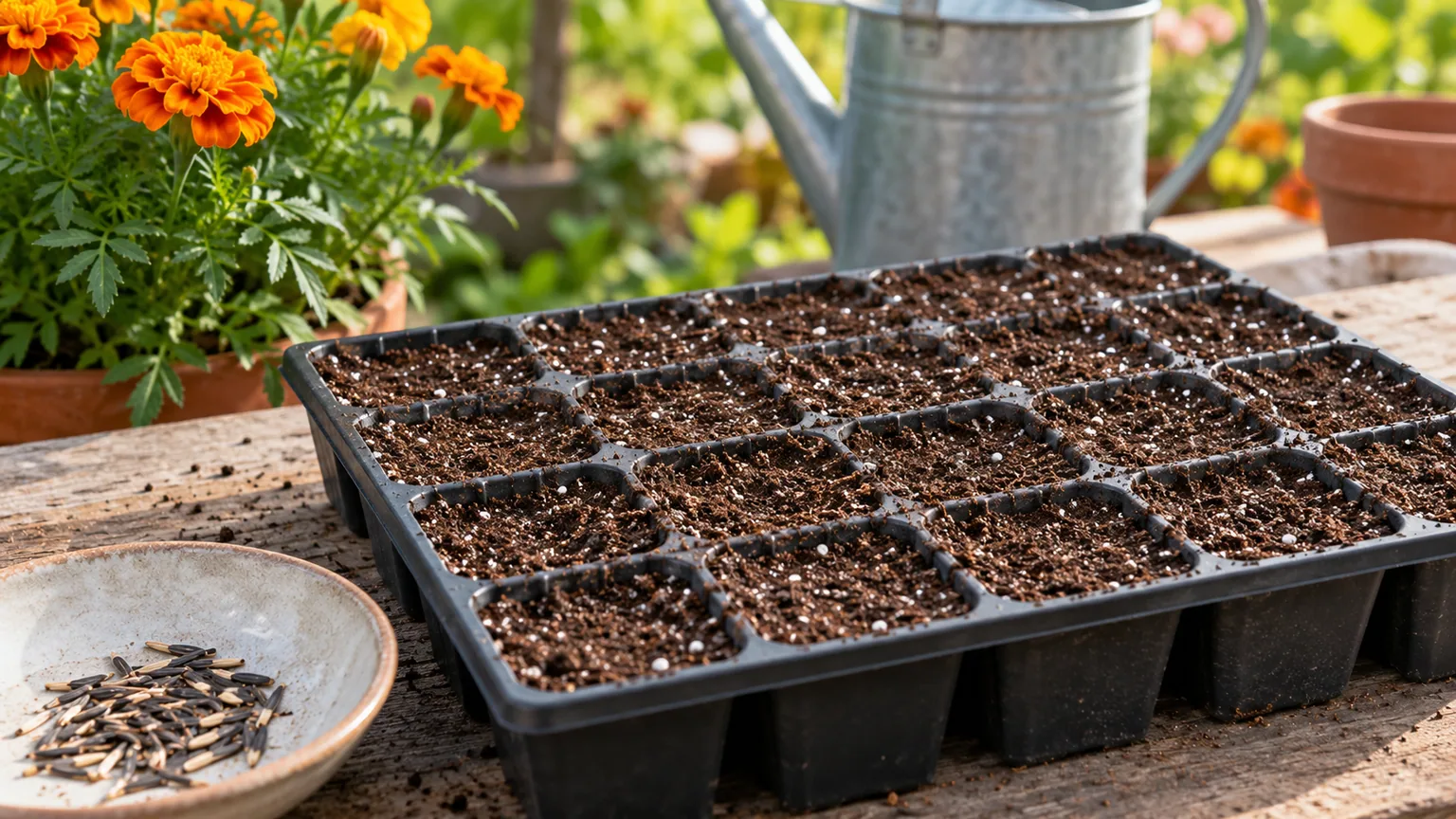
Seeds Not Germinating on Marigold: Causes, Checks and Fixes
This guide covers seeds not germinating on Marigold. See also the general Seeds Not Germinating guide, watering, and light pages for this plant.
Seeds Not Germinating on Marigold: Causes, Checks and Fixes
Quick answer
Marigold seeds usually sprout in 3 to 4 days in a warm spot, so a tray that is still bare after 10 days is telling you the seedbed failed, not that marigolds are slow. Tagetes seed germinates in the dark at 20 to 25C, which means covering the seed and holding steady warmth matters far more than giving it light. The usual culprits are cool mix, seed buried too deep, saved seed that has lost vigor, or mix that swung between dry and soggy.
First, re-sow fresh seed no deeper than one-eighth inch in damp soilless mix, cover the tray, and hold it near 21 to 24C. Check daily, and expect green hooks within a week. For the general mechanics of failed germination that apply to every species, see our seeds-not-germinating guide. Everything below is about what makes Tagetes different.
What ungerminated marigold seed looks like
A healthy marigold sowing shows fat green-white hooks pushing through the surface 3 to 4 days after sowing, often still wearing the striped seed coat like a helmet. When germination fails, you see the opposite: flat, unchanged mix with no cracks, no hooks, and no seed coats on the surface. Dig up one or two seeds with a toothpick. A viable seed still waiting looks plump and firm; a failed one is soft, dark, hollow, or missing entirely, having rotted into the mix.
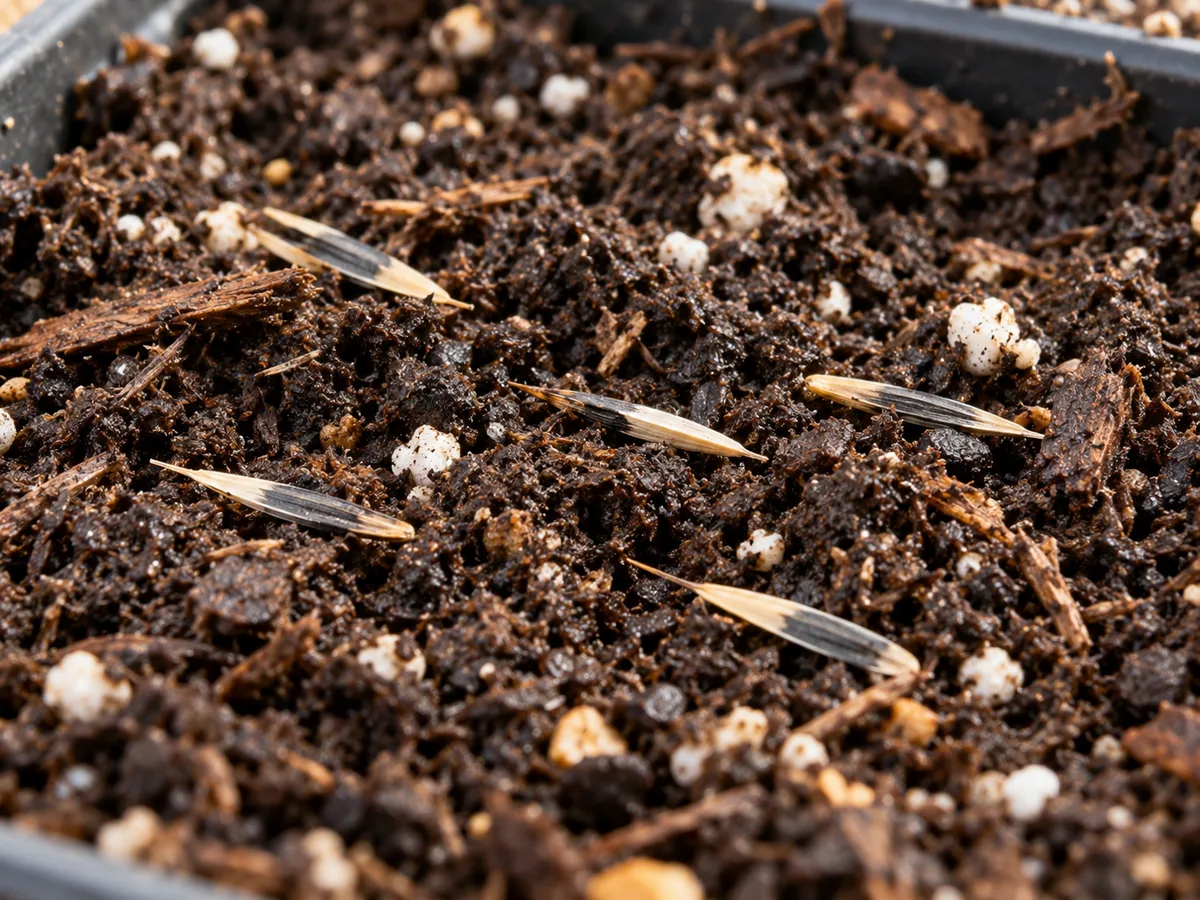
Close-up of a marigold seedbed: firm striped seeds sitting on damp mix with no sprout hooks. Soft, dark, or hollow seeds have rotted and will not recover.
Smell the tray before you decide anything. Sour or musty mix points to the rot pathway described in our marigold damping-off guide, while odorless mix with firm intact seeds points to temperature, depth, or seed-age problems instead. White fuzzy threads on the surface are mold feeding on dead seed and wet mix, covered in the mold-on-soil guide, and they confirm the tray stayed too wet rather than too dry.
Why marigold seeds fail: Tagetes-specific causes
Marigolds are famously easy from seed, which is exactly why failures confuse people. Each cause below is tied to how Tagetes actually germinates.
Sown too deep or left uncovered in light
Tagetes is a dark germinator, so seed sitting naked on bright mix under grow lights is working against its biology. At the same time, the long striped marigold seed carries limited energy reserves, so burying it deeper than one-eighth inch exhausts the shoot before it reaches the surface. The correct band is narrow: barely covered with a thin layer of vermiculite or fine mix, then kept covered with plastic wrap until sprouts show. Seed scattered on top and seed drilled half an inch down fail for opposite reasons, and both look identical from above: nothing.
Mix too cool for the Tagetes window
Marigold germination peaks between 20 and 25C, ordinary warm-room temperature. A tray on a cool windowsill in February or in an air-conditioned room near 15 to 17C can sit unchanged for two weeks, with the seed alive but stalled. This is the most common failure for gardeners who sow marigolds at the right season on paper but place the tray in the coldest spot in the house. Warmth from below or the top of a refrigerator closes the gap; a heat mat without a thermostat can overshoot it, since germination collapses near 35C.
Old or home-saved seed with dead vigor
Marigold packets stay reliable for roughly two to three years in cool, dry storage, then viability falls off a cliff. Home-saved seed from dried flower heads, a classic marigold habit since seed is the best propagation method, fails more often because the heads were picked before fully dry, stored damp, or crossed with a neighbor’s variety. If last year’s packet sprouted in 4 days and this year’s identical sowing shows nothing, seed age is the prime suspect, not your technique. Seed that was stored in a warm kitchen or a humid shed is guilty until proven innocent.
Mix that dried out, then drowned
Tagetes seed needs constant light moisture: damp like a wrung sponge from sowing until the hooks show. A tray that dried to pale, shrunken mix for even one afternoon can kill seeds mid-germination, and re-wetting does not revive them. The opposite error is just as lethal. Heavy garden soil or reused potting mix that stays soggy suffocates the seed, and soil-borne fungi rot seeds before they emerge. Marigolds demand the well-draining mix described in the soil guide even at seed stage; dense, compacted mix is covered in the wrong-soil-mix guide.
How to confirm the cause
Work through these checks in order on the failed tray before sowing again. Each one rules out a cause.
- Check the calendar. Count days since sowing. Under 7 days in a cool room is patience, not failure, since cooler spots add extra days. Over 10 to 14 days with no hooks is a failed sowing.
- Check mix temperature. Push a kitchen thermometer half an inch into the mix at seed level. Readings near 21 to 24C clear temperature; readings under 18C convict the cold spot.
- Excavate three seeds. Firm, plump, striped seeds mean the seedbed is at fault. Soft, brown, or hollow seeds mean rot or dead seed.
- Check depth. Brush the surface. Seeds visible on top were sown uncovered; seeds buried deeper than 3 mm were sown too deep.
- Run a paper-towel test. Fold ten seeds from the same packet into damp paper towel, seal in a bag, and hold at room warmth. Sprouts in 4 to 7 days clear the seed and convict your tray; nothing in 7 days convicts the packet.
- Smell and squeeze the mix. Sour odor plus mix that drips when squeezed means waterlogging and the damping-off pathway. Pale, dusty mix that will not rewet evenly means it dried out mid-germination.
The first fix to try
Re-sow a fresh test row in the same tray rather than nursing the failed one. Fill a corner with damp soilless mix, sow fresh seed barely covered, cover with plastic, and hold it near 21 to 24C. If hooks appear within a week while the old section stays bare, you have confirmed the diagnosis and already produced replacement seedlings in a single move. Only escalate to new mix, new seed, or a new location based on what the test row tells you.
Re-sowing marigolds the Tagetes way
Start with a tray or small pots of damp soilless mix, not garden soil. Sprinkle seed over the surface, cover with a thin layer of vermiculite, and cover the container with plastic wrap to hold humidity. Place it in a warm spot such as the top of a refrigerator, since the seed needs no light until it sprouts. Check daily and remove the cover the day hooks appear.
Once seedlings are up, move the tray immediately into bright light with at least five hours of strong light daily, and switch to watering from below so the surface stays aerated. Thin to one seedling per cell so neighbors do not compete and trap humidity. When seedlings carry two sets of true leaves, pot them up individually and grow them on indoors until frost risk passes. Indoor-started marigolds should begin life 6 to 8 weeks before the last frost date, which also sets your re-sow deadline: if frost is closer than six weeks out, sow directly outdoors instead.
Recovery timeline
There is no recovery for seeds that rotted; the timeline below is for the re-sowing.
- Days 1 to 4: Fresh seed at 21 to 24C shows hooks. Nothing by day 5 in warmth means recheck depth and seed age.
- Days 5 to 10: Cotyledons open and first true leaves form under strong light. Stretching here means light is too weak; see the leggy-seedlings guide.
- Weeks 2 to 3: Two sets of true leaves; transplant to individual pots.
- Weeks 6 to 8 from seed: Stocky transplants ready for the garden, matching the fast Tagetes rhythm of flowers within weeks of planting out.
If the second sowing with fresh seed, shallow cover, and steady warmth also fails, suspect contaminated or reused mix and start over with fresh sterile soilless mix rather than a third attempt in the same tray.
Lookalike problems on marigold seedlings
| What you see | Likely issue | Where to go |
|---|---|---|
| Hooks emerge then pinch and topple at the soil line | Damping-off after germination | Marigold damping-off |
| Pale, stretched stems leaning toward the window | Too little light after sprouting | Marigold leggy seedlings |
| White or green crust on the mix surface | Algae or mold from chronic wetness | Marigold mold on soil |
| Seedlings stall with purple tinge and no new leaves | Cold plus phosphorus lockout, not germination failure | Marigold slow growth |
| Nothing at all, firm seeds, cool mix | Stalled germination, usually temperature | This page: warm the seedbed and re-sow |
Mistakes to avoid
Do not keep watering a bare tray for three weeks hoping for a miracle; seeds that sat wet that long have rotted, and the tray is now incubating fungi. Do not fertilize the seed tray to force sprouting; nutrients cannot wake dead seed and salts can inhibit the living. Do not sow the entire backup packet into the same suspect mix; test one row first so a second failure costs little. Do not move an unsprouted tray into harsh direct sun under plastic, which cooks the seed past 35C. And do not overhead-water with a hard stream, which buries some seeds and exposes others in the same tray.
Marigold care cross-check
Seed failures often preview bed problems. Trays that stayed soggy usually sit in rooms with weak airflow, the same conditions behind adult marigold watering problems. Reused garden soil in trays imports both weed seed and the fungi behind root rot on marigold. If your seedlings sprout but immediately stretch, the household light that felt bright to you is dim to Tagetes; compare with the light requirements. Fix the environment once and both the sowing and the transplant benefit.
How to prevent it next time
Buy fresh packet seed each year or two, and store leftovers sealed with silica in a cool cupboard, not the kitchen. Sow Tagetes erecta at the season that matches your climate: September to October for winter bloom in North India, February for the summer crop, or 6 to 8 weeks before last frost elsewhere. Use fresh soilless mix every sowing season, cover seed shallowly since it is a dark germinator, and hold steady warmth with a thermostat mat if the room runs cool. Label every tray with variety and date so a failure teaches you which packet died. For the full seasonal calendar these steps fit into, see the marigold overview and the problems hub for every issue in one place.
When to use this page vs other marigold guides
Use this page when seeds never sprout. If hooks appeared and then collapsed, the diagnosis moves to damping-off. If sprouts are tall, pale, and floppy, move to leggy seedlings or leggy growth for older plants. If established plants stall after transplant, slow growth and not enough light pick up where this page ends.
Related marigold guides
- Marigold overview: seasonal sowing calendar and placement for the whole plant.
- Marigold problems hub: every diagnosed issue when germination failure is one symptom among several.
- Damping-off on marigold: when seeds or seedlings rot at the soil line instead of simply never sprouting.
- Leggy seedlings on marigold: when sprouts appear but stretch weak and pale.
- Mold on soil on marigold: when the tray surface crusts white or green from chronic wetness.
- Wrong soil mix on marigold: when dense or reused mix suffocates seeds before they emerge.
Related tool
Use the Plant Problem Diagnosis Tool to narrow causes for seeds not germinating on this plant before changing multiple variables at once.