Leggy Marigold Seedlings: What to Check First
Quick answer
First move the marigold seed tray under a brighter, close overhead grow light and keep the light on a consistent day-night schedule. Long, firm stems that lean toward the window usually point to low light; a stem pinched at the soil line suggests damping-off instead. Treat the old stretch as a record of past conditions and judge recovery by compact new growth.
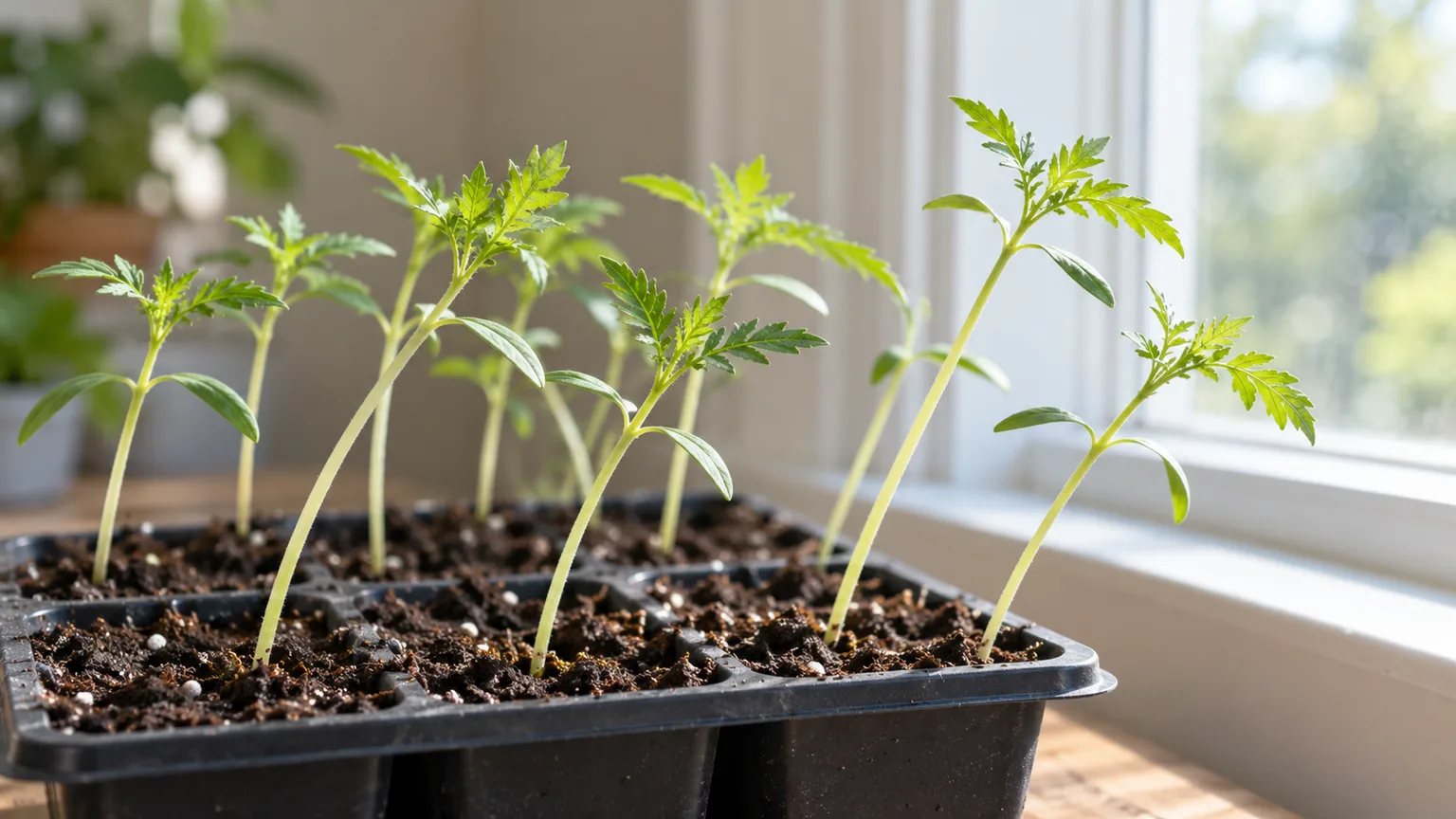
Leggy Seedlings on Marigold: Causes, Checks & Fixes
This guide covers leggy seedlings on Marigold. See also the general Leggy Seedlings guide, watering, and light pages for this plant.
Leggy Seedlings on Marigold: Causes, Checks & Fixes
Quick answer
First move the seed tray under a brighter overhead light, close enough to illuminate the marigold seedlings evenly without heating them. Low light after emergence is the most common reason seedlings stretch; the University of Minnesota Extension’s seedling guide describes leggy seedlings as weak-stemmed plants reaching toward light. Do not try to fix the problem with extra water or fertilizer. A firm but elongated seedling may continue growing; treat the visible stretch as a record of its earlier conditions and look for compact new growth.
This page is for young marigolds in seed trays or small pots. For the broad symptom pattern, see the leggy seedlings guide; for the plant’s growing conditions, start with the Marigold care guide.
What leggy seedlings look like on Marigold
Look for a firm, thin stem with long gaps between the young leaves and a clear lean toward a window or lamp. Small or uneven early leaves alone do not prove legginess; the useful clue is stretched stem growth across the tray.
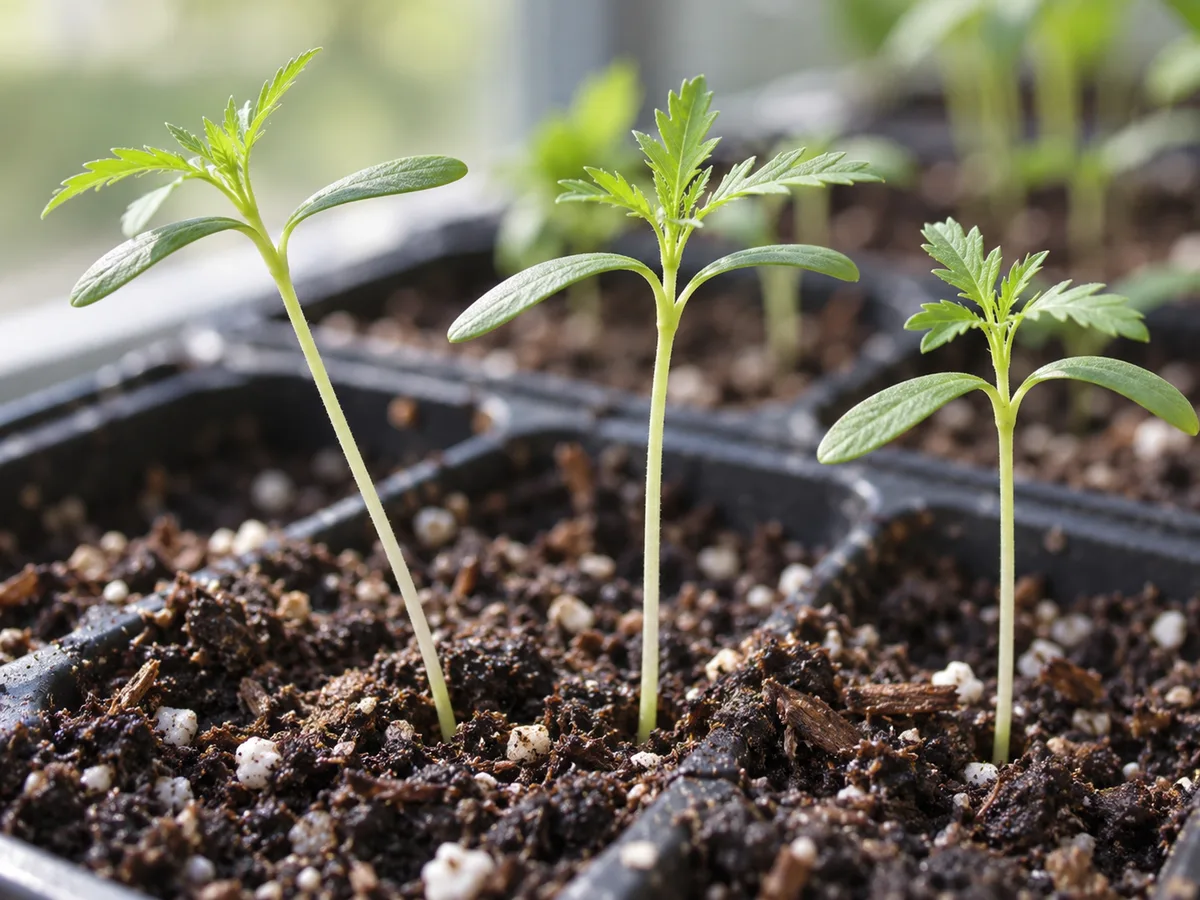
Long, firm stems leaning toward a light source fit legginess; a pinched or darkened stem at the mix line points to a different problem.
Compare seedlings across the same tray. If the ones farthest from the window or near the edge of a weak lamp are longest, light distribution is likely the main issue. If all cells are stretched, the fixture may be too dim or too far away, or the tray may have stayed warm and covered after the seeds emerged.
Why Marigold seedlings stretch indoors
African marigold’s full-sun destination starts with seedling light
Marigolds are warm-season annuals that are often started indoors before it is safe to plant outside. A bright-looking room can still provide too little light at seedling height, especially when a tray sits several feet from a window or gets light from one side only. African marigolds (Tagetes erecta) grow best in full sun outdoors, and shaded plants can become leggy; that outdoor preference makes a dim window an unreliable substitute for strong, even light indoors. See the Marigold light guide if an established plant also stretches after planting out. (The Spruce’s African marigold guide)
A warm Marigold germination setup can keep stretching stems
Warmth helps marigold seeds germinate, but continuing to run a heat mat after seedlings have emerged can encourage fast, soft growth when light is inadequate. A crowded tray creates another problem: leaves shade neighboring sprouts and make it harder for each seedling to receive light evenly. Use the mat only as needed for germination, then thin crowded cells so one strong seedling has room; Harvest to Table’s seedling guidance also identifies excess warmth and crowding as contributors to stretched growth.
Keep the mix lightly moist rather than saturated, but do not mistake wet soil for the cause of every long stem. Persistent wetness is more concerning when seedlings are collapsing or the stem base is changing; in that situation, use the checks below and the Marigold damping-off guide.
The first fix for Marigold seedlings
Move the tray under a brighter overhead grow light now. If a light is already in use, lower or strengthen it so the whole tray receives even light; follow the fixture’s instructions for a safe distance because LED output and heat vary. A common seed-starting schedule is 14–16 hours of light followed by a dark period, and the lamp should rise as the marigolds grow; Harvest to Table gives this range as a practical starting point.
Make that light correction before changing watering, feeding, or pot size. If only one side of the tray is stretching, rotate the tray after improving the overhead light. If multiple seedlings share a cell, snip the weaker extras at the mix line rather than pulling them and disturbing the roots of the seedling you are keeping.
Is it legginess or another Marigold seedling problem?
| What you see | More likely explanation | What to do |
|---|---|---|
| Long, firm stems; seedlings lean toward a window or lamp | Low or one-sided light | Improve overhead light and judge the next leaves. |
| Stem is pinched, dark, or soft right at the mix line; seedling suddenly topples | Damping-off, not ordinary legginess | Remove that seedling and keep the tray from staying wet and stagnant. The UMN Extension damping-off guide covers prevention; affected seedlings rarely recover. |
| Leaves wilt while the mix is dry and the stem is not pinched | The small root ball may be drying too quickly | Water the mix evenly, drain the tray, and check it again rather than keeping it continuously soggy. |
| Stems are sturdy but the young plants are packed tightly together | Crowding | Thin to one seedling per cell or pot. |
The distinction matters because brighter light can stop new stretching, but it will not reverse a fungal collapse at the soil line. If the stem is firm and the growing tip is intact, correct the light first. If the base is constricted and the seedling has fallen, remove it and check nearby cells for the same symptom; UMN Extension notes that damping-off commonly collapses seedlings at the stem base.
Help stretched Marigold seedlings recover
Keep the improved light in place and give the tray enough room for the new growth to receive it. Water when the surface of the seed mix begins to dry, then let excess drain away; tiny seedlings use less water than mature marigolds, and staying saturated raises the risk of damping-off. Avoid feeding just to make thin stems thicker: more nitrogen cannot replace light and may push soft growth.
Acclimate Marigold seedlings before their full-sun transplant
When a marigold is ready to move outside, harden it off gradually so its leaves adjust to outdoor sun, wind, and temperature. Do not take an indoor seedling straight from a dim room and leave it in full afternoon sun. Gardening Know How’s seedling guide recommends gradual hardening before planting outdoors. At transplant, support a top-heavy stem if needed and keep the root ball intact; removing extra seedlings or handling the stem roughly can damage a small plant.
What recovery looks like
The old stretch records the seedling’s earlier conditions, so look for new leaves that emerge closer together and a stem that holds its tip upright under the corrected light. If the light is adequate but growth stalls altogether, compare the Marigold slow-growth guide before changing several growing conditions at once.
A marigold with a broken stem, a dead growing tip, or a soft base may not be worth nursing. Start a replacement seedling if there is still time in your local growing season. If the seedling is otherwise firm, it can still be planted after gradual hardening, though the finished plant may need support if it remains top-heavy.
Keep an African marigold’s adult height separate from legginess
African marigold (Tagetes erecta) can grow tall and become top-heavy under large flower heads. That adult habit is different from a seedling stretching toward weak light: correct the light first, then stake a tall plant later only if its mature stems need support. (The Spruce on tall African marigolds)
Prevent leggy seedlings in the next Marigold batch
Set up the light before sowing so newly emerged marigolds do not sit in a warm, dark germination area. Remove any humidity cover once the seedlings are up, keep one seedling per cell, and move lights as the canopy rises. These steps reduce shading and keep the stems from stretching while the plants are still small.
Marigolds need full sun after hardening, but outdoor sun is not a safe instant rescue for tender indoor leaves. Increase outdoor exposure gradually, then plant after frost danger has passed for your area. (The Spruce’s marigold planting guidance) If the problem is a mature marigold stretching in a shaded garden rather than a seedling in a tray, use the Marigold leggy-growth guide or the not-enough-light guide. For seedlings whose stems are weak without long gaps between leaves, compare the thin-stems guide; for a collapsed base, use the damping-off guide.
Related Marigold guides
- Marigold light care helps when a mature plant stretches or produces fewer flowers in a shaded spot.
- Marigold watering care is useful if a seedling wilts in dry mix rather than growing long and leaning.
- The Marigold problems hub routes to other plant-specific symptoms, including seedling collapse and weak stems.
Related tool
Use the Plant Problem Diagnosis Tool to compare legginess with another seedling symptom before changing several conditions at once.