Mosaic Virus on Marigold: Symptoms & Diagnosis
Quick answer
Treat mosaic-like Marigold leaves as a possible virus, not a confirmed diagnosis. First isolate the plant from nearby flowers and ask a plant diagnostic clinic to identify a sample before treatment or removal.
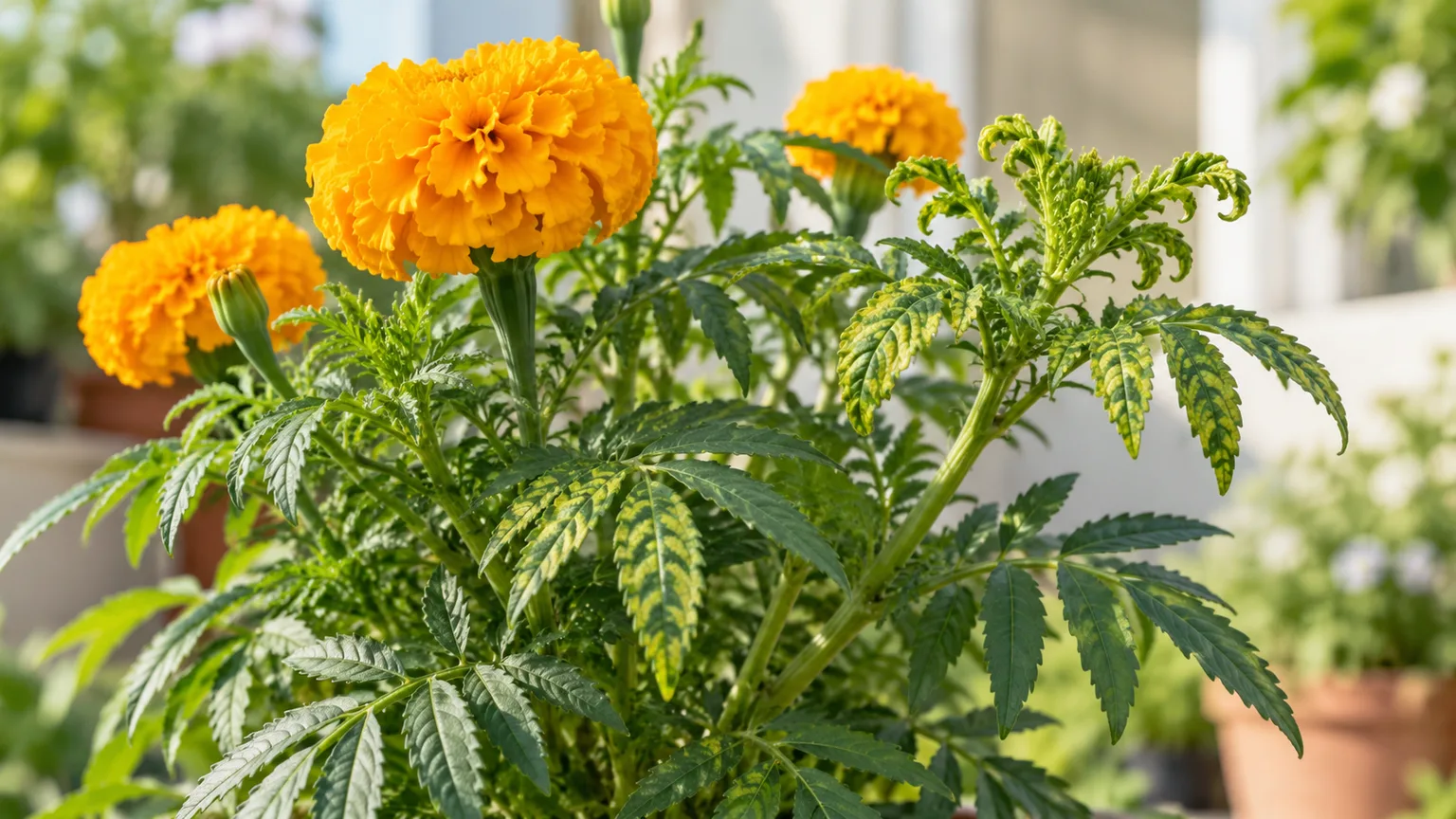
Mosaic Virus on Marigold: Symptoms, Diagnosis & What to Do
This guide covers mosaic virus on Marigold. See also the general Mosaic Virus guide, watering, and light pages for this plant.
Mosaic Virus on Marigold: Symptoms, Diagnosis & What to Do
Quick answer
On African marigold (Tagetes erecta), uneven light and dark green patches, crinkling, curled leaflets, or green blisters can raise suspicion of a virus. They cannot confirm one: a study of symptomatic marigolds found several viruses together, and its authors cautioned that the relationship between each virus and each symptom needed further study. First isolate the plant from nearby flowers and get a diagnosis before treating or removing it.
What mosaic virus looks like on African marigold
Look for irregular green-on-green patterning that repeats across several leaflets, especially alongside crinkling or distorted new growth. A 2021 study of symptomatic Tagetes erecta reported mosaic, crinkle, leaf curl, and necrosis in plants with a mixed viral infection; it did not establish that each virus caused each symptom. A later marigold-specific study reported mosaic, mottling, and green blisters in plants infected with Marigold mosaic virus (MMV).
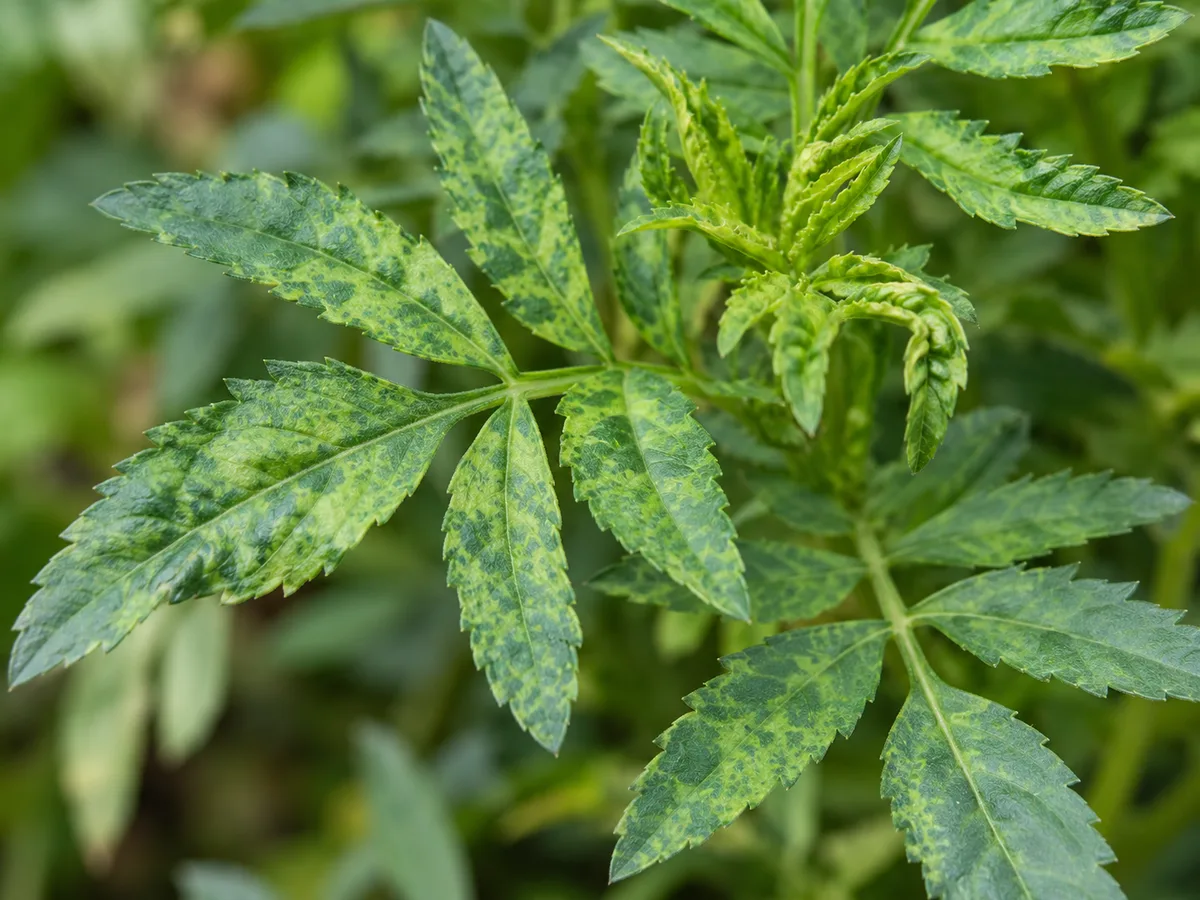
These marigold-like leaflets show a mosaic pattern and mild distortion; appearance alone cannot identify a virus.
Read mottling across Marigold’s divided leaves
Marigold leaves are made up of multiple narrow leaflets along a central stem. Compare several leaves from the same shoot and the newest shoot tip, rather than judging a single pale leaflet. Repeated irregular mottling paired with crinkling or distortion is more concerning than one isolated mark, but it still needs a lab check.
What can look like mosaic on a Marigold
Virus-like color changes are not unique to viruses. Heat, insect feeding, herbicide exposure, and mineral imbalance can also produce leaf symptoms, as Penn State Extension explains. Even tomato mosaic can resemble other plant damage, as noted in a tomato mosaic guide; treat that as a reason to confirm the cause, not as evidence that tomato mosaic infects your marigold. A University of Minnesota Extension diagnostic guide says a lab test is needed to identify the virus behind similar signs on geraniums.
The pattern may help you choose what to inspect next, not what to spray:
| What you see | Check next |
|---|---|
| Irregular mottling repeated across new leaves, with crinkling or curl | Keep the plant isolated and request a virus diagnosis. |
| Mostly even yellowing or pale color, without a repeating green pattern | Compare the yellow-leaves guide or pale-leaves guide and review recent care changes. |
| Wilting that tracks a dry or persistently wet root zone | Use the water-stress guide and check soil moisture before changing care. |
| Fine stippling, webbing, or visible mites under leaves | Follow the spider-mites guide; mite damage is a separate problem and a mite spray will not cure a virus. |
| Sudden wilt or collapse without a repeated mottled pattern | Check the bacterial-wilt guide and seek a diagnosis before removing nearby plants. |
If you also see aphids or thrips, note them for the diagnostic clinic. Some plant viruses are insect-transmitted, while others spread through infected plant material or sap on tools; the route depends on the virus, so an insect’s presence or absence does not confirm MMV ([transmission routes vary by virus](https://blog-fruit-vegetable-ipm.extension.umn.edu/2020/09/what-to-do-if-you-suspect-virus-in-your.html?utm_source=leafypixels.com&utm_medium=plants&utm_content=plant-long-form)).First fix: isolate the Marigold
Move a potted plant away from other flowers now. For a marigold growing in a bed, mark it, avoid brushing neighboring plants while you inspect it, and work on it after healthy plants. This separation is a precaution while the cause is uncertain; Penn State Extension recommends setting symptomatic plants aside for diagnosis.
Do not prune the patterned leaves or take cuttings yet; avoid unnecessary handling until you have a diagnosis. If you must touch the plant to collect a sample, follow the clinic’s collection instructions and clean your hands and tools afterward. University of Minnesota Extension educators recommend cleaning tools and hands after suspected infection.
How to confirm the cause
Take clear photos of several affected leaves, the shoot tips, and the whole plant. Record whether symptoms are spreading to new leaves, whether the plant is stunted, and whether you see aphids, thrips, webbing, or other insects. A photo is useful context, but a lab test is the reliable way to identify which virus is present; the viruses reported from symptomatic marigolds occurred in a mixed infection.
Contact a university or county plant diagnostic clinic before sending tissue. Ask what sample to collect, how to package it, and whether they test for MMV or other marigold viruses. Do not assume a general home test or a leaf pattern can tell you which pathogen is involved.
For the broad symptom pattern and other common lookalikes, see the mosaic-virus overview. This Marigold guide narrows the decision to Tagetes erecta and the limits of the available virus evidence for that plant.
When to remove an infected Marigold
Most virus-infected herbaceous ornamentals cannot be cured. UC Integrated Pest Management recommends removing infected plants when they are confirmed; viruses can also persist in a plant for its lifetime. Its guidance on virus management in ornamentals is general, so use a local diagnostic clinic’s advice if your marigold is valuable or the result is uncertain.
If MMV or another virus is confirmed and the mottling affects several shoots, growth is stunted, or the plant sits among susceptible flowers, remove the whole marigold rather than stripping a few leaves and keeping it beside healthy plants. Bag the plant before carrying it through the collection and dispose of it according to local plant-waste guidance. Do not compost it at home unless your local plant-health service says that is appropriate.
Use Marigold’s annual flowering season to weigh salvage
African marigold (Tagetes erecta) is an annual herbaceous plant, so an infected plant has a limited season to recover its appearance. If infection is confirmed and the pattern is spreading, replacing that plant is usually more practical than trying to preserve it for propagation. If the diagnosis is still pending and symptoms are mild, keep it separated rather than removing it based on a single leaf.
Recovery: judge Marigold by clean new growth
Isolation cannot repair leaflets that are already mottled or curled. If a test does not confirm a virus and later leaves are normal, reconsider the care or pest lookalikes in the table; if a virus is confirmed, normal-looking growth does not prove the infection is gone. The goal is to prevent spread and make an informed keep-or-remove decision, not to wait for marked leaves to turn green again.
Avoid fertilizer, fungicide, neem, or insecticide as a supposed cure. Penn State Extension states that no chemical cures a virus-infected plant. Insect control may be relevant only if a vector is identified and present; it will not reverse infection in a marigold that already has a virus.
Prevent another Marigold virus problem
Start with healthy nursery stock or seed, inspect new plants before grouping them with other flowers, and do not take cuttings from a plant with unexplained mosaic symptoms. Clean tools and hands after handling suspect plants. Because different viruses can have different hosts and vectors, ask the diagnostic clinic what to monitor locally instead of treating every marigold as an aphid problem.
Restart the next Marigold sowing from clean material
If a confirmed infection forces you to remove this season’s plant, start the next marigold crop with healthy seed or nursery stock rather than cuttings from the suspect plant. Virus transmission varies by pathogen, and some viruses can travel in vegetative material; the clinic can advise whether seed is an appropriate restart route for the virus it identified.
Use the Marigold watering guide, light guide, and soil guide to check whether a care change better explains symptoms. These checks help rule out stress; they do not cure a confirmed virus.
Related tool
Use the Plant Problem Diagnosis Tool to organize the symptoms and care changes you will share with a diagnostic clinic.
Related Marigold guides
- The Marigold overview covers the plant’s normal care and seasonal growth.
- The Marigold problems hub helps route symptoms that do not show a repeating mosaic pattern.
- Use the care guides above when watering, light, or soil conditions changed before the leaf symptoms appeared; use the sibling problem pages in the comparison table when one of those specific patterns fits better.