Pale Leaves on Marigold: Causes, Checks & Fixes
Quick answer
Pale leaves on African marigold are a symptom, not proof of a nutrient deficiency. First, hold fertilizer while you compare affected leaf ages, check the soil and inspect leaf undersides; then correct the one cause the pattern supports.
Pale Leaves on Marigold: Causes, Checks & Fixes
This guide covers pale leaves on Marigold. See also the general Pale Leaves guide, watering, and light pages for this plant.
Pale Leaves on Marigold: Causes, Checks & Fixes
Quick answer
Pale leaves on Marigold are a symptom, not a diagnosis of “needs fertilizer”: chlorosis can have biotic and abiotic causes. This guide is for African marigold (Tagetes erecta); if your plant may be calendula, first check the Marigold overview so you are using the right growing advice. Compare several leaves and note whether pallor starts on older leaves, new growth, or the whole canopy. For general leaf-color mechanics, see the pale leaves symptom guide; on Marigold, sun exposure, a wet root zone, and leaf-feeding pests are the practical first checks.
First action: hold fertilizer while you identify the pattern. Then check light, soil moisture and drainage, and the leaf undersides; change only the factor that fits what you find. The Marigold problems hub can route you to the more specific guide if the symptom turns out to be yellow leaves, root trouble, or a pest.
What pale leaves look like on African marigold
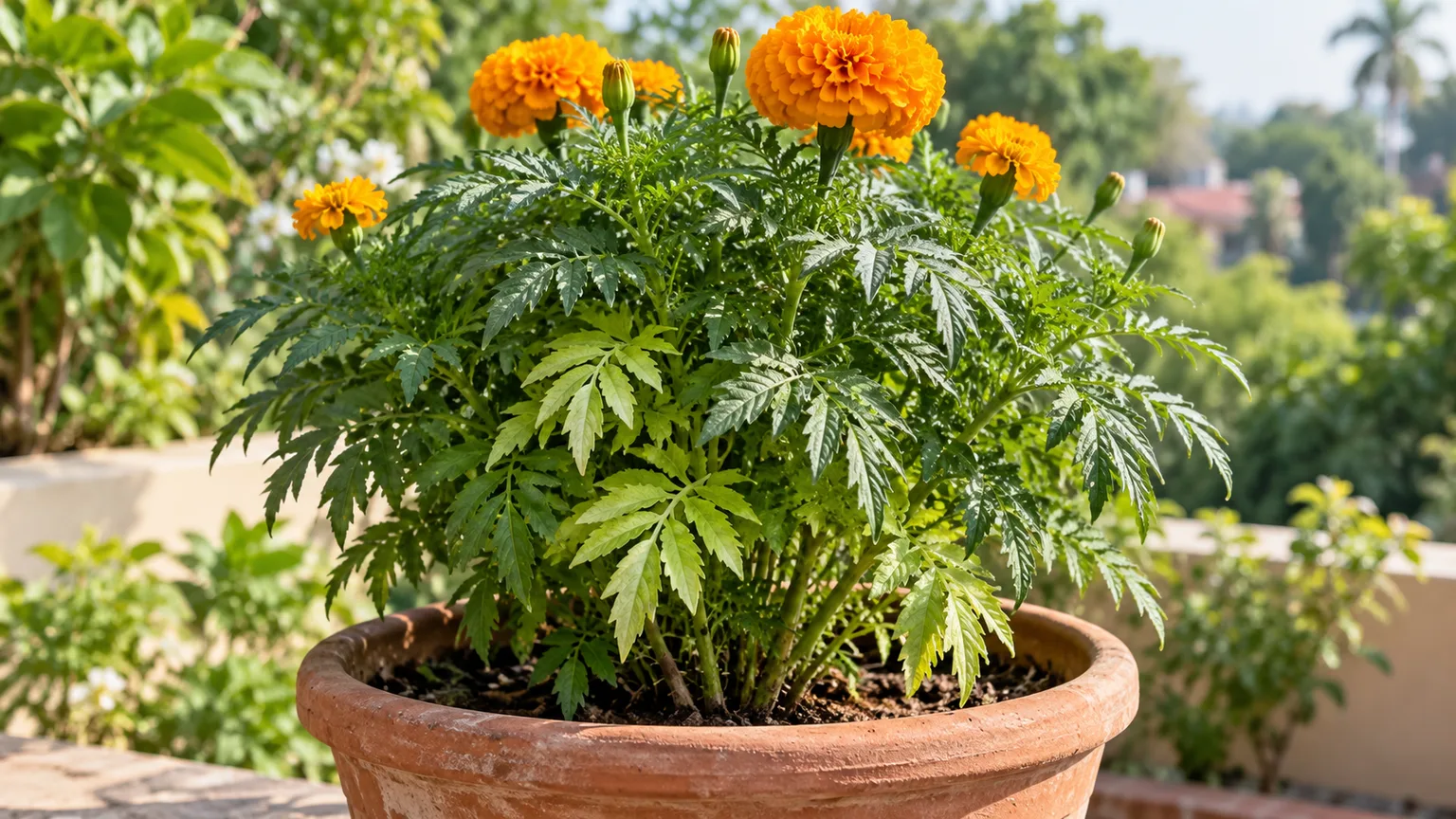
African marigold’s leaves are pinnate—many narrow leaflets arranged along a central stem—and normally read as green rather than silver or variegated. A pale-leaf problem looks like a broad loss of green across multiple leaflets or leaves, not a few dry spots. Singapore’s NParks describes Tagetes erecta foliage as dark green and pinnate, which gives you a useful baseline for comparison.
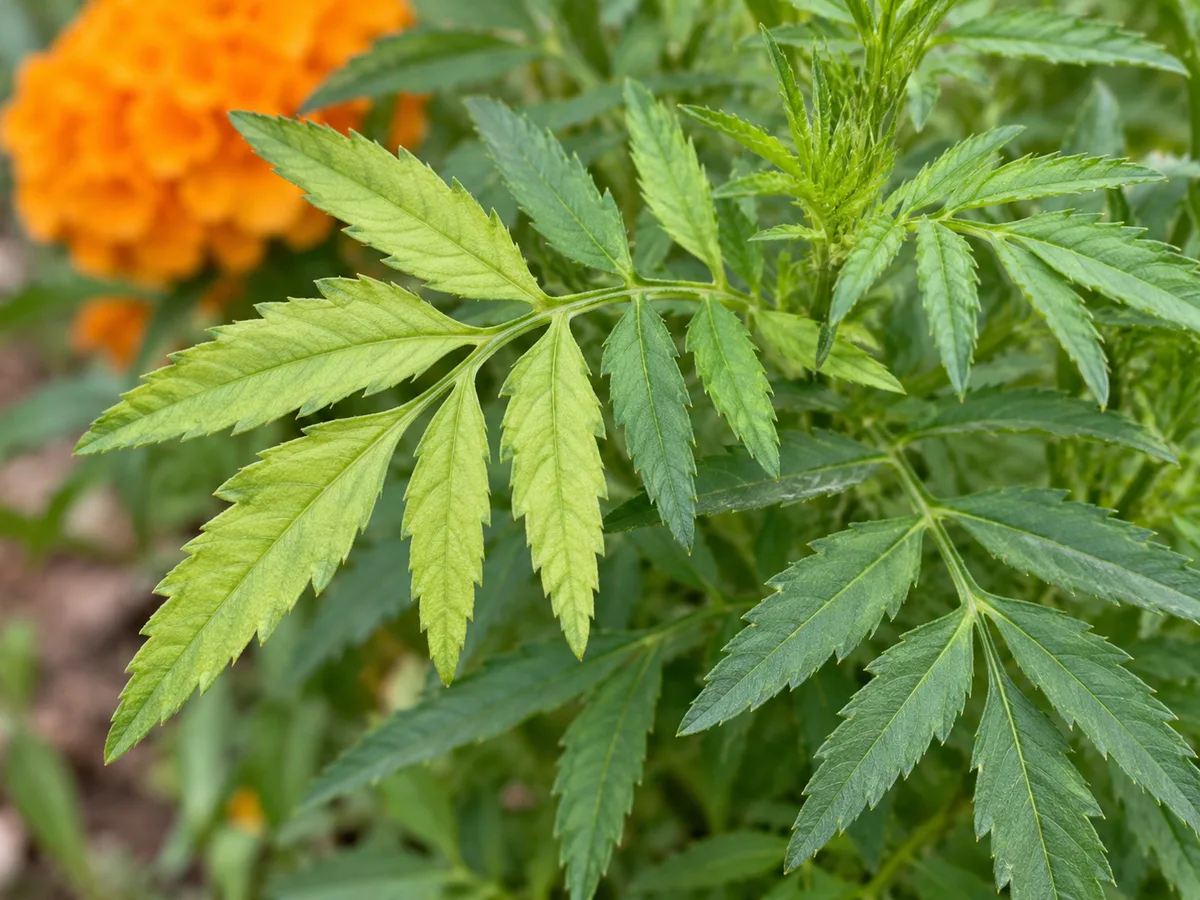
Compare the pale leaflets with the plant’s newer, greener growth before choosing a treatment.
Look across the whole plant before removing anything. A single older leaflet fading while the top remains compact and green is less concerning than several leaves paling together or new growth changing; Wisconsin Extension distinguishes isolated aging leaves from widespread yellowing that reaches newer growth (old leaves and new growth). If the leaf surface has fine pale pinpricks, bronzing, or webbing, treat that as a pest clue rather than uniform nutrient pallor; the symptom pattern matters more than the word “pale.”
Why a full-sun marigold can lose color
African marigold is a sun-loving flowering annual. NC State Extension says it does well in full sun and well-drained soil and prefers the soil evenly moist; those conditions are a better starting point than an indoor houseplant schedule. If a pot has been moved into shade or sits behind a railing, the plant may stretch toward light and produce a thinner, less vigorous canopy. Move it toward stronger light gradually if it has been shaded, especially in hot weather, and use the Marigold light guide to assess the actual sun window.
Pale leaves alone do not prove that light is the cause. If the marigold already gets a bright outdoor position, check whether its mix remains wet well after watering. The Spruce’s African-marigold guide warns that overwatering poorly drained soil risks root rot and that heavy feeding favors foliage over flowers (root rot and lush foliage). When the mix stays wet, check roots before deciding the plant needs fertilizer.
Follow the divided leaves before feeding
Marigold’s narrow leaflets make it easier to see whether the color change is even or speckled. Uniform fading across several leaflets points you back to light, roots, or nutrition; tiny pale dots, bronzed patches, or fine webbing on the undersides are more consistent with spider-mite feeding. UC IPM reports that mite damage often starts as light stippling and can progress to bronzing, yellowing, and leaf drop; check the undersides with a magnifier before you spray. If you find mites, follow the plant-specific Marigold spider mites guide; do not treat pale leaves as a pest problem without finding the pest or its feeding signs.
Check the leaves’ age as well. Pallor confined to a few older lower leaves, with fresh growth and flowers holding steady, is different from new leaves emerging pale or an entire canopy fading. Because African marigold is an annual plant, a plant near the end of its growing season may be declining naturally; a weak, pale new flush during active growth deserves a closer look at light, moisture, pests, and the root zone.
Check the root zone in a marigold pot or bed
Press the mix about 2–3 inches below the surface rather than watering by day count. If it is still damp and the pot feels heavy, wait before watering again and make sure excess water can escape. Epic Gardening recommends letting the upper 2–3 inches of soil dry before watering marigolds; the same check is more useful than a calendar when pot size, sun, and weather change. See the Marigold watering guide for container and bed checks, and the Marigold soil guide if the mix stays wet or compacted.
If pallor follows a watering and the base is soft, or the soil smells sour and stays wet, inspect the roots rather than adding feed. Waterlogged soil can damage roots and lead to yellowing, so this pattern deserves a root check before fertilizer (waterlogged soil and roots). Healthy roots should not be mushy or sloughing; if you confirm rot, use the Marigold root-rot guide for the more urgent recovery steps. If the soil is draining and roots are firm, avoid unpotting a flowering annual just to investigate one pale leaf.
Separate pale leaves from Marigold lookalikes
| What you see | What to check next |
|---|---|
| Pale foliage plus stretched shoots and fewer flowers in a shaded spot | Light may be the main mismatch; compare with the not-enough-light guide. |
| Lower leaves fading while the mix stays wet and heavy | Check drainage and root firmness; use the yellow-leaves guide if the pattern is mainly lower-leaf yellowing, or root rot if roots are soft. |
| Fine pale stippling, bronzing, or webbing under leaflets | Inspect for spider mites and use the Marigold spider mites guide if you confirm them. |
| New growth is pale and growth is weak despite good light and a draining root zone | Do not guess a nutrient from color alone; compare with nitrogen deficiency or magnesium deficiency and consider a soil test before feeding. |
NC State Extension lists leaf spot, botrytis, and root rots among possible African-marigold problems, so distinct spots, spreading lesions, or stem-base collapse deserve a disease or root diagnosis rather than a nutrient treatment. If no row fits and the plant is changing quickly, the Plant Problem Diagnosis Tool can help narrow the next check.
Recover the marigold one change at a time
After matching the pattern, make one correction and watch the next flush:
- For shade: increase sun exposure gradually, aiming for the plant’s normal bright growing position. Do not move a shaded pot abruptly into intense midday sun during a heat wave.
- For wet mix: let the upper layer dry before watering again, empty trapped water, and correct blocked drainage. Repot only if the mix has failed or roots are already rotting.
- For confirmed mites: isolate the plant and inspect nearby foliage. Use a labeled treatment only after confirming the pest, and follow UC IPM’s treatment precautions, including its advice to avoid spraying plants that are water-stressed or in very hot conditions.
- For suspected nutrient shortage: confirm that light and roots are sound first. African marigolds do not need heavy feeding, and excess fertilizer will not correct a weak root system or low light; see the Marigold fertilizer guide before changing the feeding routine.
Do not combine repotting, heavy pruning, and fertilizer in one rescue attempt. If a leaf is mostly yellow, it may stay discolored after the cause is fixed; remove it only when it is mostly dead or in the way of inspection. Keep the remaining canopy so the plant can continue supporting flowers and new growth.
Recovery timeline for an annual marigold
Judge the response by new growth rather than expecting old leaflets to regain deep green. After a light or watering correction, look for the next leaves to emerge greener and for the pale area to stop spreading. If active mites were present, improvement also means new stippling stops after the population is controlled.
Marigold is grown as an annual, so late-season decline may not reverse even when care is correct. If most foliage is fading, stems are collapsing, or flowering has finished with no healthy new growth, the plant may be at the end of its normal cycle; further fertilizer or repotting is unlikely to restore the season’s canopy.
Prevent pale growth next season
Plant African marigold where it receives substantial direct sun, in a pot or bed that drains freely. Water when the root-zone check says the mix is drying, not because several days have passed; a cool or cloudy spell slows dry-down. Avoid rich, frequent feeding unless the plant’s growth and soil test support it, since more nitrogen can produce abundant foliage without better flowers.
During active growth, turn the pot or inspect both sides of the bushy canopy so a shaded section or early pest signs do not go unnoticed. Keep the leaf surface visible and dry between inspections, and compare fresh growth with the darker established leaves rather than waiting for the whole plant to fade.
Related Marigold guides
- Use the Marigold light guide when the plant is shaded, stretched, or flowering poorly.
- Use the Marigold watering guide when soil stays wet or dries too quickly between checks.
- Use the Marigold soil guide when drainage or compaction is the problem.
- Use nitrogen deficiency or magnesium deficiency only when growth and leaf pattern support a nutrient diagnosis.
- Use the Marigold problems hub to compare other symptoms on this plant.