Nutrient Lockout on Marigold: Check pH, Salts & Roots
Quick answer
Pale growth or poor flowering on a marigold can suggest a nutrient problem, but it cannot confirm nutrient lockout. First test the root-zone soil pH; then check feeding history, drainage, and roots before adding fertilizer or a pH amendment.
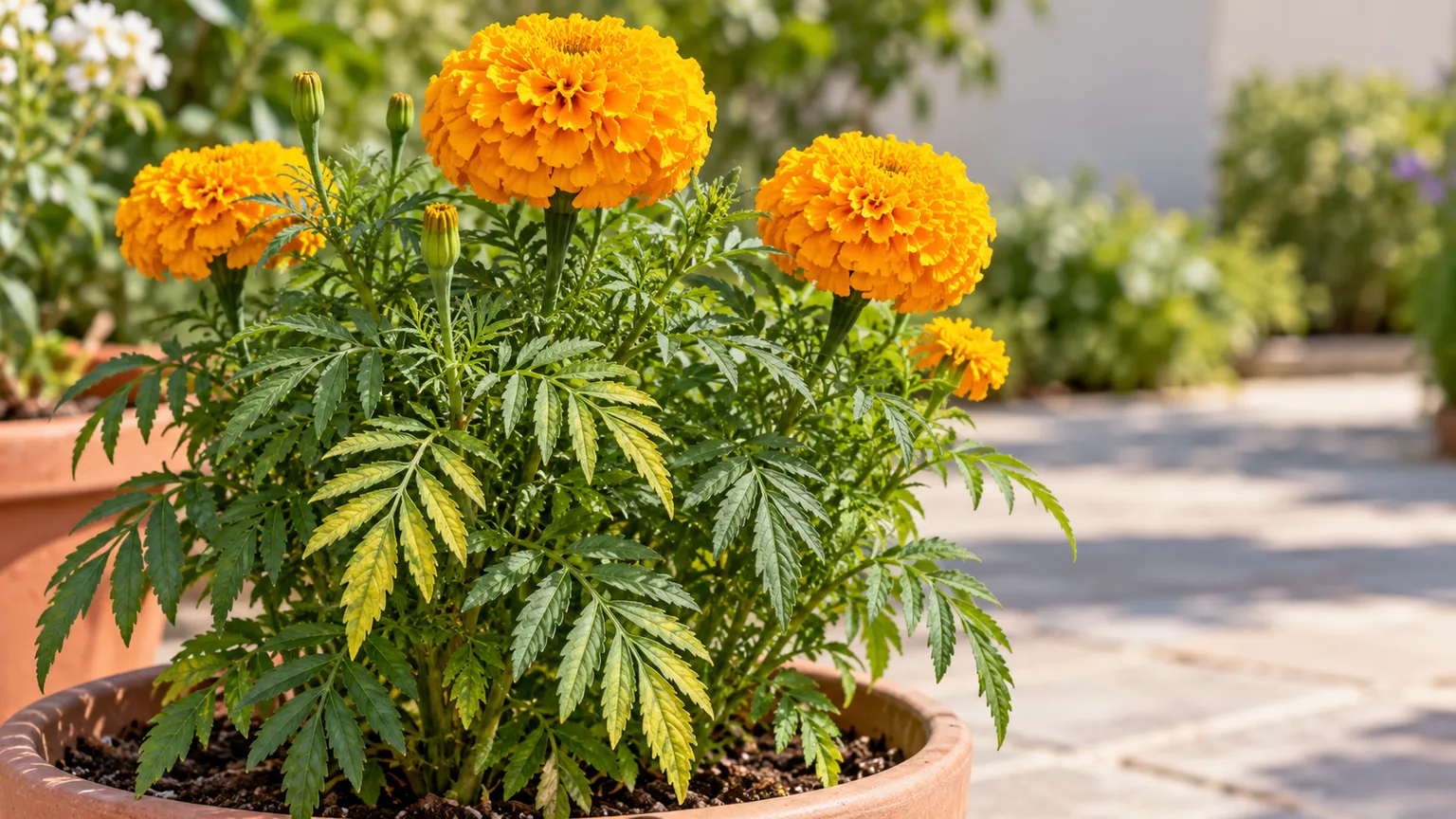
Nutrient Lockout on Marigold: Causes, Checks & Fixes
This guide covers nutrient lockout on Marigold. See also the general Nutrient Lockout guide, watering, and light pages for this plant.
Nutrient Lockout on Marigold: Causes, Checks & Fixes
Quick answer
Nutrient lockout is a working diagnosis: nutrients may be present in the mix but unavailable to the roots, or damaged roots may not be taking them up. pH, salt buildup, and root damage can all interfere with uptake, so appearance alone cannot confirm the cause (PlantSolve’s overview). For general background, see the nutrient lockout guide; this page focuses on how to check it on a marigold.
First, test a sample of the marigold’s root-zone soil for pH before adding fertilizer or a pH amendment. If the pH is near the plant’s target, check the fertilizer history, salt deposits, moisture, and roots instead of feeding by appearance.
What nutrient lockout looks like on marigold
Look for a plant-wide change rather than diagnosing one old leaf: new leaves may emerge pale, growth can slow, and flower buds may be fewer or smaller. Those are signs of stress, not a unique lockout pattern. A nutrient-deprivation experiment on T. erecta shows why foliage color is a weak diagnosis: plants lacking nitrogen, magnesium, iron, or molybdenum all developed yellow leaves. Plants without phosphorus or potassium were shorter than the complete-feed control; calcium-deficient plants had shorter roots, while boron-deficient plants developed brittle stems and curled, thickened, wrinkled leaves. Most deficiency treatments also reduced total leaf area and flower fresh weight. Because elements were omitted one at a time in a controlled hydroponic setup, these patterns are comparison clues, not a key for diagnosing a mixed soil or potting-mix problem (Acta Horticulturae study).
When you inspect the marigold, note whether discoloration affects older or newer leaves, one side or the whole plant, and whether it comes with tip scorch, brittle growth, fewer buds, or a change in root condition. Take a whole-plant photo and a close shot before making a correction, then compare the same area after a few weeks. The record will not identify the missing nutrient by itself; it helps you see whether the symptom is spreading into new growth or stabilizing after one change.
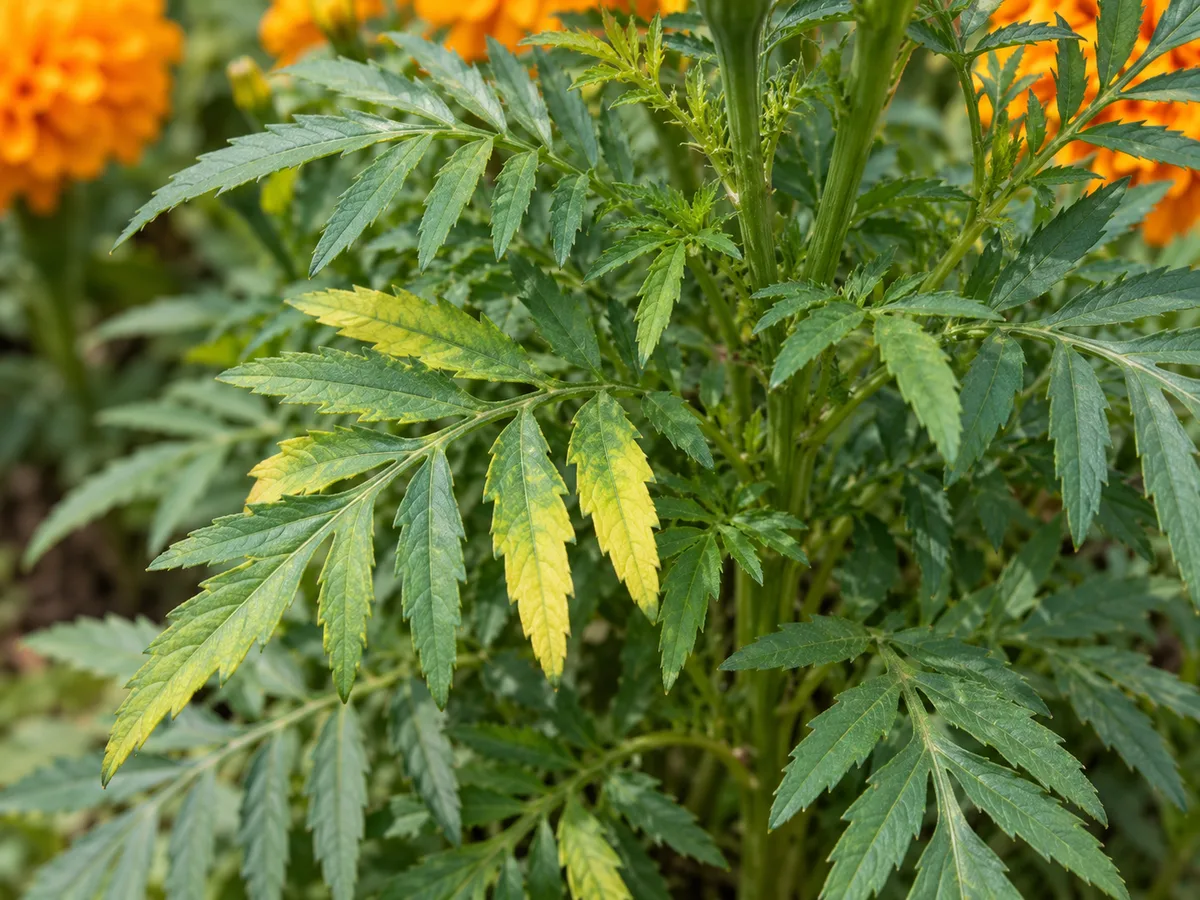
Pale or uneven foliage is a clue, not confirmation; test the growing medium before treating it as a nutrient shortage.
Why marigold’s flowering habit can mislead
Marigolds can keep their foliage green while flowering poorly for reasons that have nothing to do with locked nutrients. The Spruce describes African marigold as a one-season annual that needs full sun and does well in modestly fertile soil. It notes that very rich soil can push leafy growth at the expense of flowers, and that a marigold in reasonably good soil may need little or no fertilizer; when feeding is useful, it recommends a relatively low-nitrogen product at the label rate (The Spruce). A plant with lush leaves and few buds needs a light and fertility review, not an automatic dose of bloom fertilizer. That distinction matters: poor flowering can result from a mismatch between light, soil richness, and the plant’s seasonal stage even when nutrient uptake is working normally.
Marigolds are seasonal annuals, so a decline late in their growing season can also be ordinary aging. Compare the timing with the plant’s recent growth and flowering rather than treating every fading lower leaf as a chemistry failure. The Marigold overview gives the baseline for this plant’s season and placement.
Check the pH range for Tagetes erecta
LeafyPixels’ marigold record uses a pH range of 5.8–7.0, while Gardener’s Path gives 6.5–7.0 for African marigold in average, moderately fertile soil (Gardener’s Path). Treat the overlapping slightly acidic-to-neutral band as working guidance, not a diagnosis from one borderline reading. A strong shift outside it can change nutrient availability, so the Marigold soil guide is useful when you need to compare a test with this plant’s usual mix.
Test soil before changing pH. Gardening Know How advises starting with a soil sample and lab test, and explains that pH affects the nutrients plants can take up. For an in-ground bed, make the sample representative: collect small subsamples from several places in the same area and prepare the composite as the local lab directs. One handful beside one stem may not describe the whole bed. If a single marigold differs from its neighbors, ask whether the affected and healthy areas should be tested separately rather than mixed together. For a container, sample the root-zone mix using the kit’s instructions; do not treat an irrigation-water reading as interchangeable with the growing medium’s pH. The cited guidance also notes that changing soil pH is a slow process, so follow the lab’s rate and timing instead of adding more amendment after every watering (soil testing and pH guidance). Do not add lime, sulfur, or an acidifier just because a leaf is yellow.
Read the fertilizer history against marigold’s needs
Ask what went into the pot or bed over the last several weeks: fertilizer type, dilution, frequency, and whether the plant was fed while growth was slow. Include slow-release granules already mixed into potting soil as well as liquid feeds; otherwise it is easy to add a second program without realizing the first is still present. A white crust on the mix or pot rim is worth noting, but it does not confirm nutrient lockout. Record it alongside the feed dates, leaf-tip condition, and water source, then use a test or lab interpretation if the decision to flush or amend is not clear.
One controlled study of T. erecta examined plants grown in deliberately salt-stressed soil at 150 mM, a research treatment rather than a household threshold (PubMed study). The experiment confirms that salinity has been studied in this species, but its treatment does not provide a home-pot diagnosis or a flushing dose. Do not copy a laboratory concentration or amendment treatment into a garden container.
Compare the affected marigold with another plant growing in the same bed or container mix. If several plants changed at once, note shared irrigation, fertilizer, and soil amendments; if one plant alone is declining, inspect its localized root zone and drainage. This comparison does not diagnose the cause, but it helps you decide whether to test a shared bed or the individual container. If the plant was recently overfed or the mix is crusted, compare the symptoms with fertilizer burn and salt build-up before adding nutrients. The Marigold fertilizer guide covers restrained feeding for its flowering cycle.
Check roots and drainage before correcting nutrients
In a pot, feel the mix below the surface and lift the container to judge whether it stays heavy long after watering. African marigolds prefer well-drained soil, and cool, damp conditions can encourage root rot (The Spruce’s growing guide). A sour smell, persistent saturation, or a dense mix is a reason to inspect roots before adding fertilizer; pale leaves alone cannot tell whether uptake is impaired. If the root ball is visible without forcing the pot, feel whether the roots are firm or soft and look for decay. Soft roots or a mix that stays saturated means feeding should wait until root conditions are corrected. The Marigold watering guide explains how quickly this plant’s mix should dry between waterings.
Marigolds also need a bright growing position to flower well. If foliage is otherwise green but stems stretch and buds remain scarce, compare the site with the Marigold light guide before blaming nutrient uptake.
Choose the first correction for this marigold
Keep the response conditional so one change reveals whether the diagnosis was right:
- If the pH is clearly outside the target, follow the lab’s amendment rate for that soil. In a container, replacing a small amount of failing mix with fresh, moderately fertile, well-drained medium may be safer than trying to chemically steer the whole pot.
- If pH is reasonable but fertilizer salts are likely, stop feeding for now. Flush a container once with plain water only if it drains freely; do not flush a bed or a saturated pot. If drainage is poor or the mix is compacted, correct that first.
- If a soil test identifies a nutrient shortage and the roots are sound, use a balanced fertilizer at the label rate while the marigold is actively growing. Do not feed simply because there has been no recent liquid application if the bed or mix is already reasonably fertile. Avoid high-nitrogen products and repeated supplements; the nitrogen deficiency guide can help distinguish a true shortage from poor flowering.
- If the evidence points to a different nutrient pattern, use the magnesium deficiency guide or soil too alkaline guide to compare the affected leaves and the test result.
Avoid treating every possible cause at once. Changing fertilizer, soil pH, watering, and potting mix together makes it difficult to tell which correction helped.
When to use this page vs other marigold guides
Use this guide when pH, accumulated salts, or damaged roots could be making nutrients unavailable even though fertilizer has been supplied. Route the next step by something you can check, not by leaf color alone:
| Marigold clue | What to check next |
|---|---|
| A test is clearly outside the plant’s working pH range | Confirm the sample method and follow the lab’s amendment advice. If the result is alkaline, compare it with the soil too alkaline guide. |
| Pale leaves or slow growth, but the root zone drains and pH is reasonable | Review feeding history before assuming nutrients are missing. If a test or consistent pattern supports a shortage, compare nitrogen deficiency and magnesium deficiency. |
| Dark green, abundant foliage with few buds | Review light and soil richness rather than adding fertilizer; use the Marigold light guide and compare the feeding history above. |
| Scorched tips after repeated feeding, or a crust on the mix | Pause feeding and compare fertilizer burn with salt build-up; the visible residue alone does not identify the cause. |
| The mix stays heavy and wet or roots are soft | Correct the moisture and drainage problem first with the Marigold watering guide, then reassess nutrient uptake. |
A soil result, fertilizer label, or root inspection can move the diagnosis forward; several overlapping symptoms cannot do that on their own. Use the Marigold problems hub if the pattern fits a different issue.
Keep the next marigold out of nutrient lockout
Start the next planting with moderately fertile, well-drained soil and a single, understandable feeding plan. In a reasonably fertile bed, do not add routine fertilizer simply because marigolds are flowering plants; too much fertility can favor leaves over buds. In a container, account for any fertilizer already mixed into the potting medium before adding a liquid product, and use the label rate only when growth or a test supports feeding.
If symptoms have recurred in the same garden bed, test the soil before the next planting and use the result to choose any pH amendment. In pots, keep drainage holes open and avoid leaving the container standing in runoff; keep normal watering separate from a one-time salt flush. A brief note of the fertilizer product, date, amount, water source, and test result is more useful next season than trying several products and then guessing which one mattered.
Recovery: watch the next marigold growth
Existing yellow or scorched leaves may stay damaged even after the root zone is corrected; judge the response by new growth and buds rather than expecting marked foliage to become a progress measure (PlantSolve’s recovery guidance). During active growth, give the corrected conditions a few weeks and watch new leaves and buds; there is no dependable fixed date because the marigold’s age and remaining season matter. Improvement means new leaves emerge more evenly colored, the symptom stops moving into fresh growth, and flower buds develop normally for the season. If new growth keeps paling after pH and drainage are corrected, retest the medium or ask a local extension soil lab to interpret the result rather than adding a single-nutrient supplement by guesswork. Record the date of the correction and compare new growth with the photo you took before it; old leaves can remain discolored even when the cause has been addressed.
Because marigolds are annuals, a plant near the natural end of its season may not repay a major soil intervention. If stems are collapsing, roots are extensively soft, or the plant is past flowering, removing it and preparing the next planting’s soil may be the practical choice.
Related tool
Use the Plant Problem Diagnosis Tool to compare the visible symptoms with other likely marigold problems before changing several care conditions.
Related Marigold guides
Use the Marigold soil guide when the pH or mix itself needs correction, and the Marigold fertilizer guide when a test points to a real feeding need. Browse the Marigold problems hub when the plant’s symptoms fit a different issue than nutrient lockout.