Transparent Leaves on Marigold: Causes and First Checks
Quick answer
Transparent patches on Marigold are a symptom, not a diagnosis. First check for raised blisters under the leaflets and whether the soil is still wet; if it is, pause watering until the mix dries slightly. A recent frost or cold spell points toward cold injury instead.
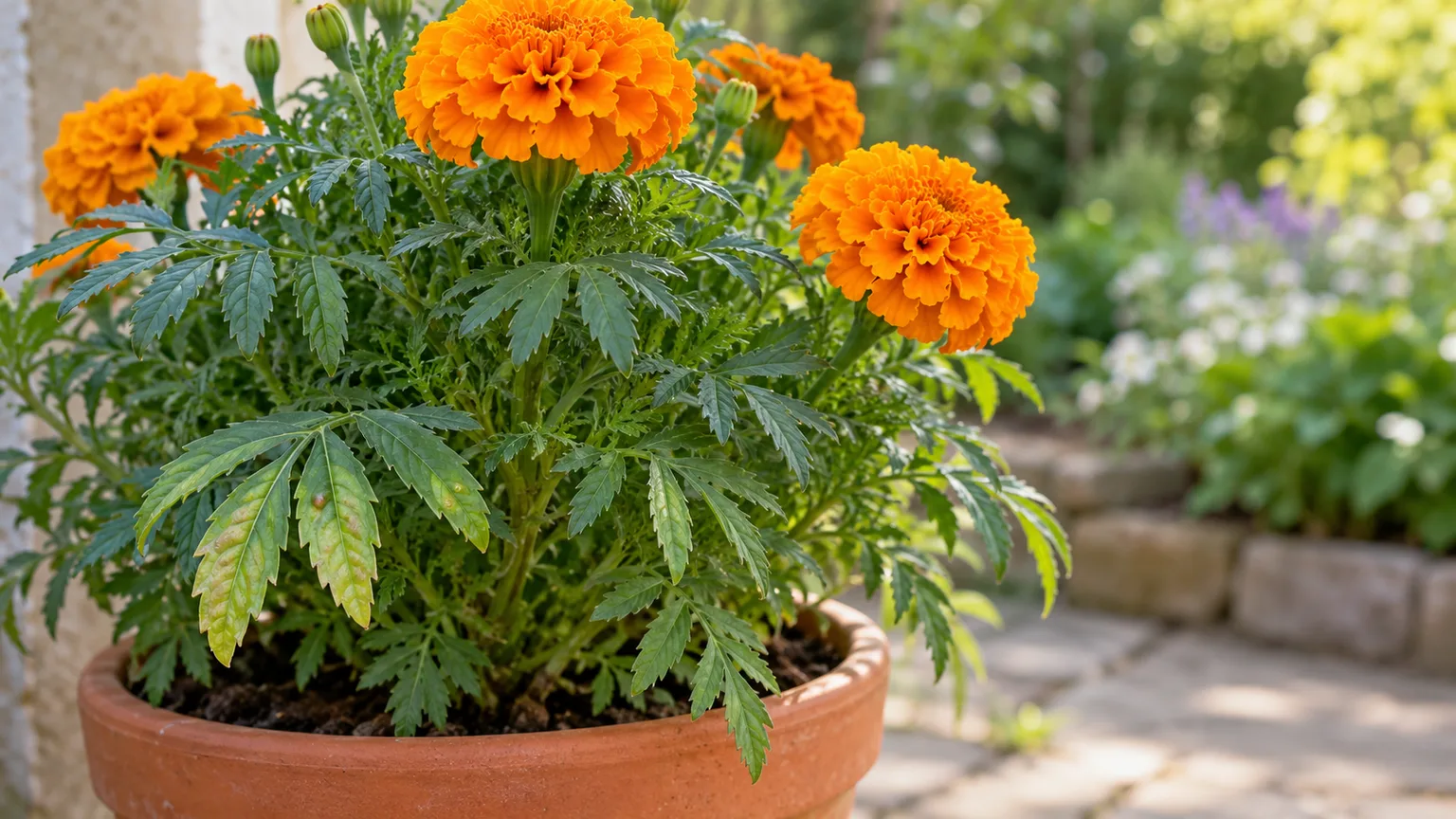
Transparent Leaves on Marigold: Causes, Checks & Fixes
This guide covers transparent leaves on Marigold. See also the general Transparent Leaves guide, watering, and light pages for this plant.
Transparent Leaves on Marigold: Causes, Checks & Fixes
Quick answer
Transparent patches on Marigold are a symptom, not a disease name. First turn over an affected leaflet and check the potting mix just below the surface. If the underside has small raised blisters and the soil is still damp, pause watering until the mix dries slightly; if the plant was exposed to frost or a cold spell, follow the cold-injury route instead.
For the general range of causes behind translucent foliage, see the transparent-leaves symptom guide. On Marigold, the shape and timing of the damage matter more than the word “transparent.”
What transparent leaves look like on Marigold’s divided foliage
Tagetes has finely divided leaves, so inspect individual leaflets rather than judging the whole branch from a distance. A few pale, water-soaked patches may be easiest to see against daylight. Turn those leaflets over: tiny raised blisters or rough tan marks on the underside support edema. If there are no blisters, or the plant was chilled shortly before symptoms appeared, consider other causes. Wisconsin’s edema guide describes translucent blisters that can burst and leave tan, corky scars, often on older leaf margins.
Look at more than one leaflet before deciding that a single pale spot explains the whole plant. Note whether the marks sit on the top or underside, whether they are clustered near the leaf edge, and whether they are present on older growth, new shoots, or only the weather-facing side. Take a photo in the same light each day; a translucent patch can look pale in one room and nearly disappear against a dark background. That record helps you distinguish a fixed scar from damage that is still spreading.
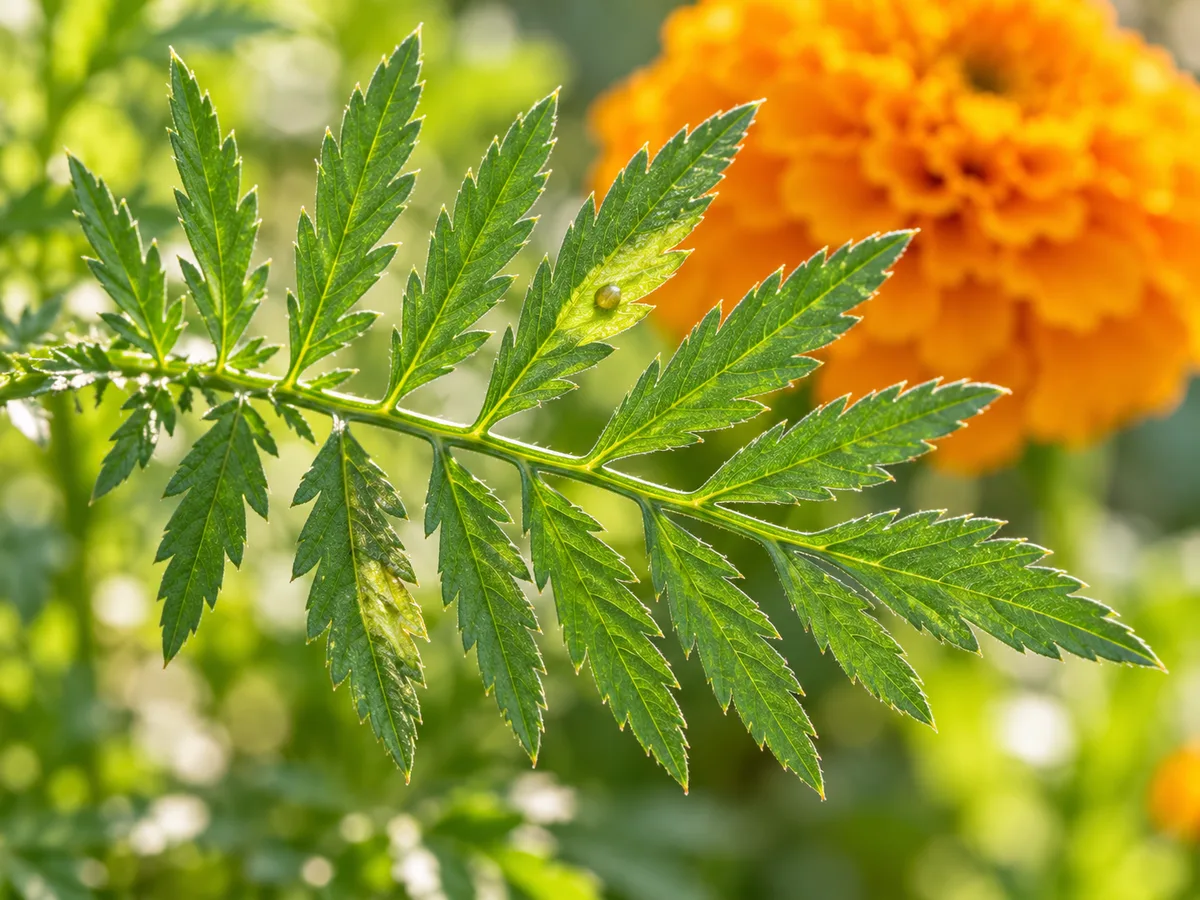
Small underside blisters can fit edema; check the soil and recent weather before deciding what caused them.
Transparent patches alone do not confirm edema. Edema is a physiological water-balance disorder: roots take up water faster than leaves lose it, and the pressure can rupture leaf cells. Utah State Extension’s explanation links high soil moisture, cool nights, and damp air with reduced leaf water loss and the disorder. That pattern is more useful than treating every clear-looking spot as infection.
The mismatch is most likely when water remains available to roots while the leaves are losing little moisture. A potted Marigold can encounter that combination after repeated watering during several cloudy days, or when rain fills a cachepot or saucer. In a garden bed, a puddled low spot or compacted ground can keep the root zone wet longer than the foliage suggests. These conditions raise edema on the list; they do not prove it, so confirm the raised underside lesions before making a major change.
Why Marigold leaves turn translucent
Edema after cool, wet weather
On a Marigold grown in a container, edema becomes more plausible when the mix stays wet while light is weak and nights are cool. The underside may develop raised, water-soaked blisters that later turn tan or corky; the upper surface can show a shallow indentation over a blister. Missouri Botanical Garden guidance describes this container and waterlogged-soil pattern.
Edema is possible on Marigold, but transparent color alone does not confirm it. Wet soil, recent cloudy or cool weather, and discrete raised lesions fit better than widespread flat discoloration. If the surface is dry but the root zone stays saturated, check drainage and the pot’s saucer before watering again.
Cold injury after a chill or frost
If translucent, limp patches appeared soon after a cold night or frost, consider cold injury before changing the watering routine. The University of Wisconsin Marigold guide lists Tagetes as an ornamental annual and recommends planting outdoors only after frost danger has passed. Petal Republic’s growing guide also advises waiting for cold conditions to pass because young growth is vulnerable to cold damage.
Raised, corky underside blisters are a better fit for edema than timing alone; a cold spell without those blisters keeps cold injury on the list. If a frost or chill fits the timing, protect the plant from another cold night and let the affected tissue show its final boundary before trimming anything. If no cold event occurred, return to the soil and underside checks rather than assuming the plant needs more warmth.
Compare the weather to the actual position of the plant. A container beside cold glass, against a wall that stays shaded, or in a spot exposed to overnight wind can have a different temperature history from plants elsewhere in the garden. If the damage appeared soon after one cold episode and the rest of the Marigold was unaffected, that timing is a useful clue, not a laboratory diagnosis.
How to confirm the cause on your Marigold
Use the sequence below before changing several parts of care:
- Check the underside. Raised, blister-like spots that later feel dry or corky fit edema. Fine webbing, insects, or a distinct expanding leaf spot needs a separate pest or disease check.
- Check root-zone moisture. Press a finger just below the surface. Cool, damp soil means wait before watering; dry soil calls for a normal deep drink at the soil line, not a spray over the foliage.
- Review the last two nights. A recent frost, cold rain, or cold glass can explain sudden limp damage better than a gradual edema pattern.
- Compare old and new growth. Edema often begins on older leaflets; damage on the crown, stems, or newest leaves raises concern for a broader root or disease problem.
Read the pattern before changing care
| What you notice | What it points toward | Next Marigold check |
|---|---|---|
| Raised, translucent blisters that later turn tan or corky, with damp mix after cloudy weather | Edema is more plausible | Check drainage and pause watering while the mix remains wet |
| Soft-looking patches after frost or a cold night, especially on exposed growth | Cold injury is more plausible | Compare with the cold-damage guide and protect the plant from another chill |
| Dark spots spreading over several days instead of raised underside blisters | A leaf-spot problem needs consideration | Compare with the black-spots guide and seek a closer diagnosis if it continues |
| Whole shoots droop while soil stays wet or stems soften near the base | The problem may involve roots or the crown rather than one leaflet | Check the root-rot guide or crown-rot guide |
These are triage patterns, not a guarantee. If the plant has several clues at once, begin with the part that can be checked without disturbing the roots: soil moisture, drainage, and the underside of a marked leaflet. Avoid applying a broad treatment to the whole plant until you have a reason to suspect a pest or disease.
Keep a photo of the same leaflets for several days. Edema is not contagious: Purdue Extension notes that oedema spots do not spread. Other disorders can look similar; RHS management advice is to improve conditions and leave marked leaves in place rather than strip them off.
The first fix for Marigold
If the soil is still damp, skip the next watering and let the upper mix dry slightly. This is the safest first correction when wet roots and cool weather point toward edema. Do not compensate by moving Marigold into deep shade: Tagetes performs best in full sun, and Utah State Extension lists low light as an edema-favoring condition.
For a container, empty standing water and confirm that the drainage holes are open; do not repot just because a leaf is marked. If the mix stays saturated from top to bottom, investigate the root zone rather than repeatedly changing the leaves. For a bed-grown Marigold, move irrigation away from the stem and check whether water pools after rain. A persistently soggy bed needs a drainage or siting correction, but a brief wet spell does not automatically mean the plant must be dug up.
If the mix is dry, water thoroughly at the soil line and let the pot drain. If cold exposure is the stronger clue, move a container Marigold to a bright, frost-free shelter and keep it out of cold rain. For a plant in a bed, shield it from another cold night; do not dig it up or apply fertilizer to a plant whose leaves are already damaged.
Make only the correction that matches the evidence. A dry root zone needs water; a wet root zone needs time and drainage; a cold-exposed plant needs shelter. Doing all three at once makes it hard to tell what helped and can create a second problem, especially if a plant that was already wet is watered again. Once the first change is made, leave the rest of the care routine stable while you watch new growth.
Recovery and timeline
A blistered leaflet will not become smooth and green again; the scab can remain after the cause is corrected. Judge recovery by whether new patches stop appearing and the next Marigold leaflets open with normal color and texture. Utah State Extension notes affected plants often recover with more favorable conditions, while extensive damage may lead to yellowing and leaf drop.
Check new growth over the next few weeks and compare photos rather than repeatedly pruning old leaves. If the plant keeps wilting while the soil stays wet, the concern shifts toward root or crown damage; see the Marigold root-rot guide for those signs.
An older leaf can remain marked even after the cause is corrected, so do not use the original spot as the only scorecard. If no new patches form and the growing tips stay firm, keep normal care steady and remove only leaflets that become fully dead or collapse. If damage continues into fresh shoots, several leaves yellow or fall together, or the crown becomes soft, stop treating the issue as a cosmetic leaf mark and ask a local extension office or plant clinic to identify the problem. A visual symptom can be shared by more than one disorder; the RHS notes oedema lesions can be confused with other diseases.
Marigold care that prevents a repeat
Tagetes needs moderate moisture and freely draining soil; Wisconsin Horticulture advises avoiding waterlogging. Water the root zone when it needs moisture, then let excess drain rather than keeping the pot constantly wet. The Marigold watering guide and soil guide cover those routines in more detail.
For containers, use a pot with an open drainage hole and a mix that does not stay saturated after a thorough watering. Rain can make a routine that worked in hot weather too frequent during a cloudy week, so check the mix before following a calendar. For garden beds, choose a sunny position where water does not stand around the roots. Check the mix or bed after rain instead of following a fixed schedule.
During cool, cloudy stretches, check soil before watering and give container plants enough airflow around their foliage; Utah State Extension recommends airflow around leaves. When temperatures drop, shelter pots from frost and cold rain; resume the normal sunny position when the weather is safe. The Marigold light guide explains why extended shade is a poor long-term fix for a sun-loving Tagetes.
Do not make the soil bone dry to prevent edema. Marigolds still need water when the root zone is dry, particularly during hot, sunny weather. The goal is a wet-to-dry rhythm that reflects the current weather and pot, not a fixed number of days between watering. If cool nights return, inspect more often and water earlier in the day, as the Wisconsin edema guidance recommends, so the mix is not newly saturated as temperatures fall.
When to use this page vs other Marigold guides
Use this page when a leaflet has a glassy or water-soaked appearance and you need to distinguish edema from cold damage. If leaves are simply black-spotted and the marks are spreading, compare them with the Marigold black-spots guide. If the plant was chilled or frosted, use the Marigold cold-damage guide for protection and cleanup steps. The Marigold problems hub and Marigold overview provide the broader plant context.
Related tool
Use the Plant Problem Diagnosis Tool to compare the leaf pattern, soil moisture, and recent weather before making additional changes.
Related Marigold guides
- Watering: use the Marigold watering guide when the soil is dry or watering frequency is unclear.
- Soil: use the Marigold soil guide if water drains slowly or the container mix stays wet.
- Cold exposure: use the Marigold cold-damage guide when damage followed frost or a chilly night.
- Disease-like spots: use the Marigold black-spots guide when lesions are dark, spreading, or unlike raised edema blisters.