Pale Leaves on Mogra: Causes, Checks & Fixes
Quick answer
On Mogra, pale leaves are a symptom, not a diagnosis. First check whether the potting mix is staying wet or drying too far between waterings, then compare affected leaves with newer growth and inspect the undersides for pests. Correct the moisture problem if present; wait to fertilize until roots, light, and pest signs have been checked.
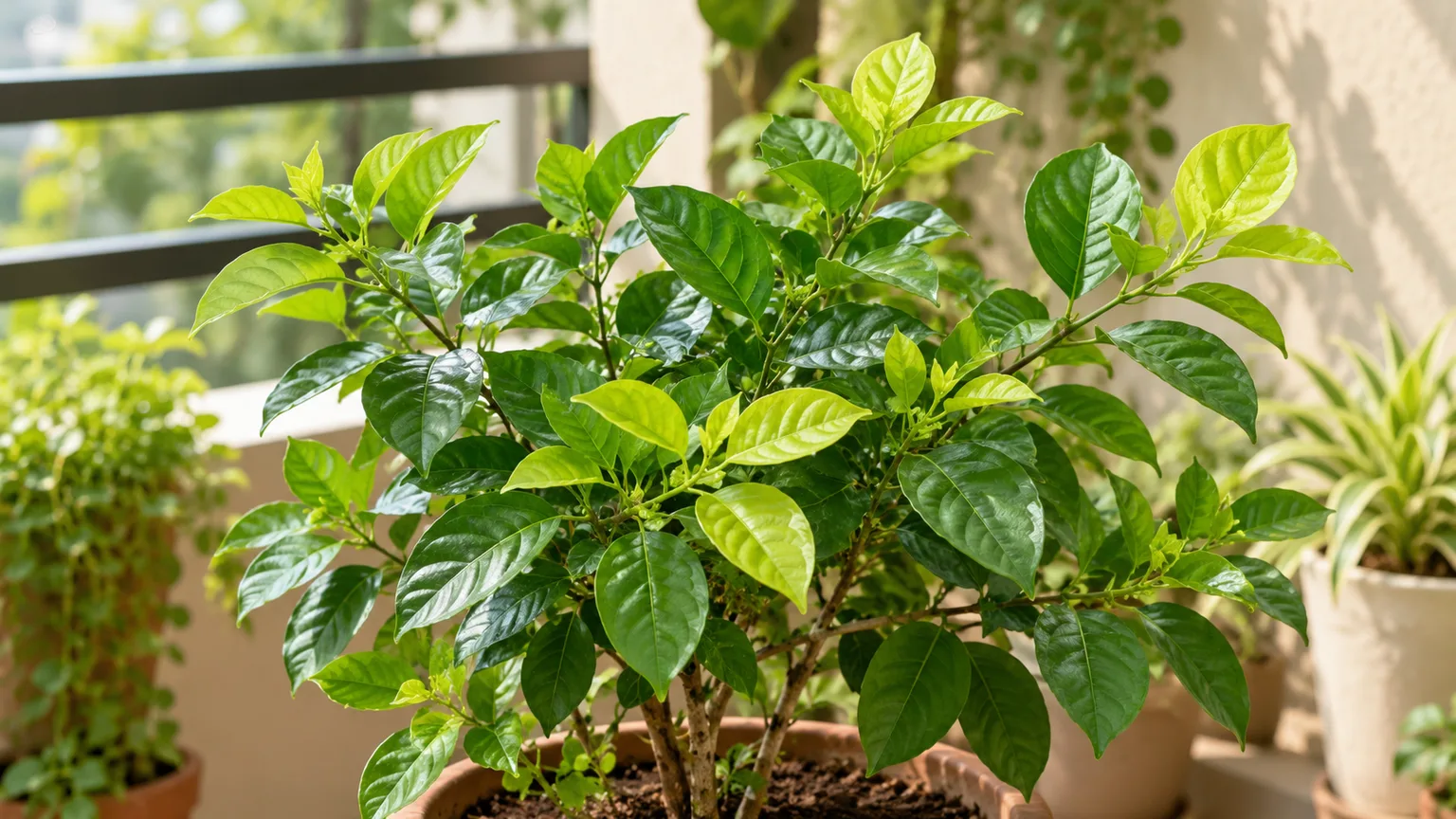
Pale Leaves on Mogra: Causes, Checks & Fixes
This guide covers pale leaves on Mogra. See also the general Pale Leaves guide, watering, and light pages for this plant.
Pale Leaves on Mogra: Causes, Checks & Fixes
Quick answer
Pale leaves on Mogra do not identify one cause by themselves. The first useful step is to check the root-zone moisture before the next watering: if the upper 2–3 cm of mix is still damp, wait for it to dry a little; if it is dry, water the pot thoroughly and let excess drain away. Do not add fertilizer as a color treatment until you have checked the plant’s light, roots, and leaf undersides.
Mogra is Arabian jasmine (Jasminum sambac), an evergreen shrub with glossy leaves. Its normal care is a useful reference point: the Royal Horticultural Society profile describes it as a bright-light plant that benefits from shade from hot sun and moist, well-drained soil. A pale plant in a dim room, a pot that remains saturated, or leaves showing fine stippling needs a different response from a plant with a clear nutrient pattern. For the general symptom patterns shared across plants, see the symptoms hub; the checks below narrow them to Mogra.
What pale leaves look like on Mogra
Look at the whole shoot before naming a deficiency. Mogra leaves are normally glossy and green, so a few washed-out leaves, a pale new flush, and a plant whose entire canopy is losing color are not the same pattern. Note whether the change begins at the growing tips or on older leaves nearer the woody stems. Also record whether the leaves are firm, limp, spotted, curled, or falling.
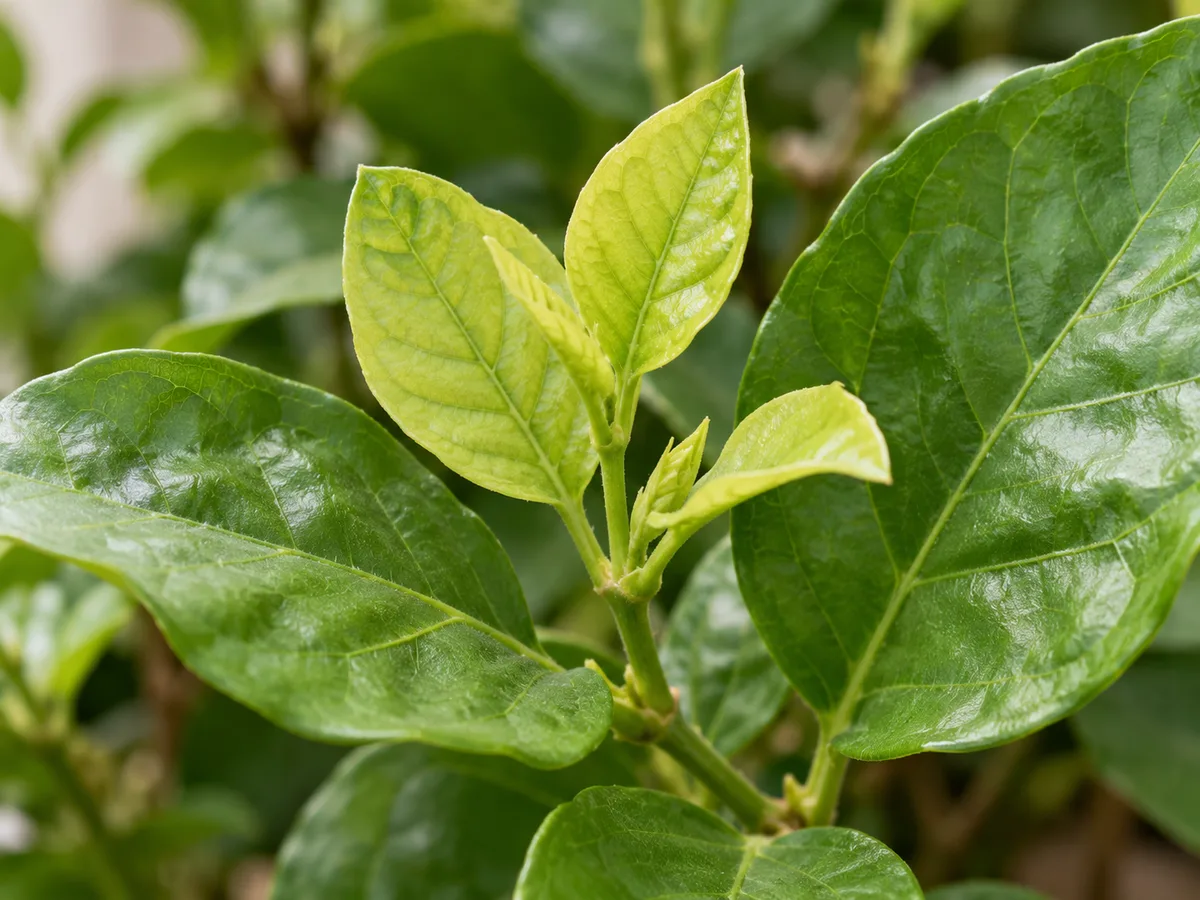
Compare the pale new leaves with mature foliage before treating color alone as a nutrient diagnosis.
Compare each pale leaf with a healthy leaf at a similar age and position. If a leaf is not fully expanded, wait until it opens before judging its settled color. If it stays unusually pale, check whether the veins remain green against pale tissue, whether the color is uniform, or whether it consists of tiny speckles. Those details help you decide whether to check the root zone, feeding history, or sap-feeding pests next.
Because Mogra is a branched evergreen shrub, compare several shoots instead of judging one leaf against a single central crown (RHS species profile). A few lower, older leaves fading while the branch tips continue to produce sturdy green growth is a different signal from pale leaves appearing across several branches at once. Photograph one affected shoot next to a healthy one; that makes it easier to tell whether the pattern is spreading after you change one care variable.
Why Mogra can lose its deep green color
A Mogra pot that stays wet
Mogra likes moisture during growth, but its mix still needs to drain. A pot that remains heavy and damp for days, especially in a cool or dim position, can leave roots unable to function normally (overwatering signs guide). Yellowing or fading may accompany that decline, but pale color alone cannot confirm root rot. The The Spruce Arabian jasmine guide recommends moist, well-drained soil and cautions against soggy conditions; its container advice is to water after the upper few inches have dried.
Check the pot before you water again. Feel the mix below the surface rather than judging only by its dry crust, lift the pot to compare its weight with a recently watered pot, and make sure water can escape through the drainage holes. A sour smell, standing water in a cachepot, or a sudden collapse while the mix is wet raises concern more than pale leaves by themselves. The overwatering signs guide explains why leaf decline and wet soil should be assessed together instead of responded to with another watering.
A Mogra that dries too far between drinks
Check the opposite possibility if Mogra is in a small pot, porous container, hot balcony, or growing quickly. A very light pot, mix that pulls away from the sides, and limp or crispy leaves are reasons to test whether the root ball is dry before considering fertilizer. Check several centimetres below the surface; a dry top layer is not enough to conclude that the whole root ball needs water if the lower mix is still cool and damp.
For a container Mogra, use moisture at the root zone as the decision point, not an every-two-days schedule. The indoor jasmine watering guidance uses the top two inches of soil as a check before watering container-grown jasmine. Pot size, material, sunlight, and season change how quickly Mogra dries, so the same calendar interval will not work in every home.
Brightness and heat on a Mogra branch
Mogra is grown as a flowering shrub and needs a bright position to keep producing healthy growth (indoor jasmine guide). If the plant moved from a sunny balcony to a shaded room, or from shade into intense afternoon sun, record the change as context rather than treating it as proof of one cause. References differ on how much direct sun to give Arabian jasmine: RHS recommends bright light with protection from hot sun (RHS profile), while The Spruce describes full to partial sun (Arabian jasmine guide). Use the plant’s recent exposure as context, and favor a bright position without an abrupt jump into punishing midday heat.
Look for a directional pattern. If leaves on the window or sun-facing side are paling or bleaching while the sheltered side remains green, consider a recent increase in direct exposure. If growth is pale throughout a plant kept well back from a bright window, light may be inadequate. Make one placement adjustment and watch new growth rather than moving the pot repeatedly; the Mogra light guide explains how to choose a brighter spot without treating every color change as a fertilizer problem.
Nutrient trouble, lockout, or a damaged root system
Pale tissue can lead owners to reach for a general-purpose feed, but that is a poor first test. Check roots before feeding if the mix has stayed wet. Record whether Mogra has received repeated fertilizer or has a crust on the mix or burnt leaf edges; use those details to choose between a nutrient-shortage question and a possible lockout or fertilizer issue. Check the history: when was the last feed, what product was used, and has the pot been flushed by unusually hard water or repeated small irrigations?
If the roots feel firm, drainage is working, and Mogra has adequate light, compare old and new leaves and inspect the green veins. A consistent pattern is more informative than a single pale leaf, but it still does not prove that iron, magnesium, or nitrogen is missing from the pot. Use a nutrient-specific diagnosis only when the symptom pattern and care history fit; the Mogra magnesium-deficiency guide and nutrient-lockout guide cover narrower possibilities. If the pattern points to iron availability, see the Mogra iron-deficiency guide in the differential table below. For ordinary feeding context, check the Mogra fertilizer guide before changing a dose.
Sap-feeding pests on Mogra
Inspect the undersides of leaves, the veins, and the tender shoot tips with good light. Fine pale stippling or a dusty appearance is a reason to look closely for mites; sticky residue, clustered insects, or small pale shells on stems suggest a different pest. The RHS species profile lists aphids, scale insects, mealybugs, and glasshouse red spider mite among Mogra’s potential pests. If you find a pest, keep Mogra apart from nearby plants while you confirm what is present.
Do not spray just because leaves look pale. First identify live insects, webbing, honeydew, or other signs on the plant. If you find mites, compare the evidence with the Mogra spider-mites guide; if the newest leaves are distorted and sticky, the aphids guide is the better next page. A treatment chosen for the wrong pest can add stress while leaving the actual cause untouched.
Confirm the cause before changing Mogra care
Take these checks in order and write down what you find. The point is to avoid changing light, water, fertilizer, and potting mix on the same day, because then you cannot tell which change helped.
- Mark the leaves by age. Is the pale color on newly opened leaves, older leaves at the base of a shoot, or across both? Check whether veins remain green, whether the surface is evenly pale, or whether it has many tiny marks.
- Check moisture below the surface. Feel the mix 2–3 cm down. If the pot is wet, verify that the drainage holes are open and that no cachepot holds runoff. If it is dry, check that the root ball itself is not still moist before watering.
- Review recent light and temperature changes. Note whether Mogra was moved indoors, shifted to a sunnier window, exposed to hot afternoon rays, or placed beside a heater or cold draft.
- Inspect leaves and shoots. Use a hand lens if available. Look underneath for mites or fine webbing and around new growth for sticky residue, clustered insects, or scale-like bumps.
- Check roots only when the evidence warrants it. If the mix stays wet, drainage is poor, or decline continues despite corrected watering, slide the root ball out carefully. Healthy roots should be firm; soft, dark roots or a sour smell support root damage (overwatering signs guide). Do not unpot a stable Mogra solely to investigate one pale leaf.
If several factors changed together, restore a stable routine first. Compare the plant with the Mogra overview and use the watering guide and soil guide to check the potting setup rather than applying a generic houseplant schedule.
The first fix for pale Mogra leaves
First, correct the watering decision at the root zone. If the upper 2–3 cm of mix is still damp, postpone the next watering and let the surface dry slightly; do not keep the pot sitting in runoff. If that layer is dry and the root ball is not wet below it, water slowly until the drainage holes release excess, then empty the saucer. This single check-and-correct step is safer than feeding a plant whose roots may already be struggling.
After that first adjustment, leave the Mogra in a bright, stable place and monitor the same marked shoot. Do not repot, prune heavily, and fertilize at once. Repot only if the mix is compacted or failing to drain, or if inspection shows substantial root damage. Treat pests only when you have confirmed them and follow the product label for the plant and setting; avoid spraying a plant in hot direct sun.
Recovery: what changes first on Mogra
Do not wait for every pale leaf to regain its original color. The more useful signs are that no new leaves become pale, the affected branch remains firm, and the next flush expands with stronger color. Mogra is a woody shrub, so assess several tips rather than expecting one damaged leaf to represent the whole plant.
Keep a simple weekly note: soil feel, pot weight, light position, and which leaves changed. If you corrected wet soil, make sure the mix is drying between waterings before you resume the prior rhythm. If the plant was too dry, water the whole root ball rather than repeatedly wetting only the surface. If you adjusted light, hold the new position steady long enough to judge the next growth; frequent moves make the comparison harder.
Do not promise recovery by a fixed date. In a stable plant, improvement is a trend across new leaves; ongoing spread, repeated leaf drop, soft stems, or a wet-mix smell means the cause has not been controlled. If the roots are mostly firm and the stem base remains sound, retain healthy branches while you correct care. If most roots have become mushy and the lower stems are soft, recovery is uncertain; avoid repeated emergency repotting unless you can preserve a firm section with viable roots.
Lookalikes: pale Mogra leaves are not all the same
| What you see | More useful clue | Next step |
|---|---|---|
| A few lower, older leaves fade while branch tips remain firm | The change is limited rather than spreading across the whole shrub | Watch the next Mogra growth and remove only leaves that are fully spent; do not feed just to restore old tissue. |
| Pale leaves plus limp growth and mix that stays wet | Root-zone stress is more likely than a simple fertilizer shortage | Check drainage and the general overwatering guide. |
| Pale, limp leaves with a very light pot and dry mix | The root ball may be drying too far between waterings | Rehydrate the root ball slowly, then adjust the watering routine. |
| Small pale flecks, fine stippling, or webbing under leaves | A mite inspection is warranted, especially on sheltered indoor Mogra | Isolate and compare with the Mogra spider-mites guide. |
| Veins remain green while the tissue between them pales | Record the contrast alongside root condition and feeding history; appearance alone does not identify a cause | Check pH, roots, and feeding history before using the iron-deficiency guide. |
| A sudden pale or yellow change across many leaves after a move | Light, temperature, or moisture shifted at the same time | Review the yellow-leaves guide if the leaves are turning yellow or dropping. |
Prevent another pale flush
Set Mogra up so the pot can dry at a reasonable pace without becoming bone dry. Use a container with drainage and a loose mix that holds some moisture but does not stay saturated. Water when the upper mix begins to dry, then let runoff leave the pot; do not use a fixed daily interval simply because Mogra is flowering or the weather is warm. During cooler or dimmer periods, check before watering because the same pot may dry more slowly.
Give the shrub bright light and keep its exposure consistent. If you move a balcony plant indoors, place it near a bright window and observe how new growth responds. If Mogra returns outdoors, avoid a sudden shift from filtered light into harsh afternoon sun. Keep leaves clean enough to inspect, and look over the undersides and shoot tips whenever you water or prune; this is particularly useful for a shrub with many overlapping leaves.
Feed only when Mogra is actively growing and the root zone is healthy. RHS cultivation guidance recommends a low-nitrogen fertilizer during growth and sparing watering in winter (RHS species profile); treat that as seasonal context, not a reason to increase feed when a leaf turns pale. For Mogra’s full routine, follow the fertilizer guide and problems hub rather than combining several corrective products.
When to use this page vs other Mogra guides
Use this guide when Mogra leaves look generally washed out, pale green, or unevenly light and you are not sure whether the cause is water, light, roots, nutrients, or pests. If the plant is clearly yellowing rather than simply losing depth of green, compare the dedicated yellow-leaves guide. If the pale area follows a strong interveinal pattern or there is a known feeding or pH issue, use the Mogra iron-deficiency or magnesium-deficiency guides listed below.
Choose the general overwatering guide when the mix is staying wet and the plant is declining, or the Mogra spider-mites guide below when stippling or webbing is visible. The broader Mogra problems hub helps route symptoms that do not fit pale foliage. This page is a starting point for diagnosis, not a reason to apply every possible treatment.
Related Mogra guides
- Mogra overview: use for the plant’s normal growth and care baseline.
- Mogra soil: use when drainage, compaction, or mix structure is in question.
- Mogra light: use when placement changed or the plant is growing in a dim room.
- Mogra iron deficiency: use when the leaf pattern and root-zone history point toward iron availability.
Related tool
Use the Plant Problem Diagnosis Tool to compare Mogra’s leaf pattern, soil moisture, and recent care before you change more than one variable.