Magnesium Deficiency on Mogra: Causes, Checks & Fixes
Quick answer
On Mogra, yellowing between green veins on several older leaves can fit a magnesium-deficiency pattern, but no reliable Mogra-specific evidence confirms that diagnosis from appearance alone. First check the age and pattern of affected leaves, then verify the pot is drying and draining normally before adding magnesium or changing fertilizer.
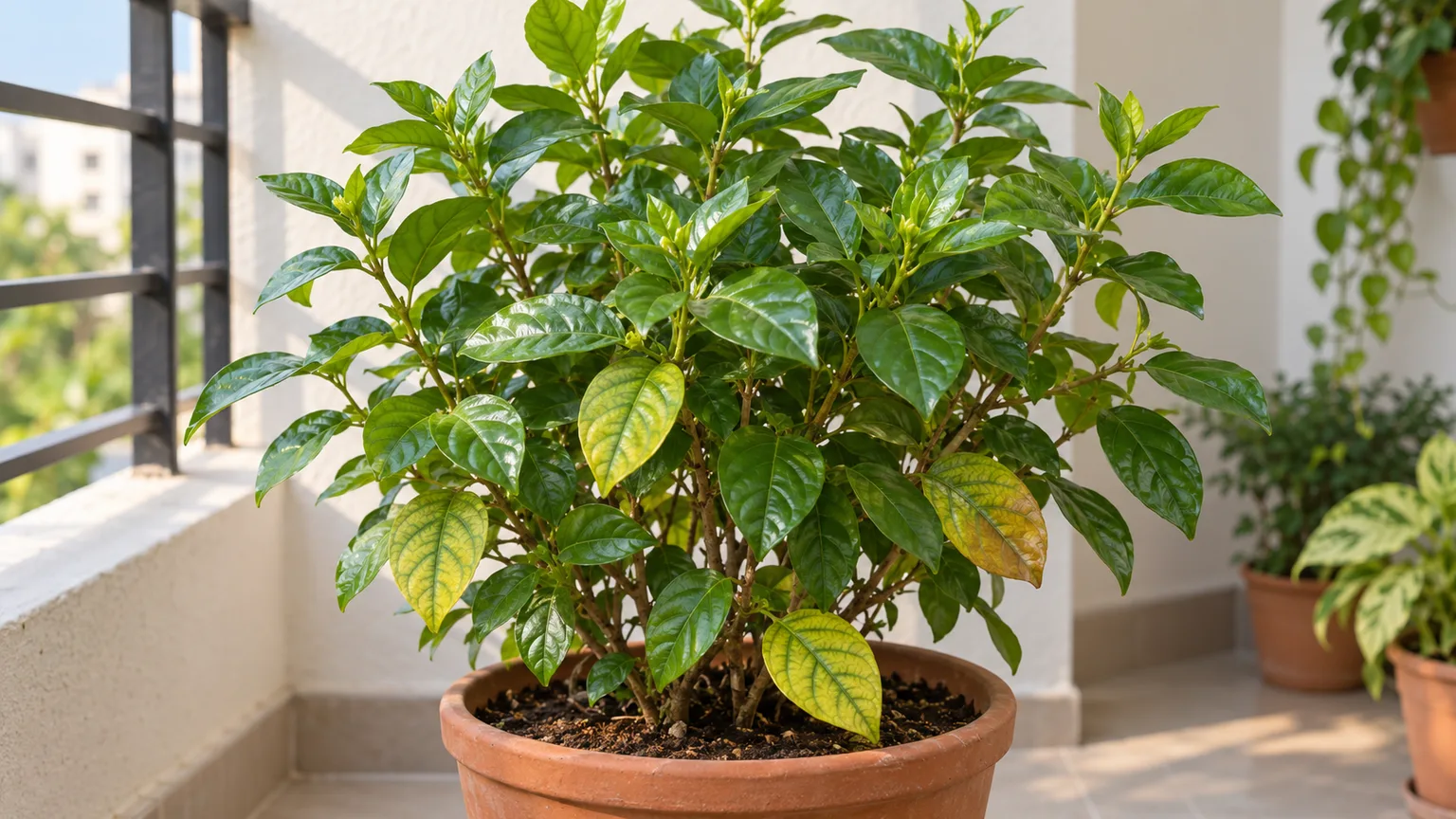
Magnesium Deficiency on Mogra: Causes, Checks & Fixes
This guide covers magnesium deficiency on Mogra. See also the general Magnesium Deficiency guide, watering, and light pages for this plant.
Magnesium Deficiency on Mogra: Causes, Checks & Fixes
Quick answer
Yellowing between the veins of older Mogra leaves can resemble magnesium deficiency, especially if the vein network stays greener and the same pattern appears on several mature leaves. It is not a confirmed diagnosis for Jasminum sambac: reliable Mogra-specific descriptions of this deficiency are scarce, and other nutrient or root-zone problems can create similar discoloration. Start by checking which leaves are affected and whether the pot is drying and draining as expected; do not apply Epsom salts or another magnesium product just because one leaf is pale. If you are tracing a wider nutrient issue, our magnesium-deficiency guide explains the general pattern, while this page focuses on the extra checks that matter for a container-grown Mogra. The Mogra overview links to the plant’s normal care routine and other problem guides.
What possible magnesium deficiency looks like on Mogra
The pattern to watch for is a gradual loss of green color in the tissue between veins on mature leaves, while the veins remain more visible. Some plants also develop bronze or reddish-brown areas, and advanced deficiency can leave dead patches or cause older leaves to drop. On Mogra, treat that as a comparison pattern from general plant nutrition guidance, not a species-verified symptom description: available reliable sources do not establish how magnesium deficiency presents specifically on Arabian jasmine.

An illustrative interveinal-yellowing pattern on a mature Mogra leaf; leaf color alone cannot confirm magnesium deficiency.
Look across several leaves on the same plant rather than diagnosing from a single fading leaf. Mogra has glossy, oval foliage, so compare leaves that are similar in age and light exposure; a uniform change across a run of mature leaves is more useful than one naturally aging leaf near the base. The Royal Horticultural Society’s nutrient guide describes magnesium deficiency as yellowing between veins, sometimes with reddish-brown tints, beginning on older leaves. That general pattern is a reason to investigate, not a basis for treating Mogra without checking the roots and feeding record.
Why the same leaf pattern needs careful diagnosis on Mogra
Mogra is an evergreen, woody flowering jasmine, Jasminum sambac. It is grown for repeated flushes of fragrant flowers, and its care depends on strong light, steady moisture while actively growing, and a mix that drains well. Those needs matter because leaves can yellow when roots stay wet or dry for too long, even if the pot contains enough magnesium. A nutrient symptom is a problem of supply or uptake; adding more fertilizer will not correct roots that cannot function normally.
Compare Mogra’s mature leaves with its active tips
Mogra carries glossy oval leaves along woody shoots, so inspect the older, fully expanded leaves separately from the soft tips and newest leaves. If the youngest growth is the part turning yellow between veins, magnesium moves lower on the list: iron deficiency more often affects young leaves first, while magnesium and manganese patterns usually begin on older leaves. The RHS notes this age difference in its chlorosis guide, but age is only one clue; it does not distinguish magnesium from manganese on its own.
Also note where the affected leaves sit. A few older leaves shaded deep inside a dense Mogra shrub may be aging or receiving less light, while a repeating pattern on exposed mature leaves deserves closer attention. If yellowing appears together with distinct spots, uneven mottling, sticky residue, or a sudden flush of leaf drop, inspect those signs separately before attributing the color change to magnesium. A single faded leaf is not enough evidence to choose a nutrient treatment.
Mogra’s flowering feed can affect the nutrient balance
Flowering jasmine care often uses a potassium-forward feed, and Mogra’s own care plan includes bloom-season feeding. That does not mean the plant needs extra magnesium. The RHS notes that overuse of potassium-rich fertilizer can reduce magnesium uptake in some plants; consider this only if Mogra has received repeated or heavy bloom feed, not as proof that a normal labeled application caused a deficiency. If you recently changed products, record the brand, label rate, and dates before adding anything else.
A recent or changed feed is a confounder, so compare the label rate with what you actually measured and note whether symptoms appeared afterward. If the plant was fed heavily or recently, compare the evidence with Mogra’s fertilizer-burn and nutrient-lockout problems before concluding that it simply needs more of a single nutrient.
Use Mogra’s pot dry-down to rule out root stress
Mogra prefers a mix that holds some moisture but drains freely. Use the Mogra watering guide to compare your routine with the actual pot: feel the top 2–3 cm of mix, lift the pot before watering, and note how long it remains heavy after a thorough drink. A container that stays wet for days, drains poorly, or smells sour deserves a root-zone check before any nutrient treatment. Conversely, a very dry, hydrophobic root ball can prevent uptake even when fertilizer is present in the mix.
For a close inspection, remove the nursery pot from its cover pot and check for standing water, blocked drainage holes, and compacted mix. Do not unpot a stable Mogra solely because one leaf is yellow; inspect roots only if the mix remains wet, the plant wilts despite wet soil, or decline is spreading. The Mogra soil guide describes the drainage balance this shrub needs. Healthy firm roots and a normal dry-down make a nutrient issue more plausible, but they still do not identify magnesium specifically.
How to check the cause before treating
Work through these checks in order and write down what you find. Keeping a short record prevents a common mistake: changing feed, watering, light, and potting mix together, then not knowing which change helped or hurt.
- Map the leaf age and pattern. Mark whether the oldest leaves, mid-canopy leaves, or newest tips show the color change. A repeating interveinal pattern on mature leaves is consistent with a possible magnesium issue; overall yellowing, edge browning, isolated spots, or damage limited to the plant’s shaded interior points elsewhere.
- Check for lookalikes. Compare young and old leaves for iron or manganese patterns, inspect both leaf surfaces for pests, and look for distinct spots or mosaic-like mottling. Iron deficiency is more relevant when the newest leaves show interveinal paling. If yellowing is broad rather than vein-centered, compare it with pale leaves on Mogra and review the plant’s light and root conditions.
- Check moisture and drainage. Feel below the surface rather than relying on the topsoil alone. Confirm the drainage holes are open, empty the saucer, and note whether the pot’s weight changes between waterings. Mogra’s normal watering interval changes with warmth, light, pot size, and season, so a fixed number of days cannot diagnose nutrient availability.
- Reconstruct feeding history. List every fertilizer, compost, soil amendment, and supplement used in the last few months. Include the concentration and frequency. Repeated potassium-heavy feeding may be relevant, but so may an overly concentrated general feed or a potting mix depleted after long-term container growth.
- Consider a test if the pattern persists. If several mature leaves keep developing the same pattern while the root zone is healthy and care is stable, a potting-mix or leaf-tissue test is more useful than guessing. Testing is especially sensible before adding a mineral product to a valuable or long-grown Mogra, because container media differ and the visible pattern is not unique to magnesium.
The RHS chlorosis guide also emphasizes that yellow leaves can result from many causes, including nutrients, waterlogging, pests, disease, and normal aging. A magnesium diagnosis becomes more credible only when the leaf-age pattern, feeding history, and root-zone condition point in the same direction. Research across different crops also shows that visible symptoms vary by species: one controlled study of cucumber and rice found interveinal chlorosis in magnesium-deficient cucumber, but not in magnesium-deficient rice under the conditions tested. That is why crop photographs and symptom charts should not be treated as a Mogra diagnosis.
Mogra lookalikes and what separates them
| Possible cause | Pattern to look for | Next check |
|---|---|---|
| Possible magnesium deficiency | Yellow tissue between green veins, mainly on mature leaves; sometimes bronze or reddish tints | Review feeding and root conditions; confirm with testing if it continues |
| Iron deficiency | Newer leaves show interveinal paling before older leaves | Compare the youngest Mogra growth and review the iron-deficiency guide |
| Manganese deficiency | Can also begin on older leaves and resemble magnesium symptoms | Do not choose a mineral by appearance alone; assess mix and test if persistent |
| Water or root stress | Yellowing is mixed with wilting, leaf drop, slow drying, sour smell, or soft roots | Correct the root environment and use the Mogra watering guide |
| Fertilizer or salt injury | Symptoms follow a recent feed, are uneven, or include scorched edges and root stress | Check label concentration and salt buildup; see fertilizer burn on Mogra |
| Normal leaf aging or shade | One or a few interior or lowest leaves fade while the rest of the shoot remains healthy | Watch whether the pattern spreads to comparable, well-lit mature leaves |
Magnesium and manganese are especially difficult to separate from a photo because both can produce interveinal yellowing on older foliage. Mogra-specific diagnostic images or lab studies were not found in this review. If the plant is otherwise vigorous and only one old leaf is fading, watch the next leaves instead of treating. If the pattern repeats across multiple branches, has a clear feed-related trigger, or appears with declining growth, investigate further before making a correction.
First fix: hold the magnesium product and check the root zone
The first action is to withhold any new magnesium supplement while you verify Mogra’s moisture and drainage. Check the mix below the surface and the pot’s weight; if it is persistently wet, blocked, sour-smelling, or compacted, address that condition first. Let the mix return to its normal dry-down before watering again, clear standing water, and improve drainage only if the container or mix is actually failing. Do not repot a stable plant just to chase a suspected mineral issue.
If the root zone is functioning normally, keep watering and light steady while you review the fertilizer history. Stop any recently added extra feed or supplement, but do not deprive an actively growing Mogra of its normal routine for weeks without a reason. If visible symptoms continue, use a reliable soil or tissue test or ask a local extension service or qualified nursery to identify a deficiency. Only use a magnesium-containing product when a deficiency is supported and the label gives directions suitable for container plants. The RHS’s garden-bed application rate is not a Mogra pot rate, so do not convert it into a home dose.
Avoid spraying Epsom salt solution on leaves, combining multiple fertilizers, or adding lime or other minerals without evidence. A container has a small root volume, so an untested addition can make diagnosis harder by changing another variable. If testing shows that magnesium is adequate, do not keep chasing yellow leaves with magnesium. Compare the diagnosis with Mogra’s fertilizer guide and the potassium-deficiency guide only when the actual symptom pattern supports those topics.
Recovery: judge Mogra by its next leaves
An older Mogra leaf that has developed yellow tissue or dead patches may remain discolored or fall; it is not a reliable measure of whether the correction worked. Magnesium deficiency can accelerate senescence in mature leaves, but the timing and severity vary among plant species. Check the next several leaves as they expand and compare them with unaffected growth. Improvement means the interveinal pattern is not advancing onto new mature leaves and the shoots remain firm and active.
There is no dependable Mogra-specific recovery timetable for magnesium deficiency. A plant with a stable root system may show a clearer response over its next period of growth, while a shrub recovering from root stress may need longer to produce normal foliage. Keep a dated photo of the affected branch and note the watering and feeding changes. Avoid cutting off every marked leaf immediately; remove a leaf only when it is mostly dead, detached, or interfering with inspection.
Escalate the diagnosis if new growth also pales, several shoots wilt, leaf loss accelerates, or the pot remains wet and sour. Those signs are not a reason to add a stronger fertilizer dose. They suggest that root damage, a different nutrient problem, pests, or disease should be checked before the plant receives more salts. If roots are largely soft or the main stems are collapsing, salvage may be limited; prioritize correcting the cause and preserving any healthy Mogra shoots rather than repeatedly dosing the pot.
Prevent repeat problems while Mogra is growing and flowering
Use Mogra’s care routine as the baseline: keep it in its suitable bright position, water according to the pot’s dry-down, and use a well-draining mix that still holds moderate moisture. The Mogra light guide helps distinguish a placement problem from a nutrient issue, while Mogra’s soil guide covers drainage. Avoid moving the plant between extremes of shade and strong sun while symptoms are being assessed; changing several conditions at once makes new leaf color harder to interpret.
Measure fertilizer rather than estimating by eye, and follow the product label for container plants. Mogra may receive a bloom-oriented feed during active growth; avoid layering extra potassium or other mineral products on top of that routine without evidence. Keep a simple log of product, dilution, and date, especially after a change in fertilizer. If a repeat pattern appears after feeding, compare the label and frequency with the separate fertilizer-burn and nutrient-lockout checks before increasing the dose.
Check the plant during regular watering rather than waiting for a major color change. Compare one established branch with newer shoots, look for several leaves showing the same pattern, and notice whether the pot has dried normally since its last watering. For a Mogra that has remained in the same container for years, a depleted or compacted mix may need attention; for a recently repotted one, root disturbance can temporarily confuse the picture. Correct only the condition that the evidence supports.
When to use this page vs other Mogra guides
Use this guide when several mature Mogra leaves show yellowing between greener veins and you are trying to determine whether magnesium is actually involved. Use the iron-deficiency guide when the newest leaves are affected, and the pale-leaves guide when discoloration is diffuse or does not follow the veins. If the pot stays wet, the plant wilts, or roots smell sour, start with Mogra’s watering and soil guidance instead.
Related Mogra guides
- Mogra fertilizer — use for routine feeding and product-label decisions after checking the plant’s condition.
- Mogra iron deficiency — use when interveinal yellowing appears first on the newest growth.
- Mogra nutrient lockout — use when several nutrients appear unavailable despite feeding.
- Mogra fertilizer burn — use when symptoms begin after a concentrated or repeated feed.
- Mogra problems hub — use when the symptom does not fit a likely nutrient pattern.
Related tool
After you confirm which fertilizer product and label rate you plan to use, the Fertilizer Dilution Calculator can help calculate a measured dilution. It cannot diagnose magnesium deficiency, and it should not be used to justify an unconfirmed supplement.