Potassium Deficiency on Mogra: Causes, Checks & Fixes
Quick answer
Potassium deficiency on Mogra is possible when older leaves develop yellowing along their edges that later turns brown, but that pattern alone cannot confirm a shortage. First check the root zone and recent feeding before adding potassium: wet, dry, damaged, or salt-stressed roots can make leaf symptoms misleading. If the roots are functioning and the feeding record points to a genuine shortage, resume a complete fertilizer at its label rate rather than adding a concentrated potassium product.
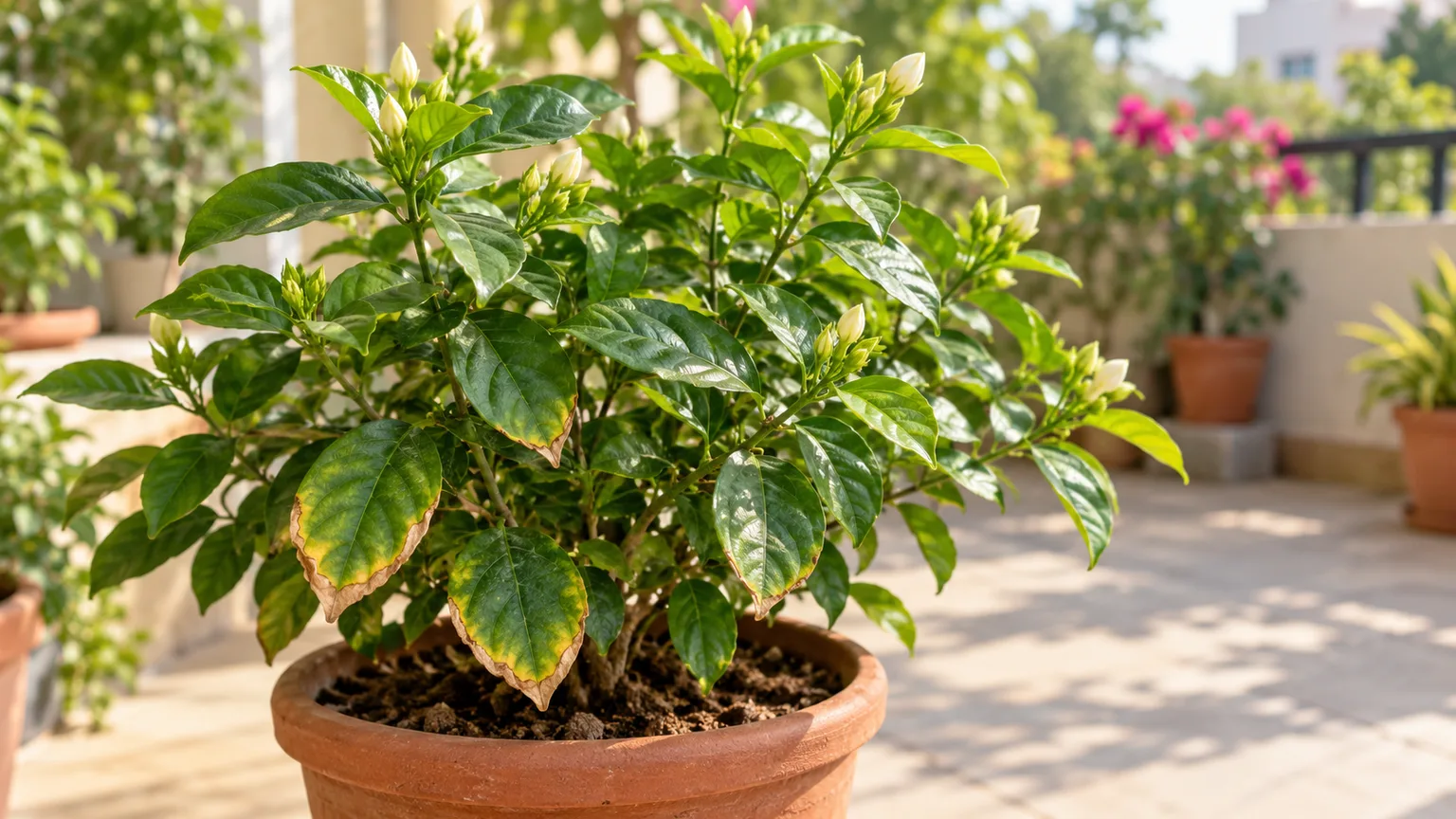
Potassium Deficiency on Mogra: Causes, Checks & Fixes
This guide covers potassium deficiency on Mogra. See also the general Potassium Deficiency guide, watering, and light pages for this plant.
Potassium Deficiency on Mogra: Causes, Checks & Fixes
Quick answer
Potassium deficiency on Mogra is possible, but brown leaf edges alone do not prove it. The more useful clue is a repeated pattern on mature leaves: yellowing becomes strongest at the margins and may turn brown as the affected tissue worsens. NC State Extension documents potassium moving from mature to younger tissues in tobacco, which is why older leaves are a useful clue to inspect rather than proof of a Mogra-specific shortage (NC State potassium-deficiency reference).
First, check the Mogra’s root zone before adding potassium. Feel the mix below the surface, make sure excess water can drain, and review what fertilizer you used and when. If the roots are waterlogged, very dry, or recently exposed to a concentrated feed, correct that condition first. If the root zone is stable and the feeding record supports a shortage, use the complete fertilizer in your normal Mogra care routine at its label rate rather than adding a separate high-potassium product.
What potassium deficiency looks like on Mogra
On a Mogra with a genuine potassium shortage, watch for a pattern across several older, established leaves rather than diagnosing one brown tip. A likely pattern is yellowing that is stronger along the leaf edges, followed by tan or brown dead tissue if the problem continues. The RHS identifies leaf-edge yellowing as a common potassium-deficiency clue, but it also stresses that yellowing can come from many causes.
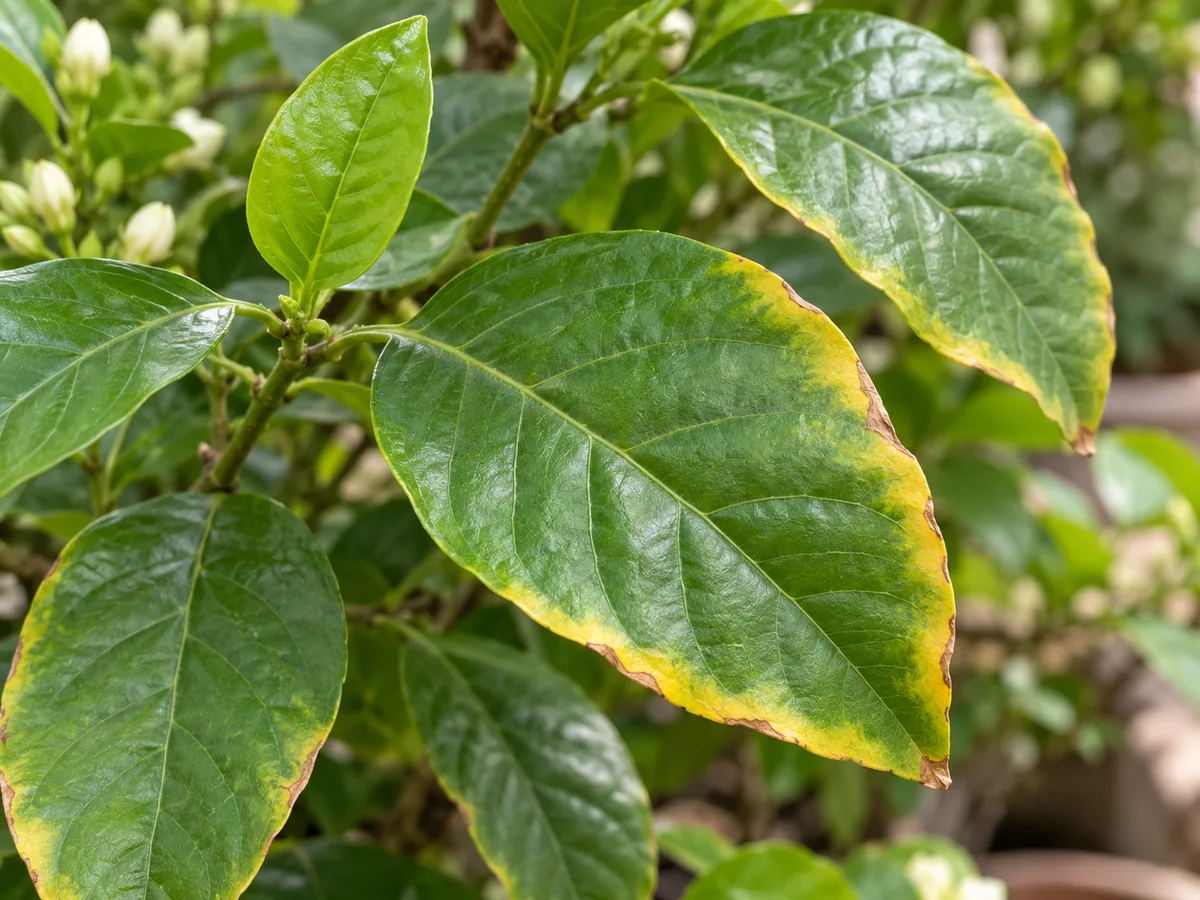
A few older Mogra leaves with marginal yellowing and light browning warrant a root-zone and feeding check; the image shows a clue, not a confirmed diagnosis.
A care reference describes Arabian jasmine (Jasminum sambac) as a smaller evergreen bush (Jasminum sambac care overview). For Mogra, compare leaves of similar age on more than one shoot. A single old leaf yellowing evenly near the base may be ordinary aging. A repeated edge-first pattern on mature leaves is more informative, especially when newer leaves remain firmer and less affected.
Do not expect every potassium-short plant to display the same picture. In Penn State’s reference images, potassium deficiency appears as blotchy chlorosis on older leaves, while the associated signs vary by species (Penn State Plant Science’s potassium-deficiency reference). The general pattern helps you decide what to inspect; it is not a Mogra-specific laboratory diagnosis.
Why Mogra can show potassium-like symptoms
A potted Mogra can run into a nutrient shortage if it has grown for a long time in the same mix without a complete feed, especially when it is actively producing leaves and flowers. That is a possibility to check against the plant’s actual history, not a reason to assume that every flowering Mogra needs extra potassium. The RHS notes that feeding may be needed for plants in containers; the amount and timing still depend on the potting mix, growth, and product label.
The other half of the diagnosis is whether the roots can take up what is already in the mix. Very wet or very dry growing media can limit root function and nutrient absorption, and extreme soil pH can make some nutrients less available (RHS guidance on nutrient deficiencies). In Mogra, a pot that stays wet for much longer than usual, smells sour, or has limp leaves can point to a root-zone problem rather than a simple lack of fertilizer. Jasminum sambac is reported as susceptible to root rot in poorly draining conditions, so inspect drainage and root health before increasing the feed (Bob Vila’s jasmine care guide).
A recent strong feed can also explain fresh edge damage better than a shortage. If browned margins appeared soon after you increased the dose, changed products, or fed a dry root ball, stop adding fertilizer while you review the event. Mogra’s fertilizer-burn guide covers that pattern; the Mogra fertilizer guide is the place to re-establish a steady routine once the plant is stable.
Read Mogra’s bushy canopy by leaf age
Mogra carries leaves on multiple shoots, so use the canopy to compare old and new growth rather than relying on one damaged leaf. Check several mature leaves lower on separate stems, then compare them with the newest leaves near the shoot tips. If the edge damage is repeated on older leaves but the newest growth is still normal, a mobile nutrient such as potassium becomes more plausible. If the youngest leaves are pale or distorted first, potassium is a weaker fit and the next step is to review root conditions, pests, and other nutrient patterns.
A branch that has just flowered may also carry a mix of aging and new foliage. Do not count every older leaf near a spent flower cluster as evidence of deficiency. Look for spread across the plant and whether the same margin pattern appears on mature leaves that are not simply declining with age. If damage stays limited to one exposed shoot, check that branch’s sun, wind, and watering conditions before changing the whole plant’s fertilizer.
How to confirm the cause before feeding
Use this order so Mogra’s leaf pattern, pot conditions, and feeding history agree before you treat:
- Compare leaf age. Mark or photograph two or three affected mature leaves and compare them with new tip growth. A potassium shortage is more plausible when repeated symptoms begin on older foliage; yellowing on the youngest leaves suggests a different nutrient or root-uptake issue.
- Map the damage. Note whether yellowing follows the outer margins, spreads between the veins, or covers a whole leaf. The general potassium-deficiency hub explains the broad pattern, while the Mogra yellow-leaves guide helps sort plant-specific lookalikes.
- Check moisture and drainage. Feel the mix a few centimeters below the surface, not only the dry crust. If the pot is heavy and persistently wet, or the mix has pulled away and will not re-wet, address watering and drainage before adding feed. The Mogra watering guide describes how to judge its dry-down.
- Review fertilizer history. Record the product, dose, and date of each recent feed. A plant that has received a complete fertilizer regularly is less likely to need a separate potassium supplement than one that has gone through active growth in unfed, depleted mix. A sudden symptom increase after feeding points away from “needs more fertilizer.”
- Look at the whole plant. Check the newest shoots, flower buds, leaf undersides, and any other plants sharing the same mix or water. If only one Mogra branch is affected, consider local exposure or damage; if the same pattern appears broadly, review the root zone and fertilizer practice.
- Test rather than guess when the pattern persists. If the plant continues to deteriorate and the checks above do not reveal an obvious care issue, ask a local extension service or lab whether a potting-media analysis is suitable. That gives you a better basis for changing nutrients than adding potassium by trial and error.
First fix for Mogra: check the root zone
The first action is to check whether Mogra’s root zone is stable. Do not apply a potassium booster while the mix is saturated, extremely dry, or draining poorly. If the mix is merely dry, water it evenly and let excess drain; if it stays wet, pause watering until the mix begins to dry and confirm that the container’s drainage holes are open. Avoid unpotting a plant just because one lower leaf has a brown edge.
If the roots appear firm and the mix drains normally, compare the feeding record with the fertilizer label. When Mogra has received little or no complete feed during active growth, return to its usual balanced fertilizer at the label rate. Use one product and one measured dose so you can assess the response. Do not combine a bloom booster, potassium salt, compost tea, and another fertilizer in the same week; if the plant improves or worsens, you would not know which change mattered.
If you have recently used a strong feed and the damage is advancing, stop feeding and read the label before taking further action. Avoid adding a second product to “balance” the first one. Where drainage is good and the mix is not already waterlogged, a local extension service can advise whether watering through the pot to reduce excess fertilizer salts is appropriate for that container and growing medium.
Match feeding to Mogra’s warm growth and flowering
Mogra’s flowering is not a reliable test for potassium deficiency by itself. A plant can flower while older leaves show stress, and poor flowering can also follow inadequate light, uneven water, pruning timing, or a restricted root zone. Jasmine care guidance recommends well-drained, moderately fertile soil and a balanced feed before new growth; use this as broad jasmine guidance and follow your Mogra product’s label rather than copying a rigid calendar (Gardening Know How’s jasmine growing guide).
Let active growth, light, and dry-down guide the schedule. A sunny Mogra growing outdoors in warm weather may use water and fertilizer differently from a plant sitting in low light or moving through a cooler, slower period. The Mogra light guide and Mogra soil guide help you check those conditions before you alter the feed. Avoid increasing fertilizer just because flower production has slowed; first rule out inadequate light, root stress, and recent changes in placement.
When feeding is appropriate, apply a complete product exactly as labeled for container plants. Do not exceed the dose, repeat it early, or add a concentrated single-nutrient product unless a reliable test or local expert recommends that specific correction. Potassium is essential to plant growth and has roles in processes such as stomatal regulation and water relations, but that does not mean more potassium automatically improves a healthy Mogra (review of potassium functions in plants). A measured, complete feeding routine is easier to assess and less likely to create a second problem.
Lookalikes to rule out on Mogra
The RHS distinguishes potassium-related edge yellowing from interveinal chlorosis and notes that iron deficiency often starts on young leaves (RHS chlorosis guide). Use those patterns as clues, then compare them with the root-zone and feeding history.
| What you see | What it may mean | Check next |
|---|---|---|
| Several older leaves develop yellow margins, then dry brown edges | Potassium shortage is one possibility | Compare leaf age, feeding history, and root-zone condition before changing fertilizer |
| Yellowing is mostly between the veins, with veins staying greener | Another nutrient pattern may fit better | Compare with Mogra’s magnesium-deficiency guide and pale-leaves guide |
| The youngest leaves yellow first | Iron or another uptake problem may be involved | Review drainage and mix conditions |
| Many leaves yellow together while the mix stays wet | Waterlogged roots or root damage may be more likely | Check pot drainage and root condition; consult Mogra’s general overwatering guide |
| Browning starts after a concentrated feed or leaf spray | Fertilizer injury or residue is a stronger possibility | Stop extra feeding and compare the timing with fertilizer burn on Mogra |
| One old leaf yellows evenly while the rest of the plant looks normal | Natural leaf aging is possible | Watch the next leaves rather than treating one isolated leaf |
Chlorosis can reflect nutrient problems, pests, disease, or cultural conditions, so the table narrows the next check rather than confirming a diagnosis. Do not treat a pale Mogra leaf with a potassium product if its pattern points between veins or starts on new growth. If multiple symptoms overlap, stabilize watering and light first, then reassess fresh growth.
Recovery timeline: watch Mogra’s new leaves
Use new growth as the recovery gauge rather than waiting for an existing brown margin to disappear. Leave a partly green leaf in place; remove it only when it is mostly dead or detaches easily. The useful evidence is whether new edge damage stops appearing and the next Mogra leaves open with their usual shape and color.
After correcting one likely cause, keep the light, pot position, and watering routine steady while you observe the plant. Photograph the same shoots every week or two and note each watering and feed. If new leaves continue to show the same edge pattern after a few new leaves have opened, revisit the diagnosis instead of repeatedly increasing fertilizer. A persistently slow Mogra with yellowing across several shoots may need a closer root inspection or a media test.
Escalate sooner if stems soften, the pot smells sour, many leaves drop together, or the plant declines rapidly after a recent feed. These signs call for a root-zone or fertilizer-injury check, not a wait-and-see potassium experiment. If only older leaves are affected and new Mogra growth stays sound, monitor before pruning healthy shoots or repotting.
Prevent potassium problems on Mogra
Keep the mix well drained and use the pot’s drying pattern as your watering cue. Mogra should not sit with its root ball continuously saturated, and it should not be left so dry that the mix repeatedly shrinks away from the container. The soil and watering guides give the plant-specific context for those checks.
Use one complete fertilizer at its labeled rate while Mogra is actively growing, and keep a simple record of product and date. If the plant slows down in a cooler or dimmer period, do not keep increasing the feed to maintain flowers. Resume the usual routine as healthy growth returns. This makes it easier to distinguish a nutrient shortage from a root-zone issue or an overfeeding event.
Refresh or replace the mix when it has broken down, compacted, or no longer drains as expected, rather than trying to repair every symptom with fertilizer. After repotting, wait until Mogra resumes healthy growth before returning to regular feeding, and follow the product label for recently potted plants. If older leaves begin showing a repeated edge pattern again, use the same checks in this guide before changing nutrient ratios.
When to use this page vs other Mogra guides
Use this guide when multiple mature leaves on Mogra show a repeated edge-first yellowing or browning pattern and the recent feeding history could plausibly leave potassium short. Use nutrient lockout on Mogra when the plant has received fertilizer but still shows signs of poor nutrient uptake. Use magnesium deficiency on Mogra when yellowing is more concentrated between veins on older leaves, and use yellow leaves on Mogra when the pattern is broad or unclear.
If damage followed a strong or frequent feed, begin with the fertilizer-burn diagnosis rather than assuming a shortage. The Mogra overview and problems hub connect these checks with the plant’s full care routine and other symptoms.
Related tool
Use the Fertilizer Dilution Calculator to check a measured feed against its label before you apply it to Mogra.
Related Mogra guides
- Use Mogra fertilizer care to set a consistent complete-feed routine once the plant is stable.
- Use Mogra watering care if the root ball dries too quickly or remains wet.
- Use Mogra soil care when drainage or mix condition is the likely constraint.
- Compare potassium deficiency in plants for the general nutrient pattern; this page explains how to apply it cautiously to Mogra.