Fertilizer Burn on Mogra: Causes, Checks & Fixes
Quick answer
On Mogra, fertilizer burn is possible when excess fertilizer salts injure roots, but brown leaf edges alone do not confirm it. Stop feeding first. If the potting mix drains freely, flush it thoroughly and let the excess water drain; if the mix is already staying wet, check the roots and drainage before adding more water.
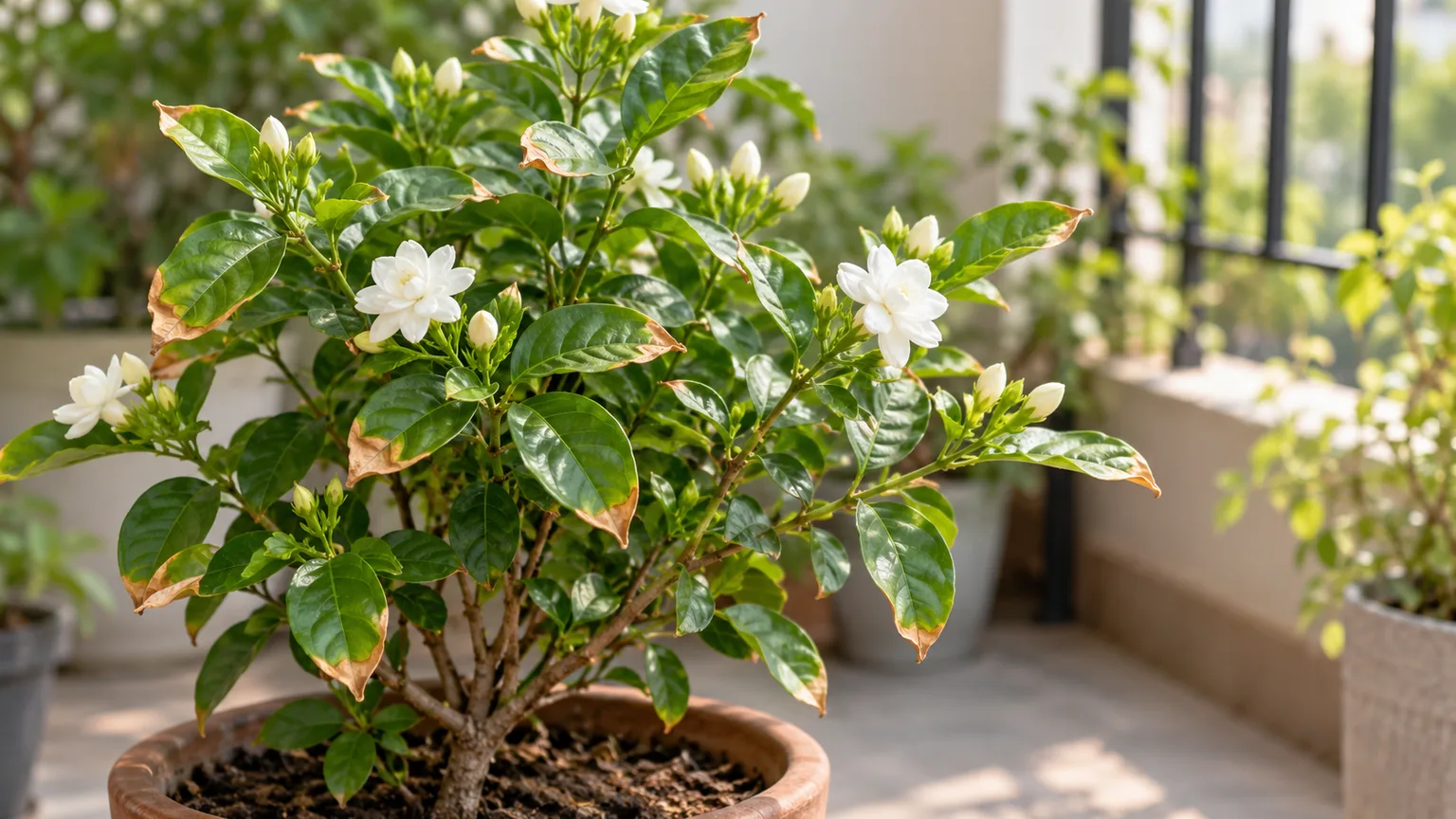
Fertilizer Burn on Mogra: Causes, Checks & Fixes
This guide covers fertilizer burn on Mogra. See also the general Fertilizer Burn guide, watering, and light pages for this plant.
Fertilizer Burn on Mogra: Causes, Checks & Fixes
Quick answer
If Mogra develops crisp brown tips or edges soon after a strong fertilizer dose, excess soluble salts may have injured its roots. Stop all fertilizer now. Brown edges by themselves do not prove fertilizer burn: the same decline can follow uneven watering, a pot that stays saturated, or hot direct sun on foliage that is not acclimated to it.
Once you have checked drainage, a freely draining Mogra pot can be flushed with clean water so some soluble salts leave through the drainage holes. If the mix remains wet, water backs up, or roots are already rotting, do not keep pouring water through it. Diagnose the root and soil problem first. For the general mechanism behind fertilizer burn, see our fertilizer-burn guide; the steps below apply it to Mogra’s woody jasmine growth and container care.
What fertilizer burn looks like on Mogra’s glossy leaves
Look for a pattern rather than one damaged leaf. Fertilizer salts can injure roots and make water uptake harder; drawing moisture out of plants. Above ground, fertilizer injury can show as dry or brittle leaf tips and margins, yellowing or browning, wilting, slowed growth, or leaf drop, signs also described by leaf tips and margins. Because Mogra’s leaves are glossy and simple, compare several leaves across the plant: repeated edge-browning is more useful than an isolated blemish. The soluble-salt injury describes soluble-salt injury as root damage that can lead to general decline or collapse, and notes that tip necrosis has several possible causes.
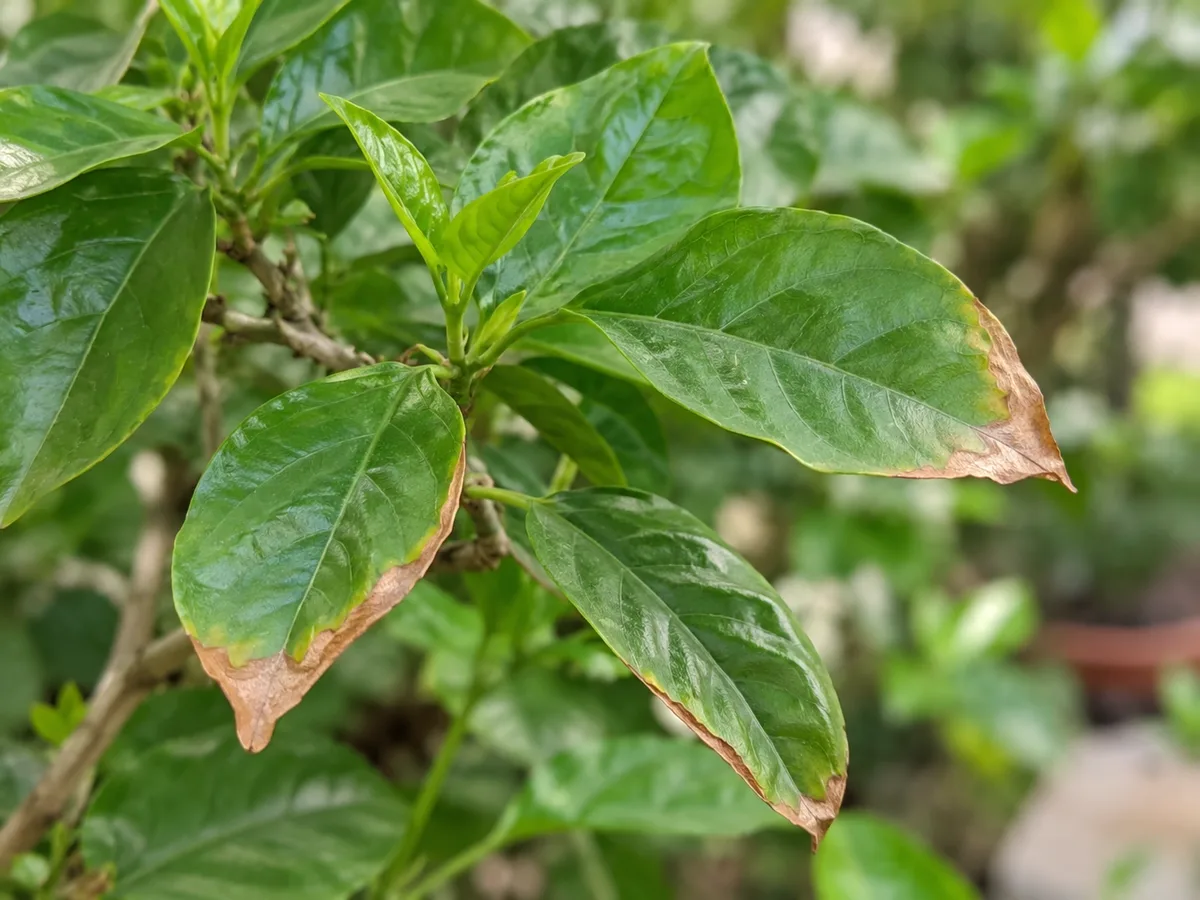
Mild leaf-edge injury can fit fertilizer salt stress, but it is only one clue; check the pot and recent feeding before diagnosing Mogra.
Timing helps. A fast-acting fertilizer applied too heavily can be followed by symptoms within a few days; products that release nutrients slowly may take longer to show an effect, as slow-release products may take longer. Record the product, dilution, amount, and date rather than relying on memory. A symptom that began soon after feeding supports the diagnosis, but it does not prove it: leaf-edge death also occurs when roots are damaged by uneven watering.
A pale crust on the soil surface or pot rim is another clue, not a verdict. The Connecticut Agricultural Experiment Station’s white crystalline deposits. However, tap-water minerals, so do not use residue alone to decide that Mogra was overfed. Overfertilized plants may also drop leaves or flower buds or grow more slowly, as drop flower buds or grow slowly. Those signs describe decline, not its cause.
Why Mogra’s seasonal growth changes the feeding question
Mogra is Jasminum sambac, an evergreen, woody jasmine with glossy simple leaves and clusters of fragrant white flowers. The Jasminum sambac profile describes it as a twining or scrambling shrub, suitable for a conservatory, greenhouse, or patio container, with summer flowering and some flowers at other times. These details matter because a potted Mogra has a limited volume of mix through which water and fertilizer salts must move.
The low-nitrogen fertilizer monthly while Jasminum sambac is growing, and sparing watering in winter. This is a seasonal reference, not a reason to add fertilizer whenever flowering slows. The extension guide also warns against excessive fertilizer during slow growth, as its excessive fertilizer during slow growth. When Mogra is not actively growing, keeping a calendar-based feed going can leave more salts in its limited potting mix; poor drainage makes that root-zone problem harder to correct. The different jasmine species also cautions that jasmine species differ in hardiness and care, so do not apply instructions for a different jasmine to Mogra without checking the plant name.
A fertilizer burn diagnosis does not mean Mogra should never be fed. It means that the dose, concentration, timing, placement, or drainage did not suit the plant at that moment. If you have been applying different products together, feeding more often than their labels direct, or adding extra phosphorus and potassium to force flowers, stop and reconstruct that routine before you restart. A recent high dose is more informative than a general belief that flowering plants always need more food.
Check the fertilizer history and root zone before treating
Start with the event that may have caused the injury. Note the fertilizer type (liquid, granular, or slow-release), its label rate, the amount actually used, the date, and whether another product, compost, or manure was added at the same time. Check whether granules are sitting against Mogra’s stems or whether any fertilizer was sprayed on the foliage. Applying fertilizer to wet foliage can also cause scorch, according to fertilizer on wet foliage. These details can reveal whether the plant received a concentrated dose or repeated applications before the previous one had washed through.
Next, check the pot without unpotting Mogra immediately. Feel the upper soil and lift the pot if it is small enough: does it feel dry and light, evenly moist, or heavy and wet several days after watering? Confirm that the drainage holes are open and that the inner pot is not standing in water inside a decorative cachepot. Mogra needs a mix that stays moist but drains freely, as the stays moist but drains freely; its watering guide explains the top-soil check, and the soil guide covers the balance between moisture retention and drainage.
Only inspect the roots if Mogra is declining, the mix remains wet, or the symptoms keep advancing after you stop feeding. Ease the root ball out while it is supported, and look for the condition of the roots rather than just their color: healthy roots should be plump and light-colored, while dark, soft, or mushy roots point toward rot or severe root injury. plump and light-colored roots, and the salt injury and root rot. If you find soft roots or a collapsing stem, compare the symptoms with the Mogra drooping-leaves guide and correct the root-zone condition before fertilizing again.
Which Mogra lookalikes should you rule out?
| What you notice | What it may suggest | What to check next |
|---|---|---|
| Brown, crisp tips or margins after a stronger feed | Fertilizer salt injury is plausible, especially with visible fertilizer granules or a crust | Reconstruct the dose and check drainage before leaching |
| White residue on soil or the pot rim, but no recent feed error | Salt buildup is possible, but hard-water minerals can leave similar residue | Look for a wider pattern of leaf or root decline; do not diagnose from crust alone |
| Wilting, yellowing, or collapse while the mix stays wet | Root or crown rot can also cause this kind of decline | Check for a saturated mix and dark, soft roots; avoid flushing until drainage is corrected |
| Dry, brittle leaves when the pot is very light and dry | Uneven watering may be contributing to leaf-tip injury | Check how quickly the Mogra pot dries and whether the root ball is evenly moist |
| Injury concentrated on leaves exposed to strong hot sun | Sun scorch or a sudden light change may be involved | Compare the damaged side with shaded leaves and adjust placement gradually |
| Pale new leaves or a persistent color pattern without a recent feed mistake | A nutrient or pH problem may need a separate diagnosis | Compare with Mogra’s iron-deficiency and nutrient-lockout guides before adding fertilizer |
No row in this table is a lab diagnosis. Mogra’s symptoms overlap: root injury can make leaves wilt, while uneven watering can cause tip injury, even without fertilizer excess. A recent over-dose plus compatible leaf symptoms and a root-zone or surface-salt clue is a stronger case than any single sign. If only one old leaf is marked and the rest of the plant is growing normally, monitor before making several changes.
First fix: stop feeding Mogra now
Pause every fertilizer product, including liquid feeds, granular fertilizer, compost, and manure. This is the first action because adding more nutrients cannot reverse salt injury and can raise the concentration around already stressed roots. Do not try to counter a suspected excess with a second fertilizer, a homemade remedy, or a “bloom booster.” The stop fertilizing during recovery also starts by stopping fertilizer and withholding further feed while the plant is recovering.
After that pause, choose the next step from the condition of the pot. If loose granules or pellets remain on the soil surface, lift away what you can without digging through Mogra’s roots. If fertilizer was accidentally splashed onto the leaves, rinse the foliage gently with clean water and let it dry in a bright, shaded spot. Do not prune the whole plant just because a few leaves look scorched. Leave partly green leaves in place for now, and remove only those that are fully brown or diseased after the cause is under control.
If the Mogra pot drains freely, leach the salts
When the mix is not already saturated and water runs freely through the drainage holes, flush it slowly with clean water. Keep the pot over a sink or outside so water can leave instead of collecting under the root ball. The Connecticut Agricultural Experiment Station’s leaching soluble salts by running water through the mix for about 20 minutes. For Mogra, use that as a cautious container-flushing reference: water should pass through the mix, not pool on top or leave the plant standing in runoff. Empty the saucer or cachepot afterward.
One thorough flush is preferable to repeatedly watering a pot that stays wet. After leaching, let Mogra’s mix approach its normal dry-down before watering again. This prevents a fertilizer response from turning into waterlogged roots. If the water will not drain, backs up at the surface, or leaves the pot heavy for days, stop: the problem is not safely solved by adding more water. Before making another change, return to Mogra’s normal drainage and dry-down check.
If the mix stays wet or salts are severe
Do not flush a Mogra whose mix is persistently saturated or whose roots are already soft and decaying. First restore drainage and remove standing water. If you inspect the root ball and find widespread damaged roots, or if salt crust and decline are severe, repotting into fresh, well-draining mix and a clean pot may be more appropriate than further leaching; the Connecticut Agricultural Experiment Station fresh sterile potting mix. Keep the new mix free of extra fertilizer while the roots settle.
Repotting is not the default response to a small amount of leaf-edge damage; it is another change to make only when the mix or roots show a real problem. Reserve it for clear soil failure, heavy buildup, or root damage. If the main issue is that the medium has become compacted and resists water, compare the Mogra compacted-soil guide before choosing the repair.
Protect Mogra’s glossy leaves and summer flowers during recovery
Remove only leaves that are fully brown, dry, or detached. A leaf with a brown edge and a green center still has usable tissue; trimming all marked leaves at once can leave a recovering Mogra with less foliage than it needs. If the margins bother you, wait until the plant is stable, then use clean scissors to trim just the dead edge without cutting into green tissue.
Mogra’s fragrant white flowers may pause during recovery, and a stress-related bud drop does not tell you which problem caused it. lost flower buds. That does not mean the plant needs an immediate boost of phosphorus or potassium. Let it stabilize before pruning or trying to induce another flush. The summer flowering period, with occasional flowers at other times, so a temporary pause in blooms can be part of recovery rather than evidence that you should feed more. If flowers brown without a fertilizer mistake, compare the symptoms with the Mogra flowers-turning-brown guide.
Keep the plant in the bright conditions it was already tolerating; do not suddenly move it into intense midday sun to “dry the soil faster.” The shade from hot sun for Jasminum sambac. Maintain ordinary watering based on the mix rather than keeping it bone dry or watering every day. Avoid combining repotting, hard pruning, a new location, and a fertilizer reset in one afternoon unless the roots are actively failing. A steady setup makes it easier to see whether the symptom has stopped.
Recovery timeline: look for new Mogra growth
Brown, crispy leaf tissue is already damaged, so it should not be the main measure of whether Mogra is recovering. Look for signs that the cause has stopped: no new edge damage on the next leaves, less wilting, stable stems, and roots that remain firm rather than becoming soft or dark. New leafy growth is a more useful recovery signal than old marks, a distinction also made in new leafy growth.
There is no dependable number of days for recovery: the injury may continue to show after the feed is stopped, and not every plant recovers from severe overfertilization. Check Mogra weekly rather than making daily adjustments. When light or temperature is low and growth has paused, lack of flowers alone is not a reason to resume feeding.
If brown margins keep spreading, the pot stays wet, or Mogra continues losing leaves after the feeding pause and a safe flush, reassess the diagnosis. Root rot, hydrophobic or compacted soil, inconsistent watering, and light stress may be contributing. A plant that has lost most firm roots or has soft stems may not recover; severe salt injury can lead to plant collapse, as the Connecticut Agricultural Experiment Station’s plant collapse. Do not promise yourself a particular recovery date from the appearance of the old leaves.
Prevent fertilizer burn on Mogra next time
Feed by measuring the product, not by estimating a capful or handful. Follow the label for dilution and application rate, and do not layer two fertilizers or add manure to a regular feeding program unless you know how their nutrients overlap. The low-nitrogen feed monthly; use that as a Mogra-specific reference and reduce or pause feeding when the plant is not actively growing, as the extension guide advises for slow-growth periods. Avoid using a large dose to compensate for poor light, a missed bloom, or slow winter growth.
Apply fertilizer to the potting mix rather than onto leaves, and water the medium first if it is dry. Do not feed Mogra when the root ball is bone dry. watering before fertilizing and avoiding fertilizer granules against stems. For Mogra, the fertilizer guide gives the plant’s usual feeding context; the light guide helps you check whether weak growth is really a nutrition problem. Correct placement and watering first if the plant is declining.
Keep the drainage holes clear and remove runoff after watering. A moist but well-drained mix suits Mogra, according to the moist, well-drained mix; drainage also lets excess soluble salts leave the container. Avoid routine heavy flushing when the plant is healthy and the pot dries slowly. If a pale crust returns, check both fertilizer history and water source before changing the feeding plan. Mogra’s overview and problems hub can help you compare care patterns across the rest of the plant.
When to use this page vs other Mogra guides
Use this page when a fertilizer dose, product change, or repeated feeding lines up with new crisp leaf margins, general decline, or suspected salt buildup. Use Mogra’s potassium-deficiency guide for a suspected potassium shortage, the iron-deficiency guide for a different leaf-color pattern, and the nutrient-lockout guide when nutrients may be unavailable despite feeding. If the pot stays wet or roots are soft, start with Mogra’s yellow-leaves guide and the soil and watering guides instead. A fertilizer diagnosis should explain both the timing and the root-zone evidence; it should not be assigned just because Mogra has a brown leaf.
Related tool
Use the Plant Problem Diagnosis Tool to compare fertilizer burn with watering stress or nutrient problems before changing Mogra’s care.
Related Mogra guides
- Use the Mogra fertilizer guide for routine feeding after healthy growth resumes; use this page for injury after excess or poorly timed feeding.
- Use the Mogra watering guide when the pot is too dry or stays wet and the fertilizer history does not fit.
- Use the Mogra soil guide when water runs through too quickly, pools on top, or the mix remains wet.
- Use the Mogra light guide when growth is weak or the plant is exposed to hot sun.
- Use the Mogra problems hub to compare fertilizer injury with other leaf, root, and flower problems.