Mulberry Repotting Guide: When & How
Mulberry Repotting Guide: When & How
Mulberry Repotting Guide: When & How
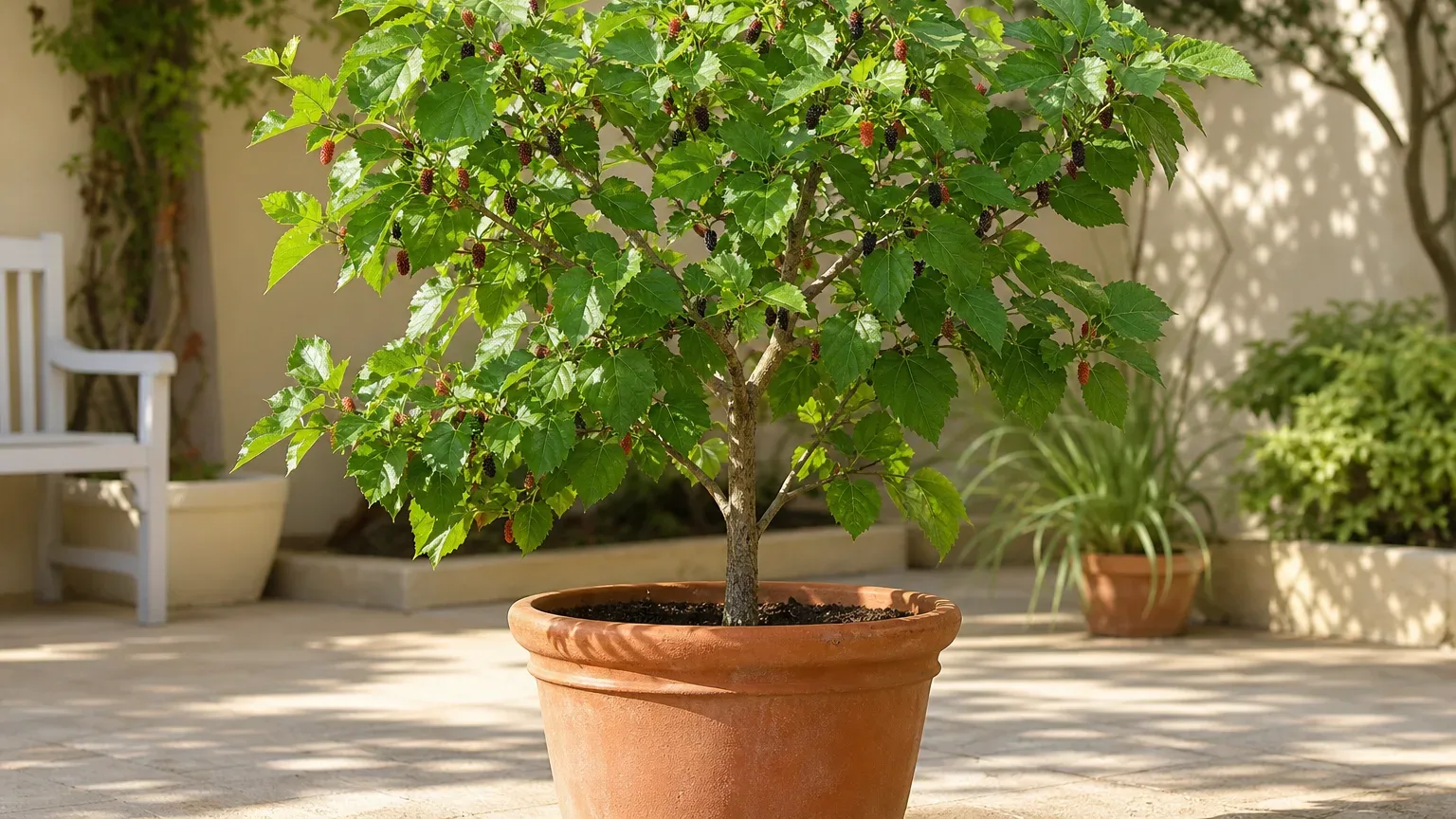
Repotting white mulberry is a tree job, not a houseplant refresh. Morus alba is a fast-growing deciduous tree with a wide crown and a shallow root system, so a nursery pot fills quickly and dries unevenly once roots circle the walls. The goal is to give young container trees modest room, keep drainage honest, and avoid moving a heat-stressed canopy mid-monsoon.
This guide covers when to repot, how much to upsize, what mix to use, how to root-prune when the tub is already huge, and how to settle the tree afterward. If your mulberry drinks a full pot in a day, leans in wind, or stalls despite full sun, start with the root ball before you change fertilizer or pruning.
Why Mulberry Repotting Differs From Houseplant Moves
Most indoor-plant advice assumes a larger pot always helps. Mulberry breaks that pattern in two ways. First, the species wants rich, moist, well-drained soil in full sun and can eventually reach 30–50 feet tall and wide in the ground — far more canopy than a balcony can support if you keep upsizing forever. Second, those roots stay shallow and wide-ranging, so an oversized, poorly drained tub holds cold, stagnant water around feeder roots while the top of the mix looks dry.
You still repot. You just do it for root health and mix quality, not because every spring needs a bigger pot. A young fruiting or ornamental mulberry benefits from regular moves while it builds a framework. An established patio tree that already fills a heavy tub often needs a same-pot refresh and light root pruning more than another 10 cm of diameter.
Shallow Roots and Rapid Canopy Growth
NC State notes that white mulberry tolerates heat and drought once established in the landscape, yet still prefers moist, well-drained ground and develops a shallow root system. In a pot, that biology shows up as a top-heavy tree that tips when the root ball is light and dry, and as a plant that wilts in afternoon heat even when you watered that morning — if roots are matted, water can channel past the center.
UF/IFAS also flags the landscape reality you inherit after a move: fallen fruit stains paving and cars, so pot placement after repotting matters as much as pot size. Choose the final terrace spot before you invest in a permanent tub.
Signs Your Mulberry Needs a Bigger or Fresher Pot
Lift the plant once a year in late winter — even in years you decide not to upsize — and look at the root ball in daylight. Healthy mulberry roots are firm and pale; sour smell, black mush, or a solid mat of circling roots means action.
Repot or refresh when several of these stack up: roots circling the bottom or emerging from drainage holes; the pot drying within a day in warm weather despite your normal watering routine; growth stalling in full sun with no pest explanation; the tree becoming unstable or top-heavy; water that races through without wetting the core of the ball. Yellowing while the mix stays wet points to root stress — inspect roots before you feed.
Age alone is a weak signal. A dwarf or weeping cultivar in a generous tub may wait longer than a vigorous seedling in a 20 cm nursery pot. For how mix structure drives those symptoms, see the Mulberry soil guide.
Best Season to Repot Mulberry
Time the job for late winter or early spring, before strong new growth. That window matches the LeafyPixels mulberry profile and lines up with general RHS guidance that spring is the best season to repot trees as growth resumes. Roots can heal while the canopy is still dormant or barely waking, so the tree is not supporting a full leaf load in summer heat.
Avoid autumn and deep winter moves when growth has stopped and fresh mix can sit too wet. Skip midsummer transplants unless the pot is cracked or roots are rotting — heat plus a reduced root system is a fast path to wilt.
The RHS mulberry cultivation guide recommends spring for container mulberry repotting and notes that compact trees can live for years in large pots if they are watered and repotted or top-dressed regularly. Use that as your calendar cue even when your plant is Morus alba rather than black mulberry: the container timing is the same.
Timing for India and Warm Climates
In much of India and similar warm regions, aim for late January through March — after cool weather slows the canopy, before the strongest pre-monsoon flush. In frost-free coastal and southern zones, you can also work immediately after leaf fall if the tree is clearly dormant. Do not repot into the peak monsoon if you can wait; saturated new mix around shallow roots invites rot when rains keep the pot wet for days.
If heat arrives early and buds are already swelling hard, top-dress instead and schedule a full repot for the next cool window. Young nursery trees bought in summer can wait in their original pots with careful watering until the next cool season, unless drainage has already failed.
Choosing the Right Pot Size
For compact container mulberries, the RHS suggests a large pot ideally about 50 cm (20 in) wide and deep once the plant is established in a tub. Start younger plants smaller and step up gradually. When upsizing pots under about 25 cm, move only 2.5–5 cm (1–2 in) wider and deeper — the RHS overpotting advice is that the new container should be no more than about one-third larger than the current one.
Jumping from a nursery can to a half-barrel of unused compost leaves a wet collar around shallow mulberry roots while the tree is still small. That is when root rot starts, not when the canopy looks thirsty. Always use a pot with open drainage holes; a sealed decorative cache pot without holes is a short path to sour mix.
Terracotta dries faster if you tend to overwater; thick plastic or fiberglass holds moisture longer in dry terrace winds and is lighter to move. Plan final tub weight against balcony load limits before you commit to a permanent size.
When to Stop Upsizing and Root-Prune Instead
Once the container is as large as you can move or store, stop chasing diameter. The RHS approach for container mulberries is clear: repot into the same pot, remove and replace loose compost, and lightly trim the roots. Between full refreshes, top-dress by swapping the upper layer of tired mix for fresh soil-based compost.
A light root prune — removing roughly the outer congested layer, often cited as up to about 15% for routine container trees, or up to a quarter of outermost roots when the plant is badly pot-bound — keeps the root-to-shoot balance honest. Do not bare-root the whole tree unless you are experienced. After a hard trim, reduce a little canopy so demand matches the smaller root volume, and save major structural work for the Mulberry pruning guide.
Soil Mix for Repotting Mulberry
White mulberry wants moist but freely draining, fertile soil. Missouri Botanical Garden culture notes call for rich, moist, well-drained soils in full sun to part shade, with tolerance for a wide soil range including alkaline ground — toughness that does not make a waterlogged pot safe. RHS plant profiles likewise want moist but well-drained conditions across chalk, clay, loam, or sand.
A practical container blend that matches the LeafyPixels mulberry profile:
- 50% loam-based potting mix (or peat-free John Innes–style soil-based compost)
- 25% finished compost
- 25% coarse perlite, pumice, or pine bark
That mix holds useful moisture for a leafy deciduous tree while leaving air around shallow feeders. Prefer soil-based media for long-term tubs; organic-only multipurpose composts collapse sooner and need more frequent refreshes. Do not fill a pot with unamended heavy garden clay. Preferred pH is roughly 5.5–7.5, with landscape plants accepting a broader range — still keep drainage first. More detail lives in the Mulberry soil guide.
Step-by-Step: How to Repot a Container Mulberry
Work outdoors on a tarp. A fruiting mulberry in a 40–50 cm tub is awkward and often heavier than it looks — get help before you mid-lift a tipping trunk.
Prep, Lift, and Inspect the Root Ball
Water the tree two to three days before so the ball holds together without dripping. Gather the new pot (if upsizing), fresh mix, clean pruners, gloves (milky latex can irritate skin), and a stake if the plant is tall and top-heavy. Wear gloves when roots or shoots weep sap.
Tip the pot on its side and slide the root ball out. If it sticks, run a knife around the rim — never yank by the trunk. Check for circling mats, sour odor, and soft black roots. Trim rotten sections back to firm tissue. Tease outward-facing roots with your fingers; slash only the worst spirals so new roots will enter fresh mix.
Tease Roots and Set the Plant at the Right Depth
Add a base layer of fresh mix and set the tree so the previous soil line sits slightly below the rim, with room to water without overflow. Do not bury the trunk deeper than it grew before. Fill around the sides in stages, firming lightly to remove large air pockets without packing the mix into concrete.
Water until drainage runs clear, then top up any sinkholes. Stake only if the tree wobbles; remove the stake once new roots anchor it. Keep drainage holes clear of mesh clogging or perched saucers of standing water.
Post-Repot Care and Watering Adjustments
The first two weeks are about stable moisture and reduced demand. Keep the mulberry in full outdoor light it already knows, but shield a freshly moved plant from the harshest midday heat for a few days if you repotted on the edge of a hot spell. Water when the top 3–5 cm of new mix dries, then soak until excess drains — the same finger-test logic as everyday mulberry watering, adjusted for how quickly the refreshed mix dries.
Hold fertilizer until you see new buds opening or at least two to three weeks of steady watering. Mild leaf wilt for a few days is common; persistent wilt with wet soil suggests rot or a sealed pot. Do not prune hard on the same day you remove a large fraction of roots unless the canopy clearly outweighs what remains underground.
Expect slower fruiting the season after a major root prune. That trade-off is normal for a vigorous tree kept in a fixed tub.
When Not to Repot (and What to Do Instead)
Skip a full repot when the tree is in peak leaf, mid-fruit swell, or monsoon saturation; when buds are already in hard flush after a warm spell; or when the only complaint is pale leaves that actually track low light or underfeeding. In those cases, top-dress, clear drainage holes, and correct light or fertilizer first.
Also wait if the plant arrived last week and is still adjusting to sun intensity. Learn how fast the current pot dries before you change containers. If white mulberry is restricted or invasive where you live — Missouri Botanical Garden flags it as a Midwest noxious weed concern in parts of its introduced range — prefer named sterile or fruitless cultivars and remove volunteer seedlings after any soil spill from repotting.
Moving a Mulberry From Pot to Ground
If you are graduating a container tree into the garden, dig a hole only as deep as the root ball and two to three times as wide, in full sun with room for a spreading crown and shallow roots away from paving. Plant at the same depth it grew in the pot, water deeply, and mulch — keeping mulch off the trunk. UC IPM warns that mulberries are hard to garden under because shallow roots run near the surface, so site the tree where surface roots will not lift paths.
In warm climates, plant in the same cool window you would use for container repotting. Keep watering through the first dry season; landscape drought tolerance comes after establishment, not on day one.
When to Use This Page vs Other Mulberry Guides
Use this page when the question is pot size, timing, root inspection, soil refresh, or transplant recovery. Use the Mulberry watering guide when the mix is fine but you are unsure how often to soak. Use the soil guide when drainage recipes and pH need more depth than a repotting day allows. Use fertilizer after roots have settled, not as a substitute for a congested ball. Use pruning for canopy structure in late fall or winter — mulberries bleed sap if cut in active growth. Use propagation when you want new plants rather than a larger pot. The overview is the hub for size, fruit mess, and whether a dwarf cultivar fits your space.
Related Mulberry Guides
- Mulberry overview — growth habit, mature size, and whether a pot or ground site makes sense
- Mulberry watering — finger-test depth and seasonal moisture after a move
- Mulberry soil — drainage, pH, and mix recipes in more detail
- Mulberry fertilizer — when to resume feeding after roots settle
- Mulberry light — full-sun placement that must stay true after repotting
- Mulberry pruning — dormant-season cuts if you balance canopy after root work
- Mulberry propagation — cuttings and new plants instead of upsizing forever
Conclusion
Repot Morus alba when roots, drying speed, and mix quality say so — ideally in late winter or early spring, with only a modest pot increase and a moist but airy mix. Once the tub is as large as your terrace allows, refresh the same container, trim circling roots lightly, and top-dress in between. Give the tree steady moisture and a pause on fertilizer while shallow roots re-enter fresh soil, and you will keep a vigorous mulberry productive without drowning it in unused compost.