Mulberry Watering: How Often to Water Morus alba
Mulberry Watering: How Often to Water Morus alba
Mulberry Watering: How Often to Water Morus alba
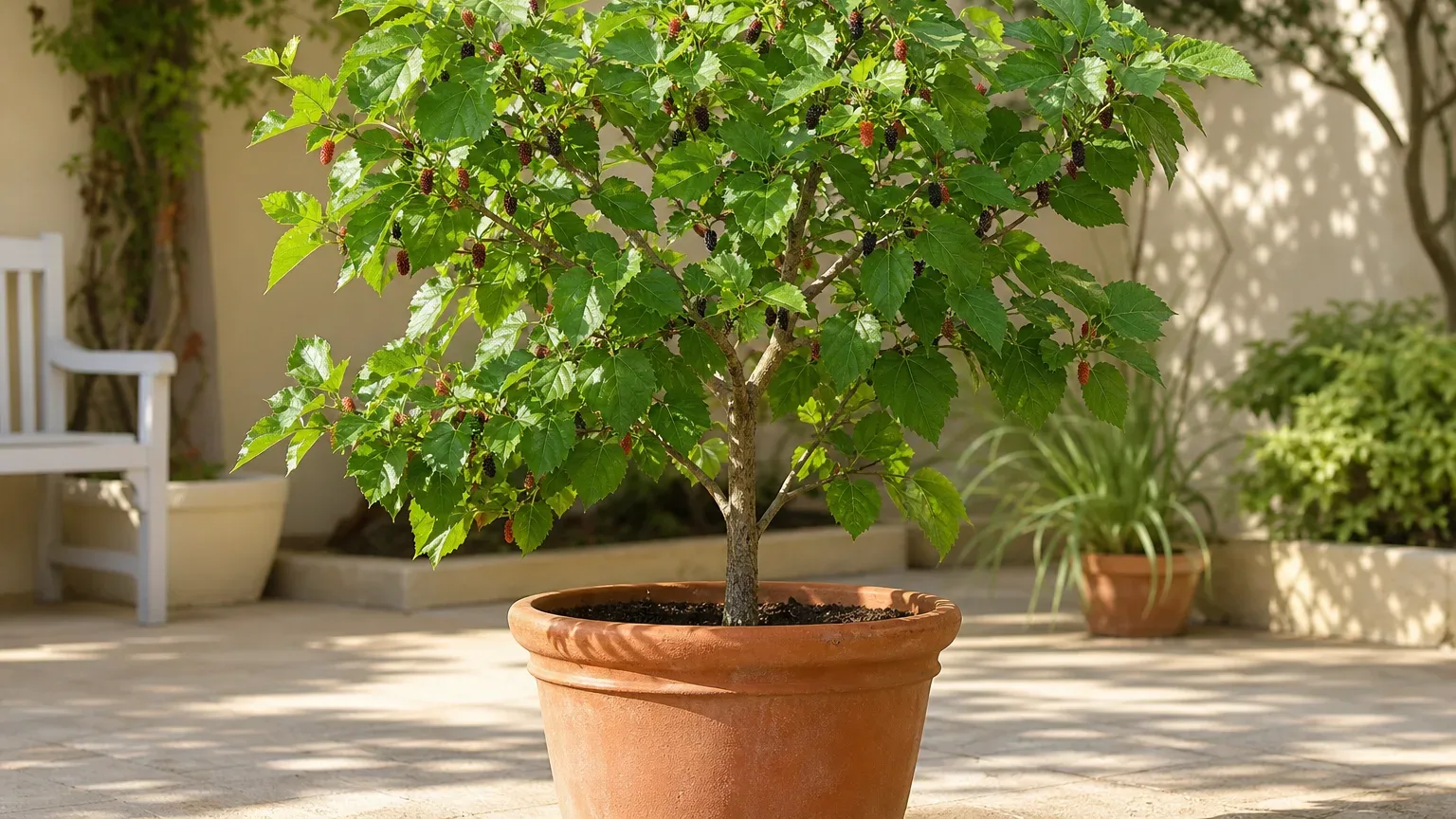
Mulberry watering is less about a fixed calendar and more about matching moisture to a fast-growing deciduous tree with shallow roots and a medium thirst. Morus alba — white mulberry, often sold in India as shahtoot — wants rich, moist, well-drained soil in full sun, yet the same species is widely tagged as drought tolerant once established. Those two facts are not a contradiction. Landscape trees with a wide root run can ride out dry spells; a young nursery plant or a terrace tub cannot.
Water deeply when the top 3–5 cm of mix feels dry, keep young and fruiting container trees evenly moist during active growth, and cut back after leaf fall without letting a pot bake bone-dry. UF/IFAS Gardening Solutions notes that mulberries rarely need irrigation after establishment in the landscape — a useful reminder that overwatering a mature in-ground tree is as common a mistake as neglecting a pot on a hot balcony. For whole-plant context, start with the Mulberry overview and pair this page with Mulberry soil and Mulberry light.
Why Mulberry Water Needs Differ From Tropical Houseplants
Mulberry is a woody, deciduous fruit tree, not a moisture-loving indoor tropical that likes constantly damp peat. Missouri Botanical Garden lists Morus alba water need as medium, with tolerance of drought and urban conditions, and culture guidance for moist, well-drained soils in full sun to part shade (Missouri Botanical Garden — Morus alba). The RHS describes growing conditions as moist but well-drained across chalk, clay, loam, and sand.
NC State Extension adds that white mulberry grows best in rich, moist, well-drained soils, tolerates heat and drought, accepts a wide soil range including alkaline ground, and develops a shallow root system (NC State — white mulberry). Shallow roots dry faster near the surface in pots and heat, but they also drown faster when water sits in a saucer or clay basin. Your job is the middle path: replenish moisture thoroughly, then let oxygen return before the next soak.
How Often to Water Mulberry
There is no honest universal “every X days” rule. Pot size, sun load, wind, mix texture, fruit load, and whether the tree is leafless all change how fast the root zone dries. Use dryness at 3–5 cm as the trigger, then learn your plant’s rhythm over two full soak-and-dry cycles.
Container Mulberry Watering Intervals
In hot, bright weather during leaf expansion and fruit swell, many terrace mulberries need a deep soak every 2–4 days once the upper mix is dry. In milder spring or autumn weather, every 5–7 days is common. After leaf fall, the same pot may only need water every 10–21 days, and only when the root ball is approaching dry.
Lift the container after a full soak and again a day or two later. When it feels clearly lighter and the finger test is dry at 3–5 cm, water again. A dwarf or weeping cultivar in a smaller tub will dry faster than a large tub with a heavier soil mass — check the plant you have, not a neighbour’s schedule.
In-Ground and Established Landscape Trees
Once roots explore surrounding soil, Morus alba is far more forgiving. UF/IFAS states mulberry trees are drought tolerant after establishment and rarely require irrigation afterward in Florida landscapes (UF/IFAS — mulberry). That does not mean never water a new transplant. For the first one to two growing seasons, deep irrigate when the upper soil dries during rainless heat so the tree can push feeder roots outward.
For established garden trees, prefer deep, infrequent watering during prolonged drought — wetting the soil under the canopy and beyond the drip line — rather than daily sprinkles against the trunk. Daily light watering keeps the surface wet, encourages shallow roots, and wastes water without helping fruit fill.
How to Check Soil Dryness Before You Water
Surface colour lies. Mulch, compost toppings, and peat-heavy mixes can look dry on top while staying cool and wet deeper — or the opposite after hot wind. Always check into the root zone before you soak.
Finger test: Push a finger 3–5 cm into the mix or bed. Cool, clinging soil means wait. Dry, crumbly soil at that depth means you can water. On very large tubs, check near the trunk and toward the outer root mass.
Pot weight: Lift after watering and again as days pass. A light pot is a more honest whole-root signal than a pale crust on the surface.
Drainage watch: After a soak, water should exit drainage holes within minutes. If it sits or the saucer fills and stays full, empty it and fix the mix or holes before the next watering cycle.
Do not water because a reminder app said Tuesday. Do not water because leaves wilt at noon in full sun while the mix is still wet — afternoon wilt can be temporary heat stress, not drought.
The Deep-Soak Method for Mulberry Roots
Mulberry responds best to one thorough wetting followed by a dry-down, not a daily sip. Missouri Botanical Garden’s overwatering guidance explains why: roots in waterlogged soil cannot absorb oxygen, then decay and stop supplying water and nutrients even though the mix looks wet (Missouri Botanical Garden — overwatering). Deep watering also pushes roots to use the full soil volume instead of circling near a damp rim.
For containers, water slowly across the surface until excess runs freely from the holes. Empty the saucer within about 30 minutes. For in-ground trees, soak under the canopy and past the drip line so moisture reaches the active feeder zone. Avoid leaving a permanently soggy ring against the trunk, where bark and shallow roots stay wet.
Mulch helps hold that moisture without daily irrigation. A 5–8 cm organic mulch layer over the root zone — kept a few centimetres clear of the stem — slows evaporation on hot terraces and open beds. Pair mulch with the right mix from the Mulberry soil guide; watering cannot rescue a compacted, airless pot.
Watering Young Trees, Fruiting Season, and Heat Waves
Young mulberries and freshly transplanted trees have not yet built a wide, drought-buffering root run. Keep moisture even during the first growing seasons: check every few days in heat, soak deeply when the top layer dries, and never leave a new root ball bone-dry for a week in full sun. MOBOT’s general watering advice prioritises newly planted trees and shrubs for exactly this reason — establishment depends on surface water until deeper roots form (Missouri Botanical Garden — newly planted trees).
During flowering and fruit swell, container trees and young orchard plants need the most consistent moisture of the year. Drought at that stage can curl leaves, dry margins, and trigger premature fruit drop. That does not mean flood the pot. It means shorter intervals between thorough soaks while leaves and berries are expanding, then a return to longer gaps once harvest ends and growth slows.
Heat waves on concrete terraces amplify demand. Reflected heat can dry a black plastic pot in a day. Check morning and evening if temperatures stay extreme, but still wait for the 3–5 cm dry signal before soaking again.
Signs of Overwatering and Waterlogged Roots
Overwatered mulberry often looks “thirsty” because damaged roots cannot take up water. Watch for persistent yellowing while the soil stays wet, weak or stalled new growth, a sour or rotten smell from the mix, and dark, soft feeder roots when you tip the pot. Leaves may wilt even though the container feels heavy.
Missouri Botanical Garden lists stunted growth, yellowing, leaf scorch, and root death as classic waterlogging symptoms, and notes that dying roots invite rot pathogens such as Phytophthora in periodically saturated soils (Missouri Botanical Garden — overwatering). If several of these signs appear together, stop watering, improve drainage, and inspect roots before the next soak.
When Shallow Roots Meet Standing Water
White mulberry’s shallow root habit makes standing water especially risky. NC State explicitly flags the shallow root system alongside moist, well-drained culture (NC State — white mulberry). A saucer left full overnight, a decorative cachepot without drainage, or a clay garden pocket that ponds after rain can smother those roots quickly.
First action when unsure: dig or tip-check the root zone. If soil smells sour or roots are brown and mushy, withhold water, raise the pot on feet if needed, and plan a soil refresh or repot into a freer-draining mix once the tree is stable. Do not “perk it up” with another drink.
Signs Your Mulberry Needs Water
Underwatering is more common on containers in heat than on mature landscape trees. Look for wilted or curled leaves in heat, dry brown leaf margins, premature leaf or fruit drop, and a pot that feels very light or pulls away from the root ball. Soft, limp foliage with wet soil is not drought — that is overwatering.
A single dry episode rarely kills an established Morus alba; the species is built to tolerate drought once rooted. Rehydrate with one deep soak, let excess drain, then resume the dry-down cycle. Do not compensate with daily cups of water, which swings the problem toward rot within a week.
Seasonal Watering From Leaf-Out Through Leaf Fall
Late winter to spring leaf-out: Increase checks as buds open and new leaves expand. Cool weather still slows drying, so confirm dryness before every soak.
Summer growth and fruiting: Peak demand for containers and young trees. Keep the upper 3–5 cm from staying wet for days, but do not let the whole root ball bake during fruit swell.
After harvest into autumn: Growth slows; lengthen intervals. Continue deep soaks only when the finger test says dry.
After leaf fall: The tree uses far less water. Reduce frequency sharply. Keep container root balls from going rock-hard, but avoid the summer schedule on cold, slow-drying mix. Leafless mulberry is not an indoor tropical that needs weekly misting — it needs occasional moisture for living roots only.
Watering Mulberry in Indian Climates and Monsoon
In much of peninsular India, the practical watering challenge flips twice a year. Dry pre-monsoon heat can empty a terrace pot in a day or two, while monsoon weeks can leave the same pot waterlogged if drainage is weak. During peak dry heat, check containers daily and water deeply when the top 3–5 cm is dry. During heavy monsoon, move pots under open shelter if possible, empty saucers after every rain, and pause irrigation entirely while the mix stays wet.
In-ground trees in sandy or raised beds may still need occasional deep irrigation in rainless heat, especially while young. Trees in heavy clay basins often need better drainage more than extra water — mulberry tolerates many soils, but stagnant water around shallow roots is the failure mode. Full sun from the light guide increases both growth and water use; shade does not fix a drowning pot.
Pot Size, Soil Mix, and Drainage Effects
Watering advice fails when the container is wrong. An oversized pot holds wet mix for weeks while a small tree uses little of it. An undersized pot dries in hours under fruit load. Choose a container with generous drainage holes and a mix that holds useful moisture without staying saturated — typically a loam-based blend opened with coarse perlite, pumice, or bark, as covered in Mulberry soil.
If the pot dries within a day in warm weather despite full soaks, the tree may be root-bound and due for repotting. If the pot stays heavy and dark for a week after watering, cut frequency, improve drainage, and resist fertiliser until roots recover — Mulberry fertilizer cannot fix anaerobic roots.
When to Use This Page vs Other Mulberry Guides
Use this watering page when you need soak timing, dryness checks, seasonal cuts, or over/underwatering diagnosis for Morus alba. Switch to Mulberry soil when the mix stays soggy or dusty no matter how carefully you water. Use Mulberry light when a shaded tree grows soft and drinks little, or a full-sun terrace pot dries twice as fast. Open Mulberry repotting when roots circle, the pot dries overnight, or drainage holes are blocked. Reach for Mulberry fertilizer only after moisture and drainage are stable — feeding a waterlogged tree worsens stress. For pruning timing and sap bleeding, use the Mulberry pruning guide instead of changing your watering schedule.
Related Mulberry Guides
- Mulberry overview — growth habit, size, fruit safety, and where watering fits the whole plant
- Mulberry soil — mixes and drainage that make correct watering possible
- Mulberry light — sun load that drives water use and fruiting
- Mulberry fertilizer — feeding only after the root zone is healthy
- Mulberry repotting — when rapid drying or poor drainage means a pot change
- Mulberry propagation — moisture care for cuttings and young starts
- Mulberry pruning — dormant cuts that reduce sap bleed and reshape the canopy
Conclusion
Water Morus alba by the root zone, not the calendar. Keep young and container trees evenly moist during leaf and fruit growth with deep soaks after the top 3–5 cm dries, then reduce sharply after leaf fall. Established landscape mulberries are drought-tolerant and seldom need routine irrigation, but shallow roots still hate standing water. Check dryness, drain saucers, and adjust for heat and monsoon — that routine protects both fruit and roots.