Mulberry Fertilizer Guide for Pots & Gardens
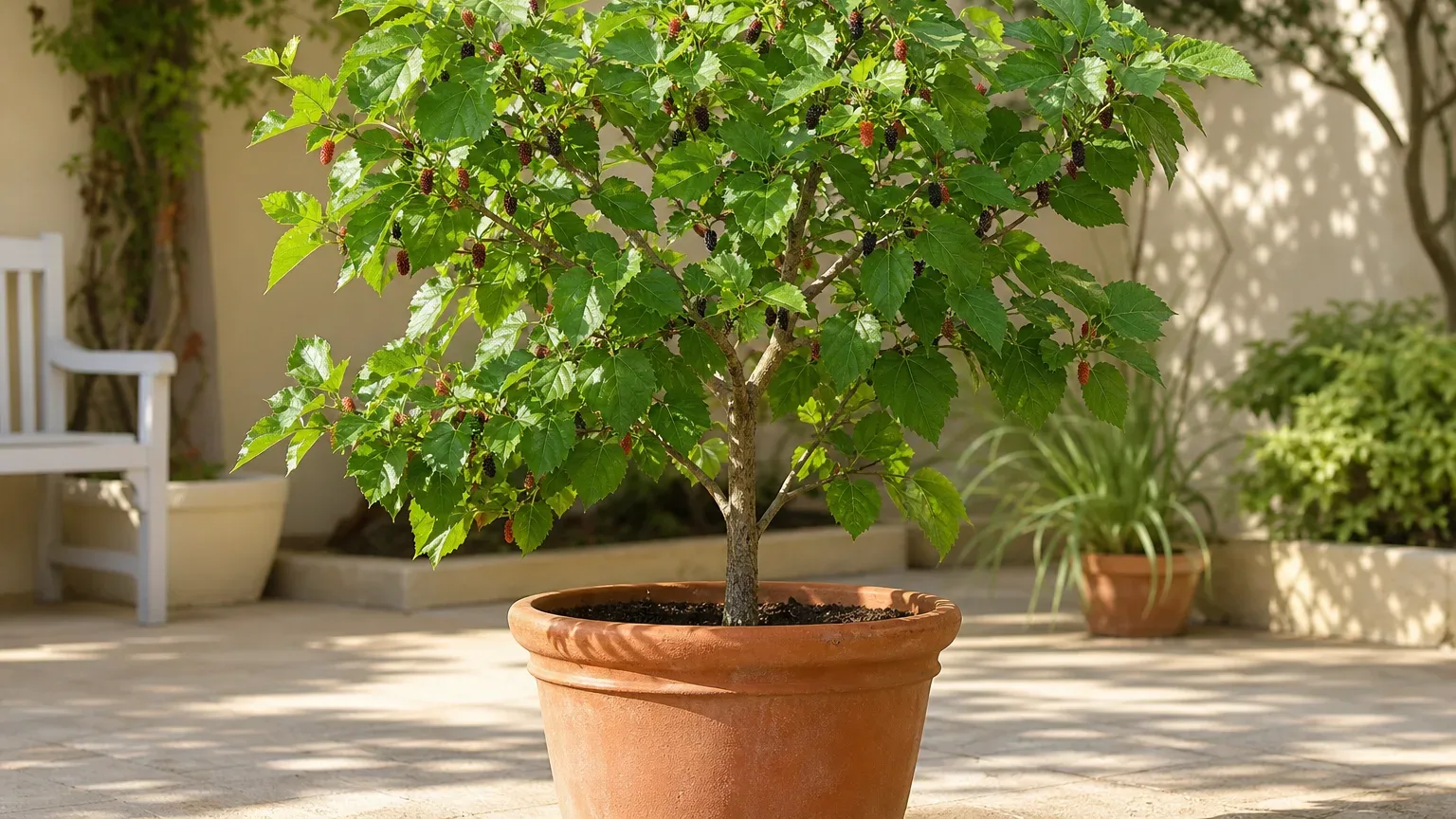
Mulberry Fertilizer Guide for Pots & Gardens
Mulberry Fertilizer Guide for Pots & Gardens
Mulberry does not need a weekly “boost.” Morus alba is a fast-growing deciduous fruit tree that often thrives in ordinary garden soil once roots are established. UF/IFAS Gardening Solutions notes that mulberry trees generally do not require fertilization after establishment and can perform in infertile sandy ground. Your job is to feed only when active growth, light, and healthy roots can use nutrients — especially if the tree lives in a pot, where salts accumulate and nutrients wash out quickly.
For a home shahtoot or white mulberry in India, start with a complete balanced or fruit-tree fertilizer at half the container label rate every four to six weeks during visible active growth, skip feeds whenever the mix stays saturated or the tree is heat-wilted, and treat large hectare NPK schedules from leaf plantations as a different crop system, not a terrace recipe.
Mulberry fertilizer: the quick answer
Feed Mulberry when new leaves and shoots are expanding, the root zone is moist but not waterlogged, and the canopy is in full outdoor sun. Pause after leaf fall or during cool, low-growth spells. In the ground, many established trees need little more than an annual organic top-dressing and a soil-test-guided dose if growth is clearly weak. In a container, plan small, repeatable feeds because potting media lose nutrients with frequent watering.
Use a complete fertilizer that supplies nitrogen, phosphorus, potassium, and micronutrients. A balanced formula suits a young vegetative tree; a fruit-tree formula with relatively more potassium can suit a bearing plant. Always follow the product label for pots or landscape trees, and begin at half strength in containers rather than converting kilogram-per-hectare field advice into a handful for a 40-litre tub.
Why Morus alba responds the way it does
NC State Extension describes white mulberry as a fast grower that prefers rich, moist, well-drained soil in full sun to part shade, while still tolerating heat, drought, and a wide soil range, including alkaline ground. It also notes a shallow root system. That combination explains the fertilizer pattern you see in real gardens: the tree can race when nutrients and moisture are available, yet an established specimen often looks “fine” with little extra feeding if soil structure and sun are already good.
Nitrogen drives leafy shoot growth. Too much of it on a mulberry you are trying to keep compact or fruit-focused can produce long, soft wood at the expense of a manageable canopy. Clemson Cooperative Extension warns that excessive nitrogen stimulates leafy shoot growth at the expense of flowers and can make lush growth more vulnerable to stress. For Mulberry, that means fertilizer is a growth tool, not a cure for shade, waterlogging, or a root-bound pot.
Fertilizer cannot replace light. Sparse fruiting on a shaded balcony tree is usually a light and pollination issue first. Check the Mulberry light guide before raising the nitrogen rate. If the pot stays wet for days, fix drainage through the Mulberry soil guide because stressed roots will not use an extra feed cleanly.
When to use this page vs other Mulberry guides
Use this page when you are deciding whether to feed, which product class to buy, how to time applications around Indian seasons, or how to read leaf-tip burn after a recent dose. Use the Mulberry watering guide when leaves wilt or yellow while the mix is still wet or bone-dry. Use the Mulberry soil guide when drainage, mix recipe, or pH is the real constraint. Use the Mulberry repotting guide when a congested root ball is starving the tree despite feeding. For species identity, size, and placement, start at the Mulberry overview or the Mulberry plant hub.
In-ground trees vs container Mulberry
In open ground, Mulberry explores a wide, shallow root zone and can draw on soil organic matter and residual nutrients. UF/IFAS’s low-maintenance note fits many landscape trees: if annual shoot growth looks normal, leaf color is a healthy green for the cultivar, and fruiting is acceptable, do not invent a heavy feeding schedule. Prefer a soil test before adding phosphorus or micronutrients, and broadcast any needed fertilizer under the canopy out toward the drip line rather than piling granules against the trunk.
A container tree is a different system. NC State Extension’s container gardening chapter explains that potting media leach nutrients with watering and that salt crust on the mix surface is a cue to leach excess salts with plain water. A terrace mulberry may have only 30–60 litres of mix; orchard or plantation rates will overshoot that root volume. Keep doses small, water first when the upper mix is dry, and watch for white mineral crust, brown leaf margins, and stalled growth after feeding.
India seasonal fertilizer schedule for Mulberry
India does not share one mulberry calendar. A cool-winter north Indian garden, a humid coastal courtyard, and a dry Deccan terrace enter active growth on different weeks. Use seasonal cues, then let new leaves, fruit set, rainfall, and root-zone moisture choose the exact day.
| Seasonal cue | In-ground Mulberry | Container Mulberry |
|---|---|---|
| New spring flush begins | Apply a modest complete dose or organic top-dress if growth was weak last season; prefer a soil test when unsure | Start half-rate liquid or resume controlled-release only after steady new growth |
| Hot dry growth or fruit fill | Feed only if irrigation is reliable; never fertilize drought-wilted roots | Water thoroughly, drain, then feed on a cooler morning; skip severe heat wilt |
| Sustained monsoon rain | Pause if soil is saturated or nutrients would wash away unused | Usually pause while the pot stays wet; resume after a normal wet–dry rhythm returns |
| Post-monsoon active flush | Apply the next light split if the tree is pushing growth again | Resume half-rate feed if shoots and leaves are expanding |
| Cool weather or leaf fall | Do not force growth with nitrogen | Stop routine feeding until fresh growth returns |
Late winter and spring flush
In much of India, late winter to spring brings stronger light and the first flush. Begin feeding only after you see expanding leaves or shoots, especially on a tree that was recently moved, root-pruned, or hard-pruned. Clemson Extension recommends timing woody-plant fertilizer from spring into early summer and again in late summer to early fall when demand and moisture favor uptake, and advises against assuming fertilizer will fix poor growth from damaged or waterlogged roots.
If you repotted into fresh compost-rich mix that already contains controlled-release fertilizer, wait several weeks and judge growth before stacking liquid feed on top. Stacking products is a common path to salt stress in pots. Separate transplant recovery from feeding using the Mulberry repotting guide.
Hot summer and fruit fill
Do not fertilize bone-dry roots during a heatwave. Water the pot thoroughly, let excess drain, and feed later only when leaves are firm again. Consistent moisture during fruit development matters more than a sudden high-nitrogen dose. A bearing tree may benefit from a complete fruit-tree formula with useful potassium, but a “bloom booster” will not create fruit on a shaded or chronically wet plant.
Monsoon pause and post-monsoon resume
Pause routine feeding when monsoon rain keeps the root zone saturated. Soluble fertilizer applied before a downpour can leach away; granules added to an airless pot raise root stress. Move portable containers out of constant roof runoff, confirm drainage holes are open, and wait until the mix returns to a normal wet–dry cycle. Resume a light feed only when fresh growth continues after drainage recovers.
What fertilizer type and NPK to choose
There is no single magic NPK for every Mulberry. Clemson’s guidance on fertilizing trees and shrubs generally favors ratios near 3:1:1 or 3:1:2 for landscape woody plants when a soil test supports phosphorus, and prefers slow- or controlled-release nitrogen to reduce leaching and burn risk. For a fruiting home tree, a complete fruit-tree fertilizer or a balanced product with micronutrients is a practical starting class; the label rate and the tree’s response matter more than chasing one printed ratio from a blog.
In pots, controlled-release, slow-release, and water-soluble liquid fertilizers are all workable if you respect dilution and frequency. NC State’s container handbook notes that liquid fertilizers can replace nutrients lost in heavy rain or rapid growth, and that salt accumulation shows up as a white crust that calls for leaching. Start at half the label’s pot rate. Foliar sprays are for temporary micronutrient correction, not a substitute for a root-zone program.
Organic options such as well-finished compost, vermicompost, or farmyard manure improve structure and supply nutrients more slowly. They are useful as part of a soil-building routine, especially in the ground, but their analyses vary. Treat them as supportive organic matter, then decide whether a measured complete fertilizer is still needed based on shoot growth and leaf color.
How to apply fertilizer without burning shallow roots
Water first when the upper few centimetres of mix are dry and the pot feels lighter, then apply fertilizer to moist — not soggy — media. Keep granules off the trunk flare and off dry foliage. For in-ground trees, spread fertilizer evenly under the canopy toward the drip line rather than dumping it at the stem. Clemson recommends irrigating after application so nutrients dissolve and move into the root zone, and warns against fertilizing plants that already show stress from drought, pests, or excess water.
If a white crust appears on potting mix after repeated liquid feeds, stop fertilizing and leach a freely draining pot with plain water until excess drains clearly. Do not flood a compacted or already waterlogged container. Brown tips that appear days after a strong dose, especially with crusted media, point to soluble-salt injury more often than to a mysterious disease.
Compost, FYM, and sericulture schedules are different jobs
Home fruit Mulberry and commercial leaf Mulberry are related plants with different goals. Tamil Nadu Agricultural University’s sericulture pages publish high NPK recommendations per hectare for irrigated mulberry leaf gardens, with split applications after leaf harvest and pruning, plus farmyard manure during nursery and field preparation. Those schedules exist to push repeated leaf crops for silkworms. They are species-relevant evidence that Morus responds strongly to nutrition under intensive culture — and they are not safe to copy as kilograms into a balcony pot.
For a fruiting garden tree, borrow the principles, not the hectare math: prefer soil-test guidance, split modest doses through active growth, use well-decomposed organic matter, and avoid mixing biofertilizer packets carelessly with concentrated inorganic fertilizer in a small root ball. If your goal is leaf biomass for sericulture, follow local package-of-practices documents instead of this home-fruit guide.
Signs of underfeeding vs overfertilizing Mulberry
Underfeeding on an otherwise healthy, sunny tree can look like pale overall leaf color, short annual shoots compared with previous years, and thin canopy density despite good watering. Confirm light and root health first. A soil test is more reliable than guessing micronutrients from a photo.
Overfertilizing often shows as brown leaf tips or margins after a recent feed, a white crust on the mix, soft overly lush shoots with weak wood, and sometimes leaf drop on salt-stressed plants. Clemson notes that excess fertilizer can injure or kill plants through fertilizer burn and that unused nutrients can move into waterways. On Mulberry, dial back nitrogen if the tree is already racing beyond the space you can prune.
Yellow leaves on wet soil are more often a watering or drainage problem than a cue to add more nitrogen. Open the Mulberry watering guide before feeding a soggy plant.
Common Mulberry fertilizer mistakes
The most common mistake is treating a low-need landscape mulberry like a hungry annual and stacking feeds all summer. The second is importing sericulture or orchard hectare rates into a container. The third is fertilizing dry, heat-wilted, or waterlogged roots. The fourth is ignoring salt crust and repeating liquid doses until margins scorch. The fifth is blaming fertilizer for poor fruit when the tree lacks full sun, female flowers, or a pollination partner on a dioecious planting.
Clemson’s fertilizer environmental guidance frames the practical rule set: right source, right rate, right time, and right place. Sweep granules off paving, follow the label, and skip applications that cannot be taken up.
Related Mulberry guides
- Mulberry overview — identity, size, and where fertilizer fits in overall care
- Mulberry light — sun needs before you raise feeding rates
- Mulberry watering — wet/dry diagnosis that often mimics nutrient problems
- Mulberry soil — mix and drainage that control nutrient uptake
- Mulberry repotting — root space refresh when pots leach or salt up
- Mulberry plant hub — full care cluster entry point
Conclusion
Mulberry fertilizer care is mostly restraint with good timing. Morus alba grows quickly when sun, moisture, and nutrients align, yet established ground trees often need little supplemental fertilizer, while containers need small, planned feeds and careful salt management. Feed during active growth, prefer complete products at conservative rates, pause in saturated monsoon soil and cool dormancy, and never convert leaf-plantation hectare schedules into a pot dose. If growth is weak, check light, water, and roots before reaching for another scoop of nitrogen.