Mulberry Propagation: Hardwood Cuttings & Seed
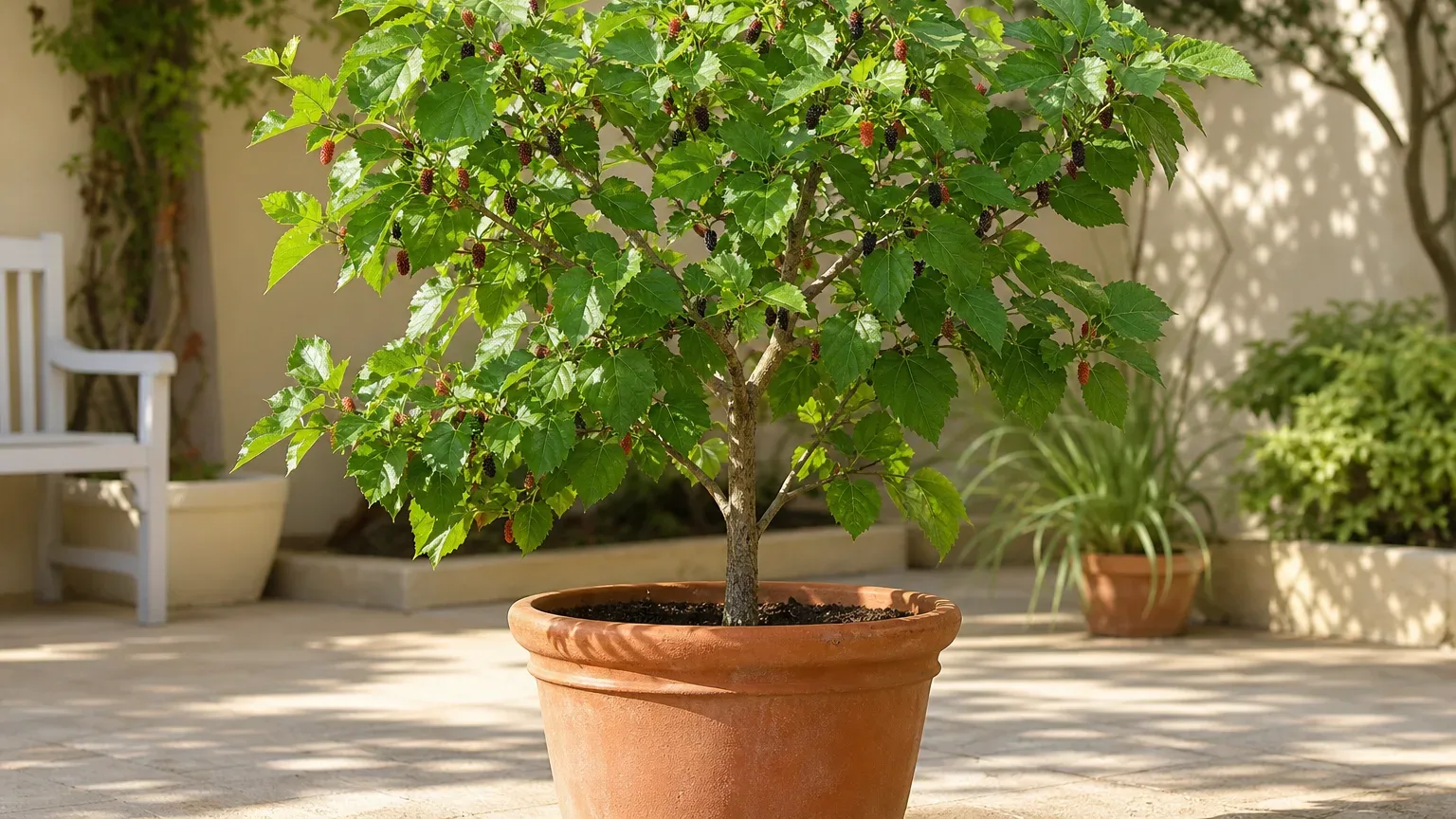
Mulberry Propagation: Hardwood Cuttings & Seed
Mulberry Propagation: Hardwood Cuttings & Seed
Mulberry (Morus alba) multiplies readily once you match the method to the goal. The Royal Horticultural Society recommends hardwood cuttings taken from mid-autumn until late winter as the practical way to make new trees from an existing mulberry, and notes that young trees can take around eight years to begin fruiting. (RHS — Grow mulberries) NC State Extension lists layering and seed among recommended strategies for white mulberry, a fast-growing deciduous tree that can reach 30–60 feet with a shallow root system and milky sap in broken twigs. (NC State Extension — Morus alba)
This guide walks through hardwood cuttings step by step, when simple layering or seed makes more sense, how plant sex affects fruit, and how to care for young plants after they root. Everyday culture after establishment belongs in the mulberry overview, watering, light, and soil guides—not in a propagation tray.
Why Mulberry Propagation Confuses Home Growers
Online advice often treats mulberry like a soft houseplant cutting or like a guaranteed fruiting orchard tree. Morus alba is neither. It is a woody deciduous fruit tree that roots well from dormant wood when handled correctly, but a seedling is not a cultivar copy, and a male tree will never produce berries. Missouri Botanical Garden describes white mulberry as usually dioecious—separate male and female trees—though some plants are monoecious, with sweet blackberry-like fruit only after female flowers are fertilized. (Missouri Botanical Garden — Morus alba)
Clone, seedling, or nursery tree
A hardwood cutting or layer is a vegetative clone of the parent shoot: same leaf habit, same sex expression, same fruit potential as that wood. A seed reshuffles genetics and may produce a tree that never matches the fruit you ate. Buying a named nursery plant is still the fastest route to a known fruiting or fruitless selection when you lack healthy parent wood. UF/IFAS also warns that weeping and contorted ornamentals may be sold as non-fruiting trees, so read labels before you assume every mulberry will crop. (UF/IFAS Gardening Solutions — Mulberry)
Choose Your Propagation Path First
Start with the outcome you want: a genetic copy, a cheap experiment, or a ready fruiting plant.
When hardwood cuttings are the best home method
Choose hardwood cuttings when you already have a healthy, correctly identified mulberry and want one or more true-to-type backups. The RHS includes mulberry among fruit plants suited to hardwood cuttings and describes the method as reliable though often slow to show roots and shoots. (RHS — Hardwood cuttings) This is the default home method for shahtoot and white mulberry in cool-season windows, especially on a terrace where you can stick cuttings in deep pots rather than dig a trench.
When layering or seed fits better
Choose simple layering when a low branch can be pegged into soil while still attached to the parent—NC State’s plant toolbox recommends layering for Morus alba, and the Extension Gardener Handbook explains that layered shoots root while the parent keeps supplying water. (NC State Extension — Morus alba) (NC State Extension Gardener Handbook — Propagation) Choose seed when you accept genetic variation, want many plants cheaply, or are managing wildlife plantings—not when you need a named fruiting clone. Seedlings also self-sow aggressively; NC State notes white mulberry can become weedy and that hand-pulling young seedlings is the practical control. (NC State Extension — Morus alba)
Best Timing for Mulberry Propagation
Hardwood wood roots when the tree is dormant or nearly so—not when soft tips are pushing hard growth and bleeding sap.
Cool-season windows in India and frost-free climates
The RHS times hardwood cuttings from mid-autumn until late winter, after leaf fall, avoiding severe frost. (RHS — Hardwood cuttings) In much of India, mirror that logic during the cool, drier months after the monsoon flush hardens and leaves thin or drop—typically late autumn through late winter in subtropical and temperate zones. In frost-free coastal or tropical sites where Morus alba stays partially leafy, take firm current-season wood when growth has slowed and nights are cooler, rather than during peak monsoon humidity that keeps cut ends wet without callusing. NC State’s handbook places hardwood cuttings in late fall, winter, or early spring when stems are dormant, firm, and not actively flushing. (NC State Extension Gardener Handbook — Propagation)
How to Propagate Mulberry From Hardwood Cuttings
Think of a mulberry hardwood cutting as a dormant stick that calluses over winter and pushes roots as spring warmth returns—not as a leafed tip in a water jar.
Selecting and preparing the wood
Select vigorous, healthy shoots of the current year’s growth that are woody but still pliable; remove soft tip growth. (RHS — Hardwood cuttings) Cut sections 15–30 cm (6–12 inches) long: a sloping cut above a bud at the top (to shed water and mark orientation) and a straight cut below a bud at the base. (RHS — Hardwood cuttings) Wear gloves if milky latex irritates your skin—NC State reports that leaves and young shoots contain mildly toxic white latex, and unripe fruit plus milky sap can cause stomach upset. (NC State Extension — Morus alba) Take wood only from disease-free trees; do not propagate from cankered or pest-ridden parents.
Rooting mix, hormone, and placement
Dip the basal cut in rooting hormone if available—the RHS recommends a hormone rooting compound for hardwood cuttings. (RHS — Hardwood cuttings) Missouri Botanical Garden’s general cuttings guidance notes that many plants root faster with hormone and that cuttings develop better roots in a soil-less mix than in water. (Missouri Botanical Garden — Propagating by cuttings) For a few terrace cuttings, insert them into deep containers of a gritty mix such as equal parts coarse grit and multi-purpose compost, burying about two-thirds of each cutting so a few buds remain above the surface. (RHS — Hardwood cuttings) In a garden bed, use a sheltered trench with well-drained soil amended with compost, space cuttings 10–15 cm apart, and firm after frost heave. Keep the medium moist but never waterlogged—mulberry’s shallow roots hate stagnant wetness once growth resumes.
Rooting timeline and first pot-up
Expect callusing through the cool season and root development as temperatures rise; the RHS notes hardwood cuttings can generally be left until the following autumn before lifting, provided they do not dry out in summer. (RHS — Hardwood cuttings) In warm Indian winters, you may see earlier bud break—resist yanking cuttings every week. A gentle tug that meets resistance, plus new leaf flush, is a better signal than calendar hope. Pot rooted plants into a free-draining mulberry soil mix in a modest container first; jump to an oversized tub and you invite wet, sour mix around a still-small root system. Harden gradually into the full sun mature trees need, covered in the light guide.
Propagating Mulberry by Simple Layering
Simple layering suits a mulberry with flexible low branches. Bend a healthy stem to the ground, cover a mid-section with soil while leaving 6–12 inches of tip above ground, stake the tip upright, and wound the buried underside if needed to encourage roots. (NC State Extension Gardener Handbook — Propagation) Keep the buried zone evenly moist through one growing season. When a dense root mass has formed, sever the new plant from the parent and pot or plant it with the same aftercare you would give a rooted cutting. Layering is slower than sticking a batch of hardwood sticks, but the attached shoot rarely desiccates the way a neglected cutting can.
Growing Mulberry From Seed
Seed is straightforward and matches NC State’s recommended strategies, but it is the wrong tool if you need a named fruit clone. (NC State Extension — Morus alba) Clean ripe fruit pulp from seeds, sow in a sterile, free-draining seed mix, and keep evenly moist in bright light—not baked full sun under a sealed dome. Watch for damping-off in overly wet trays: collapse at the soil line means reduce moisture and improve air flow rather than watering more. Transplant seedlings once they have several true leaves, then grow them outdoors in full sun. Label seedlings clearly so you never sell or gift them under a parent cultivar name. Where white mulberry is invasive or restricted, do not sow freely and remove volunteer seedlings early, as NC State advises. (NC State Extension — Morus alba)
Sex, Fruit, and What a Clone Actually Copies
Fruit only forms on trees with female flowers. Missouri Botanical Garden and NC State both describe white mulberry as usually dioecious, with fruit following fertilized female flowers; fruit may ripen white, pink, red, or purple-black depending on the tree. (Missouri Botanical Garden — Morus alba) (NC State Extension — Morus alba) UF/IFAS adds that some mulberries are monoecious and that dioecious plantings may need both sexes for fruit. (UF/IFAS Gardening Solutions — Mulberry) A cutting from a known fruiting female (or a self-fruiting cultivar) copies that fruiting potential; a cutting from a male ornamental copies a non-fruiting tree. Site fruiting clones away from paving—fallen fruit stains surfaces. (UF/IFAS Gardening Solutions — Mulberry)
Common Mulberry Propagation Failures
Most failures are moisture and timing errors, not mysterious genetics. Soft green tips stuck in humid bags rot before they callus—use firm hardwood in the cool season instead. Cuttings left bone-dry in a hot terrace wind never form roots; cuttings sitting in a saucer of stagnant water invite stem and root decay. Upside-down sticks (straight cut at the top) waste a season—always keep the sloping cut at the apex. Propagating from a male or fruitless ornamental and expecting berries is a planning failure, not a rooting failure. Finally, impatient early lifting of barely callused wood undoes months of waiting; leave hardwood cuttings in place through the first full growing season when you can. (RHS — Hardwood cuttings)
Aftercare for Young Mulberry Plants
Once roots and leaves are active, treat the plant as a young outdoor tree. Water when the top few centimetres of mix dry, following the watering guide, and avoid permanent saucer water around the shallow root system NC State describes. (NC State Extension — Morus alba) Give full sun as foliage hardens. Delay heavy pruning until the plant is established; when you do shape it, work in late fall or winter because mulberries bleed sap if cut in active growth. (RHS — Grow mulberries) (NC State Extension — Morus alba) Move up pot size gradually using the repotting guide, and do not fertilize hard until roots fill the container. Expect years—not months—before meaningful fruit on a rooted cutting or seedling; the RHS’s roughly eight-year figure for young trees is a useful planning horizon. (RHS — Grow mulberries)
When to Use This Page vs Other Mulberry Guides
Use this page when you are making new plants—taking hardwood cuttings, layering a branch, or sowing seed. Use the overview for species identity, mature size, and whether mulberry fits your space. Use light and watering once a rooted plant is growing on. Use soil and repotting when choosing mix or upsizing containers. Use pruning for dormant structural cuts and sap-bleed timing—not for multiplying plants. Use fertilizer only after establishment, not on unrooted cuttings.
Related Mulberry Guides
- Mulberry overview — habit, size, fruit safety, and whether to grow this tree at all
- Mulberry light needs — full-sun placement for strong structure and fruiting
- Mulberry watering — deep watering for young and container trees
- Mulberry soil — free-draining mixes for pots and ground
- Mulberry repotting — when and how to move a young tree up
- Mulberry pruning — dormant cuts without excessive sap bleed
- Mulberry fertilizer — feeding established plants, not fresh cuttings
Conclusion
Propagate Morus alba by deciding first whether you need a clone, a seedling, or a nursery tree. For most home growers with a good parent plant, hardwood cuttings in the cool season—firm 15–30 cm wood, hormone optional, two-thirds buried in gritty free-draining mix—are the method the RHS builds around mulberry. Layering gives a patient, low-risk clone on attached wood; seed is easy but variable and can create weedy volunteers. Protect yourself from latex, confirm fruiting sex before you expect berries, and give rooted plants full sun, careful watering, and years of growth before you judge the harvest.