Brown Tips on Mulberry: Salt Burn, Drought & Scorched Leaf
Quick answer
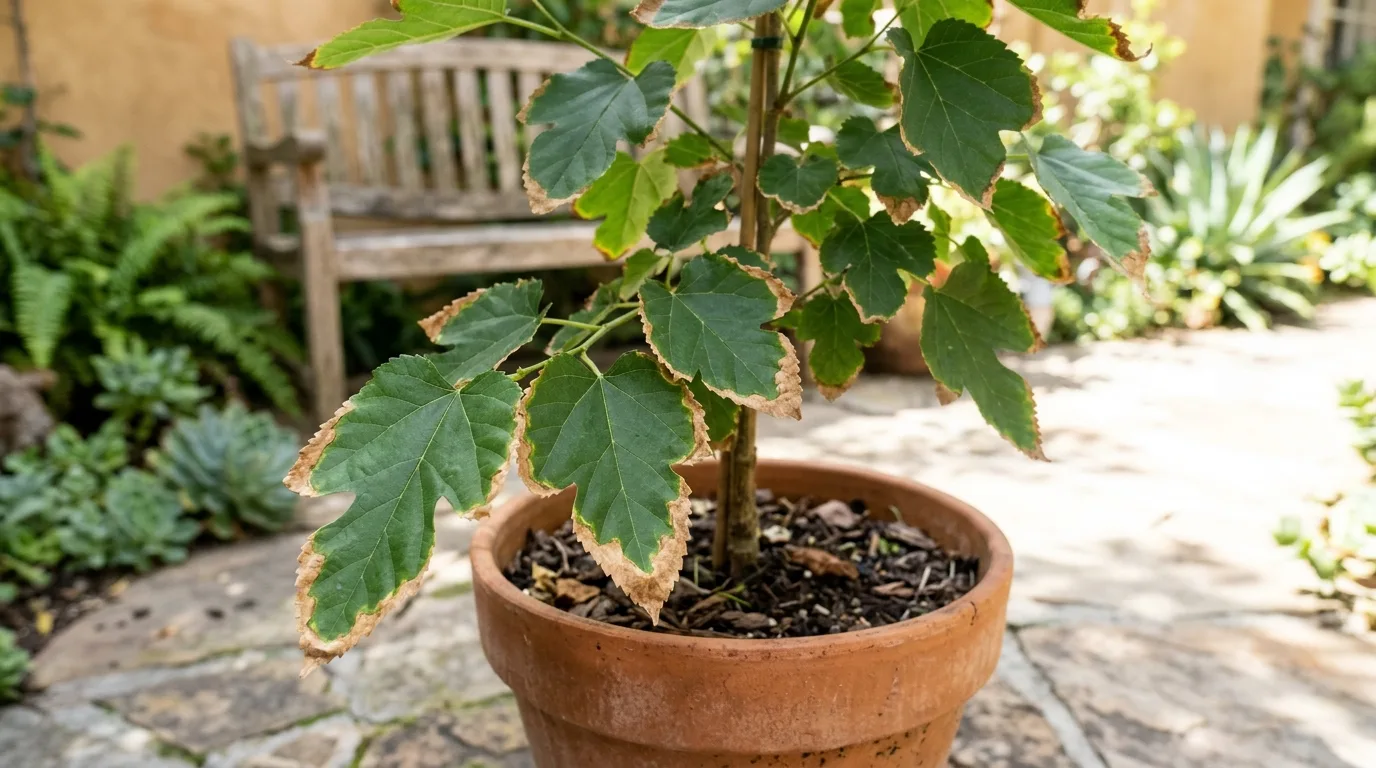
Brown tips and scorched margins on Mulberry (Morus alba and Morus rubra) are primarily caused by soluble fertilizer salt accumulation in container media, severe soil moisture deficits during hot weather, or tap water chemical sensitivity. The leaf tips and outer serrations dry out and turn crisp tan-to-brown with a narrow yellow halo. First steps: flush the container substrate thoroughly with fresh water to leach accumulated mineral salts, deep-soak the root zone, and protect potted trees from hot desiccating winds.
Brown Tips on Mulberry: Salt Burn, Drought & Scorched Leaf Fixes
This guide covers brown tips on Mulberry. See also the general Brown Tips guide, watering, and light pages for this plant.
Brown Tips on Mulberry: Salt Burn, Drought & Scorched Leaf Fixes
Quick answer
Brown tips and crispy edges on Mulberry (Morus alba and Morus rubra) leaves indicate physiological marginal necrosis. The most frequent triggers are soluble fertilizer salt buildup in container soils, prolonged root dehydration from missed waterings during hot weather, and intense wind scorch. Because leaf tips and margins are the furthest extremities of the plant’s vascular plumbing, they dry out first when hydraulic pressure falters. To resolve it, flush the potting soil with abundant fresh water to leach out accumulated mineral salts, maintain consistent soil moisture, and shelter potted trees from drying wind gusts.
For universal diagnosis guidelines across other woody fruit and foliage plants, explore our comprehensive guide on brown leaf tips.
What brown tips look like on Mulberry
Marginal leaf scorch creates distinctive visual and tactile patterns across the mulberry canopy:
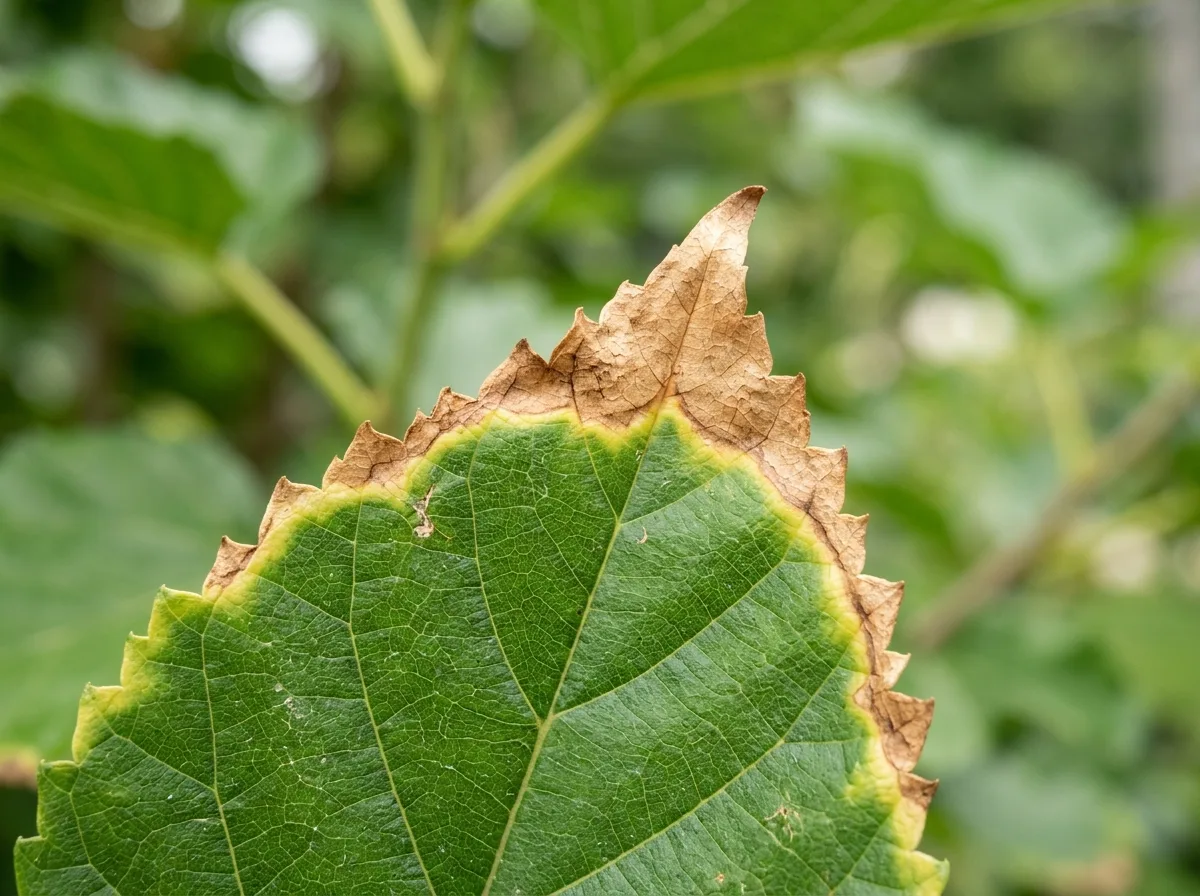
Close-up of Mulberry leaf margin showing dry, crisp, tan-to-biscuit-brown tissue bounded by a thin chlorotic yellow margin.
- Crisp peripheral browning: The sharp apical tip and outer serrated margins turn brittle, tan, or biscuit-brown, crumbling easily when pinched between fingers.
- Yellow chlorotic transition zone: A narrow, vibrant yellow band frequently separates the dead brown leaf margin from the interior green blade tissue.
- Crusty soil surface deposits: A white or pale yellowish chalky crust visible along the top of the potting soil or outer rim of unglazed clay pots, confirming heavy fertilizer or tap water salt accumulation.
- Inward progression: Under chronic drought stress, browning advances inward between main lateral veins, progressing toward overall drooping leaves and premature leaf shedding.
- Canopy distribution: Symptoms appear most heavily on mature, fully expanded middle and lower leaves, distinguishing cultural scorch from apical pest damage such as aphids or spider mites.
If left uncorrected, extensive marginal necrosis limits photosynthetic capacity, resulting in canopy decline and slow growth.
Why Mulberry leaves develop brown tips
Mulberry trees feature expansive, membranous foliage with a high stomatal density designed for vigorous summer transpiration, as noted by NC State Extension and NC State Extension.
Key physiological mechanisms driving tip browning include:
- Fertilizer salt accumulation (Osmotic root stress): Regular applications of chemical fertilizers leave behind mineral ions (nitrates, sulfates, phosphates). When potting soil dries slightly, the concentration of these dissolved salts spikes, reversing osmotic pressure and drawing water out of tender root hairs, a condition documented by Utah State University Extension.
- Acute summer drought stress: Because mulberries are vigorous drinkers, container soil can dry out completely within hours on hot summer days. The resulting moisture deficit causes vascular cavitation, cutting off water to leaf tips and producing severe underwatering.
- High evaporative demand and wind scorch: Exposure to hot, dry summer breezes accelerates cuticular transpiration beyond the intake capacity of container roots, as detailed by the Wisconsin Horticulture Division of Extension.
- Root restriction and pot-bound compaction: When roots fill the entire container, soil volume decreases, preventing adequate water buffering and leading to rapid wet-to-dry extremes.
- Subterranean root decay: Paradoxically, past episodes of overwatering that rot lower roots reduce total root surface area, leaving the tree unable to hydrate its canopy during peak sun and triggering root rot.
Step-by-step remediation protocol
Restore healthy leaf margin development with this targeted recovery process:
Step 1: Soil leaching flush
Take the potted mulberry outdoors or to a wash basin. Slowly pour fresh, tepid water—equal to roughly double the pot’s volume—evenly across the soil surface. Allow the water to stream continuously through the drainage holes, carrying away accumulated mineral salts. Repeat this leaching cycle after 30 minutes.
Step 2: Calibrate watering cadence
Never allow a potted mulberry to dry out to the point of severe wilting during active spring and summer growth. Check the soil daily; when the top 2 to 3 centimeters feel dry, water deeply until water flows out the bottom. Empty drainage saucers promptly to avoid root suffocation.
Step 3: Relocate from extreme microclimates
If the tree sits on hot reflective concrete, near brick walls, or in an exposed windy corridor, move it to a location sheltered from intense afternoon winds while still providing 6 to 8 hours of direct sunlight, adhering to cultivation benchmarks from the Missouri Botanical Garden.
Step 4: Halt high-salinity fertilizers
Pause all synthetic, fast-acting fertilizers immediately for 3 to 4 weeks. When resuming feeding, switch to a gentle, organic liquid formulation (such as diluted fish hydrolysate or seaweed extract) applied at half-strength, or top-dress with aged organic compost.
Long-term cultural care to prevent scorched leaf tips
Maintain vibrant, unblemished mulberry foliage throughout the growing season:
- Pot sizing and repotting: Repot container-grown mulberries every 1 to 2 years into a container 5 to 8 centimeters wider, using a rich, loam-based potting soil mixed with 20% coarse perlite or pumice to ensure steady moisture retention with sharp drainage.
- Root-zone mulching: Apply a 2- to 3-centimeter layer of organic bark mulch over the soil surface to buffer root temperatures and slow evaporation during peak summer heat.
- Water quality management: If municipal tap water is heavily mineralized or treated with high chlorine, use collected rainwater, filtered water, or let tap water sit in an open container for 24 hours before irrigating.
- Seasonal winter dormancy prep: As autumn approaches, naturally reduce watering to allow stems to harden off, avoiding late-season fertilizer flushes that induce frost-sensitive growth and yellow leaves.
Related tool
Analyze container soil moisture retention and prevent dehydration scorch using our Soil Moisture Calculator.
Related mulberry problems: