Aphids on Mulberry: Identification, Honeydew Control &
Quick answer
Aphids on Mulberry (Morus spp.) congregate in dense colonies along tender terminal spring shoots and the undersides of young leaves, piercing vascular tissues to extract phloem sap. This feeding causes leaf curling, distorted shoot growth, and copious sticky honeydew that fuels black sooty mold. First steps: blast infested branches with a strong stream of water to dislodge colonies, prune heavily infested shoot tips, and apply insecticidal soap or release native lady beetle predators.
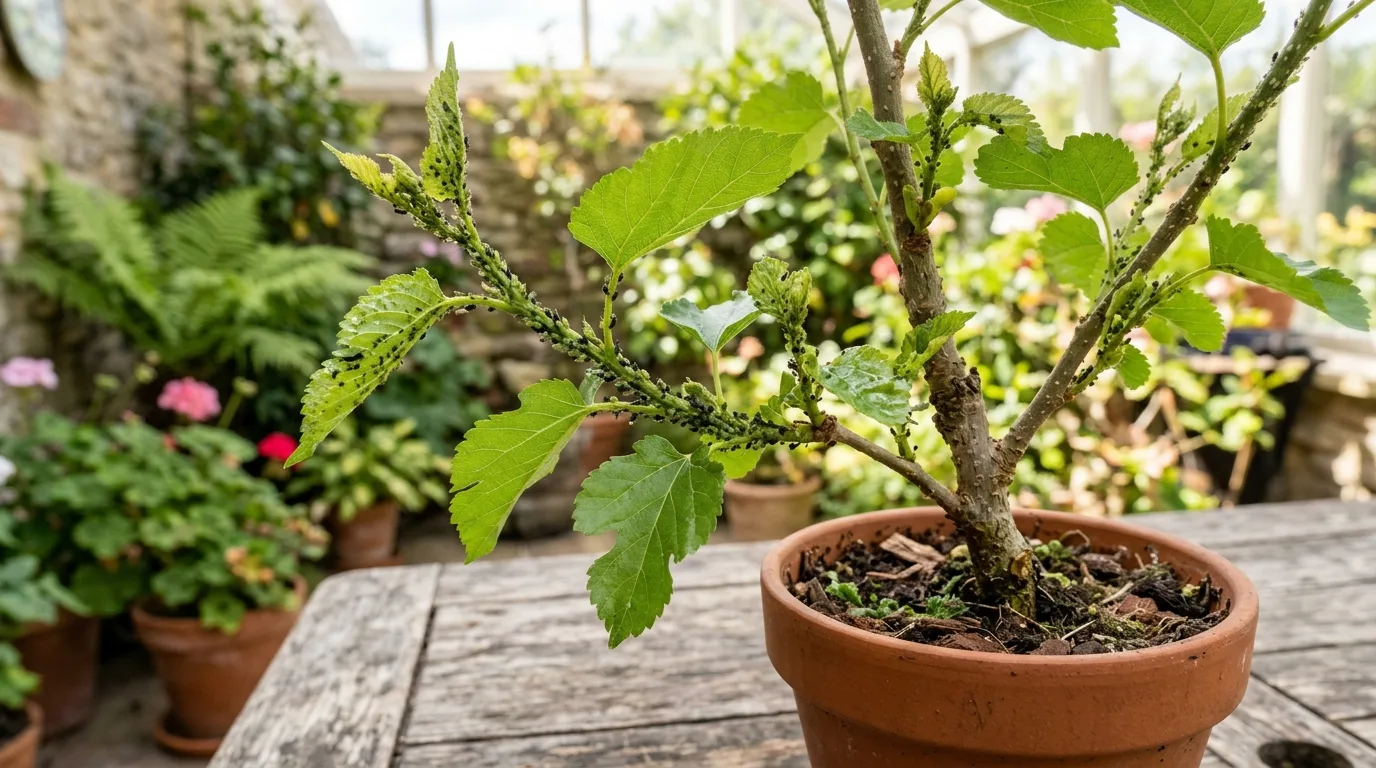
Aphids on Mulberry: Identification, Honeydew Control & Treatment
This guide covers aphids on Mulberry. See also the general Aphids guide, watering, and light pages for this plant.
Aphids on Mulberry: Identification, Honeydew Control & Treatment
Quick answer
Aphids on Mulberry (Morus alba and Morus rubra) are small, soft-bodied phloem-feeding insects that cluster along the undersides of newly emerged leaves and soft terminal shoots. By tapping directly into vascular tissues, they drain plant sugars and amino acids, leading to crinkled foliage, stunted branch growth, and dripping coats of sticky honeydew that cultivate black sooty mold. To fix an infestation, physically dislodge aphid clusters with a sharp spray of water, suppress ant attendants with trunk barriers, and spray undersides of leaves with insecticidal soap while encouraging native predators like lady beetles and lacewing larvae.
For comprehensive symptom comparisons across all container and landscape plants, consult our master symptom guide on aphids.
What aphids look like on Mulberry
Aphid colonies establish quickly during spring vegetative flushes and display obvious physical and physiological markers:
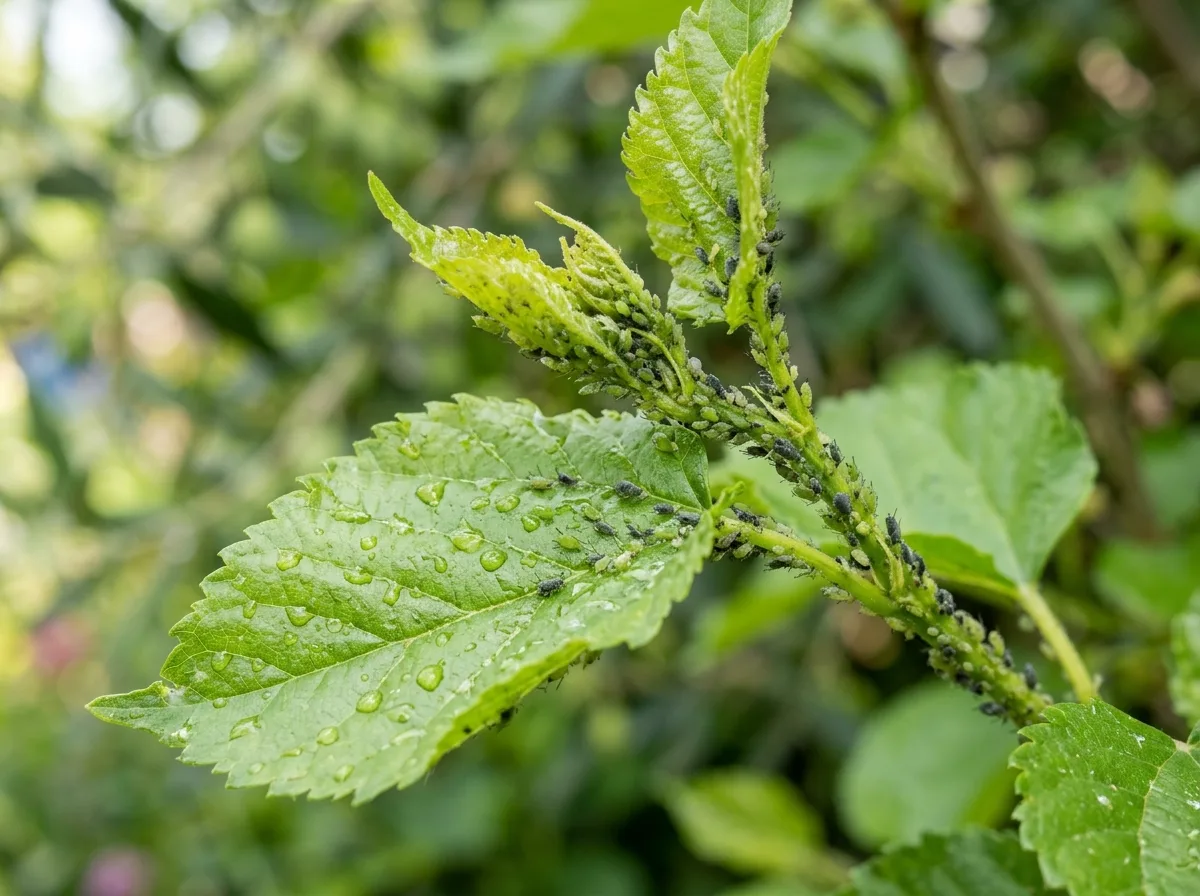
Aphids clustering along tender terminal shoots and leaf veins on Mulberry — notice the leaf curling and sticky honeydew droplets.
- Dense shoot clusters: Hundreds of tiny (1 to 2 mm) wingless, pear-shaped insects ranging in color from lime-green and yellow-green (Myzus persicae, Aphis gossypii) to dull black (Aphis fabae) packed tightly along new branch tips.
- Cupping and curled leaf margins: Leaves fed upon during bud break develop puckered, downward-cupped, or twisted margins, resembling early drooping leaves.
- Sticky honeydew and black sooty mold: Leaf surfaces, fruit clusters, and sidewalks beneath the canopy become coated in a clear, varnish-like syrup that turns into a velvety black fungal soot (Capnodium spp.).
- Ant trails on the trunk: Streams of worker ants marching continuously up and down the bark to harvest honeydew and protect aphid nymphs from natural enemies.
- White cast skins: Flakes of translucent white exuviae (shed nymphal exoskeletons) scattered across leaf surfaces, often mistaken for whiteflies or fungal spores like mold on soil.
Unchecked sap drainage on young saplings or container-grown mulberries slows canopy development, contributing to overall slow growth and premature yellow leaves.
Why Mulberry trees attract aphids
Morus species are renowned for their rapid, luxuriant vegetative growth and protein-rich foliage—qualities that historically made white mulberry the premier food plant for silkworms, as noted by NC State Extension and the Missouri Botanical Garden.
Several environmental and cultural factors make mulberries prime aphid targets:
- High amino acid concentrations in new shoots: During rapid spring growth or following summer pruning, mulberry terminal buds produce tender, unlignified tissues packed with soluble nitrogen compounds that stimulate aphid reproduction, documented by the Wisconsin Horticulture Division of Extension.
- Excessive synthetic nitrogen fertilization: Over-fertilizing with fast-release high-nitrogen fertilizers creates an unnatural surge of soft vegetative shoots, triggering exponential aphid population spikes.
- Ant mutualism and predator exclusion: Argentine ants and carpenter ants aggressively defend aphid herds against natural biological controls, biting and killing beneficial predator larvae, as explained by UC IPM.
- Sheltered microclimates: Container-grown mulberries kept in enclosed courtyards or patios lack natural wind and rainfall, allowing aphid colonies to multiply undisturbed by weather.
Step-by-step eradication and control protocol
Follow this integrated pest management procedure to eradicate aphid colonies while preserving beneficial garden insects and fruit safety:
Step 1: Mechanical water jet dislodgement
In early morning, use a garden hose fitted with a high-pressure brass nozzle or trigger sprayer. Direct a strong, sharp jet of water up into the undersides of leaves and across terminal shoots. This blasts aphids off the tree; once dislodged, soft-bodied aphids rarely survive ground predators to re-climb the tree.
Step 2: Mechanical pruning of terminal strikes
If aphid colonies are tightly curled inside distorted terminal leaves where water spray cannot reach, use clean hand pruners to snip off the infested 5- to 10-centimeter shoot tips. Bag and discard the clippings in the garbage. Mulberries tolerate heavy pruning and will rapidly break dormant lateral buds.
Step 3: Ant exclusion from tree canopy
Wrap a 10-centimeter band of heavy paper or duct tape around the lower trunk (sticky side out), and apply a layer of sticky tree-banding compound (such as Tanglefoot) onto the band. Ensure no low-hanging branches touch the ground, walls, or fences. Excluding ants allows resident lady beetles, syrphid fly larvae, and lacewings to decimate remaining aphids within days.
Step 4: Targeted insecticidal soap or horticultural oil
For stubborn infestations on non-fruiting trees or after fruit has been harvested, spray thoroughly with a potassium salts of fatty acids insecticidal soap (diluted to 1% to 2%) or light horticultural summer oil. Spray in early morning or late evening when temperatures are below 85°F (29°C) to prevent foliar scorch. The soap dissolves the waxy epicuticular layer of the aphids, suffocating them upon contact.
Long-term cultural care to prevent aphid outbreaks
Build durable natural defense and prevent recurrent pest surges on your Mulberry:
- Nitrogen moderation: Avoid high-nitrogen synthetic fertilizers. Instead, top-dress in late winter with well-rotted organic compost or a balanced slow-release organic fertilizer (such as 5-5-5) to promote sturdy, fibrous cell walls rather than overly soft shoots.
- Predator habitat enhancement: Plant nectar-rich flowering companion plants nearby (such as dill, fennel, alyssum, and yarrow) to provide pollen and nectar for adult syrphid flies, lacewings, and parasitoid wasps (Aphidius spp.).
- Pruning sanitation: Prune trees during winter dormancy to remove crossing branches, improve interior sunlight penetration, and open canopy airflow, adhering to structural pruning practices from NC State Extension.
- Regular moisture monitoring: Avoid severe drought stress that concentrates leaf sap, preventing severe underwatering while ensuring excellent drainage to guard against root rot.
Related tool
Identify insect damage, track pest reproduction thresholds, and determine organic intervention timing with our Plant Pest Identifier.
Related mulberry problems: