Overwatering on Neon Pothos: Causes, Checks & Fixes
Quick answer
Overwatering on Neon Pothos (*Epipremnum aureum* 'Neon') means the root zone stays wet too long. First step: stop watering until the top 1–2 inches of mix are dry, then inspect roots if chartreuse leaves keep yellowing on a heavy pot.
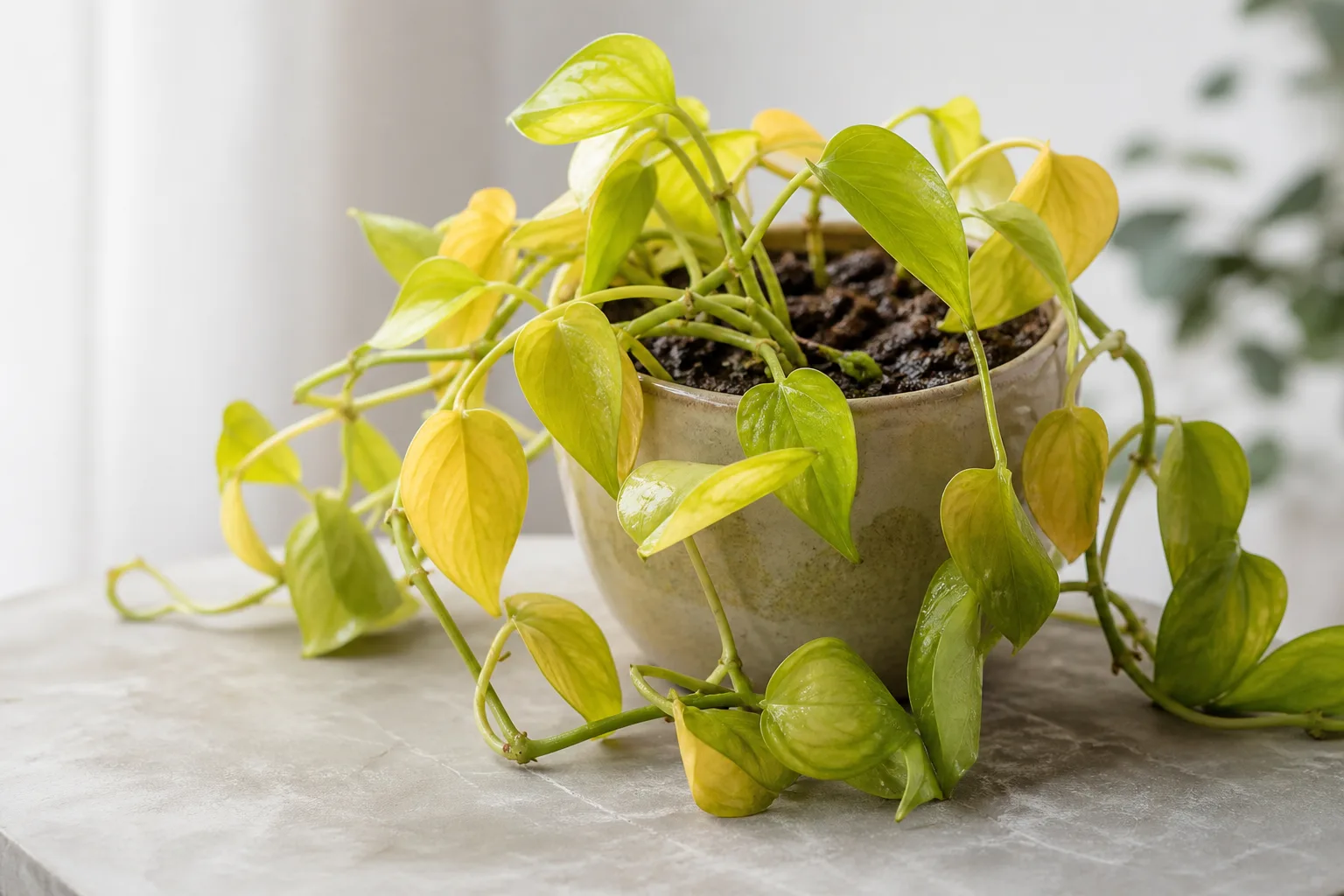
Overwatering on Neon Pothos: Causes, Checks & Fixes
This guide covers overwatering on Neon Pothos. See also the general Overwatering guide, watering, and light pages for this plant.
Overwatering on Neon Pothos: Causes, Checks & Fixes
Quick answer
Overwatering on Neon Pothos (Epipremnum aureum ‘Neon’) is not one heavy drink-it is repeated watering before the mix dries. This chartreuse cultivar is marketed as drought-tolerant and forgiving of missed waterings, which tricks growers into watering on habit while the electric-lime vines still look vibrant and the root zone stays saturated. Pothos is better kept too dry than too wet; chronic dampness suffocates roots long before the color fully fades.
First step: stop watering until the top 1–2 inches of mix are completely dry. Lift the pot-if chartreuse leaves are limp but the container feels heavy and the surface stays cool and damp, you are likely facing root stress, not thirst. For the full dry-down rhythm, see the Neon Pothos watering guide. For advanced mushy roots, see root rot.
For species-wide pothos context, see overwatering on pothos.
What overwatering looks like on Neon Pothos
Yellow lower chartreuse leaves and limp vines
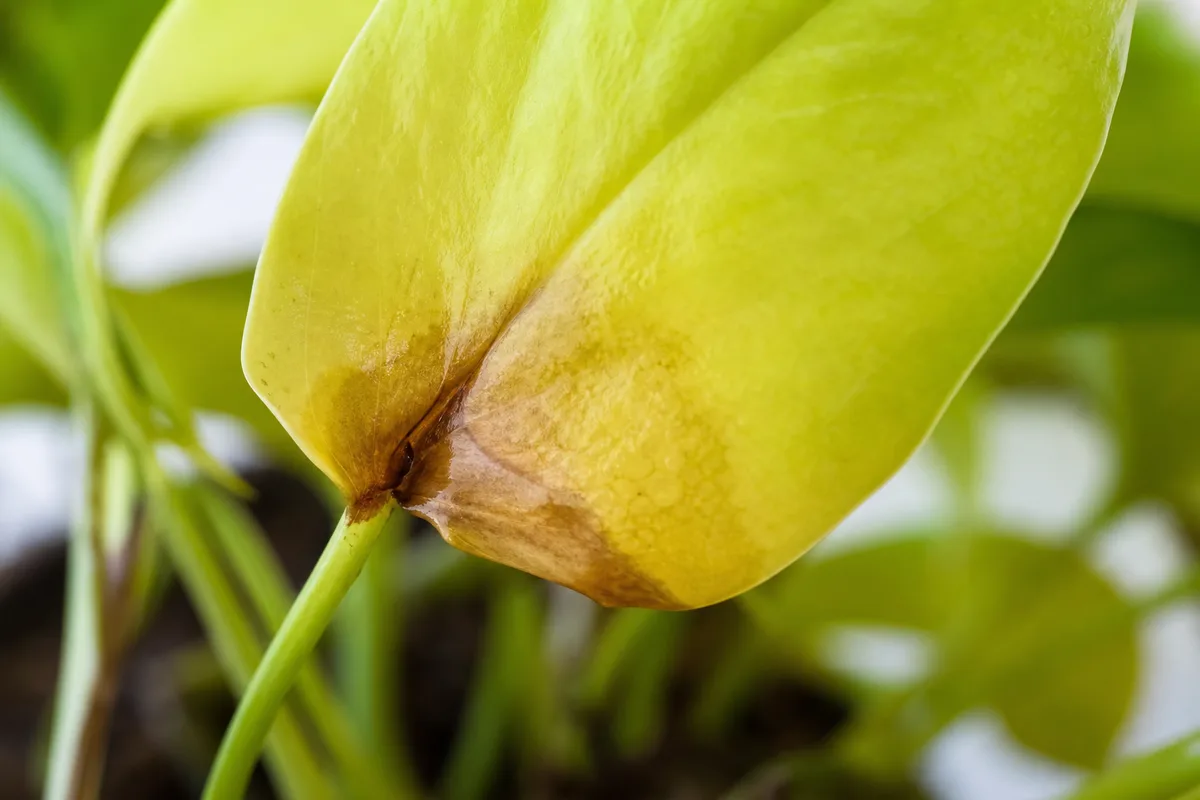
Overwatering symptoms on Neon Pothos - compare with healthy tissue on the same plant.
On a trailing Neon Pothos, the classic pattern is yellowing lower leaves while newer chartreuse tips still look bright-damage climbs from the soil line up the vine. The pot feels heavy days after you last watered. Vines hang limp even though the mix is dark and moist.
Chartreuse foliage makes overwatering harder to spot than on golden or jade pothos. A yellow lower leaf can look like natural color fade or aging until several leaves drop in a cluster. Healthy Neon vines feel firm; stressed vines feel rubbery and pull away easily. Slender, thinner leaves on this cultivar can dull toward olive-green before widespread yellowing appears.
Surface clues often appear together: fungus gnats hovering near damp soil, white mold on the peat surface, and a sour smell from drain holes. See fungus gnats when flies are the first symptom you notice.
The wilt-with-wet-soil trap
The diagnostic trap on Neon Pothos is wilt on wet soil. Owners see drooping chartreuse heart-shaped leaves and reach for the watering can-the opposite of what damaged roots need. When fine roots decay in oxygen-poor mix, they cannot absorb water even though the pot holds plenty. Pothos stores water in its stems, so leaves can stay passable for days while roots fail underground.
If leaves droop but the finger test at 1–2 inches reads wet and the pot is heavy, do not add water. Empty saucers, improve bright indirect light, and let the mix dry. For the full wet-vs-dry wilt split, see wilting on Neon Pothos.
Why Neon Pothos gets overwatered
Calendar watering and winter schedule mismatch
The most common cause is watering on a schedule instead of checking soil. Water pothos when the soil is dry-not every Sunday because an app reminder says so. In active spring and summer growth, many Neon Pothos pots need water every 7–10 days once the top inch dries. In cooler, low-light winter, the same plant may need water only every 10–14 days or longer. Continuing summer frequency through winter is how yellow lower leaves and soggy mix accumulate while the vine still trails normally for weeks.
Neon Pothos grows faster than heavily variegated Marble Queen in bright light, which can mask wet-soil problems until a sudden multi-leaf drop. Fast summer extension does not mean the plant wants constant moisture-it means the vine uses water quickly when light is strong, then slows sharply when days shorten.
Oversized pots, heavy mix, and poor drainage
Setup mistakes compound calendar watering: oversized decorative pots holding excess wet mix, peaty soil without perlite, pots sitting in full saucers, and cachepots with no drainage holes. Fresh Neon Pothos repotting guide into heavy wet mix plus an immediate deep soak is a common trigger-excess water right after repotting stresses roots that are still settling.
NC State recommends letting well-drained medium dry out between waterings. When mix never cycles air back into pore spaces, roots lose oxygen and decay. Standard indoor potting mix amended with 20–30% perlite dries more predictably than straight peat.
Low light and hanging basket vs. cachepot dry-down
Neon Pothos in dim corners transpires less while soil stays damp longer-the exact combination that makes winter overwatering likely. Electric-lime color fades toward plain green when light is weak; see not enough light when dull new growth accompanies slow dry-down.
Pot style changes the clock. A hanging basket exposes soil on all sides to air and often dries in 5–7 days during active growth. A deep cachepot on a dim shelf can hold moisture two weeks or longer in winter. Adjust checks to your setup, not a generic weekly rule. For cultivar biology and normal care baselines, see the Neon Pothos overview.
How to confirm the cause
Work through these checks before changing several variables at once:
- Moisture at depth - Probe 2.5–5 cm (1–2 inches) into the mix. Cool, clinging soil with yellow lower leaves supports overwatering.
- Pot weight - Lift after a proper watering to learn the wet reference. A chronically heavy pot days later means roots sit in stale moisture.
- Wilting vs. moisture - Limp chartreuse vines with wet soil point to root stress, not drought.
- Smell and pests - Sour odor from drain holes, fungus gnats, or surface mold confirm chronic wetness.
- Light level - Dull olive new growth plus slow dry-down suggests low light is slowing water use while habits stay the same.
- Drainage - Standing water in saucers or sealed outer pots keeps roots anaerobic.
- Root inspection - Unpot if smell, stem softness, or continued decline appears after a week of dry-down. Firm pale roots with dry soil mean underwatering instead.
Lookalikes: underwatering, low light, and root rot
| Pattern | Soil / pot | Leaves & vines | Likely cause |
|---|---|---|---|
| Overwatering (early) | Heavy, wet; no sour smell yet | Yellow lower chartreuse leaves; limp vines on moist mix | Repeated watering before dry-down |
| Underwatering | Light, dry top 3–5 cm | Wilt that firms within hours after a soak; crispy edges; firm stems | Missed watering, fast dry-down in bright heat |
| Root rot (advanced) | Heavy, wet, sour smell | Same wet-wilt, plus soft stem at soil line and mushy roots on inspection | Chronic overwatering-see root rot |
| Low light alone | Moist but not sour; slow dry-down | Leggy stretch, dull green new growth without rapid yellowing | Dim placement |
| Natural aging | Normal moisture rhythm | One or two yellow leaves at base of long vine; tips still glossy lime | Senescence-not rot |
First fix for Neon Pothos
Mild cases: stop watering and improve light and drainage
Stop watering and let the top 1–2 inches of mix dry completely before the next drink.
Move the plant to brighter indirect light so it uses moisture steadily and keeps chartreuse color vivid-do not jump to direct sun, which scorches tender lime foliage. Empty any saucer water immediately. If the mix is badly saturated, tip the pot briefly to drain excess, then wait.
Do not fertilize, mist heavily, or repot into a larger container on day one unless roots are clearly rotting.
Moderate cases: inspect roots, trim rot, repot
If soil has smelled sour for days, stems feel soft at nodes, or yellowing continues after a full dry-down week, unpot and rinse away old mix. Trim brown or mushy roots with sterilized scissors. Repot into fresh well-draining mix in a clean pot matched to remaining root mass-not vine length. Water once lightly to settle, then wait for partial dryness again.
Save firm node cuttings in water as insurance if stem bases soften. Hold fertilizer until new chartreuse tips appear for two weeks without further decline.
Recovery timeline
Mild overwatering caught early-wet soil but firm roots-often stabilizes within two to three weeks once dry-down rhythm and light improve. Judge success by new glossy lime growth, not old yellow leaves turning chartreuse again. Yellow or limp leaves rarely re-green; recovery means yellowing stops and fresh tips hold their color.
If more than half the root mass was mushy, recovery may take a full growing season. Cool dim rooms extend timelines; warm bright indirect light speeds dry-down and new tip extension. A single dry week is not enough when roots are damaged-watch for continued decline and escalate to inspection.
What not to do
Do not water because leaves look sad when soil is already wet-that deepens root stress. Do not move the plant into harsh direct sun to “dry it out” faster. Do not repot into a much larger pot to “give roots room”; extra wet mix worsens the cycle. Do not leave runoff sitting in saucers. Do not stack repotting, pruning, and fertilizing the same week on a stressed vine.
How to prevent overwatering next time
Water when the soil is dry at the top 1–2 inches, not on a fixed weekly schedule. In summer that may mean every 7–10 days; in winter every 10–14 days-or longer in cool dim rooms. Always empty saucers within 30 minutes of watering.
Use perlite-amended mix, pots with open drain holes, and container size matched to root mass. Refresh compacted peat every one to two years before it holds water like a sponge. If fungus gnats or surface mold appear, treat them as a moisture warning and lengthen the dry-down interval before reaching for pesticides.
Pair dry-down watering with enough bright indirect light that the vine actually uses moisture-the same baseline in our watering and light guides.
When to worry
Escalate immediately if stems soften at the soil line, several chartreuse leaves yellow within a week, soil smells rotten, or vines collapse while mix stays soggy. At that stage, unpot and assess roots-mild dry-down alone is not enough.
If the entire root ball is mushy and vines collapse from the base, salvage firm node cuttings rather than expecting the original pot to rebound. Severe stem-base softness may be irreversible even after trim and repot.
Conclusion
On Neon Pothos, overwatering is a volume-and-timing error on a drought-tolerant chartreuse vine-not a death sentence if caught while roots are still firm. Confirm moisture at depth, stop watering until the top inch dries, and pair drainage with enough light that the plant actually uses water. Recovery shows up in new electric-lime tips, not old yellow leaves turning green again. When wet soil, sour smell, and soft stems overlap, move from this page to the root rot protocol without delay.
This page was reviewed by the LeafyPixels Review Board against Penn State, Clemson HGIC, and NC State pothos guidance, and our Neon Pothos watering and overview guides before publication. Author: sai-ananth. Reviewed: 2026-06-16.
When to use this page vs other Neon Pothos guides
- Neon Pothos watering guide - Use for routine moisture checks before assuming overwatering is the main issue.
- Neon Pothos problems hub - Browse all 5 common issues on this species.
- Root Rot on Neon Pothos - Different entry point when symptoms overlap with overwatering.
- Yellow Leaves on Neon Pothos - Different entry point when symptoms overlap with overwatering.