Underwatering on Pearls and Jade Pothos: Causes, Checks &
Quick answer
Underwatering on Pearls and Jade Pothos shows as limp vines, a very light pot, and bone-dry mix 3–5 cm down. Water deeply until excess drains, then resume waiting until that depth dries again-do not keep soil constantly wet as a reaction to past overwatering.
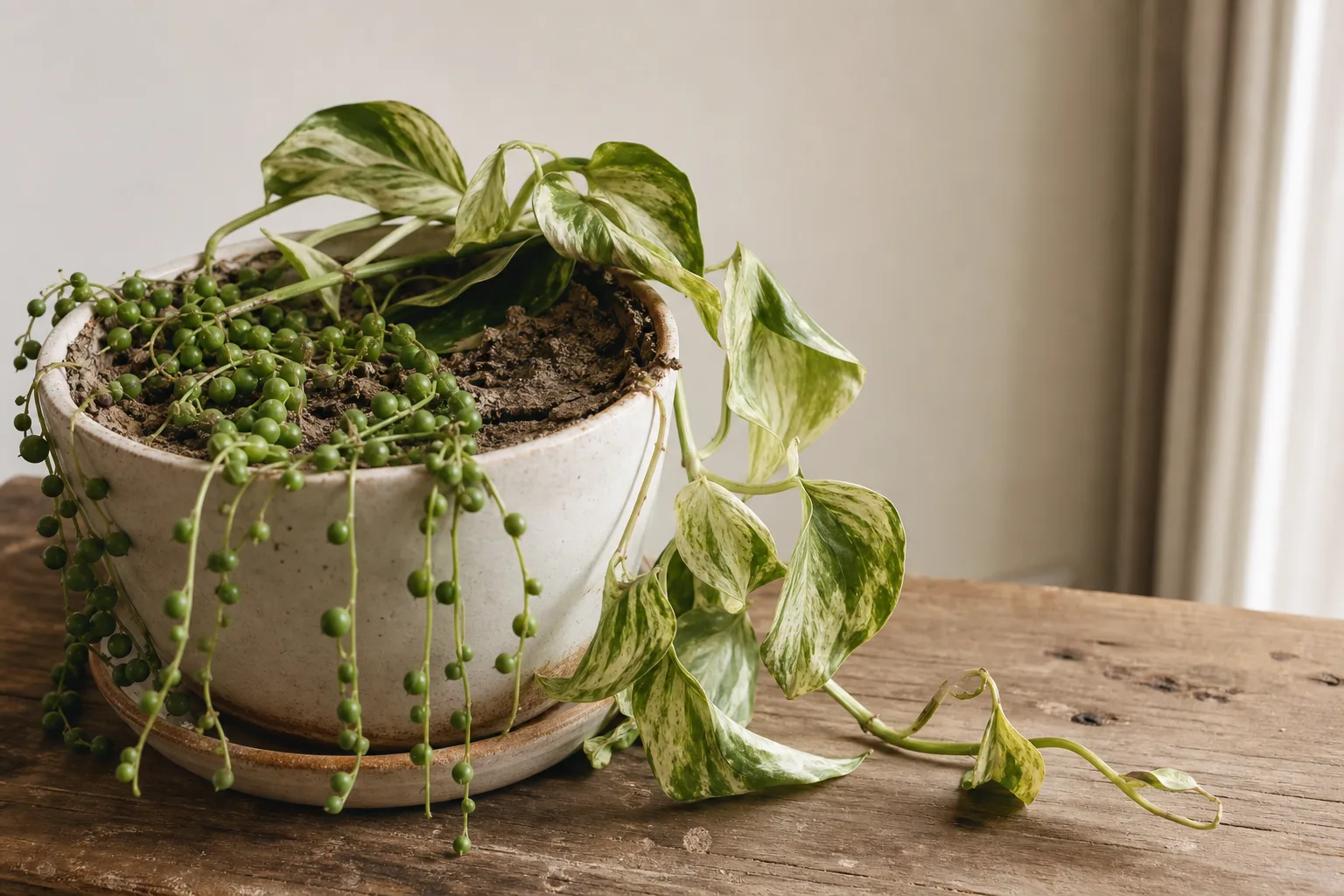
Underwatering on Pearls and Jade Pothos: Causes, Checks & Fixes
This guide covers underwatering on Pearls and Jade Pothos. See also the general Underwatering guide, watering, and light pages for this plant.
Underwatering on Pearls and Jade Pothos: Causes, Checks & Fixes
Quick answer
Underwatering on Pearls and Jade Pothos (Epipremnum aureum ‘Pearls and Jade’) shows up as limp vines, a feather-light pot, and bone-dry mix when the top 3–5 cm has stayed dry too long. This slow variegated cultivar uses water more slowly than standard golden pothos, so owners often swing too far dry after worrying about overwatering-but chronic drought still damages the small marbled leaves and fine roots.
First step: water thoroughly until excess runs from the drainage hole, then discard saucer water. If water runs straight through without soaking the mix, the soil has likely gone hydrophobic and needs bottom-watering before you resume a normal dry-down schedule. Do not react by keeping soil constantly wet-that invites the root rot on Pearls and Jade Pothos Pearls and Jade Pothos overview is more vulnerable to than brief dryness.
What underwatering looks like on Pearls and Jade Pothos
Watch the small white-and-green leaves together with the pot, not one leaf in isolation.
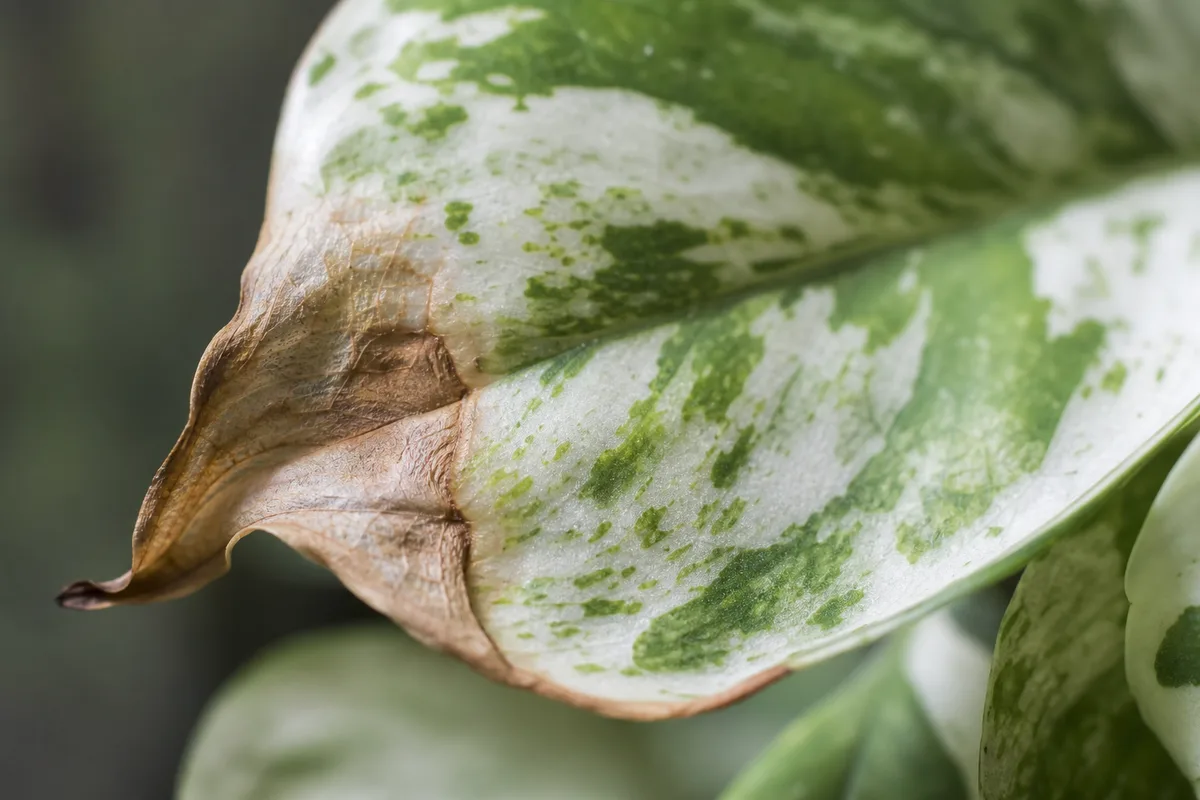
Underwatering symptoms on Pearls and Jade Pothos - compare with healthy tissue on the same plant.
Typical underwatering signs:
- Vines hang limp and feel thin or papery, not heavy and waterlogged
- Pot feels noticeably light when lifted
- Mix is dusty dry 3–5 cm down and may pull away from the pot edge
- Variegated leaf edges turn crisp and brown before the whole leaf yellows
- Older lower leaves yellow and drop after repeated dry cycles
- New growth stalls or emerges smaller than usual
What stays different from overwatering: stems remain firm at the base, soil is dry throughout (not wet for days), and there is no sour smell from the pot. Yellow leaves on wet heavy soil point to overwatering or rot-not underwatering.
Pearls and Jade has smaller, thinner leaves than Marble Queen or golden pothos, so edge crisping shows up faster on variegated tissue when the root zone runs dry in bright light.
Why Pearls and Jade Pothos gets underwatered
Several patterns fit this cultivar specifically:
Overcorrection after overwatering scares. Because Pearls and Jade is a slow grower and overwatering is its primary indoor risk, many owners cut back too aggressively. Waiting weeks between drinks in moderate light can leave the root ball dry while the surface looks briefly damp after a splash of water.
Bright light without a matching schedule. This cultivar needs Pearls and Jade Pothos light guide to hold variegation. Stronger light dries the pot faster than the same plant in a dim corner-summer sun through a window can shrink the watering interval from every 10–14 days to every 7 days without anyone adjusting.
Hydrophobic, peat-heavy mix. When potting mix dries completely, it can repel water instead of absorbing it. Water runs down the gap between soil and pot wall while the center of the root ball stays dry. The plant looks wilted even right after you watered.
Small pots and root-bound plants. A crowded root ball in a small nursery pot holds little moisture. A Pearls and Jade in a 10 cm pot near a bright window may need water every few days in summer while a larger specimen in the same room needs ten days.
Travel, seasonal forgetfulness, or calendar watering. Watering every two weeks in winter may be fine, but the same calendar in a hot July room leaves the plant drought-stressed. Slow growers still need moisture-they just need less than faster pothos varieties.
How to confirm the cause
Work through these checks before you soak the plant:
- Pot weight - Lift the container. Very light with limp vines strongly suggests underwatering.
- Moisture at depth - Push your finger 3–5 cm into the mix. Bone dry at that depth confirms drought; damp deep mix with wilt means look elsewhere.
- Stem firmness - Press stems near the soil line. Firm tissue with dry mix fits underwatering; soft or mushy bases suggest rot.
- Water absorption test - Pour a small amount slowly. If it races through to the saucer without darkening the mix, suspect hydrophobic soil.
- Light and season - Is the plant in a bright window during summer? Has the home gotten warmer or drier recently? Faster dry-down may have outpaced your old schedule.
- Recent care history - Did you stop watering after yellow leaves (which may have been overwatering)? Fear-driven drought is common on variegated pothos.
If the pot is heavy, soil stays wet for days, and lower leaves yellow while stems stay limp, underwatering is unlikely-wilt with wet soil often means rotting roots cannot take up water, so inspect for overwatering or root damage before adding more water.
First fix for Pearls and Jade Pothos
Water thoroughly until excess drains from the bottom, then empty the saucer.
Use room-temperature water and pour slowly until the entire root zone moistens and runoff appears. That single deep drink is the correct first response for confirmed dry wilt-do not mist leaves, fertilize, or repot on day one.
If water runs through immediately and the mix still feels dry inside:
- Set the pot in a basin with a few inches of water for 30–45 minutes (bottom watering)
- Let the mix wick moisture up through the drainage holes
- Top-water lightly afterward if the surface still feels dry
- Allow the pot to drain fully before returning it to its spot
Do not leave the pot sitting in standing water overnight. Once hydrated, resume waiting until the top 3–5 cm dries before the next drink.
Step-by-step recovery
For mild underwatering (limp leaves, dry mix, firm stems):
- Deep soak as above
- Place in bright indirect light so the plant can recover without scorching stressed leaves
- Wait 12–24 hours-healthy roots usually restore turgor within that window
- Trim fully crisp brown leaves for appearance once vines firm up
- Adjust your schedule to pot weight and finger checks, not habit
For repeated dry cycles or hydrophobic mix:
- Bottom-water or submerge the pot until the mix rehydrates evenly
- If soil has shrunken away from the pot walls, poke a few shallow holes in the surface to help water penetrate
- Consider refreshing the top inch of mix or Pearls and Jade Pothos repotting guide into new potting mix with 20–25% perlite if hydrophobic clumps return every cycle
- Hold fertilizer until new growth looks normal for two weeks-stressed roots do not need salt load
If vines stay limp for more than 48 hours after a confirmed deep soak, unpot and inspect roots. Dry, brittle tan roots may need trimming; mushy roots point to rot from a prior overwatering episode, not current drought.
Recovery timeline
Hours to one day: Mild dehydration often shows visible perk-up within hours after thorough watering when roots are intact.
One to two weeks: Repeated dry cycles may leave some yellow lower leaves that drop. New small variegated leaves signal success-not old blades re-greening.
Several weeks: If fine roots dried severely, full vine vigor may take longer. Judge recovery by firm stems and new nodes producing leaves, not by saving every damaged blade.
Worsening signs: Continued limpness after proper rewetting, spreading brown stems, or new yellowing on wet soil means the diagnosis was wrong or roots were already compromised-stop soaking and inspect.
Lookalike symptoms
- Overwatering / root rot - Heavy wet pot, yellow leaves, soft stem bases, sour smell. Wilt with wet soil means roots cannot take up water even though you watered.
- Low humidity - Crisp brown tips on otherwise firm, well-watered leaves; pot weight normal. Fix humidity or water quality, not watering frequency alone.
- Not enough light - Long gaps between nodes, green reversion, slow dry-down with pale leaves-not the same as drought wilt with a light dry pot.
- Heat stress near windows - Sudden edge crisping in direct afternoon sun; soil may actually be dry faster than expected, but moving the plant back from glass also helps.
- Normal leaf senescence - One or two older leaves yellow and drop at the base while the rest of the vine stays firm and the pot dries on schedule.
What not to do
Do not keep soil constantly wet because the plant looked sad-you will trigger the overwatering problems this slow cultivar handles worse than dryness. Avoid shallow splashes that wet only the surface while the root ball stays dry. Do not fertilize a drought-stressed plant before rehydrating. Do not repot immediately unless mix is clearly hydrophobic and repeated bottom-watering fails-repotting dry stressed roots adds shock. Do not assume every limp pothos needs water without checking; wilt on wet soil needs the opposite fix.
When handling damaged leaves or soggy saucers, keep the plant away from pets-Epipremnum contains calcium oxalate crystals toxic to cats and dogs.
How to prevent underwatering next time
Match watering to how fast your specific pot dries in bright indirect light, not a calendar copied from a faster golden pothos. Check the top 3–5 cm before every major watering. Track pot weight weekly until you learn the rhythm in each season.
Use well-draining mix with perlite so water penetrates evenly but the pot still cycles between moist and dry. In summer or bright windows, expect shorter intervals; in winter, stretch to every 10–14 days when growth slows.
If you travel, bottom-water before leaving or use a trusted sitter with clear finger-check instructions-not “water once a week” without context. Refresh peat-heavy mix that repeatedly goes hydrophobic before drought stress becomes a habit.
Pearls and Jade tolerates brief dryness better than chronic soggy soil, but “drought tolerant” is not “drought proof.” Too little water may lead to leaves temporarily drooping, though pothos is better kept too dry than too wet. Regular moisture checks keep the variegation crisp and the vines full.
When to use this page vs other Pearls and Jade Pothos guides
- Pearls and Jade Pothos watering guide - Use for routine moisture checks before assuming underwatering is the main issue.
- Pearls and Jade Pothos problems hub - Browse all 4 common issues on this species.
- Brown Tips on Pearls and Jade Pothos - Different entry point when symptoms overlap with underwatering.
- Yellow Leaves on Pearls and Jade Pothos - Different entry point when symptoms overlap with underwatering.