Drooping Leaves on Pearls and Jade Pothos: Causes, Checks &
Quick answer
Drooping on Pearls and Jade Pothos shows as downward-hanging teardrop blades and soft petioles-often one long trailing section first. Dry soil perks leaves up after a soak; limp leaves on wet soil mean failing roots. Lift the pot and probe 2 inches (3–5 cm) deep before you change anything.
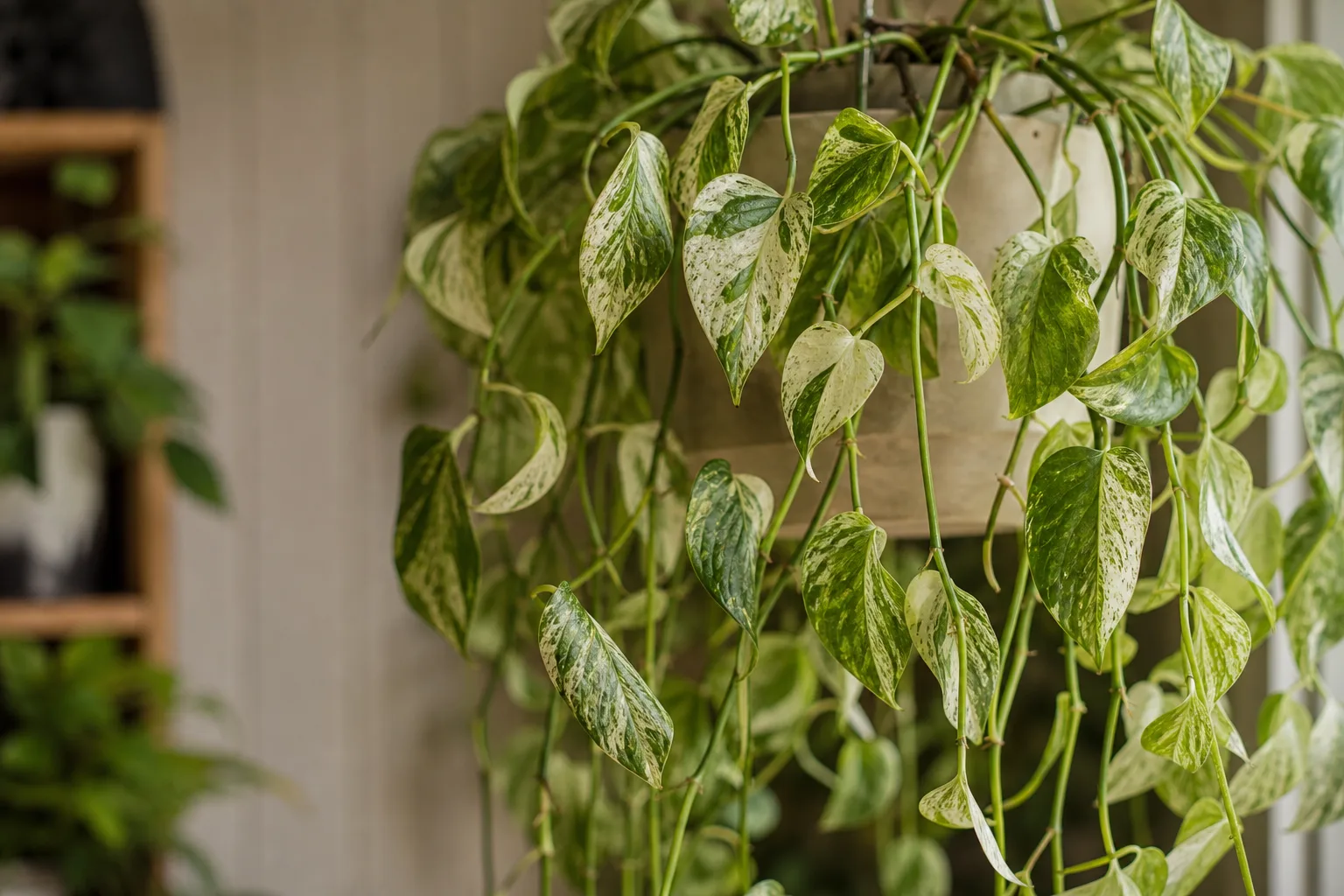
Drooping Leaves on Pearls and Jade Pothos: Causes, Checks & Fixes
This guide covers drooping leaves on Pearls and Jade Pothos. See also the general Drooping Leaves guide, watering, and light pages for this plant.
Drooping Leaves on Pearls and Jade Pothos: Causes, Checks & Fixes
Quick answer
On Pearls and Jade Pothos (Epipremnum aureum ‘Pearls and Jade’), drooping leaves look like downward-hanging teardrop blades on soft petioles-not a leaf disease. The small white-and-green marbled foliage normally holds a slight upward angle along the vine; when turgor drops, one long trailing section may sag first while the rest of the plant still looks fine. Because mature leaves average only 7–8 cm (2.5–3.0 in.) long-much smaller than Marble Queen foliage-there is less stored moisture in each blade, so droop can appear quickly once the mix crosses from evenly moist to too dry.
The same limp posture can mean opposite problems. Dry droop: light pot, dry mix 2 inches (3–5 cm) down, firm stems, green but floppy leaves. Wet droop: heavy pot, damp mix at depth, limp leaves despite moisture-rotting roots cannot move water upward. Your first move is always the same: lift the pot and probe depth before you water or withhold water. For cultivar baseline care, see the Pearls and Jade overview; for dry-down rhythm, see the watering guide.
Drooping vs. wilting on Pearls and Jade Pothos
These two symptoms overlap on pothos, but they answer different search questions-and different fixes.
Drooping is the earlier, softer signal: petioles lose stiffness and small marbled blades hang downward while most stems still feel firm. Owners often notice one trailing tip first, especially in a hanging basket where the longest vine dries out fastest.
Wilting is a deeper collapse-the whole vine looks slack, tissue may feel thinner, and wet-soil cases progress toward yellow lower leaves and soft nodes faster. If stems are already softening at the base or the plant looks collapsed rather than merely hanging, use the wilting guide for systemic uptake failure. Stay on this page when foliage is limp but stems are still green and firm and you need to decide dry versus wet before the problem escalates.
What drooping leaves look like on Pearls and Jade Pothos
Healthy Pearls and Jade holds its compact teardrop leaves at a slight upward angle. When turgor drops, petioles soften and blades hang straight down. The effect may hit one trailing section first-often the longest vine farthest from the root ball-or the whole plant at once.
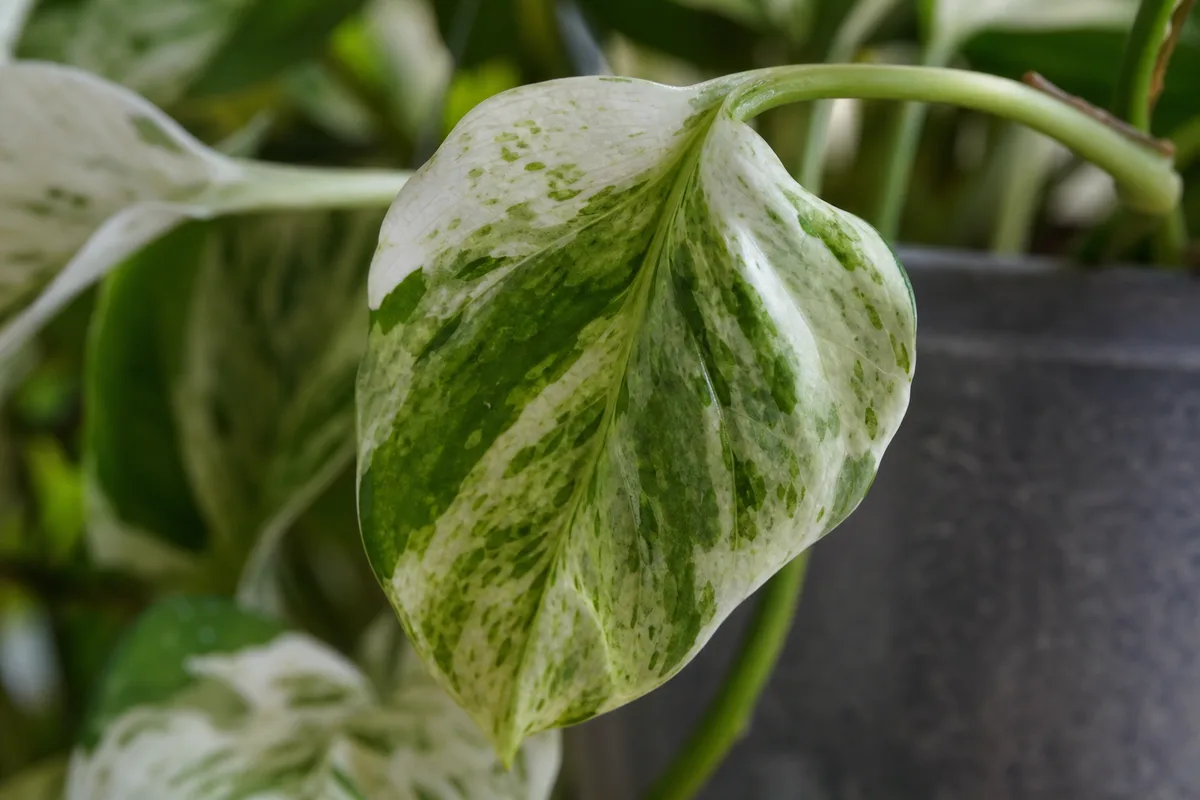
Drooping Leaves symptoms on Pearls and Jade Pothos - compare with healthy tissue on the same plant.
Early thirst droop keeps leaves green but limp; edges may feel thin and papery. Severe dryness adds crisp brown tips on the variegated patches. Overwatering droop looks similar from across the room, but the pot stays heavy, lower leaves may yellow, and stems near the soil line can feel less firm over time. Sour soil smell or fungus gnats hovering near the pot are wet-drooping warnings even before stems soften.
Temporary droop after Pearls and Jade Pothos repotting guide or a sudden move to a hotter window is also common. Those cases usually involve firm stems and no sour soil smell.
Why Pearls and Jade Pothos gets drooping leaves
Underwatering is the most frequent cause when the plant lives in bright light. Clemson notes Pearls and Jade has smaller leaves than other pothos cultivars and requires lots of light to maintain intense coloring. More light means faster evaporation from the pot. If you wait for a golden-pothos calendar in a sunny spot, the mix can go dry while leaves still look fine-then droop appears quickly because the smaller leaf surface has less stored moisture.
Overwatering and root stress hit Pearls and Jade Pothos overview hard because slow variegated growth uses water slowly. Soil that stays damp in moderate or low light suffocates roots; stunted slow growth with yellowing leaves is a symptom of over-watering. Damaged roots cannot move water upward, so leaves droop despite wet mix. Dim corners compound the trap: see not enough light when leggy pale new growth shares the same spot.
Light or heat shock increases transpiration faster than roots can supply water-especially right after moving the pot closer to a west window or placing it above a heat register. Do not move a wet-drooping plant into direct midday sun to dry the soil; pale variegated tissue scorches quickly.
Recent repotting disturbs fine roots and can cause one to three days of soft vines while the plant settles. Hydrophobic old mix creates a third pattern: surface looks damp but the root ball stays dry, producing droop that does not respond to a quick splash from the top.
Hanging baskets versus cachepots change dry-down speed. Water drains toward the root ball while outer vine tips in open air dry first-so tip-only droop is common without whole-plant root failure.
Dry droop vs. wet droop vs. shock droop vs. hydrophobic droop
| Pattern | What you see | Pot / soil | Stems | First action |
|---|---|---|---|---|
| Dry droop | Green limp teardrop blades, often tips first | Light; dry at 2 in. (3–5 cm) | Firm | Deep soak → underwatering |
| Wet droop | Limp leaves on moist mix; may yellow below | Heavy; damp at depth | Firm or softening at base | Stop water → overwatering |
| Shock droop | Afternoon limpness after move or heat spike | Even moisture | Firm | Stabilize light/temp; no repot |
| Hydrophobic droop | Droop after light top water; mix pulls from pot edges | Surface damp, core dry | Firm | Bottom-water or rewet evenly |
| Leggy + mild droop | Small pale leaves, long gaps between nodes | Varies | Firm, stretched | Brighten → leggy growth |
How to confirm the cause
Work through these checks in order before you treat:
- Lift the pot. Light weight plus dry mix 2 inches (3–5 cm) down confirms thirst. Heavy weight days after watering suggests saturation or poor drainage.
- Probe depth, not surface color. Peat-heavy mix can look dry on top while staying damp underneath-or repel water while roots stay dry.
- Feel stems at the soil line. Firm stems with dry soil mean underwatering. Softening base with wet soil means inspect roots-see root rot if odor or gnats appear.
- Scan newest growth. Mostly green new leaves with long internodes signal insufficient light contributing to slow dry-down and weak structure-not just a water issue.
- Note recent changes. Repot, relocation, travel, or a cold draft near an AC vent often explain sudden droop without root disease.
If wet soil and droop persist after one full dry-down cycle, unpot and look at root color and smell before the next watering.
First fix for Pearls and Jade Pothos
Lift the pot and check moisture 2 inches (3–5 cm) deep. That single check tells you whether to water or to stop.
- Dry and light: Water thoroughly until excess runs from the drainage hole, then discard saucer water within 30 minutes. Leaves often regain firmness within hours to a day.
- Wet and heavy with soft stems: Do not water. Move to bright indirect light so the mix dries faster-never direct midday sun on pale marbled leaves. If soil smells sour or stems keep softening, unpot, trim mushy roots, air-dry the root ball briefly, and repot into fresh mix with 20–25% perlite. Epipremnum aureum contains insoluble calcium oxalate crystals toxic to cats and dogs-wash hands after handling trimmed tissue and keep cuttings away from pets.
Do not split the difference with a half-cup of water when you have not confirmed dryness-that can worsen rot on an already wet slow grower.
Step-by-step recovery
For dry-soil droop: Soak until water flows freely from drainage holes. If mix repels water, bottom-water 20–30 minutes or poke shallow holes to rewet evenly. Resume the normal rhythm: allow soils to dry between waterings and wait until the top 2 inches (3–5 cm) is dry before the next drink. Full branch: underwatering on Pearls and Jade.
For wet-soil droop: Stop watering immediately. Confirm drainage holes are open and no standing water sits in a cachepot. Let the top half of the mix dry before reassessing. Trim only stems that stay mushy after the root zone stabilizes-do not mass-prune limp but firm vines on day one. Escalation paths: overwatering and root rot.
For environmental droop: Move the plant out of direct midday sun and away from heat vents. Keep soil moisture steady while it acclimates over several days. Avoid repotting, fertilizing, and heavy pruning during acute droop.
Recovery timeline
Mild droop from a missed watering usually improves within 6–24 hours after a full soak if roots are healthy-this is grower-experience timing, not a published cultivar interval. Environmental shock may take two to five days once conditions stabilize. Root-related droop can take one to three weeks-or longer if a large portion of the root system was removed. Judge recovery by firm new leaves with crisp white-and-green variegation, not by every old limp blade re-standing. Fully collapsed or brown leaves will not green up again; trim them after the plant shows stable new growth.
Lookalike symptoms
Leggy growth stretches vines with smaller pale leaves but stems may still feel firm-fix light before assuming thirst. Yellow leaves often follow chronic overwatering; droop may appear first while leaves are still green-see yellow leaves on Pearls and Jade. Brown tips point to low humidity or hard water more than acute turgor loss. Full wilting is a more severe collapse; drooping is often the earlier, softer signal on pothos. If you are unsure whether the pot is wet or dry, treat pot weight as the tiebreaker.
Mistakes to avoid
Adding water without checking soil first is the most common error-especially dangerous when roots are already failing in wet mix. Assuming every droop means underwatering leads owners to pour more water onto rotting roots. Moving the plant repeatedly between rooms adds stress while you guess at the cause. Fertilizing a droopy plant rarely helps and can burn stressed roots on low-chlorophyll variegated tissue. Do not use leaf shine or heavy misting as a substitute for correct root-zone moisture; surface moisture does not restore turgor. Do not blast a wet-drooping plant with direct sun to dry the soil-pale sections burn before roots recover.
Pearls and Jade Pothos care cross-check
This cultivar was developed at the University of Florida and stays compact compared with faster pothos types. It needs bright indirect light, well-draining mix, and a dry-down window matched to how slowly the pot dries in your home-not a one-size-fits-all weekly schedule. Indoor plants need consistent moisture checks rather than calendar watering. If the pot stays wet longer than expected in a dim corner, improve light or mix before watering again. Cross-check light and watering guides for baseline rhythm.
Example dry-down pace: a 6-inch pot in bright filtered light beside an east window may need water every 7–10 days in summer, while the same plant in a north-facing desk bowl can hold moisture 12–14 days-yet both should be triggered by the 2-inch dry test, not the calendar.
How to prevent drooping leaves next time
Track pot weight weekly until you learn your plant’s rhythm in its current spot. Water when the top 2 inches (3–5 cm) is dry, empty saucers after every soak, and use perlite-amended mix in a pot with open drainage. Pearls and Jade in too little light droops from both slow uptake and soggy soil; brighter placement helps the plant use water predictably. Brief afternoon droop in bright summer windows is normal if the mix crosses from dry to too dry-use the depth test before leaves hang for days.
When to worry
Act quickly if drooping continues more than 48 hours after correct watering or drying, if stems soften at the base, if soil smells sour, if fungus gnats multiply, or if new growth collapses while the mix stays wet. Those patterns suggest advancing root rot on a plant that drinks slowly and shows stress late.
Related Pearls and Jade problems
- Wilting - deeper collapse and soft nodes
- Overwatering - chronic wet feet
- Underwatering - dry mix and crisp edges
- Root rot - sour smell and mushy roots
- Yellow leaves - often follows wet droop
- Leggy growth - light stress with weak structure
- Fungus gnats - wet-soil warning sign
How we wrote and verified this guide: Recommendations were checked against Clemson Cooperative Extension, Missouri Botanical Garden, UF/IFAS, UMN Extension, and ASPCA references cited inline. Author: sai-ananth. Reviewer: LeafyPixels Review Board. Methodology: plant problem guidance is reviewed against botanical references, extension resources, and LeafyPixels plant-care data before publication. Claims validation: claims-validator-v1 pass with inline external links documented below. Last reviewed: 2026-06-17.
When to use this page vs other Pearls and Jade Pothos guides
- Pearls and Jade Pothos watering guide - Use for routine moisture checks before assuming drooping leaves is the main issue.
- Pearls and Jade Pothos problems hub - Browse all 4 common issues on this species.
- Root Rot on Pearls and Jade Pothos - Different entry point when symptoms overlap with drooping leaves.