Wilting on Pearls and Jade Pothos: Causes, Checks & Fixes
Quick answer
Wilting on Pearls and Jade Pothos means roots are failing to move water-either from underwatering (light dry pot) or overwatering and root rot (heavy wet pot). Lift the pot and press your finger 3–5 cm into the mix before you water. Never treat wilt on autopilot.
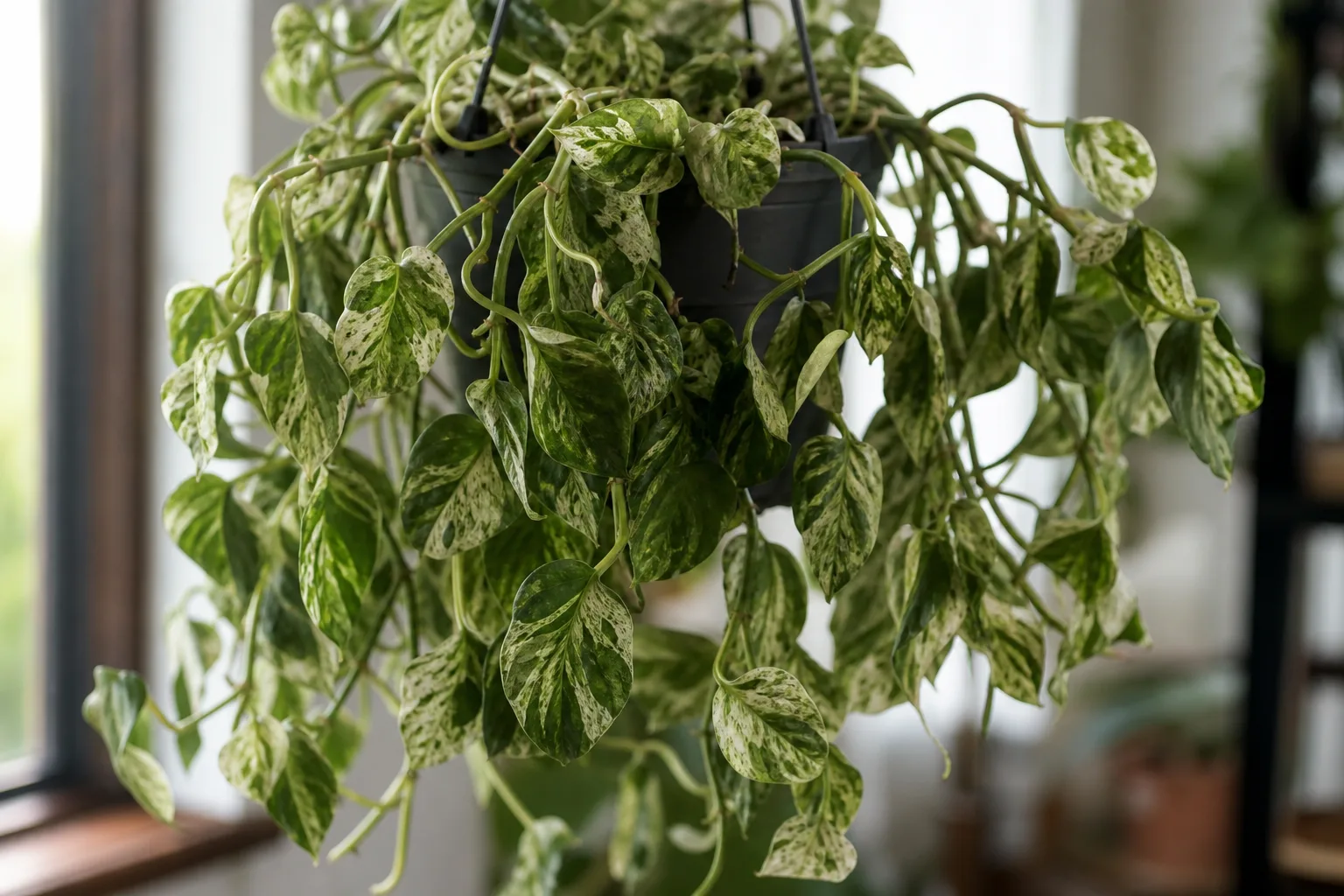
Wilting on Pearls and Jade Pothos: Causes, Checks & Fixes
This guide covers wilting on Pearls and Jade Pothos. See also the general Wilting guide, watering, and light pages for this plant.
Wilting on Pearls and Jade Pothos: Causes, Checks & Fixes
Quick answer
When Pearls and Jade Pothos wilts, the small variegated leaves and thin stems go limp because water is not reaching them-but the cause is not always thirst. This slow-growing cultivar of Epipremnum aureum uses less water than golden or neon pothos, so the same weekly watering that keeps a fast vine happy can leave Pearls and Jade in soggy mix for days. Rotting roots cannot absorb moisture, which produces wilt even when the soil feels wet. The single most useful first step is the pot-and-soil test: lift the container for weight, then press your finger 3–5 cm into the mix. Light and dry means the plant needs water; heavy and damp means stop watering and investigate roots.
What wilting looks like on Pearls and Jade Pothos
Wilting shows up as lost turgor-the heart-shaped leaves hang downward instead of holding their usual slight arch, and trailing vines look slack rather than springy. On Pearls and Jade, the effect is often dramatic because the leaves are smaller and thinner than on marble queen or golden pothos. White and grey-green marbling makes limp tissue easy to spot against healthy firm leaves higher on the vine.
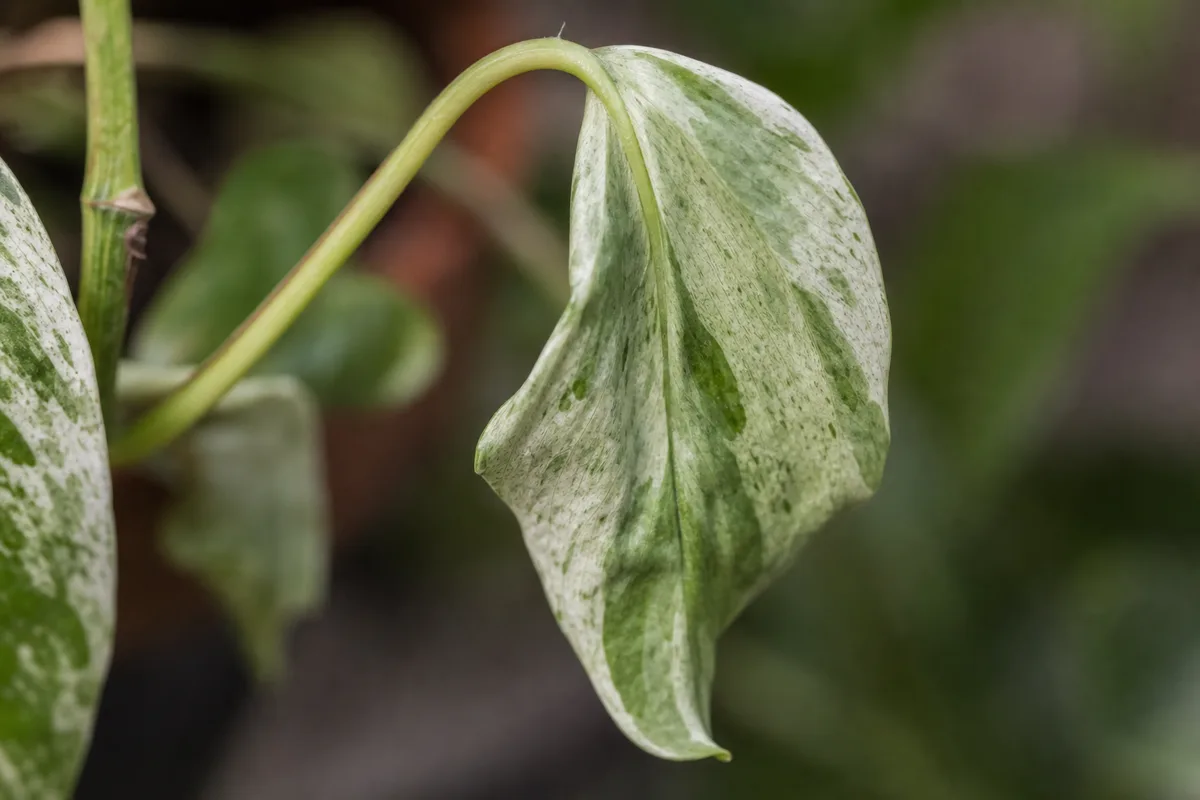
Wilting symptoms on Pearls and Jade Pothos - compare with healthy tissue on the same plant.
Two patterns dominate home care. In dry wilt, the pot feels light, the mix is dusty several centimeters below the surface, and leaf edges may curl or feel papery before the whole leaf collapses. Stems usually stay firm at the nodes. In wet wilt, the pot stays heavy, lower leaves often yellow before they droop, and the mix may smell sour near the drainage hole. Stem bases can soften where they meet wet soil. Variegation on new growth may fade as the plant weakens, though that change takes time on this slow cultivar.
Afternoon limpness that recovers by morning sometimes reflects heat and bright window exposure rather than a root crisis-especially if the mix is evenly moist and stems feel solid. Context matters: a plant that wilted right after a long trip in a hot car is a different case from one that has looked sad for two weeks in a dim corner with wet soil.
Why Pearls and Jade Pothos wilts
Most wilting traces back to a broken water pathway-roots too dry to function, too wet and rotting, or temporarily disturbed. Pearls and Jade adds cultivar-specific wrinkles: less chlorophyll in variegated tissue means slower photosynthesis and slower water use, so the pot dries down more slowly than owners expect.
Overwatering and root rot on Pearls and Jade Pothos
Overwatering is the leading long-term threat on Pearls and Jade Pothos overview. Pearls and Jade is flagged in grower notes as a slow grower where overwatering is a significant risk. When soil stays saturated, roots lose access to oxygen and fungal decay sets in. Damaged roots cannot transport water upward, so leaves wilt despite wet mix-the classic wilt paradox. Cool rooms, oversized pots, dense peat-heavy mix without enough perlite, and watering on a calendar all push this pattern. Yellow lower leaves on wet soil are a strong rot clue.
Underwatering
Pearls and Jade tolerates brief drought better than chronic sogginess, but extended dryness still collapses leaves. Thin variegated foliage loses water faster than thick succulent leaves during heat or when a small root ball has fully dried. Underwatering is common after travel, when a plant sits near a heating vent, or when hydrophobic dry mix repels water from the root ball even after a quick top watering.
Low light slowing dry-down
Pearls and Jade requires lots of light to hold its white and grey variegation. In dim corners the plant transpires less and the mix stays wet longer between waterings-which increases rot risk even when watering frequency looks modest. Leggy stretched vines with pale new growth often share the same low-light spot as a wilting plant in wet soil.
Recent Pearls and Jade Pothos repotting guide or root disturbance
Repotting breaks fine root hairs. For a week or two afterward, the top growth may wilt even with correct moisture because uptake is temporarily reduced. This is more likely if the plant was watered heavily immediately after repotting into a much larger pot. Firm nodes and no sour smell suggest transplant stress rather than advanced rot.
Heat stress and draft exposure
Sudden heat near a south window or a cold draft from AC can cause temporary afternoon wilt on an otherwise healthy vine. If soil moisture is even and stems are firm, stabilize temperature and light before changing the watering routine.
How to confirm the cause
Work through these checks in order. Stop when the pattern is clear.
- Pot weight - Lift the container. A light pot supports drought; a heavy pot supports excess moisture or poor drainage.
- Deep soil moisture - Push your finger or a bamboo skewer 3–5 cm into the mix. Dry at depth confirms underwatering. Damp or cool at depth with wilted leaves suggests uptake failure.
- Stem firmness - Pinch nodes along the wilted vine. Firm green tissue points toward dry wilt, repot stress, or heat. Soft, darkening tissue near the soil line confirms rot involvement.
- Leaf pattern - Crisp curled edges favor dryness. Yellow lower leaves on green upper growth favor overwatering.
- Smell and drainage - Sour odor from the drainage hole or water sitting in the saucer for days supports rot. Fast drainage with dry mix supports drought.
- Recent care history - Note repotting within two weeks, a skipped watering stretch, or a move to a darker room.
| What you find | Likely cause | Confirmed? |
|---|---|---|
| Light pot + dry 3–5 cm + firm stems | Underwatering | Yes - water deeply |
| Heavy pot + damp mix + yellow lower leaves | Root rot / overwatering | Yes - stop water, inspect roots |
| Firm stems + wilt 1–2 weeks after repot | Repotting stress | Likely - stabilize and wait |
| Even moisture + afternoon wilt + firm stems | Heat / light stress | Check placement |
| Wet mix + fungus gnats + no stem softening yet | Early overwatering | Correct drainage before rot advances |
The first fix to try
Lift the pot and check moisture 3–5 cm deep before you touch the watering can. That is the entire first action-no fertilizer, no repotting, no pruning until you know whether the plant is dry or wet.
If the pot is light and the mix is dry, water thoroughly until excess drains from the bottom, then empty the saucer within fifteen minutes. Wait until the next morning to judge turgor.
If the pot is heavy and the mix is damp, do not water. Move the plant to Pearls and Jade Pothos light guide with good airflow and let the top half of the mix dry. If stems soften or the smell worsens within a week, unpot and inspect roots.
Step-by-step recovery
When the plant is dry and firm
Water from the top until water runs freely from drainage holes, or bottom-soak the pot for twenty to thirty minutes if the mix has become hydrophobic and water runs off the surface. Drain completely. Pearls and Jade leaves often regain firmness within hours to one day. If they stay limp after a proper soak, partial root damage may already exist-recheck moisture in three days and water again only when the top 3–5 cm is dry.
When the plant is wet with soft roots
Stop all watering. Remove the plant from its pot and brush away mix. Healthy pothos roots are firm and white or tan; root rot turns roots brown, translucent, or mushy. Trim damaged tissue with clean scissors, let the root ball air in shade for several hours, then repot into fresh standard potting mix with 20–25% perlite in a container sized to the trimmed root mass-not dramatically larger. Wait five to seven days before the first light watering. Severe rot on a slow cultivar may require salvaging firm nodes as stem cuttings if most of the root system is gone.
When repotting caused the wilt
Hold water for three to five days unless the mix is bone dry at depth. Keep bright indirect light and stable room temperature. Mild wilt should ease as new white root tips appear over two to three weeks. If the caudex area at soil line softens during the wait, rot predated the repot-switch to the wet-root protocol.
Recovery timeline and success signs
Mild drought wilt on firm stems often improves within hours to one day after a thorough watering. Repotting stress may take two to three weeks before new leaves open with normal firmness. Root rot recovery is slow on Pearls and Jade: expect four to eight weeks minimum before you trust the Pearls and Jade Pothos watering guide again, and only if healthy roots remained after trimming.
Signs you are winning: leaves feel springy by the next morning after a dry-wilt soak; new growth emerges with crisp variegation; wilt does not spread to additional vines; soil dries at a steady pace between waterings.
Signs the problem is worsening: stems blacken upward from the base; more leaves yellow while mix stays wet; no new growth after a month of corrected care; soft tissue climbs past the first node. Advanced stem rot on a compact slow cultivar may not fully recover-propagate healthy nodes if the base is lost.
Lookalike symptoms
Drooping without true wilt - Long bare vines in low light look sad and sparse but stems may still be firm. That is etiolation, not a water crisis. Move to brighter indirect light and prune leggy sections rather than watering more.
Yellow leaves without limp stems - Yellowing alone often means overwatering or natural aging of lower leaves. Wilting specifically means turgor loss; check moisture and roots first.
Brown crispy tips - Edge browning from low humidity or hard water is a separate issue from whole-leaf collapse. Crispy tips can coexist with firm leaves; do not soak the plant assuming drought.
Fungus gnats only - Flying gnats signal persistently moist surface soil. The plant may not wilt yet, but the same overwatering habit will cause wet wilt if unchanged.
Mistakes to avoid
Do not pour water on every limp Pearls and Jade without checking soil-wet wilt gets worse with more water. Do not copy golden pothos watering frequency; this cultivar dries more slowly and rots more easily when kept wet. Do not repot on day one unless you find mushy roots or a sealed pot with no drainage. Do not fertilize a wilted plant; salts stress roots that are already struggling. Do not move a dehydrated plant into harsh direct sun to “perk it up”-bright indirect light during recovery is enough. Wear gloves when trimming if sap contact bothers your skin; all Epipremnum aureum varieties contain irritating calcium oxalate crystals.
How to prevent wilting
Allow the soil to dry between waterings when the top 3–5 cm of mix is dry-not on a fixed weekly schedule. Use standard potting mix with 20–25% perlite in a pot with drainage holes sized to the root ball. Place Pearls and Jade where it receives several hours of bright indirect light daily so the plant uses water predictably and variegation stays sharp. Empty saucers after every watering. In winter, stretch intervals toward every ten to fourteen days as growth slows. Inspect nodes when you water; catching early softening saves the plant before an entire trailing vine collapses.
When to worry
Treat wilting as urgent when stems soften at the base, soil smells sour while leaves collapse, or most of the vine wilts within a few days on wet mix. Those signs suggest active rot spreading faster than this slow cultivar can outgrow. Dry wilt on firm stems is less alarming-one deep watering and stable light usually reverse it. If you are unsure, default to the pot weight and deep moisture test rather than guessing. Pearls and Jade forgives brief dryness far more often than it survives repeated sogginess in low light.
When to use this page vs other Pearls and Jade Pothos guides
- Pearls and Jade Pothos watering guide - Use for routine moisture checks before assuming wilting is the main issue.
- Pearls and Jade Pothos problems hub - Browse all 4 common issues on this species.
- Root Rot on Pearls and Jade Pothos - Different entry point when symptoms overlap with wilting.
- Yellow Leaves on Pearls and Jade Pothos - Different entry point when symptoms overlap with wilting.