Brown Tips on Peperomia Hope: Causes, Checks & Fixes
Quick answer
Brown tips on Peperomia Hope are usually environmental-fluoride in tap water, uneven watering, or dry winter air-not disease. First step: switch to room-temperature filtered or rainwater and water only after the top half of the mix has dried.
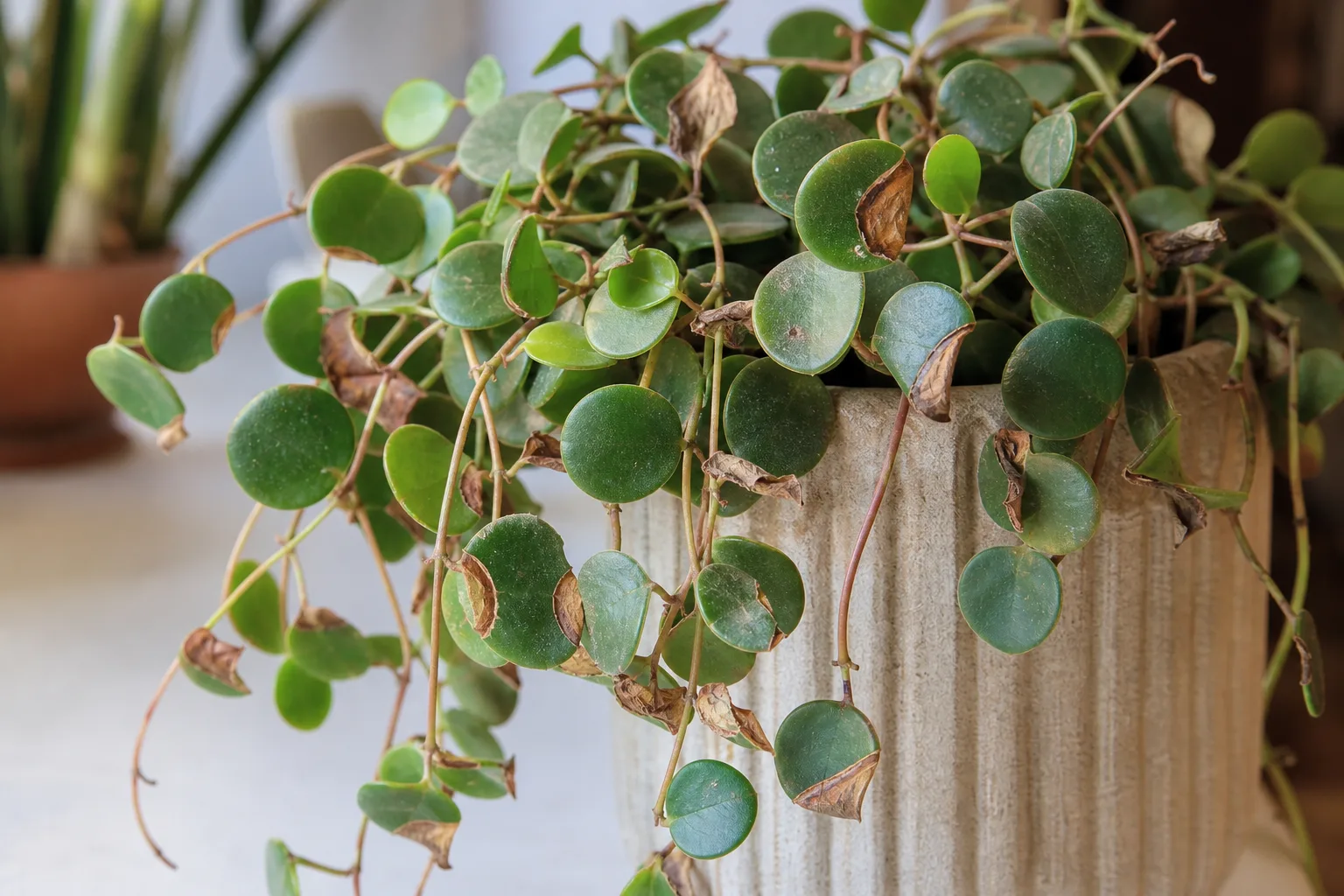
Brown Tips on Peperomia Hope: Causes, Checks & Fixes
This guide covers brown tips on Peperomia Hope. See also the general Brown Tips guide, watering, and light pages for this plant.
Brown Tips on Peperomia Hope: Causes, Checks & Fixes
Quick answer
Brown tips on Peperomia Hope (Peperomia tetraphylla ‘Hope’) are almost always environmental stress, not fungal leaf spot or pest damage. The round, semi-succulent leaves store water, but their thin margins still dry out first when moisture delivery or water chemistry goes wrong.
First step: switch to room-temperature filtered or rainwater and check whether the top half of the potting mix has dried before you water again. Hope is sensitive to fluoride and minerals in tap water, and alternating bone-dry spells with heavy soaking also crisp leaf edges on this trailing cultivar. Do not increase watering just because tips look dry-that often makes root stress worse.
What brown tips look like on Peperomia Hope
On Hope, damage usually starts at the outermost point of the round leaf-the tip or a short section of margin-while the rest of the leaf stays plump and green. Healthy Hope leaves are firm, slightly succulent, and about an inch across, held in clusters along reddish trailing stems.
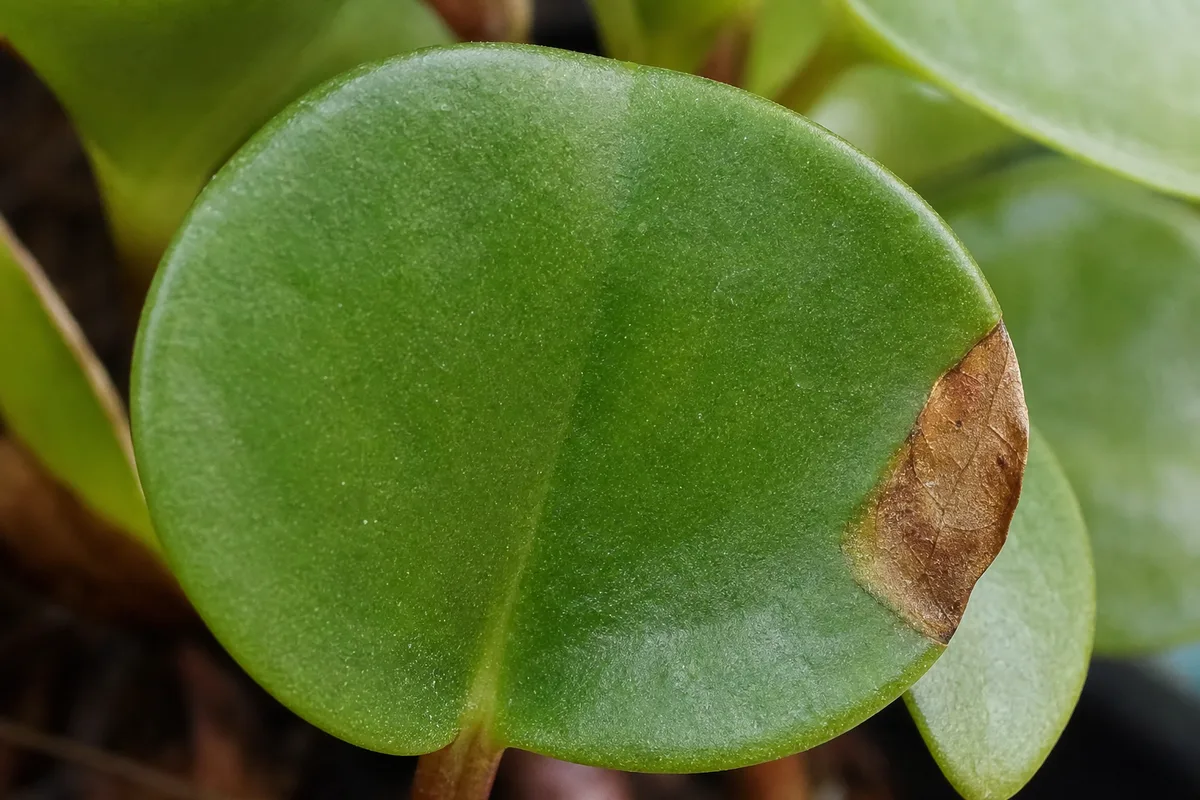
Brown Tips symptoms on Peperomia Hope - compare with healthy tissue on the same plant.
Typical brown-tip patterns include:
- Dry, papery tan-to-brown tissue at the tip only, with no yellow halo
- Crispy margins on one or two older leaves while newer inner leaves look fine
- Symmetrical tip burn on several leaves after weeks of straight tap water
- Scorched patches on leaves facing a hot window, sometimes with bleached yellow areas nearby
What brown tips are not on Hope: soft brown bases where stems meet wet soil (rot), dark spots with yellow rings (leaf spot), stippling with webbing (spider mites), or entire leaves turning mushy. Tip necrosis stays dry and localized when the cause is water quality, humidity, or light stress.
Why Peperomia Hope gets brown tips
Hope is a patented hybrid between Peperomia deppeana and P. quadrifolia, bred for trailing stems and thick, round leaves. That semi-succulent habit helps the plant survive missed waterings, but it also means leaf margins lose moisture fast when roots cannot keep up-or when dissolved salts and fluoride accumulate in the transpiration stream.
Tap-water fluoride and mineral buildup
Peperomias are sensitive to fluoride in tap water, which can turn leaf tips brown. Fluoride and other salts concentrate at leaf margins as water evaporates. Over months of city tap water, Hope’s thin leaf edges are often the first tissue to die back, even when watering frequency seems fine.
Uneven dry-down watering
Hope prefers the top of the mix to almost dry before the next drink. Letting the pot go completely desiccated, then flooding it, stresses the small root system Peperomia Hope overview is known for. Damaged or intermittently dry roots deliver water unevenly, and the farthest leaf tissue-the tip-desiccates first. The same pattern appears when Hope sits in an oversized hanging basket where the center stays wet while the surface looks dry.
Low humidity in heated rooms
Hope tolerates average household humidity around 40–50%, but winter heating, air conditioning, and vents near a trailing basket drop local humidity sharply. Dry air increases transpiration from fleshy leaves faster than roots replace moisture, especially on the longest trailing stems farthest from the pot.
Too much direct sun
Hope wants bright indirect light, not hot direct sun through glass. Direct exposure scorches the thin leaf tissue on round leaves, producing crisp brown or bleached patches that can look like tip burn but often affect the leaf face or sunward edge instead of the very tip alone.
Salt stress from over-fertilizing
Heavy or frequent fertilizer on a small root ball builds salts in the mix. Salt accumulation pulls water away from roots and burns margins-often showing as brown tips plus a white crust on the soil surface. Hope needs only light feeding during active growth; feeding a stressed plant makes tip burn worse.
Root stress from overwatering (indirect tip burn)
Overwatering does not always show as tips first, but failing roots from soggy mix cannot hydrate leaf margins. Leaves may look thirsty at the edges while soil stays damp-a lookalike worth ruling out before you blame tap water alone.
How to confirm the cause
Work through these checks in order. You usually need only two or three to identify the main trigger.
- Water source - Have you used straight tap water for months? Did tips worsen after moving to a new home with different municipal water? Fluoride sensitivity fits a gradual, spreading crisp edge on multiple leaves.
- Soil moisture pattern - Stick a finger halfway into the mix. Is it often bone dry before a heavy soak, or wet for days after watering? Record one week of pot weight and moisture before changing anything.
- Pot size and drainage - Is Hope in an oversized decorative basket with no drainage? Does water sit in a saucer? Poor dry-down rhythm and salt buildup both fit chronic tip burn.
- Light exposure - Did brown appear after a window move? Afternoon sun on trailing leaves points to scorch, not fluoride.
- Humidity and airflow - Is the plant above a radiator or AC vent? Winter tip burn on outer stems only often tracks dry air.
- Soil surface - White or crusty deposits suggest fertilizer or mineral salts; flush before blaming humidity alone.
- Stem base - Press where stems enter the mix. Firm and dry is reassuring; soft, dark tissue on wet soil means stop and inspect for rot before trimming tips.
If tips are crispy with firm stems, dry-to-touch upper soil, and no sour smell, you are likely treating environmental tip burn, not crown rot.
The first fix to try
Switch to room-temperature filtered or rainwater for the next four to six weeks, and water only when the top half of the mix has dried.
Pour slowly until water runs from drainage holes, then empty every saucer or cachepot. Do not mist heavily or fertilize during this trial- you need a clean read on whether water chemistry and dry-down rhythm were the problem.
If you have been using tap water exclusively, this single change stops new fluoride accumulation. Existing brown tips will not green up, but new leaves should emerge with clean edges within one to two growth cycles once stress eases.
Step-by-step recovery
After the water-source trial, add steps based on what your checks showed:
- Stabilize watering - Check the top half of the mix before every drink. In bright indirect light, many Hope plants need water every 10–14 days in growth season and less in winter-not a fixed calendar day.
- Flush salts if crust is present - Run lukewarm water through the pot at roughly two to three times the pot volume, letting it drain fully. Repeat once, then resume the dry-down rule after the mix dries appropriately.
- Adjust light - Move trailing stems back from harsh direct sun to bright filtered light. Rotate the pot weekly so all sides get even light and growth stays balanced.
- Raise local humidity in winter - Group plants, use a pebble tray with water below pot level, or run a humidifier nearby if heated air is drying outer leaves. Avoid enclosing Hope in stagnant wet air without airflow.
- Trim cosmetic damage - Snip fully dead tip tissue with clean scissors, following the leaf’s natural curve and leaving a thin brown edge rather than cutting into green tissue.
- Hold fertilizer - Skip feed until new growth looks healthy for two weeks. Then use half-strength liquid fertilizer monthly during spring and summer only.
- Repot only if roots fail inspection - If mix never dries, smells sour, or stems are soft at the base, unpot, trim mushy roots, and repot into a slightly larger pot with fast-draining mix-not as a first response to a few crisp tips alone.
Recovery timeline
Stabilization often takes two to three weeks once water source and dry-down rhythm improve-you should see no new tip necrosis on the newest leaves.
Clean new leaves are the best success signal. Expect them within four to eight weeks during spring and summer active growth; winter recovery may take longer if light and humidity are low.
Old damaged tips never re-green. They can stay brown indefinitely without harming the plant, or you can trim them for appearance.
Worsening signs: brown creeping down entire leaf margins on most new leaves, stems softening at the crown, yellowing across the plant on wet soil, or leaves dropping in clusters. Those point to root or crown problems, not cosmetic tip burn.
Lookalike symptoms
- Leaf spot disease - Brown or black spots with yellow halos on leaf faces, often after wet foliage sits overnight. Fix airflow and watering technique, not water filtration alone.
- Sun scorch - Bleached or brown patches on the sun-facing side of leaves after a window move. Pull back from direct rays; tips alone may not be the main damage pattern.
- Underwatering wrinkle - Leaves look slightly deflated or soft before tips crisp; pot is very light and mix is dry throughout. One thorough soak after dry-down, then resume schedule-not constant misting.
- root rot on Peperomia Hope - Mushy stem bases, sour soil, wilting on wet mix. Stop watering and inspect roots; do not trim tips and keep soaking.
- Spider mites - Fine stippling, webbing, and dull leaves-not isolated dry tips on otherwise glossy foliage.
Mistakes to avoid
Do not water more because tips look dry while the mix is still damp halfway down-that deepens root stress. Avoid heavy fertilizer to “green up” damaged leaves. Do not cut deep into healthy green tissue when trimming; you create fresh wounds that brown again.
Skip misting alone as humidity fix in dry winter rooms-it evaporates in minutes and can encourage leaf spot if foliage stays wet overnight. Do not repot into a much larger basket because vines are long; extra wet soil volume slows drying and invites rot.
Do not assume pests or disease without checking water, light, and soil first-Hope’s brown tips are usually cultural.
Peperomia Hope care cross-check
Tip burn often exposes a care mismatch elsewhere. Confirm these basics while recovery runs:
- Light: Bright indirect light; direct summer sun scorches round leaves.
- Water: Top half of mix dry between thorough soakings; reduce frequency in winter.
- Soil: Fast-draining mix with perlite; avoid dense, slow-drying peat in a large pot.
- Pot size: Slightly tight is fine; oversized pots stay wet too long.
- Temperature: Roughly 18–27°C (65–80°F); cold drafts and heat blasts dry margins fast.
When several factors drift at once-new tap water, a window move, and winter heat-you often see tip burn before whole leaves yellow or stems collapse.
How to prevent brown tips next time
Use filtered or rainwater at room temperature as your default for Hope. Let the top half of the mix dry before each soaking, and empty saucers after every drink. Keep the plant in bright filtered light away from hot glass.
In dry months, raise humidity near the basket without soaking foliage overnight. Feed lightly during active growth only, and flush the pot occasionally if you fertilize regularly or have hard tap water. When Peperomia Hope repotting guide, choose one size up with open drainage-not a large decorative liner that traps moisture.
Press stems at the soil line monthly during the growing season. Early softness is easier to fix than a collapsed trailing plant.
When to worry
Cosmetic tip burn on a few older leaves is not urgent. Escalate if brown spreads rapidly on new growth, stems soften at the crown, the mix smells sour despite your changes, or the plant drops multiple leaves while soil stays wet.
If more than a third of stems show soft tissue at the base after inspection, treat for root or crown rot rather than continuing a water-quality trial alone.
Conclusion
Brown tips on Peperomia Hope are a margin problem, not a mystery disease. Confirm dry crispy tissue on firm round leaves, check tap water and dry-down rhythm first, switch to filtered or rainwater, and stabilize watering before you repot, fertilize, or panic. New round leaves with clean edges tell you the fix worked; old brown tips can be trimmed or ignored while the trailing plant fills back in.
When to use this page vs other Peperomia Hope guides
- Peperomia Hope watering guide - Use for routine moisture checks before assuming brown tips is the main issue.
- Peperomia Hope problems hub - Browse all 7 common issues on this species.
- Yellow Leaves on Peperomia Hope - Different entry point when symptoms overlap with brown tips.