Fungus Gnats on Peperomia Hope: Causes, Checks & Fixes
Quick answer
Fungus gnats on Peperomia Hope mean the soil surface stays wet too often. Let the mix dry completely before watering again-that is the first fix. Sticky traps catch adults; BTI targets larvae if drying alone is slow.
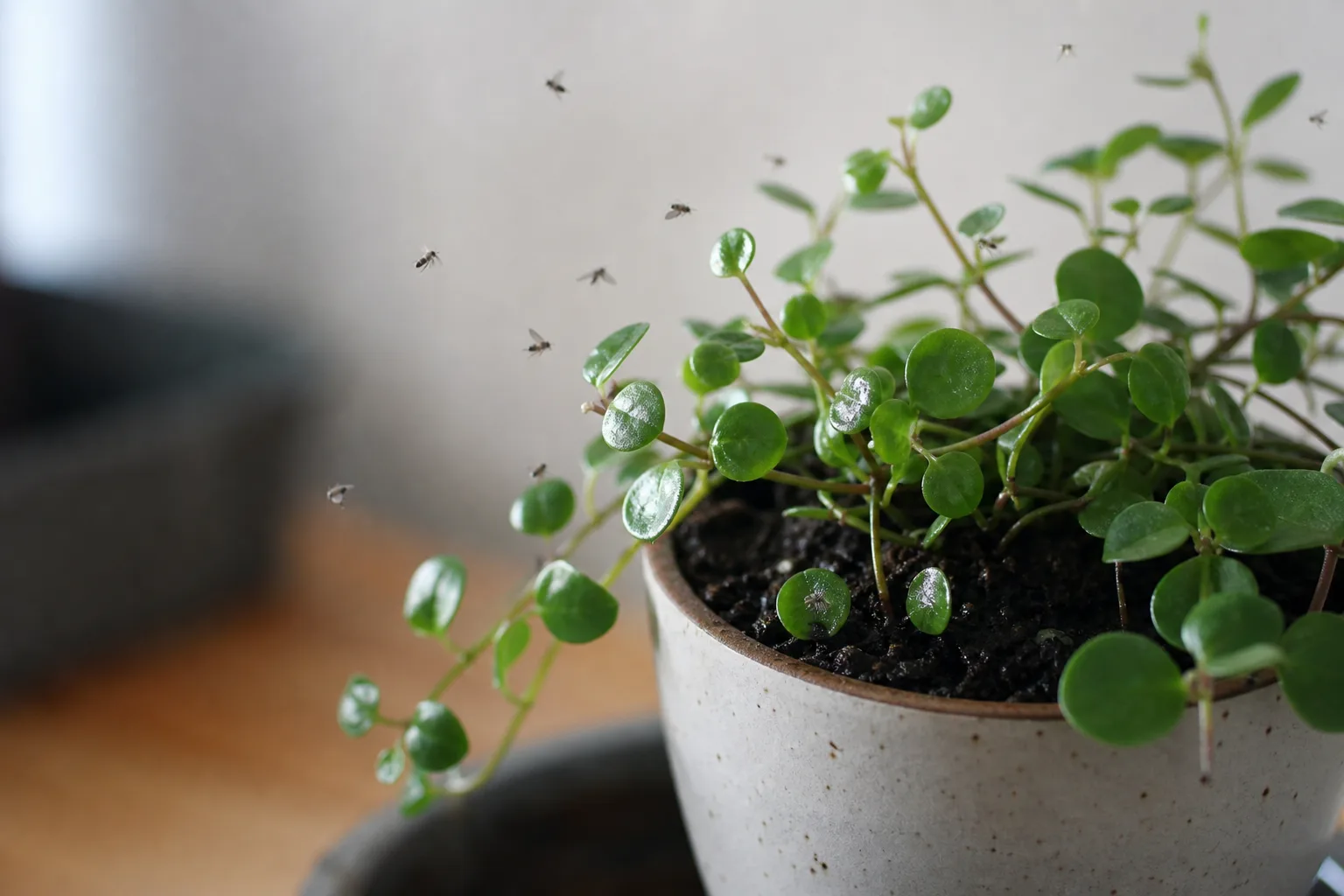
Fungus Gnats on Peperomia Hope: Causes, Checks & Fixes
This guide covers fungus gnats on Peperomia Hope. See also the general Fungus Gnats guide, watering, and light pages for this plant.
Fungus Gnats on Peperomia Hope: Causes, Checks & Fixes
Quick answer
Fungus gnats on Peperomia Hope (Peperomia tetraphylla ‘Hope’) are almost always a moisture warning, not a random pest invasion. These tiny flies breed in the top layer of potting mix when it stays damp for days-exactly the condition this trailing hybrid tolerates poorly. Peperomia Hope carries succulent round leaves on cascading stems but has a small, thin root system that needs the entire pot to dry between waterings, not just the surface looking less shiny.
First fix: stop watering until the mix is dry throughout. Stick a finger deep or lift the pot-if it still feels heavy or cool and damp, wait. Breaking the wet surface breaks the gnat life cycle because larvae cannot survive in dry soil. Only after you have corrected the Peperomia Hope watering guide should you add yellow sticky traps for adults or BTI products for larvae.
What fungus gnats look like on Peperomia Hope
The clearest sign is behavioral: small dark flies that flutter up when you water, move the hanging basket, or brush trailing stems aside. Adults are roughly mosquito-sized but weaker fliers-they hover near the soil line, windows, and lamps rather than biting you. On a basket plant, you may notice them only when the pot is at eye level or when you bring the plant down to check moisture.
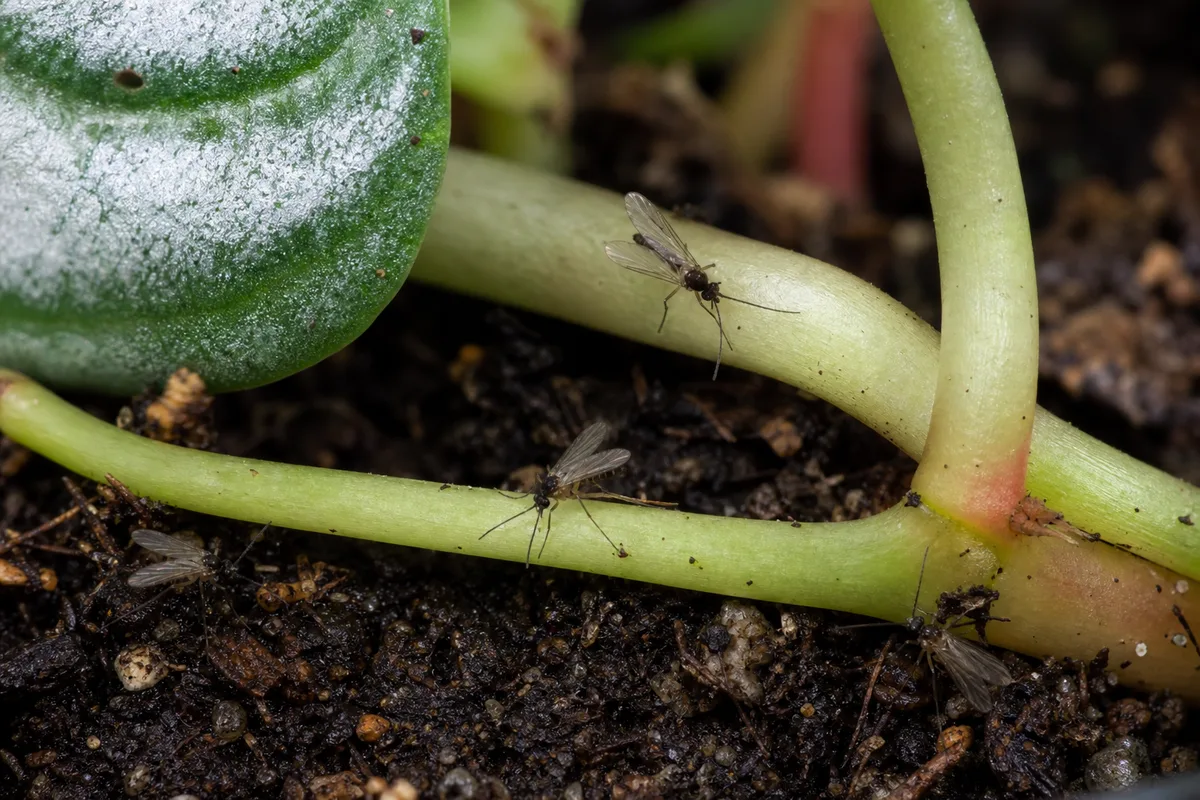
Fungus Gnats symptoms on Peperomia Hope - compare with healthy tissue on the same plant.
Peperomia Hope leaves themselves usually look fine at first. Unlike spider mites or mealybugs, fungus gnats do not leave stippling, webbing, or white cotton on the round leaves. The damage is below soil:
- Translucent, worm-like larvae in the top 1–2 inches of mix when you scrape the surface gently
- Soil that never dries on top even a week after watering
- Yellow sticky traps near the pot catching dozens of tiny flies within days
If round leaves are yellowing, wrinkling, or dropping while soil stays wet, treat that as root stress from moisture, not as a leaf disease. Gnats and root problems often share the same cause on Peperomia Hope overview.
Why Peperomia Hope gets fungus gnats
Fungus gnats need persistently moist organic soil to reproduce. Their larvae feed on fungi and decaying organic matter in the top layer-and on tender feeder roots when populations are high. Overwatered houseplants are especially vulnerable because wet mix supports both fungal growth and continuous egg-laying.
Peperomia Hope is prone to this pattern for plant-specific reasons:
Watering before the pot dries. This hybrid stores water in its leaves and needs the entire mix dry between soaks-typically every 10–14 days in active growth, less in winter. Watering on a calendar while the basket still feels heavy keeps the surface damp indefinitely.
Oversized hanging baskets. Long trailing vines tempt owners into large decorative pots, but Hope’s roots stay compact. A big wet zone around a small root ball dries slowly and breeds gnats for weeks.
Dense or peaty mix. Standard bagged soil without enough perlite holds moisture at the crown where trailing stems meet soil-root rot in overly moist soils and gnats both start there.
Low light slowing dry-down. In dim corners, transpiration drops and the pot stays wet longer even if you water less often than you think.
Hidden wet soil in baskets. Liner pots inside decorative hangers trap water and hide a constantly damp surface you never see until flies appear.
Gnats rarely arrive alone on a perfectly dry plant. They mean habitat is wrong, not that Hope is inherently gnat-prone.
How to confirm the cause
Work through these checks before reaching for sprays:
- Fly behavior - Do insects rise from the pot when disturbed? Fungus gnats fit; fruit flies cluster near food; whiteflies fly in clouds from leaf undersides.
- Surface moisture - Is the top inch damp to the touch days after watering? A dry surface with occasional flies may mean a nearby infested pot instead.
- Pot weight and drainage - Lift the basket. Heavy pot plus slow dry-down confirms excess moisture. Saucer still holding water?
- Larva check - Scrape the top centimeter of mix onto white paper. Tiny white or translucent larvae confirm breeding in this pot.
- Stem bases - Press where stems enter soil. Firm is good; soft or mushy means moisture damage beyond gnats alone.
- Light and season - Winter with short days plus unchanged watering often triggers both gnats and yellow leaves.
If the mix is dry throughout, leaves are firm, and flies appear only near the kitchen, fruit flies are more likely-clean counters and remove produce rather than drying an already-thirsty Hope.
First fix to try
Let the potting mix dry completely before the next watering.
That single change targets the root cause. Fungus gnat larvae in the upper soil die when the surface stays dry long enough, and adult females lose favorable egg-laying sites. For Peperomia Hope, “dry” means the pot feels light, the top 2 inches are crumbly, and trailing leaves may feel slightly softer until the next deep soak-do not panic-water at the first gnat sighting if soil is still damp.
Hold fertilizer and Peperomia Hope repotting guide until moisture rhythm is stable. Stressed roots from wet soil need consistency, not extra interventions on day one.
Step-by-step recovery
Once drying is underway, add controls in this order based on severity:
- Adjust placement for faster dry-down - Move to Peperomia Hope light guide and ensure airflow around the basket. Rotate the pot so all sides dry evenly.
- Deploy yellow sticky traps - Place traps just above soil level or pegged to the hanger. Replace when coated. Traps reduce adult egg-layers and show whether counts are falling over two to three weeks.
- Empty saucers and fix drainage - Never let Hope sit in standing water after a soak. Confirm liner holes are open.
- Apply BTI for persistent larvae - Products containing Bacillus thuringiensis subsp. israelensis (Mosquito Bits, Gnatrol) target larvae in moist soil. Prepare a drench per label, water through the mix, and repeat every five to seven days for several weeks because BTI does not kill eggs or pupae.
- Bottom-water selectively - Set the pot in a tray so roots drink from below while the surface stays drier. Useful if you struggle to keep the top inch dry during recovery.
- Scrape and top-dress if needed - Remove the top inch of old wet mix and replace with dry, airy soil (50% potting compost, 50% perlite). A thin layer of coarse sand can discourage new egg-laying on the surface.
- Repot only when mix will not dry - If the basket stays soggy for weeks despite corrected watering, move into fresh fast-draining mix in a smaller pot sized to roots, not vine length. Trim any soft stem bases during repot.
Skip hydrogen peroxide drenches as a default-they can stress thin roots and do not replace drying plus BTI for a sustained infestation.
Recovery timeline
Expect two to six weeks of consistent dry-down and larval control before flies disappear completely. Life stages overlap, so adults may linger on traps after larvae decline.
Improvement signs:
- Fewer flies on sticky traps each week
- Topsoil dries within your normal 10–14 day cycle
- Firm stem bases and new round leaves along trailing stems
- Pot weight drops predictably before you water again
Worsening signs:
- Swarms increase despite dry surface (check nearby pots or saturated inner liner)
- Yellow leaves spreading from crown while soil stays wet
- Soft stem bases or sour smell-shift focus to root rot treatment, not gnat traps alone
Adult gnats are mostly a nuisance; the wet soil habit is what threatens Peperomia Hope long term.
Lookalike symptoms
- Fruit flies - Attracted to ripening produce; less tied to constantly wet pot soil. Rounder body, often in kitchens.
- Shore flies - Also breed in wet media but have stout bodies and shorter antennae; same fix: dry the surface.
- Whiteflies - Tiny white insects on leaf undersides, not emerging from soil when watered.
- Mold on soil surface - White fuzzy growth on damp mix; often appears with gnats and shares the overwatering cause.
- Thrips - Silvery leaf scarring and black specks; not a soil-fly problem.
Mistakes to avoid
Do not spray only flying adults with soapy water or neem while soil stays wet-eggs keep hatching. Avoid watering on schedule without checking pot weight; Hope needs dry-down, not routine dampness. Do not upsizing the basket to fix gnats. Resist misting the crown or leaving decorative moss on wet soil-it extends surface moisture.
Stopping treatment after a few days when adults briefly decline leaves larvae in the mix. Do not reuse infested soil without replacing or drying thoroughly.
Peperomia Hope care cross-check
Gnats often appear when other care drifted:
- Light - Bright to medium indirect light helps the plant use water and dry the pot.
- Water - Entire mix dry before soaking; reduce frequency in winter.
- Soil - Fast-draining with perlite; avoid straight peat that stays wet at the crown.
- Pot size - Slightly tight is safer than oversized hanging baskets.
- Root health - If gnats came with yellow leaves, inspect stem bases for rot before assuming the pest alone is the problem.
How to prevent fungus gnats next time
Quarantine new plants two to three weeks with their own sticky trap before mixing them near Hope. Water from below occasionally if your home keeps topsoil damp. Keep dead leaves off the soil surface so larvae have less organic debris. Monitor with one trap per shelf during fall when outdoor plants move inside and often carry eggs in nursery mix.
Prevention on this plant is mostly boring, correct watering in a right-sized, well-draining pot-not constant pesticide rotation.
When to worry
Escalate beyond basic drying and BTI if seedlings or fresh cuttings collapse (larvae damage tender roots quickly), flies swarm multiple rooms despite dry pots (check the whole collection), or Hope shows soft crowns and sour soil alongside gnats. That is a root-health emergency-unpot, trim decay, and repot dry rather than relying on traps alone.
For a mature trailing plant with firm bases, dry soil rhythm, and falling trap counts, gnats are manageable. They are telling you the basket was too wet for too long-fix that, and Hope usually outgrows the problem without lasting damage.
When to use this page vs other Peperomia Hope guides
- Peperomia Hope watering guide - Use for routine moisture checks before assuming fungus gnats is the main issue.
- Peperomia Hope problems hub - Browse all 7 common issues on this species.
- Root Rot on Peperomia Hope - Different entry point when symptoms overlap with fungus gnats.
- Slow Growth on Peperomia Hope - Different entry point when symptoms overlap with fungus gnats.