Low Humidity on Peperomia Hope: Causes, Checks & Fixes
Quick answer
Peperomia Hope tolerates average home humidity, but very dry winter air can crisp leaf edges and invite spider mites on trailing stems. Move the plant away from heating vents first, then raise humidity moderately if edges stay dry.
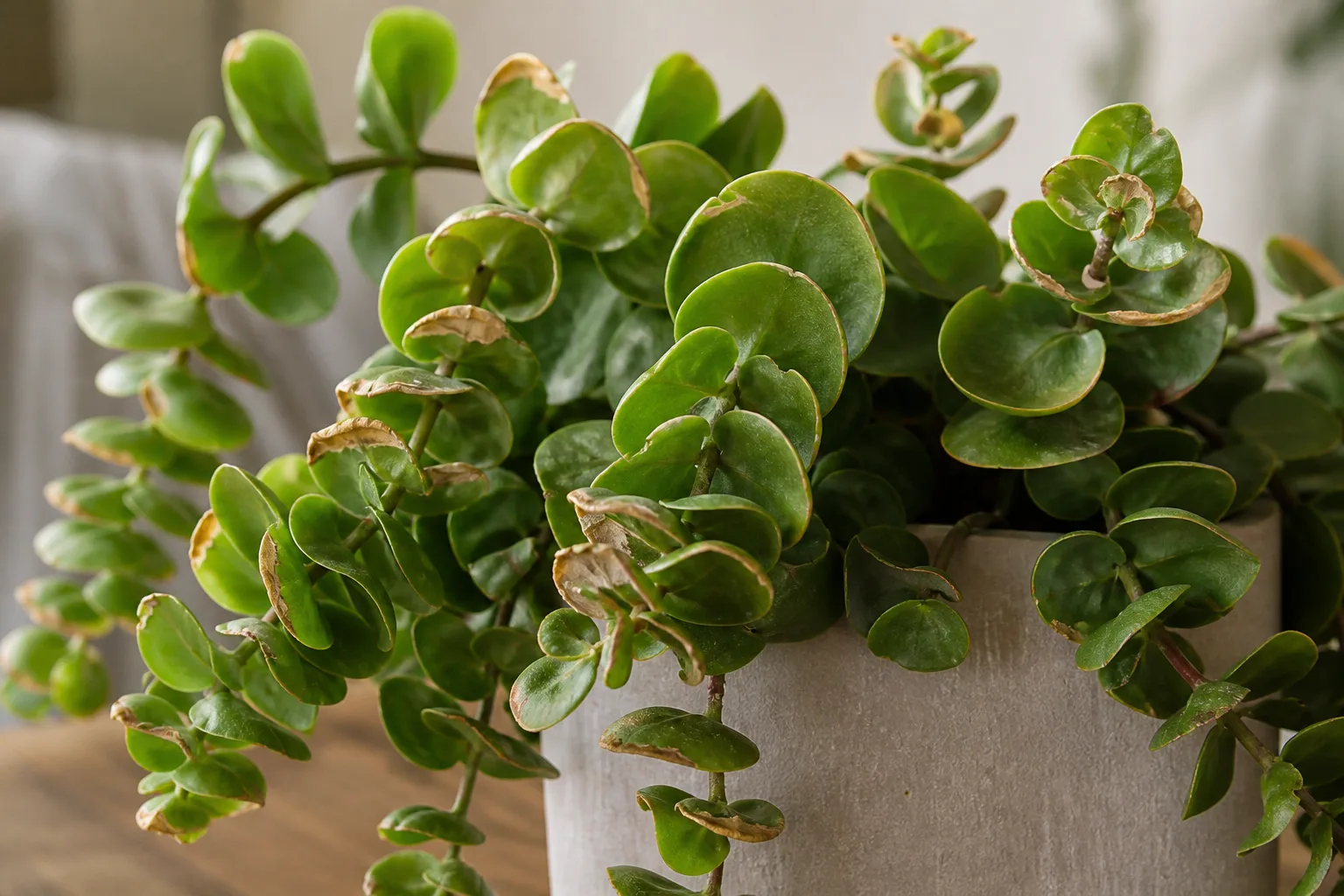
Low Humidity on Peperomia Hope: Causes, Checks & Fixes
This guide covers low humidity on Peperomia Hope. See also the general Low Humidity guide, watering, and light pages for this plant.
Low Humidity on Peperomia Hope: Causes, Checks & Fixes
Quick answer
Low humidity is rarely fatal on Peperomia Hope, but very dry indoor air can accentuate brown leaf edges and make spider mites more likely on trailing stems. This trailing cultivar with round, succulent leaves stores moisture in its foliage and adapts to the humidity levels of most homes better than thin-leaved tropicals. Before buying a humidifier, move the pot away from heating vents and confirm the problem is dry air-not underwatering, fluoride, or pests.
What low humidity looks like on Peperomia Hope
Dry air stress shows as crispy brown margins on otherwise firm round leaves, often on the outermost trailing sections first. Leaves may feel slightly papery at the edges while the center stays plump. Fine pale stippling on leaf undersides along vines points to spider mites favored by hot, dry conditions with humidity below 50%, not humidity alone. Soil dry-down speed may increase near radiators, but the crown and stem bases should stay firm. Soft limp stems with wet soil mean rot or overwatering-not dry air.
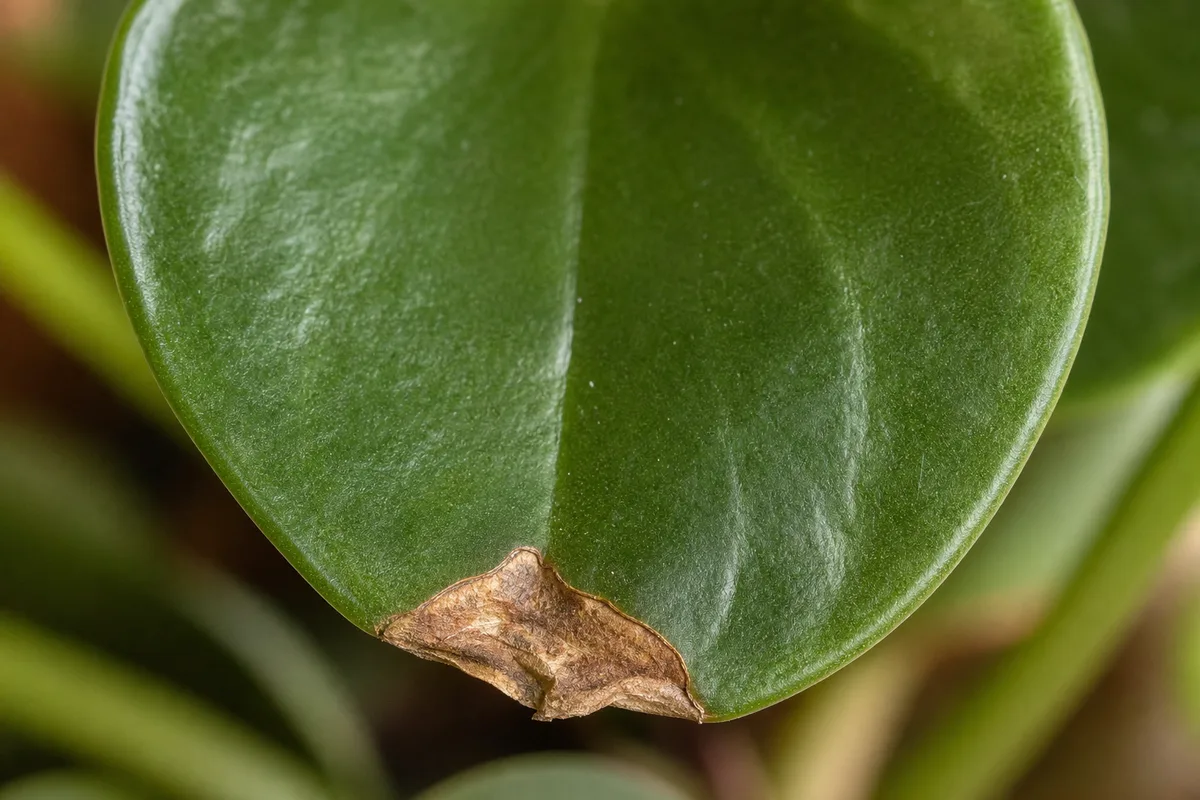
Low Humidity symptoms on Peperomia Hope - compare with healthy tissue on the same plant.
Why Peperomia Hope gets dry air stress
Peperomia Hope is a tropical epiphyte with fleshy leaves that store moisture, so it tolerates drier rooms than many rainforest houseplants. That tolerance has limits. Winter heating can drop indoor humidity well below the 40–50% range Peperomia Hope overview handles comfortably. Trailing stems hanging in front of radiators, forced-air vents, or hot window glass lose moisture fast. Very dry air also slows recovery from fluoride and salt tip burn-peperomias are sensitive to fluoride in tap water, which can look identical to humidity damage on round leaf margins.
How to confirm the cause
Run through these checks in order before changing humidity:
- Pot weight and soil moisture. A very light pot with wrinkled leaves means underwatering, not low humidity. Heavy wet soil with limp stems points to crown trouble.
- Placement. Note radiators, heat vents, fireplace drafts, and winter window glass touching trailing vines.
- Leaf texture. Firm plump leaves with only dry edges suggest environmental crisping. Papery, collapsing leaves across the plant suggest water stress.
- Pest signs. Hold trailing stems to the light and check undersides for stippling, webbing, or moving specks-spider mites are among the most common peperomia pests.
- Water source. If tips browned after repeated tap-water soaks, fluoride may be the trigger even at normal humidity.
A simple room hygrometer near the pot helps, but placement and pests often explain the damage more clearly than a single humidity reading.
The first fix to try
Move Peperomia Hope away from the obvious dry-air source-heating vent, radiator, or hot glass-into stable bright indirect light. Do not compensate by watering more; wet soil around a small root system is more dangerous than dry winter air on this plant. Keep your normal complete dry-down rhythm. If you see mite stippling, isolate the plant and rinse leaf undersides before any spray treatment.
Step-by-step recovery
Once placement is fixed, add moderate humidity only if edges keep crisping on firm leaves:
- Group nearby plants so combined transpiration raises local moisture slightly.
- Use a pebble tray or small humidifier near the pot-not under it-so trailing stems are not sitting in pooled water.
- Switch to room-temperature filtered or rainwater if margins browned after tap-water use.
- Treat spider mites if stippling spreads; raising humidity alone will not clear an active infestation.
- Trim fully dead edge tissue only after conditions stabilize; partial crisping often stops spreading once air moisture improves.
Damaged leaf margins will not re-green. Judge recovery by new firm round leaves along trailing stems and no new stippling on fresh growth.
Lookalike symptoms
| What you see | More likely cause on Peperomia Hope |
|---|---|
| Crispy tips on firm leaves near a radiator | Dry air / heat blast |
| Crispy tips after tap-water soaks | Fluoride or salt stress |
| Wrinkled leaves with a very light pot | Underwatering |
| Yellow limp leaves with wet heavy soil | Overwatering / root stress |
| Fine stippling and webbing on trailing vines | Spider mites in dry conditions |
Mistakes to avoid
Do not mist trailing stems and leaf clusters directly-surface moisture at the crown increases rot risk on this trailing peperomia. Do not keep soil wet to “replace” humidity. Do not place the pot inside a closed terrarium without excellent airflow; peperomias prefer humid air but still need drainage and air movement. Do not assume every brown tip means you need 70% humidity; moderate improvement is usually enough. Do not ignore stippling while focusing only on a humidifier.
How to prevent dry air stress
Target average household humidity around 40–50% and stable temperatures in the comfort range this plant already prefers. In dry winters, a humidifier benefits peperomia more than occasional misting. Keep trailing growth rotated so one window-facing side does not bake while the other stays shaded. Use filtered water, fast-draining mix, and pots sized to roots-not vine length-so watering stays predictable. Peperomia is non-toxic to cats and dogs, which makes it easier to keep on open shelves where airflow is better than inside enclosed cabinets.
When to use this page vs other Peperomia Hope guides
- Peperomia Hope watering guide - Use for routine moisture checks before assuming low humidity is the main issue.
- Peperomia Hope problems hub - Browse all 7 common issues on this species.