Repotting Philodendron Florida Ghost: Timing, Pot Size &
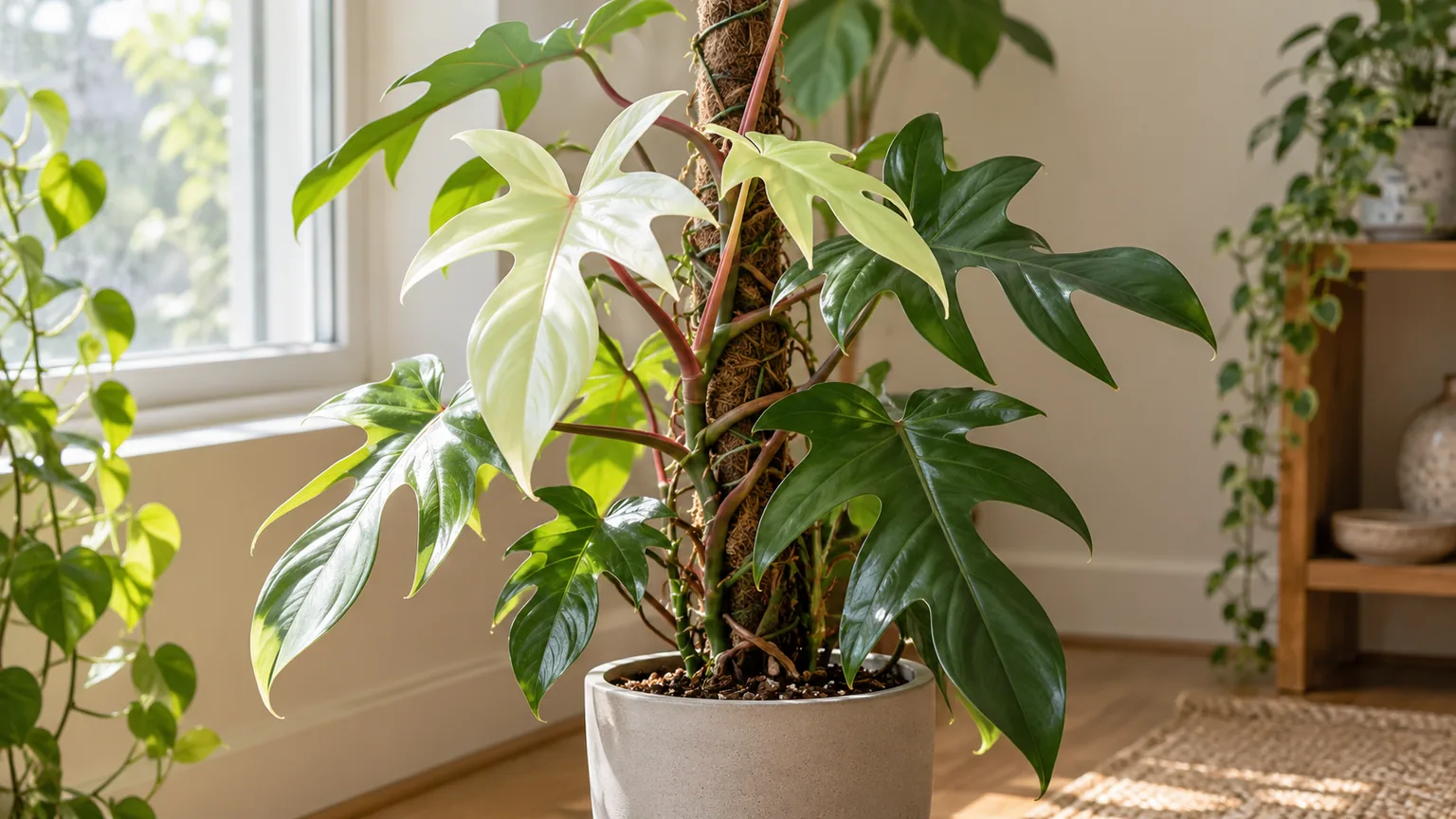
Repotting Philodendron Florida Ghost: Timing, Pot Size & Moss Pole Tips
Repotting Philodendron Florida Ghost: Timing, Pot Size & Moss Pole Tips
Philodendron Florida Ghost (Philodendron ‘Florida Ghost’) is a climbing hybrid in the Florida philodendron series — a cross of Philodendron pedatum and Philodendron squamiferum that produces pure white juvenile leaves before they harden off green. Repotting is one of the few routine jobs where a small error — oversized pot, bare-root shock, or a moss pole stabbed through established roots a week later — can stall that pale new growth for a month or more. Unlike a forgiving golden pothos, Florida Ghost combines a vining root mass that fills pots unevenly with chlorophyll-light new tissue that has less energy buffer during recovery.
Done well, a spring repot refreshes drainage, replaces compacted peat, and gives adventitious roots along the stem room to anchor a moss pole. Done poorly — repotting in a dim winter stretch into a pot two sizes too large — you get wilting, collapsed white leaves, and a plant that looks fine in photos but stalls below the soil line. This guide walks through when Florida Ghost actually needs a new container, how to execute a repot without stripping fine root hairs, and how to read the first pale leaf after the move as your clearest recovery signal.
Quick Answer — When to Repot Florida Ghost
Repot Philodendron Florida Ghost every two to three years under typical indoor conditions, or sooner when roots circle drainage holes, water runs straight through without absorbing, or growth stalls despite good light and balanced feeding. RHS lists a 2–3 year repot interval for this cultivar under glass. Spring through early summer is the safest window because active growth helps roots colonize fresh mix faster. Choose a pot only 2–5 cm (1–2 inches) wider than the current one, refresh with the chunky aroid blend from our soil guide, anchor any moss pole during the same session, and skip fertilizer for four to six weeks after the move. Mild wilting for one to two weeks is normal; a firm new leaf opening pale white or cream is your best sign that roots have reconnected.
Why Florida Ghost Repotting Differs From Other Philodendrons
Florida Ghost is not a generic philodendron with a colour swap. RHS describes ‘Florida Ghost’ as a climbing hybrid whose foliage is pure white when young, becoming lime-green and then darker green as leaves age — a juvenile colour phase, not stable chimeric variegation like Philodendron ‘Pink Princess’. That biology changes how repotting feels in your hands and how fast the plant recovers afterward.
Vining habit, moss poles, and uneven root fill
Climbing philodendrons produce adventitious roots from nodes along the stem. Indoors, those roots want to attach to a moss pole, trellis, or chunky bark — not sit in a dense peat cylinder with no air channels. NC State Extension notes that related climbing philodendrons prefer moist, well-drained soil rich in organic matter and should be repotted when root-bound — guidance that applies directly to Florida Ghost containers. When you repot, you are usually managing two root zones: the fibrous mass in the pot and aerial roots wrapped around support material.
That uneven fill is why Florida Ghost can seem modest above soil while roots have already spiraled the entire bottom third of a nursery container. Vining stems also add top weight once you install a pole. Repotting is the practical moment to reset pole placement, deepen the base anchor, and confirm the plant will not tip when the next leaf flush arrives.
White new leaves as your recovery benchmark
On a solid green philodendron, “new growth” alone signals recovery. On Florida Ghost, you need to look closer. Pale juvenile leaves carry less chlorophyll than mature green sections — pale tissue photosynthesizes less efficiently — which means the plant already runs closer to its energy limit before any root disturbance. Repot shock plus dim light is a double hit on the white unfurling phase.
After repot, watch whether the first new leaf opens at normal size with clean white or cream tissue — not paper-thin collapsed white, not stunted half-leaves, and not immediate solid green on every new leaf unless light has dropped sharply. Pale colour stability still depends primarily on bright indirect light, but damaged roots from soggy old mix or an oversized new pot remove the buffer that keeps white tissue expanding without scorching. Treat a firm pale new leaf as confirmation that the root zone is working again.
Routine Repot vs Rescue Repot
Not every unpotting is the same job. Matching your session type prevents treating a rotting plant like a simple size upgrade — or delaying a rescue because the calendar says wait until spring.
| Signal | Routine upgrade repot | Rescue repot |
|---|---|---|
| Root color | Mostly white or tan, firm | Brown, mushy, or foul-smelling |
| Growth | Stalled but leaves still firm | Widespread wilt, collapse, or spreading yellow |
| Timing | Spring–early summer preferred | Any season if rot is active |
| Pot direction | One size up (2–5 cm) | Often same size or smaller after trimming |
| Root handling | Tease circling tips only; keep ball intact | Trim rot; may need propagation backup |
| Fertilizer | Wait 4–6 weeks | Wait until firm new growth |
Penn State Extension notes that spring is the best time for houseplant repotting because roots grow into fresh mix as seasonal growth resumes — ideal for routine upgrades. When mushy roots or sour mix are present, treat it as rescue work even in winter, using a modest pot, temperatures above 18°C (65°F), and cautious watering until spring.
When to Repot Philodendron Florida Ghost
Calendar reminders help, but root condition should drive the decision. Penn State Extension lists classic root-bound signals: potting mix that dries out very quickly, roots growing through drainage holes, or growth slowing even when fertilized in spring and summer. Lift the plant and check — if roots circle the bottom third or you cannot see mix through the root mass, it is time.
Plan a full repot every two to three years for an actively growing indoor Florida Ghost in a 12–18 cm grow pot, matching the RHS cultivar interval. Fast growers in bright east or south-facing rooms may need the shorter end of that range; slower specimens in cooler winter homes may sit comfortably toward three years.
Do not repot just because one lower leaf yellowed. Yellowing often traces to overwatering, cold drafts, or natural aging on a long vine. Repotting an already stressed plant stacks variables and makes diagnosis harder. Confirm the root zone is the bottleneck — circling roots, fast dry-down, or salt-crusted mix — before you commit.
Do not repot a brand-new nursery plant on day one unless the mix is clearly failing or pests are visible. Quarantine, learn the pot’s dry-down rhythm for two to three weeks, then repot in the next active growth window if roots are already tight. The overview guide covers first-month stability in more detail.
Top-dress vs full repot
Not every spring soil refresh requires lifting the entire plant. Top-dressing — scraping the top 3–5 cm of depleted mix and replacing it with fresh aroid blend — works when roots are healthy, drainage is still acceptable, and the pot size is still appropriate. Choose full repot when two or more root-bound signals appear together, the mix smells sour, or water channels through a hydrophobic mat without wetting the center.
Best Season and Timing for Repotting
Spring, as houseplants resume active growth, is the default window. NC State Wayne County Extension recommends spring repotting so roots establish during the growing season. RHS repotting guidance likewise places spring at the start of growth as the best time for most container plants, with early to midsummer as a secondary option.
Avoid autumn and winter repotting for routine upgrades. Fresh compost in a larger pot stays wet longer when growth slows and daylight drops — exactly the conditions that punish pale new leaves on a climber already running a thin energy margin. Winter repotting is justified only for rescue situations: active root rot, a broken pot, or a plant so root-bound that watering has become impossible to manage safely.
Choosing the Right Pot Size
The one-size-up rule is not conservative advice — it is damage prevention. RHS guidance recommends repotting into a container about 2.5–5 cm (1–2 inches) deeper and wider than the previous one for pots under 25 cm. NC State Wayne County caps the increase at no more than 2 inches in diameter. Both align on the same practical limit for indoor Florida Ghost.
Oversized pots are a common collector mistake on expensive hybrids. RHS overpotting advice warns that excess compost stays wet when the root system cannot use it — leading to yellowing, wilting, and soggy mix. Florida Ghost in a pot that is too large often shows yellow lower leaves and collapsed pale new growth while the center of the root ball remains anaerobic. If you already own a decorative cachepot, plant into a properly sized inner pot with drainage holes and slip it inside — never plant directly into a hole-free outer container.
Every repot container needs drainage holes. NC State Wayne County confirms that gravel layers in the bottom decrease drainage rather than improve it — water will not move into a gravel zone until the soil above is saturated.
Soil Mix to Use at Repot Time
At repot time, replace degraded mix entirely rather than packing fresh peat around a sour root ball. Florida Ghost needs the same chunky, well-draining aroid blend described in our soil guide: roughly 50–55% quality potting soil, 20–25% perlite, 10–15% orchid bark, and optional worm castings by volume. RHS cultivation notes call for an open, ericaceous, well-drained but moisture-retentive mix that can include bark, lava rock, and sphagnum — the same structural goal as a home-blended aroid recipe.
Penn State Extension stresses using a soilless potting mix created for containers, not garden soil, and pre-moistening the mix before repotting so water distributes evenly through the new root zone. Run the cup drainage test from the soil guide before you unpot — if water pools, add perlite and bark before a live plant goes in.
Moss Pole Installation During Repot
Florida Ghost is a climbing hybrid — both parent species are climbers, and the trait passes to the cultivar. A moss pole is not optional décor; it is structural support that keeps internodes short and gives aerial roots a surface to colonize. Install or extend the pole during the repot session, not a week later when roots have already begun settling.
Set the pole 2–3 cm from the main stem with its base in the lower third of the new pot before you firm the final mix layer. Tie the lowest node with an aerial root to damp sphagnum on the pole using soft plant ties. Do not bury the stem deeper just to stabilize the vine — philodendron stems rot easily when buried in wet mix. If you are upgrading pole height, nest the new pole beside the old one rather than pulling roots off established moss.
Step-by-Step Florida Ghost Repot Procedure
Follow this sequence for a routine spring upgrade on a healthy Florida Ghost in a 12–15 cm nursery pot.
1. Water lightly the day before. Penn State Extension recommends watering about one hour before repotting so roots are hydrated but not soggy. This softens the root ball without turning the job into a mud slide.
2. Prepare workspace and tools. Clear a bench, sanitize reused pots with dilute bleach solution if needed, pre-moisten fresh mix, and set out secateurs, ties, and your moss pole. RHS notes that Florida Ghost is harmful if eaten and a skin/eye irritant — wear gloves when trimming roots or handling sap.
3. Unpot and inspect roots. Tip the container and support the root ball — do not yank by the stem. Tease circling outer roots gently; cut only mushy brown sections. If more than a third of the root mass is rotten, switch to rescue protocol and consider a propagation backup from a healthy node.
4. Position pole and partial fill. Add moist mix to the new pot so the top of the root ball will sit about 2.5 cm below the rim. Set the moss pole, place the root ball, and backfill around the sides. Firm lightly — do not compress mix until air channels collapse.
5. Water once and drain fully. Soak until excess runs from drainage holes, then empty the saucer within 30 minutes. Place in bright indirect light — not direct sun on freshly stressed pale leaves.
6. Wait before feeding or heavy watering. Resume normal check-first watering only when the top 3–5 cm dries. Hold fertilizer for four to six weeks unless you are in active rescue mode with a separate recovery plan.
Post-Repot Care for Florida Ghost
The first two weeks after repot are about stability, not pushing growth. Expect mild leaf droop or slight curl on the newest white leaf — that is transplant adjustment, not necessarily rot. If multiple leaves collapse, the mix stays wet for more than seven to ten days, or the stem softens at soil line, unpot and inspect immediately.
Water more cautiously than in midsummer peak growth. Fresh mix often dries slower for the first two to three weeks while roots explore new territory — adjust your watering rhythm accordingly rather than pouring on a calendar schedule. Keep temperatures in the 65–85°F (18–29°C) comfort band NC State lists for related climbing philodendrons and avoid cold drafts below about 15°C (59°F) on wet roots.
Your clearest success marker is a new pale leaf that unfurls at full size without scorching or collapsing. If new leaves emerge solid green immediately while light has not changed, roots may be fine but the plant is telling you it needs brighter placement — not another repot.
When NOT to Repot Florida Ghost
Skip repotting when the plant is pushing a fresh white leaf that has not hardened off — wait until that leaf matures if the pot is still manageable. Do not repot during a pest outbreak until you have isolated and begun treatment; disturbing roots spreads stress. Do not repot purely because social media says “spring potting day” when roots are still loose in the current mix.
If the only symptom is one yellow lower leaf on a long vine, fix watering and light first. Repotting a plant that is actually overwatered in a correctly sized pot often makes rot worse, not better.
When to use this page vs other Florida Ghost guides
Use this repotting guide when roots are tight, mix is exhausted, or you are installing a moss pole during a container upgrade. For day-to-day moisture checks, read the watering guide. For mix ratios and drainage testing before you repot, read the soil guide. For light placement that keeps pale new leaves expanding, read the light guide. For stem-cut backups if a rescue repot fails, read the propagation guide. For identity, toxicity, and first-month quarantine, start with the overview.
Related Philodendron Florida Ghost guides
- Watering Philodendron Florida Ghost — check-first rhythm and dry-down depth after repot
- Best soil for Florida Ghost — volume ratios and cup drainage test before repot day
- Florida Ghost light needs — brightness for pale juvenile leaves post-repot
- Florida Ghost propagation — stem-tip backup if rescue repot trims heavily
- Florida Ghost fertilizer — when to resume feeding after the post-repot pause
Conclusion
Philodendron Florida Ghost repotting succeeds when you treat it as root-zone engineering for a climbing pale-leaf hybrid, not a generic houseplant upgrade. Repot every two to three years in spring, move up only one pot size, refresh chunky aroid mix, install the moss pole in the same session, and judge recovery on the first firm pale new leaf — not on whether the plant merely survived the afternoon. When roots are rotten or mix is sour, repot becomes rescue work regardless of season; when only one leaf yellowed, fix watering and light before you unpot. Get those decisions right and Florida Ghost rewards you with another cycle of white juvenile foliage at the growth tip.