Root Rot on Philodendron Florida Ghost: Causes, Checks &
Quick answer
Root rot on Philodendron Florida Ghost usually means the chunky aroid mix stayed wet too long and feeder roots have turned brown and mushy. First step: lift the nursery pot out of any cachepot and pour off standing water. Then check the mix and roots to decide whether it needs repotting.
Root Rot on Philodendron Florida Ghost: Causes, Checks & Fixes
This guide covers root rot on Philodendron Florida Ghost. See also the general Root Rot guide, watering, and light pages for this plant.
Root Rot on Philodendron Florida Ghost: Causes, Checks & Fixes
Quick answer
Florida Ghost is a climbing aroid that wants a drink and then a dry-down. When its chunky mix stays soggy, roots can deteriorate and the vine may wilt even while the soil is wet. First, lift the nursery pot out of any cachepot and pour off standing water. Then check the mix and roots; repot only if roots are soft or the mix stays waterlogged.
For how wet mix damages houseplant roots in general, see our root rot guide. Everything below is about why this particular ghost rots and how to rescue a vine, not just a root ball.
What root rot looks like on Florida Ghost
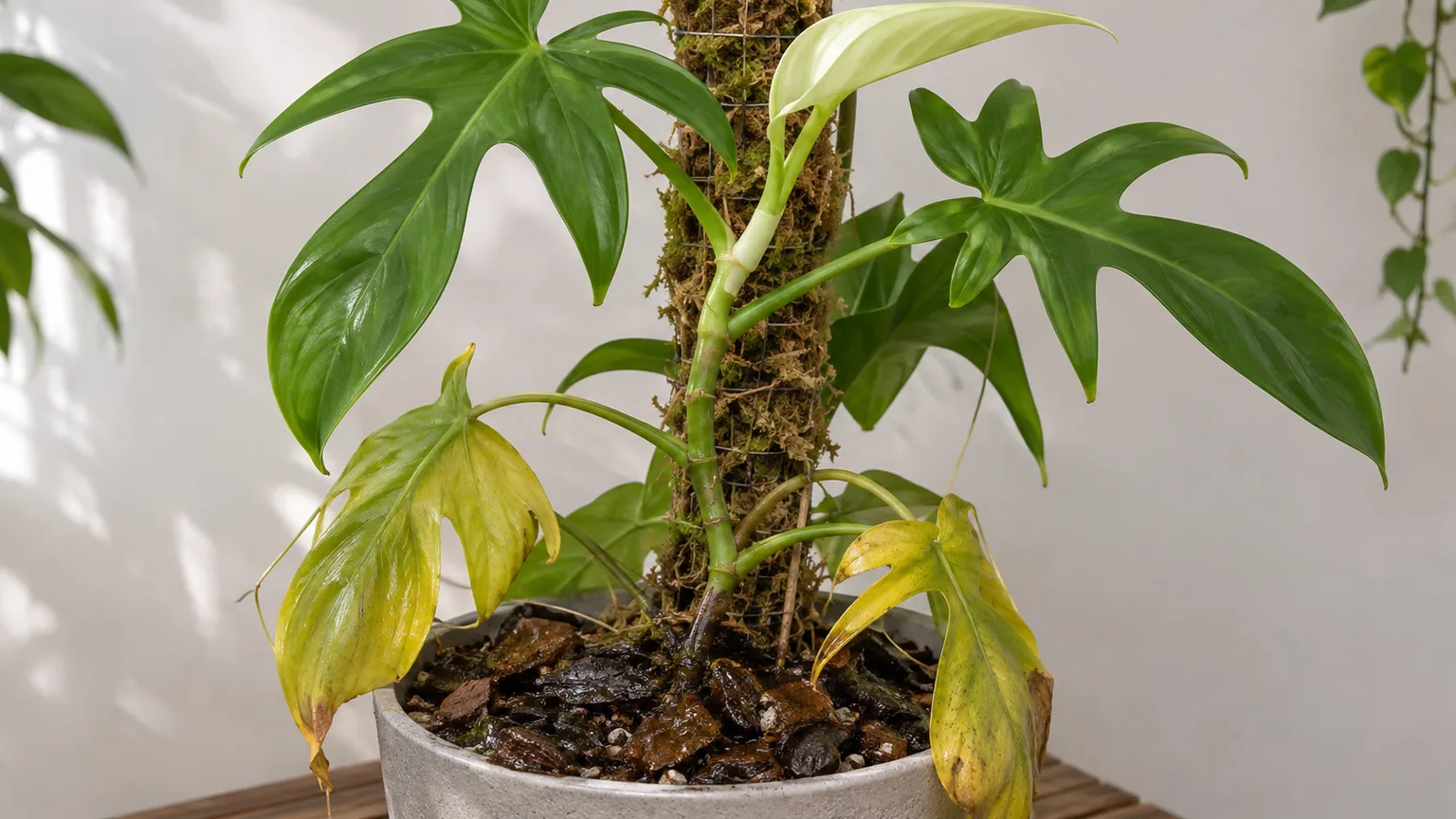
On this plant, rot announces itself from the bottom up while the pretty top distracts you. Lower green leaves yellow and go soft rather than crisp, petiole bases feel mushy where they meet the stem, and the stem near the soil line may turn brown or slightly translucent. The giveaway that separates rot from simple thirst is a plant that is wilted even though the soil is wet — a thirsty Ghost perks up after watering, a rotted one never does.
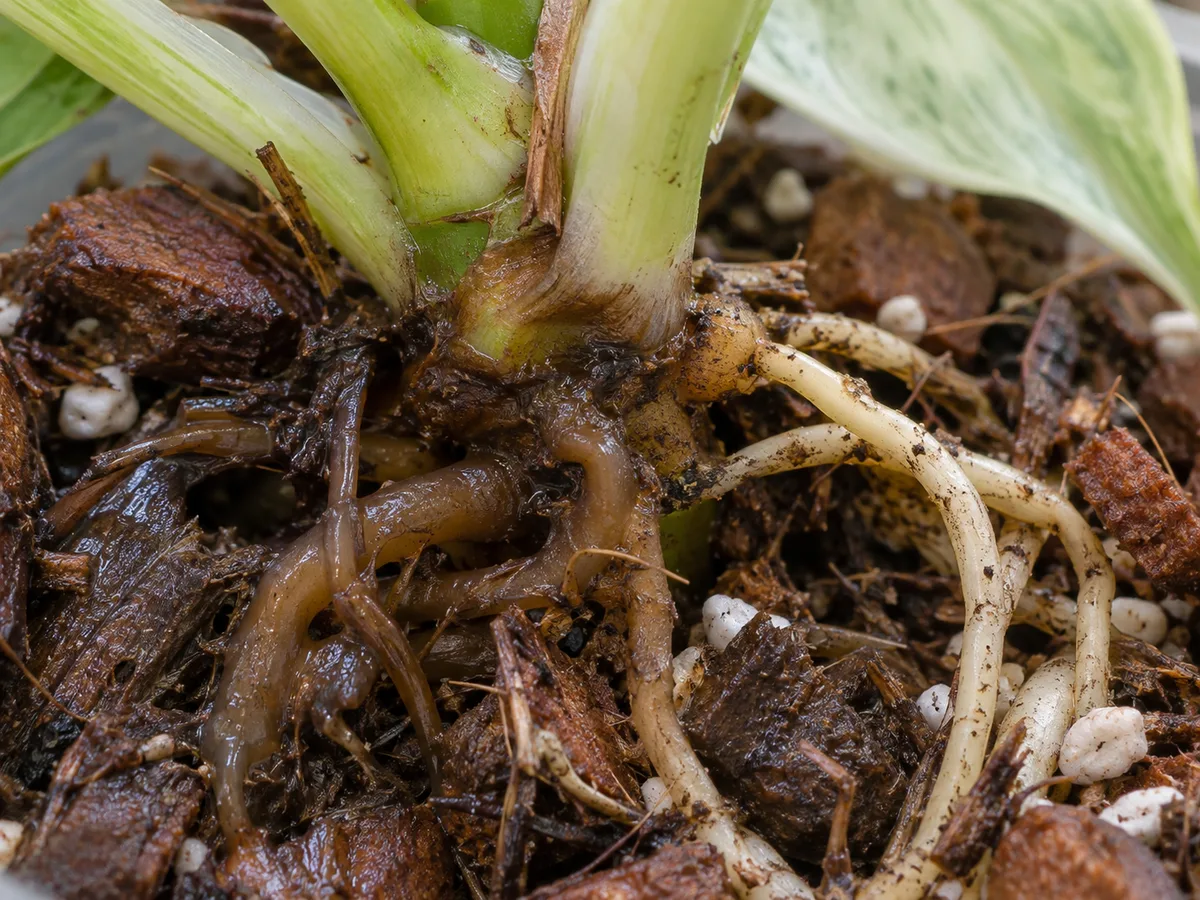
Rotted feeder roots turn soft and brown while healthy roots stay firm and pale.
Watch the growth tip, because on a single-vine climber the tip is the whole future. Clemson notes that the death of the growing tips on philodendrons can trace to overwatering, and on Ghost that shows as a white spear that stalls, blackens at the edges, or collapses before unfurling. Pale new leaves also hide early yellowing, so by the time you notice discoloration up top, the roots may have been failing for weeks. Other supporting clues: a pot that stays heavy many days after watering, sour smell at the drainage holes, fungus gnats hovering, and white aerial roots on the moss pole looking fine while everything below the soil line fails.
Why Florida Ghost rots: the usual causes in order
1. Calendar watering in dense or tired mix. The number-one killer is water arriving on schedule instead of by dry-down, in a mix that holds too much of it. Clemson puts it plainly: root rot usually results from a mix that drains poorly or watering that comes too often. Ghosts often arrive in dense nursery peat that stays wet at the core long after the surface looks dry — exactly the wet soil conditions where Pythium and Phytophthora thrive.
2. No drainage exit. A decorative cachepot with no holes, or a saucer that is never emptied, keeps the bottom of the pot permanently soaked. The Spruce’s Ghost guidance warns to pour off any excess so the plant never sits in water, and to water only once the top inch or so has dried. If your Ghost lives in a sealed decorative pot, that alone can explain the rot.
3. Winter watering at summer pace. Ghosts slow down as light and warmth drop, drinking far less — but owners keep the summer rhythm going. The Spruce notes this plant goes dormant in winter and needs watering cut back with soil moisture monitored. A Ghost watered weekly through December in a cool room is sitting in exactly the cold, wet mix roots cannot survive.
4. The pale-leaf overwatering trap. White new leaves look delicate, and the instinct is to pamper them with extra water. The opposite is right: pale tissue carries less chlorophyll, grows slowly, and uses less water — and Cafe Planta names overwatering as the top issue Ghost parents face, since these plants want to dry out a bit between drinks. Extra water for the white leaves drowns the roots feeding them.
5. A sopping moss pole draining into an already-wet pot. Ghost is a vine meant to climb, and a damp pole is good — a dripping one is not. Daily pole soakings that run straight down into mix that never dried turn the stem base into a permanent wet zone. Keep the pole barely damp to the touch, and skip pole waterings entirely while the pot is still heavy. The Florida Ghost light guide covers placement that keeps both pole and pot drying at a healthy rate.
6. Reused mix, reused pathogens. Potting a pricey Ghost into leftover mix from a plant that died mysteriously can import the very fungi that killed its predecessor. Wisconsin extension warns to never reuse potting mix from houseplants, since it can harbor root rot fungi, and to start rot-prone plants in pasteurized commercial mix.
How to confirm the cause
Work through these in order before cutting anything:
- Lift the pot. Heavy and damp many days after watering means the core is waterlogged even if the surface looks fine. A light pot with a wilted plant points to underwatering instead.
- Sniff the drainage holes. Sour, swampy smell plus brown mush visible at the holes is near-confirmation. Healthy Ghost roots smell like fresh earth or nothing at all.
- Do the finger test. Cafe Planta’s rule is simple: push a finger about two inches into the soil — damp means hold off, dry means water. For an established Ghost in chunky mix, extend that to 3–5 cm deep, as the Florida Ghost watering guide describes.
- Read the tip and newest spear. Firm green tip with a swelling pale spear means the vine is still fighting — worth the full rescue. Blackened, mushy tip tissue means the rot has reached the crown and a backup cutting becomes the priority.
- Slip the plant out and inspect. Rotted roots are soft and brown with a bad odor; healthy Ghost roots are firm and white to tan. If more than half the root mass is mush but the stem base is firm, the plant is very saveable. If the stem itself is brown and hollow at the soil line, save what nodes you can.
- Rule out lookalikes. Crispy brown edges with a light pot mean underwatering. Brown crispy patches on white leaves after a sunny move mean sunburn, not rot. Cold damage after a drafty winter window can also blacken new spears — but cold damage comes with dry mix, while rot comes with wet.
The first fix to try
Get it out of the water — one action, today. Lift the nursery pot out of the cachepot, pour off every drop of standing water, and set the pot where air circulates so the mix can start drying. Don’t fertilize, don’t repot yet, don’t spray anything: just end the drowning first. Then, within a day or two, unpot for the inspection and trim described below — drying alone cannot resurrect roots that have already turned to mush.
Step-by-step recovery
- Unpot and rinse. Slide the plant out, shake off old mix, and rinse roots under lukewarm water so you can see what is firm and what is not.
- Cut back to healthy tissue. With scissors wiped with alcohol or a 10% bleach solution — Wisconsin recommends disinfesting tools this way after handling rotted plants — trim every soft brown root back to firm white tissue. If the stem base is mushy, cut upward until the cross-section shows clean, firm flesh.
- Repot small and chunky. Use fresh pasteurized mix, never the old one: roughly standard indoor mix loosened with perlite and orchid bark, as The Spruce’s drainage-focused recipe describes. Choose a pot with drainage holes, only as big as the surviving root mass needs — a too-big pot stays wet and restarts the cycle. The Florida Ghost soil guide has the exact aeration mix this hybrid wants.
- Stake the vine. Tie the stem loosely to its moss pole so it stands upright without wobbling; aerial roots will re-grip as it recovers. Keep the pole just barely damp for now.
- Water once, then wait. Soak lightly to settle the mix, drain fully, and then let the top 3–5 cm dry before the next drink. Expect no visible progress for weeks — roots rebuild before leaves do.
- Take a node-cutting backup. Ghost vines root from stem sections with a node, and Clemson notes philodendrons propagate readily from stem cuttings or air layering. If any firm stem with a node and an aerial root nub exists above the rot, cut it, let the end callus briefly, and root it in fresh mix or water as insurance. Details are in the Florida Ghost propagation guide.
Skip the fungicide aisle: Wisconsin extension does not recommend chemical fungicides for houseplant root rots, noting products for home gardeners are limited and expensive. Sanitation, fresh mix, and correct watering are the treatment.
Recovery timeline
In spring or summer, a Ghost with a firm stem base usually pushes a new spear or a fresh bud from a dormant node within 4–8 weeks of the rescue. The first new leaf often emerges small and may unfurl paler than usual — that is fine; judge recovery by whether each successive leaf sizes up and hardens off green. Yellowed lower leaves will not recover; let them drop naturally or trim them once new growth is clearly coming.
If nothing moves after two months of correct care in the growing season, unpot once more and re-check: either rot remains in the crown or the stem base was dead all along. A winter rescue runs slower — hold steady, keep the mix barely moist, and wait for spring before declaring failure.
Mistakes to avoid
- Fertilizing a rotted plant. Extra salts on freshly trimmed roots burn rather than feed. No fertilizer until new growth looks healthy for several weeks.
- Repotting into a bigger pot “for room.” Survivors need smaller quarters, not larger — excess mix stays wet and re-invites the fungi.
- Reusing the old mix or an unwashed pot. Fungi persist in both. Fresh pasteurized mix, scrubbed pot, and a bleach or alcohol wipe for tools, per the extension sanitation guidance above.
- Keeping the pole sopping while the pot recovers. The pole is part of the watering system. If the pot is wet, the pole stays nearly dry until the pot lightens.
- Stacking fixes in one weekend. Trim plus repot plus feed plus pest spray on a plant with no functioning roots is how rescues die. Surgery first, stability second, feeding last.
When to worry
Most Ghost root rot caught at the yellow-lower-leaves stage is survivable. Escalate to triage mode when the stem is translucent or hollow at the soil line, the tip collapses, or the whole root mass sloughs off in your hands — cut ruthlessly to firm tissue and prioritize the node-cutting backup. If no firm stem, node, or root remains, the kindest call is the one Wisconsin extension names first: throwing out a rotted plant is often the best and most cost-effective option, especially since keeping it risks spreading fungi to neighboring pots. A rescued Ghost that survives earns the brightest filtered light you have — its pale new leaves need the energy to rebuild what the rot took.
Related Philodendron Florida Ghost guides
Use the Florida Ghost overview for general care and the problems hub to compare symptoms. If the roots are still firm but the mix dries slowly, see the Florida Ghost soil guide or repotting guide. For wilt in dry mix, use the underwatering guide; for wet mix without damaged roots, compare overwatering.
Related tool
Check whether your watering rhythm is actually the problem with the Root Rot Risk Checker — answer a few questions about pot, mix, and dry-down before you change anything else.