Underwatering on Philodendron Florida Ghost: Causes, Checks
Quick answer
Underwatering on Philodendron Florida Ghost shows as limp drooping leaves, dry lightweight potting mix, and browning or crisping edges — with the fragile white new leaves suffering first. First fix: give one deep, thorough watering until water drains freely, then wait until the top few centimetres dry before watering again.
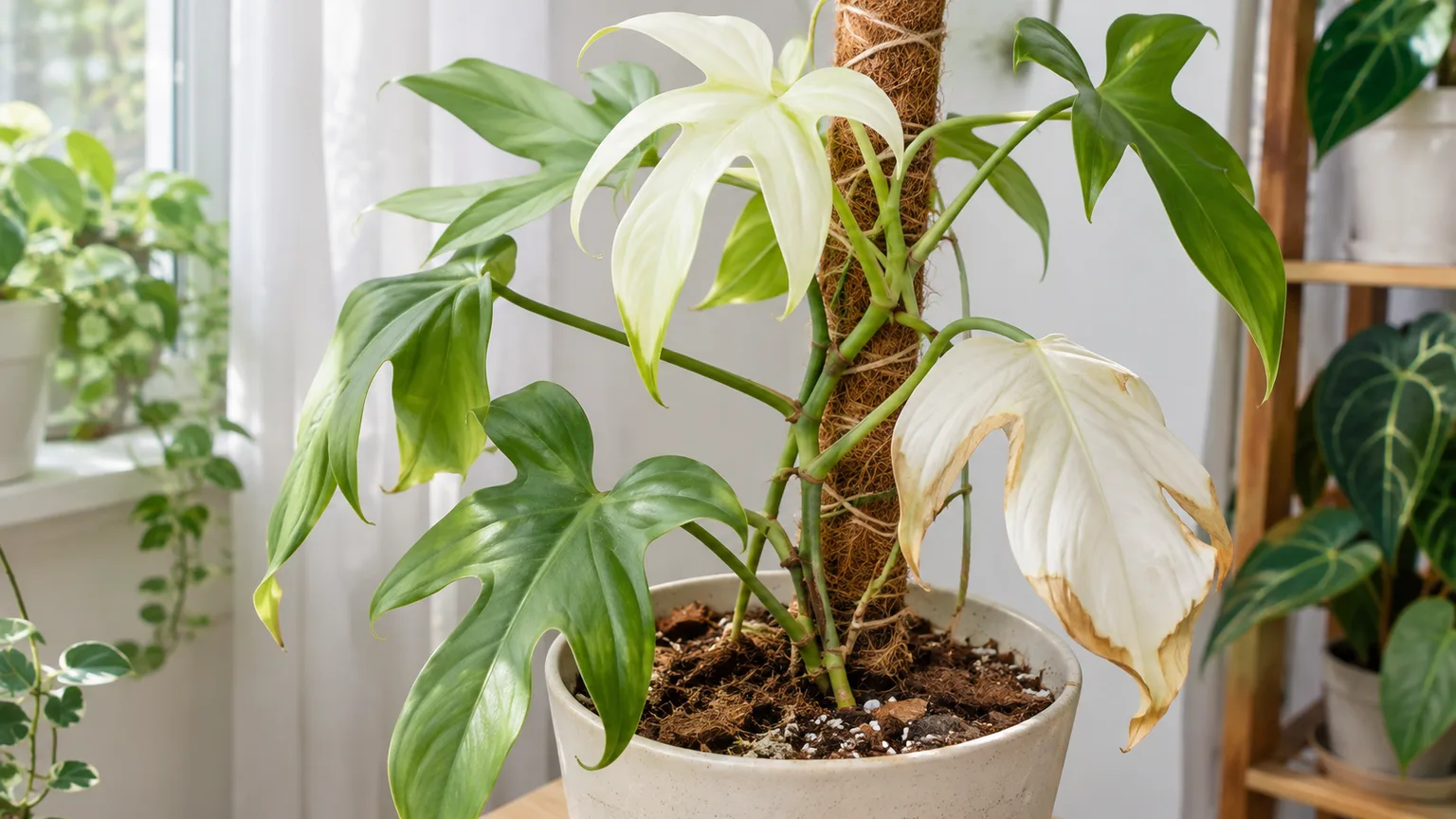
Underwatering on Philodendron Florida Ghost: Causes, Checks & Fixes
This guide covers underwatering on Philodendron Florida Ghost. See also the general Underwatering guide, watering, and light pages for this plant.
Underwatering on Philodendron Florida Ghost: Causes, Checks & Fixes
Quick answer
An underwatered Philodendron Florida Ghost droops, feels light in its pot, and sits in dry, crumbly mix. Leaf edges turn brown and crisp, older leaves may yellow and drop, and new growth stalls — with the pale white leaves usually showing damage first because they hold less chlorophyll and lose water faster. First fix: water deeply once, slowly, until water flows from the drainage holes, empty the saucer, and watch for leaves firming up within hours. If you are new to this climber, its Florida Ghost care overview explains how its pale emerging leaves change as they mature.
For the general mechanics of how dry mix stresses houseplants, see our underwatering guide. Everything below is about how thirst shows up specifically on this climbing white-leaf philodendron.
What underwatering looks like on Florida Ghost
Thirst on Florida Ghost is a texture story, not just a colour story. Leaves go limp and papery rather than soft and yellow. The vine looks deflated: petioles lose stiffness, leaf blades hang, and the whole plant looks tired even in good light.
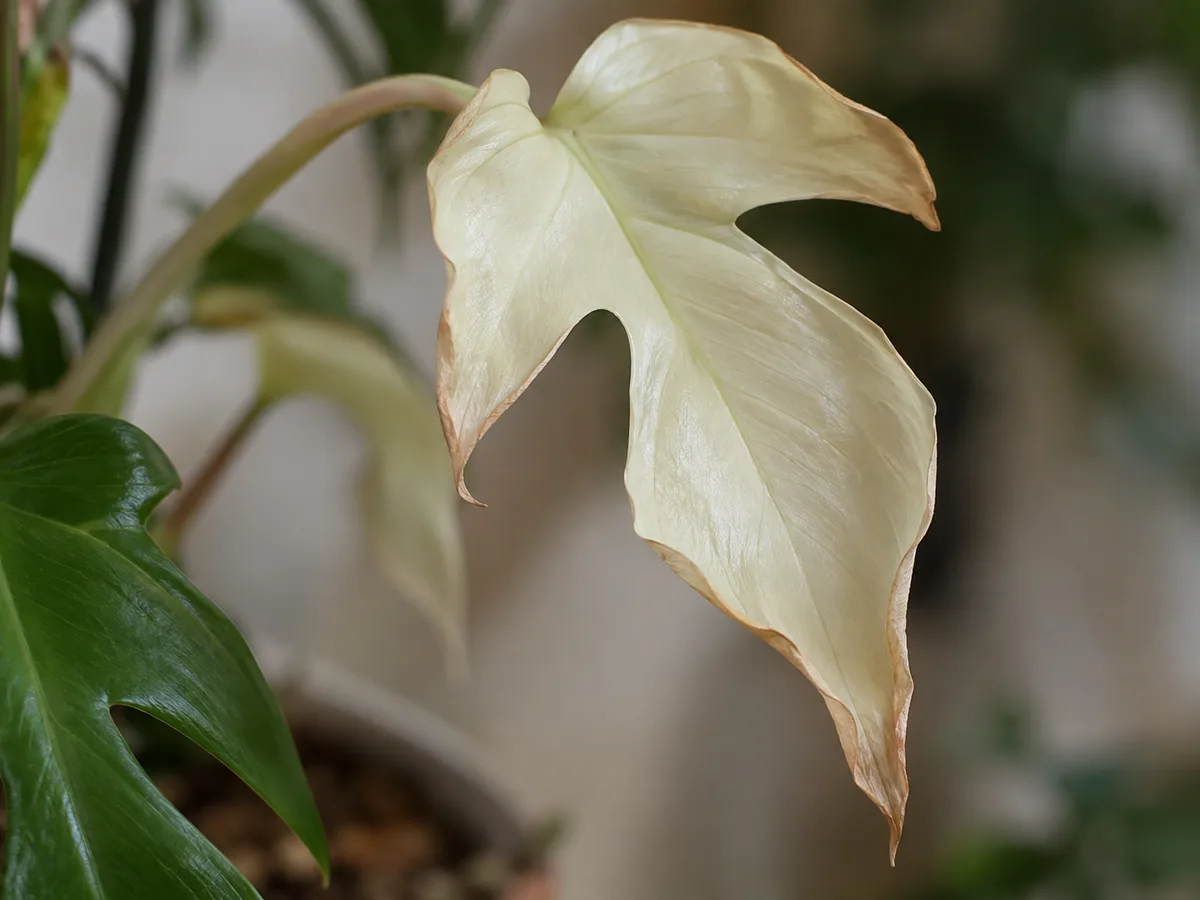
Underwatered Florida Ghost leaves can droop and develop dry, crispy margins, especially on pale new growth.
The signature detail is the white new growth. Fresh leaves emerge nearly pure white and harden to green over time, and those pale leaves crisp at the edges first when water runs short. A stuck or half-unfurled new leaf with browning tips is a classic drought signal on this plant, distinct from the even yellowing that overwatering causes on older leaves. Brown crispy margins, inward-curling blades, and a pot that feels conspicuously light complete the picture.
Why Florida Ghost dries out faster than expected
Three traits of this plant stack the odds toward underwatering. First, it grows in a chunky aroid mix of bark, perlite, and potting soil that drains fast by design — excellent for preventing root rot, but it holds far less water than dense peat mixes. Check the Florida Ghost soil guide if water seems to bypass the root ball. Second, Florida Ghost wants bright filtered light so its pale new leaves have energy to expand, and brighter light means faster water use; compare its placement with the Florida Ghost light guide before changing exposure. Third, it is a climbing vine, often on a moss pole, and both the small relative root system and the exposed aerial roots dry quickly in warm rooms.
The most common trigger is a rigid calendar schedule carried into changing conditions: weekly watering that worked in spring fails during a hot bright spell, or winter heating dries the air while the owner keeps the summer rhythm. Small pots on large vines and bone-dry moss poles accelerate the problem. Water when the top inch or so has dried out, not when the calendar says so.
How to confirm the cause
Confirm thirst with two checks before you water: pot weight and moisture depth. Lift the pot — a thirsty Florida Ghost feels strikingly light. Push a finger 3–5 cm into the mix; it should feel dry and crumbly, and growers of this plant use the first two inches of soil should be dry as the watering signal. The plant’s watering guide gives the routine to resume after this one-time recovery watering.
Then read the leaves. Dry, crispy edges and limp texture point to underwatering; soft yellow lower leaves in heavy wet mix point the other way. If you are unsure, check roots at the drainage holes: firm pale roots in dry mix mean thirst, while dark mushy roots in wet mix mean rot. Compare the wet-soil pattern with the plant’s overwatering guide and root rot guide before adding more water. Never diagnose from leaf colour alone — drooping leaves can signal either too little or too much water, so always confirm with the soil.
The first fix to try
Water deeply, once. Place the pot in a sink, water slowly and evenly until water flows freely from the drainage holes, and let it drain completely before returning it to its saucer. Slow watering matters because dry bark mix initially sheds water; give it time to absorb rather than flooding and draining in seconds.
If water runs straight through and the mix has shrunk away from the pot edges, the root ball has gone hydrophobic. Set the nursery pot in a basin of room-temperature water and soak it for half an hour so the bark and coir fully rehydrate, then drain well. Do one rehydration and stop — do not follow it with fertilizer, repotting, or pruning on the same day.
Step-by-step recovery
- Rehydrate as above and empty any standing water from saucers or cachepots.
- Move the plant back to its usual bright indirect spot; do not shift it into harsh direct sun while it recovers.
- Mist or dampen the moss pole so aerial roots can take up moisture while the root ball stabilises.
- Wait 24 hours. Limp green leaves should firm up; leaves that stay flat and papery are spent.
- Trim only fully brown, crispy tissue at the point where green meets brown. Leave partially green leaves alone — they still photosynthesise.
- Resume check-based watering: test the top few centimetres every few days and water only when dry. Philodendrons generally want compost that is allowed to dry out slightly between waterings without ever baking solid.
Wear gloves if you handle cut tissue or unpot the plant during checks: all philodendron parts contain calcium oxalate crystals that irritate skin and mouths, so keep the plant away from pets and children while you work.
Recovery timeline
Wilted but living leaves usually perk up within a few hours of thorough watering and look normal by the next day. Leaves that yellowed after rehydration often drop within a week or two — that shedding is normal triage, not a new problem, and yellowed leaves will not turn green again.
Judge recovery by the vine tip, not by old leaves. A new leaf emerging on schedule and unfurling without crisping means the plant has recovered. Crispy edges on old leaves are permanent scars; they do not heal, but they also do not spread once watering is corrected. If no new growth appears within three to four weeks in the growing season, recheck roots and light rather than watering more.
Lookalike symptoms
| What you see | More likely | How to tell |
|---|---|---|
| Soft yellow lower leaves, heavy wet pot | Overwatering / root rot | Mix stays wet for days; stems feel soft at the base |
| Brown leaf tips only, mix normal | Low humidity | Edges crisp while pot weight and growth stay normal; philodendrons prefer moderately humid air per RHS guidance |
| Pale new leaves yellowing in dim light, wet mix | Overwatering in low light | Yellowing concentrates on fragile new leaves while soil stays damp |
| Stippling, fine webbing, silvery leaves | Spider mites | Check leaf undersides with a lens; drought-stressed plants attract mites faster |
| Whole vine limp but pot heavy | Root failure, not thirst | Roots dark and mushy; watering more makes it worse |
Note that heat stress compounds drought: Florida Ghost prefers roughly 65 to 85 degrees Fahrenheit, so a plant baking near a hot window or radiator will wilt faster than the soil alone suggests.
Mistakes to avoid
Do not flood a thirsty plant repeatedly in one day — one deep watering followed by normal dry-down beats three shallow floods. Do not fertilize dry or freshly rehydrated soil; fertilizer on stressed roots burns them, so wait until new growth looks healthy before feeding. Do not repot on day one unless the mix is genuinely broken or root-bound; a thirsty plant needs water, not a new pot. And do not cut off every wilted leaf at once — limp green leaves often recover, and premature pruning removes the canopy the plant needs to rebound.
How to prevent it next time
Tie watering to the pot, not the week. In warm bright summers this usually means checking every few days and watering about weekly; in winter, growth slows and intervals stretch to ten days or more. Always confirm the top 3–5 cm are dry first, lift the pot to learn its light-when-thirsty weight, and empty saucers after every watering so the chunky mix never sits in standing water.
Support the vine’s water system as a whole. Keep humidity moderate to high, keep the moss pole lightly damp so aerial roots stay functional, and avoid placing the plant in desiccating drafts from heating vents or air conditioners. Refresh compacted or shrunken mix at repotting time so water absorbs evenly instead of channelling down the pot sides.
When to worry
Worry if the vine collapses entirely and petioles shrivel rather than just droop, if several leaves crisp in a single week, or if rehydration produces no firming within 24 hours — that suggests root damage beyond simple thirst. Unpot and inspect: firm pale roots mean you should keep to the recovery plan, while widespread dark mushy roots mean rot has set in and you should trim dead roots and consider stem cuttings with a node as backup. If the growth tip itself is blackened and mushy, salvage healthy stem sections promptly rather than waiting.
Related tool
Use the Plant Watering Calculator to narrow causes for underwatering on this plant before changing multiple variables at once.
Related Florida Ghost guides
- Use the Florida Ghost overview for general identification and care context.
- Use the watering guide to set a moisture-check routine after recovery.
- Use the overwatering guide when the mix stays wet or the pot remains heavy.
- Use the root rot guide when roots are dark, soft, or foul-smelling.
- Use the light guide when dry-down speeds up after a move or seasonal light change.