Overwatering on Philodendron Florida Ghost: Causes, Checks
Quick answer
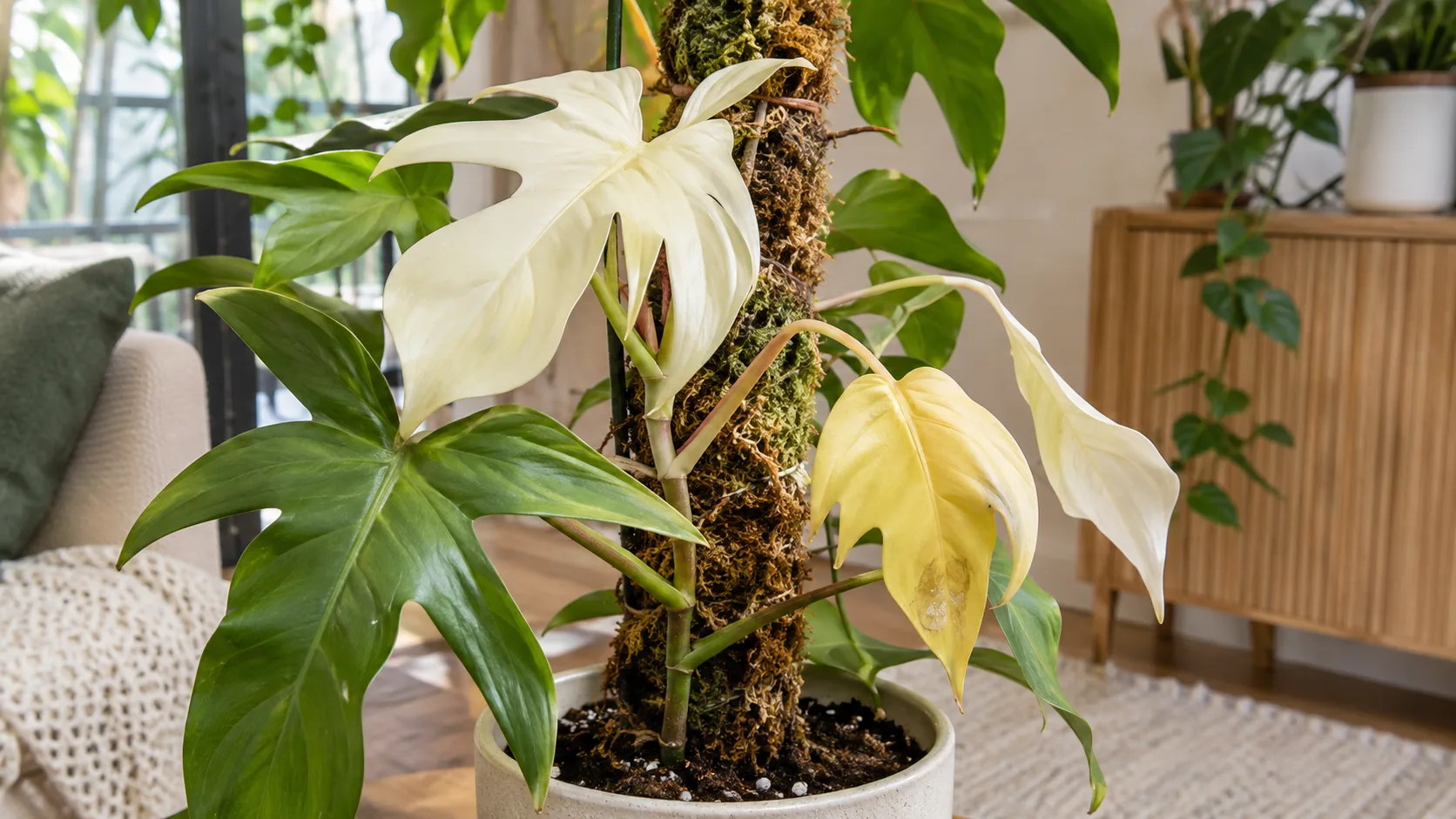
Overwatering on Philodendron Florida Ghost shows first on the pale new leaves — yellowing, soft or translucent patches, and limp petioles while the mix still feels damp. First step: empty the saucer and cachepot, then let the top 3–5 cm of mix dry fully before watering again.
Overwatering on Philodendron Florida Ghost: Causes, Checks & Fixes
This guide covers overwatering on Philodendron Florida Ghost. See also the general Overwatering guide, watering, and light pages for this plant.
Overwatering on Philodendron Florida Ghost: Causes, Checks & Fixes
Quick answer
An overwatered Florida Ghost announces itself through its most delicate tissue first: the white new leaves yellow, turn translucent or papery-soft, and go limp while the mix still feels cool and damp. Older green leaves may follow with yellowing and droop, and growth at the tip stalls. For how chronic wet mix damages roots in general, see our overwatering guide. On Florida Ghost, the pattern usually shows up as failing pale leaves on a heavy pot, not uniform yellowing across the vine.
First step: lift the nursery pot out of its cachepot, pour off every drop of standing water, and let the top 3–5 cm of mix dry fully before you water again. One decisive dry-down tells you more than any schedule adjustment.
What overwatering looks like on Florida Ghost
The white-leaf phase is your early warning system. Pale new leaves carry less chlorophyll and less energy reserve, so they are the first to yellow, develop water-soaked translucent patches, or collapse when roots sit wet. A leaf that unfurled ghost-white and turns buttery yellow within days — while the mix is still damp — is classic excess water, not the normal white-to-green hardening.
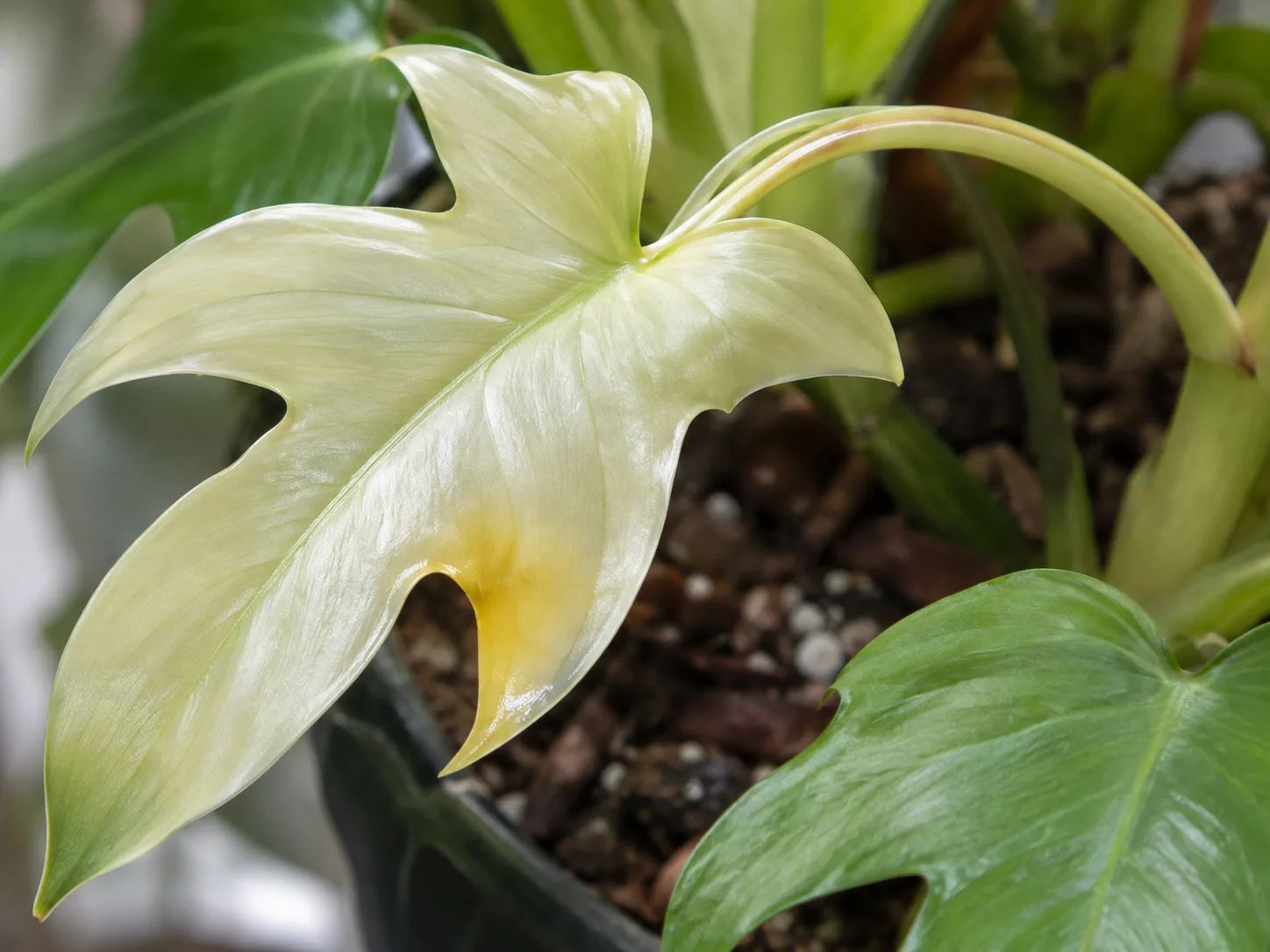
Pale new leaves can yellow or develop a water-soaked look when roots stay wet for too long.
Older green leaves react more slowly: lower leaves yellow and feel soft rather than crisp, petioles go limp, and the growth tip stops pushing. In advanced cases the stem base softens, the mix smells sour, and you may see mould on the surface or fungus gnats hovering. Stunted slow growth with yellowing leaves is the textbook overwatering signature, and water-soaked spots and crown rot mark the point where wet soil becomes tissue damage.
Why Florida Ghost gets overwatered
Calendar watering is the most common cause. This vine wants roughly 7–10 days between soakings in summer and 10–14 days in winter, but only if the top of the mix has actually dried. Watering “every Sunday” through a dim winter keeps roots wet for weeks, and problems often arise in winter due to overwatering and poor light.
The second cause is light too dim for the plant’s needs. Ghost needs brighter filtered light than plain green philodendrons so its pale leaves can photosynthesize; in a dark corner it barely drinks, so even a modest watering lingers. Review placement against the Florida Ghost light guide before blaming your watering can.
The third cause is the container setup: nursery pot sealed inside a cachepot with no drainage check, saucers left full, or a dense peat-heavy mix instead of chunky aroid mix. Saturated compost can eventually cause root rot, and fine soggy mix around a climber’s stem base invites exactly that.
The moss-pole moisture trap
Florida Ghost is a climber, and its support changes the watering equation. A sphagnum moss pole that you mist daily stays wet against the stem while the pot mix below may already be saturated — the stem base rots even though you “only watered once.” Keep the pole lightly humid for aerial roots, never dripping, and check stem firmness where vine meets pole.
Also inspect where the vine was tied. Ties cinched tight hold damp moss against soft stem tissue and hide the first mushy patch. Loosen ties during recovery so air reaches the stem, and retie loosely once the plant is growing again.
How to confirm it: the Ghost dry-down check
Work in this order so one check rules things in or out:
- Pot weight and cachepot. Lift the pot — heavy means wet. Tip the nursery pot out of any cover pot and check for pooled water underneath. Standing water around philodendron crowns invites bacterial problems, so this check comes first.
- Finger test at Ghost depth. Push a finger 3–5 cm into the mix, not just the surface crust. The first two inches of soil should be dry before you water, tested with a finger to the knuckle. Cool and clinging means wait; dry and crumbly means the plant is ready.
- Growth tip read. New white leaves yellowing or collapsing while older green leaves still look fine points to excess water in low light. Uniform crisp browning on all ages points elsewhere.
- Root-zone smell and feel. If the pot stays heavy many days after watering, slide the root ball out and check: white firm roots are fine, while dark mushy roots or a sour or rotten smell confirm rot has started.
- Winter context. If growth has stalled and days are short, the plant is drinking almost nothing — wet mix in December is confirmation by itself.
The first fix to try
Empty all standing water and start one full dry-down: no watering until the top 3–5 cm tests dry and the pot feels noticeably lighter. Move the vine into brighter indirect light if it sits in a dim corner, since light is what will pull that moisture out of the mix.
Water only when the top inch or so has dried out, and always pour off the drip tray so the plant never sits in water. If yellow leaves appeared after a single heavy watering with firm stems and healthy roots, this dry-down alone usually stabilizes the plant.
Step-by-step recovery
Once the mix has dried to depth, resume with a soak-and-drain: water thoroughly until it runs from the holes, wait ten minutes, then empty the saucer and cachepot completely. Details live in the Florida Ghost watering guide.
If you found mushy dark roots, trim only the clearly rotted portions with clean scissors, leaving every firm white root intact. Repot into fresh chunky aroid mix — potting mix plus perlite plus orchid bark, as the Florida Ghost soil guide describes — rather than reusing sour mix. Keep the stem base slightly proud of the surface so it dries between waterings.
Prune leaves that are fully yellow, translucent, or mushy once the cause is fixed; keep partially green leaves that still photosynthesize. Hold fertilizer until the growth tip pushes a healthy new leaf — feeding a stressed root system risks leaf-tip burn from excess fertilizer salts.
Recovery timeline
Mild cases — one overwatering with firm stems — stabilize within one to two dry-down cycles: no new yellowing, and the next leaf unfurls pale and firms up normally. Expect the damaged yellow leaves to drop or stay blemished; they will not re-green.
After root trimming and repotting, allow three to six weeks before judging. Success looks like a firm growth tip, new white leaves that harden off to green, and a pot that gains and loses weight on a normal rhythm. If stems keep softening or new leaves emerge already yellow on properly drying mix, unpot again — rot may have reached the stem base, and a healthy node cutting may be the realistic rescue.
Lookalike symptoms
| What you see | More likely | How to tell |
|---|---|---|
| White new leaf yellowing on damp heavy mix | Overwatering | Mix cool at 3–5 cm, pot heavy, tip stalled |
| Lower green leaves yellowing one at a time on dry mix | Natural aging or underwatering | Mix dry, pot light, newest growth still firm |
| Yellow leaves plus tiny webs or stippled foliage | Spider mites | Check leaf undersides with magnification in bright light |
| Yellow leaves with sticky residue or visible insects | Sap pests | Inspect new growth and undersides for mealybugs or aphids |
| Soft black stem base with foul smell | Stem or root rot | Roots dark and mushy; needs unpotting, not just drying |
Yellowing of lower leaves can also come from too little light, so if the mix dries normally and roots look fine, move the plant brighter before changing anything else.
Mistakes to avoid
Do not “fix” wet soil with more water, misting, or fertilizer — all three keep the root zone wetter or saltier while it needs air. Do not repot on day one unless you found rot or the mix is collapsed and airless; a simple dry-down resolves most mild cases with less shock.
Do not cut the whole vine back to “restart” it while roots are still wet. And do not seal the nursery pot back into a tight cachepot without checking for pooled water — that hidden reservoir restarts the whole cycle silently.
How to prevent it next time
Match watering to dry-down, not the calendar: top 3–5 cm dry in chunky mix, pot lighter in hand, every 7–10 days in summer stretching to 10–14 in winter. Keep Ghost in bright indirect light so it drinks at a healthy rate, and always use a pot with drainage holes with saucers emptied after each soak.
Repot into fresh chunky aroid mix every couple of years before it compacts into a waterlogged sponge, and ease off the moss-pole misting in winter when the vine is barely growing. Overwatering can cause wilting that is easy to mistake for lack of water — when leaves droop, feel the mix before reaching for the can.
Related tool
Use the Root Rot Risk Checker to narrow causes for overwatering on this plant before changing multiple variables at once.