Mold on Soil on Philodendron Gloriosum: Causes, Checks &
Quick answer
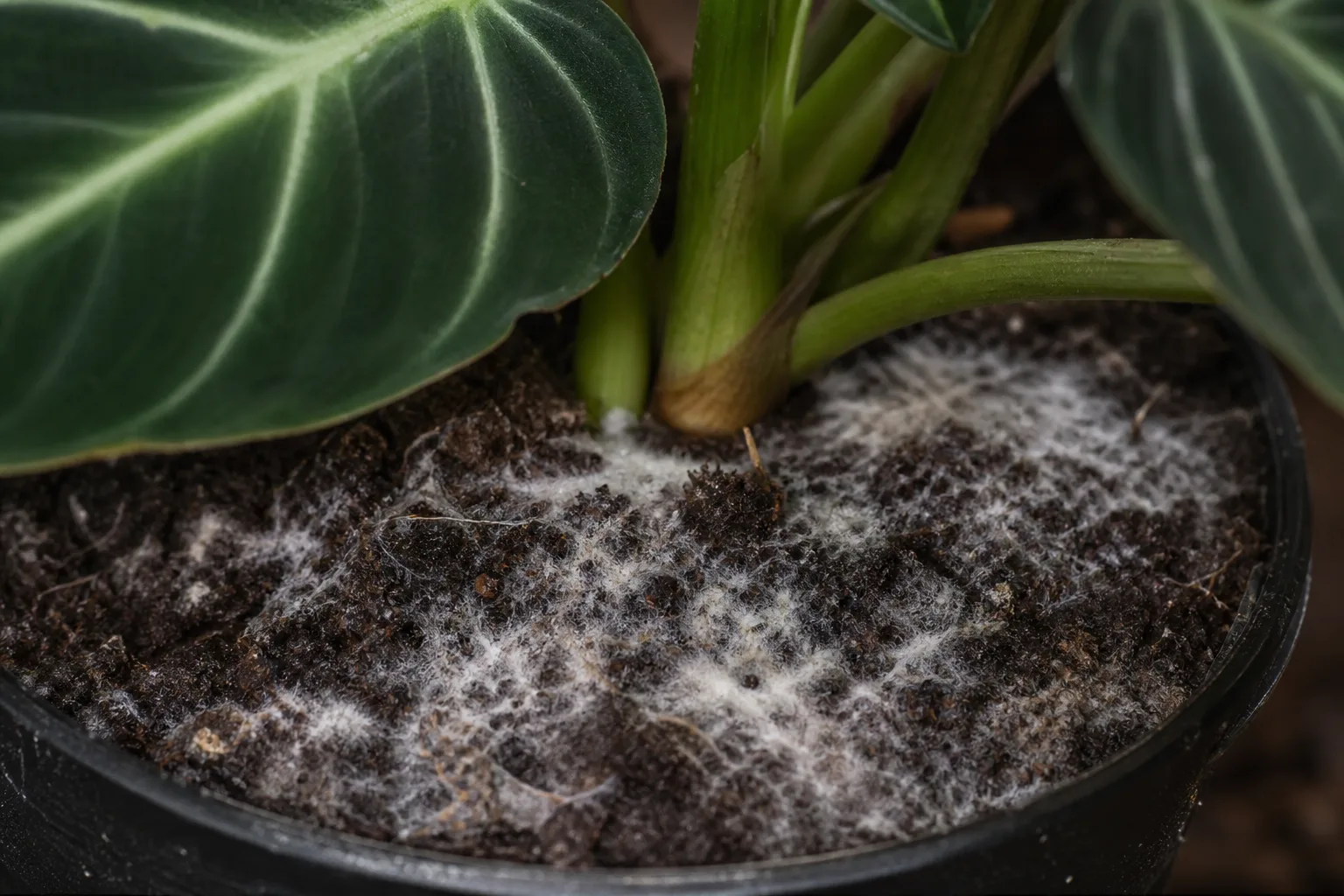
White mold on Philodendron Gloriosum soil is usually saprophytic growth on damp organic mix around a surface-running rhizome-not an infection of firm tissue. First fix: scrape off the moldy top layer, let the top 3–5 cm dry at the rhizome front, and restore airflow around the wide pot before any fungicide.
Mold on Soil on Philodendron Gloriosum: Causes, Checks & Fixes
This guide covers mold on soil on Philodendron Gloriosum. See also the general Mold on Soil guide, watering, and light pages for this plant.
Mold on Soil on Philodendron Gloriosum: Causes, Checks & Fixes
Quick answer
You lifted a wide shallow pot and found white or gray fuzz on the mix surface around a creeping rhizome that should sit at or just above the soil line-not buried in wet moss. On Philodendron gloriosum, that pattern is usually saprophytic fungal growth on damp organic media, not a direct attack on firm rhizome tissue. The crawler’s large exposed substrate area in a shallow wide pot dries unevenly at the rim while the rhizome front can stay wet if top-dressing or saucer water keeps the surface saturated.
First fix: scrape off the moldy top 1–2 cm, remove wet decorative moss from the rhizome zone, let the top 3–5 cm dry before the next drink, and add gentle airflow around the pot. Do that before fungicide sprays or repotting.
| What you notice | Severity | First move |
|---|---|---|
| Fuzz only on mix, firm rhizome, earthy smell, top drying within a week | Cosmetic (this page) | Scrape surface; dry top 3–5 cm; improve airflow |
| Fuzz + tiny flies hovering at rim | Fungus gnats overlap | Same dry-down; add yellow sticky traps |
| Heavy pot, yellow lower leaves, wet throughout | Overwatering | Stop water; check saucer and cachepot drainage |
| Mold on soft rhizome, sour smell, decline in wet mix | Root rot - same day | Inspect rhizome; do not scrape and wait |
| White dust on leaves, not soil | Powdery mildew lookalike | Foliar disease workflow-not this page |
| Cottony clusters on living tissue with stickiness | Mealybugs | Pest treatment, not dry-down alone |
Symptom photo pending: cosmetic white fuzz on mix beside exposed Gloriosum rhizome vs. mold creeping onto soft rhizome tissue.
Why Philodendron Gloriosum soil grows mold
Wide shallow pots and crawler geometry
Gloriosum is a terrestrial crawler-its thickened rhizome advances horizontally along the mix surface in a wide, shallow container, not a deep upright pot. That geometry exposes a large substrate footprint relative to depth. The rim and edge zones often stay damp longer than the center because evaporation is fastest at the perimeter but water also pools along the inside wall when mix compacts. Meanwhile the active growth front sits low and forward, where wet sphagnum top-dressings or moss “for humidity” keep the creeping stem in contact with saturated organic matter. Surface fungi colonize that persistently moist upper layer; they are usually not directly harmful to plants until mats thicken enough to block water infiltration or attract pests.
Moisture triggers specific to this species
Common causes on Gloriosum:
- Summer watering rhythm in winter light - water use drops in cooler months but many growers keep the same interval, leaving the top layer wet for days.
- Wet top-dressing on the rhizome - damp moss touching the crawler zone prevents the surface from drying where mold and fungus gnat larvae in the top 2–3 inches both thrive.
- Aging peat-heavy mix - degraded media holds moisture longer and attracts egg-laying adult gnats to moist organic surfaces.
- Poor airflow in cabinets or corners - stagnant humidity above a wide pot rim supports fungal mats on the exposed surface.
- Runoff left in saucers or cachepots - wicking keeps the bottom of a shallow root zone wet even when the rim looks dry.
Chronic saturation is a primary pathway to houseplant decline, including root rot on philodendrons when the rhizome sits in poorly aerated wet mix too long.
What mold on soil looks like on Philodendron Gloriosum
On the mix surface:
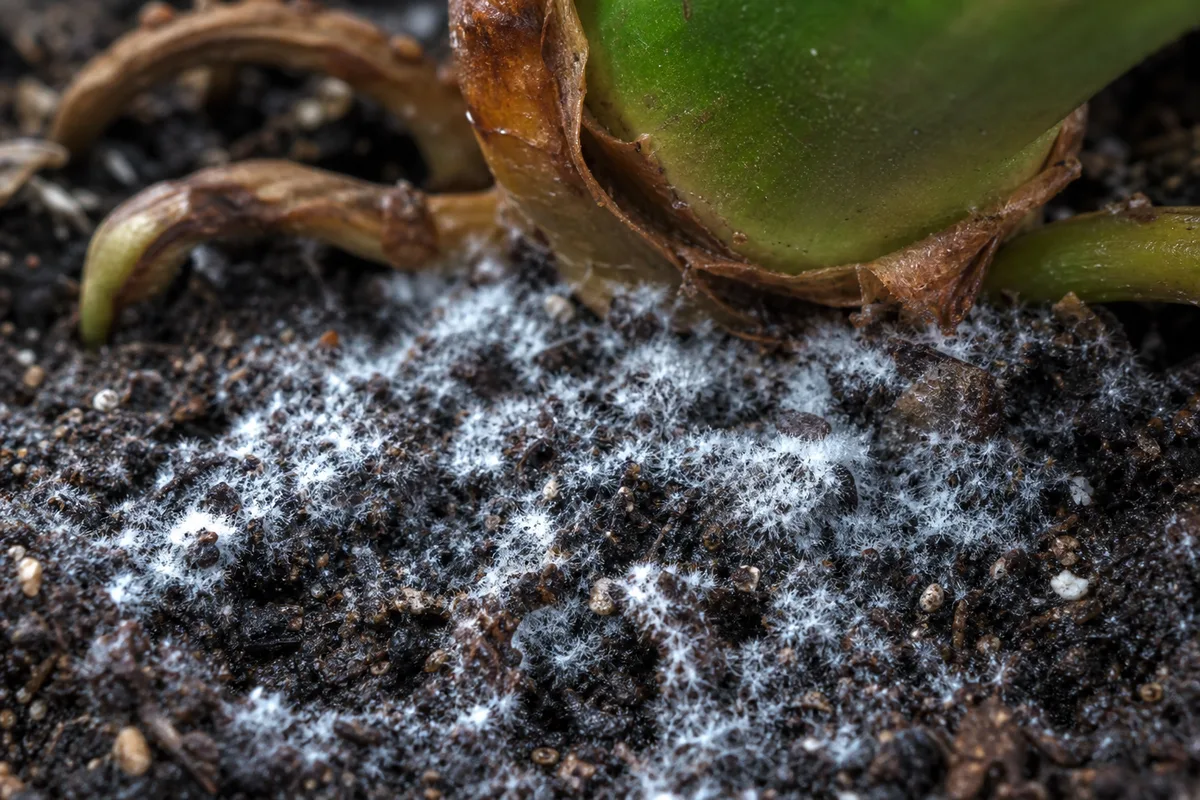
Mold on Soil symptoms on Philodendron Gloriosum - compare with healthy tissue on the same plant.
- White, gray, or pale green fuzzy patches on bark, peat, or decaying organic bits
- Thread-like cottony growth in a ring where wet top-dressing meets the creeping rhizome
- Top 3–5 cm stays damp many days after irrigation while the pot rim also shows algae or mold on plastic
- Green slimy film instead of cottony fuzz-same moisture problem, different organism
Companion signs on this crawler:
- Small flies hovering at the pot rim when the upper layer never dries
- Firm rhizome with earthy smell → usually cosmetic surface issue first
- Soft rhizome, sour odor, yellowing lower velvet leaves in a heavy wet pot → escalation toward rot
Mold on the saucer rim or outer pot wall is the same moisture signal-wipe it when you scrape the surface.
Cosmetic surface mold vs urgent rhizome-risk mold
| Signal | Cosmetic pattern | Urgent pattern - act today |
|---|---|---|
| Location | Fuzz only on mix, not living tissue | Mold or wet decay on rhizome scales |
| Rhizome feel | Firm along creeping stem | Soft, mushy, or collapsing at base |
| Smell | Earthy, like potting soil | Sour, swampy, anaerobic |
| Leaves | Stable older velvet; no new yellowing wave | Yellowing spreads on lower leaves while mix stays wet |
| Pot weight | Light to moderate; dries at top within 7–10 days after fix | Heavy; wet at 3–5 cm for a week+ |
| Gnats | Few or none after dry-down starts | Cloud of adults every time you water |
| First action | Scrape, dry top 3–5 cm, airflow | Stop water; inspect rhizome; open root rot |
A real recovery timeline
In January 2025, a two-node Gloriosum in a 10-inch wide shallow pot developed white cottony fuzz in a half-moon arc where damp sphagnum top-dressing touched the forward rhizome tip. Ambient room humidity was about 68% in a cabinet with minimal fan movement; the top 3–5 cm at the growth front stayed wet eight days after the last soak-and-drain watering. The rhizome felt firm, smell was earthy, and no gnats were visible yet.
After scraping roughly 1.5 cm of moldy mix, removing the moss collar, and pausing water until the probe at 3–5 cm read dry (six days), no new fuzz appeared. A yellow sticky card at the rim caught two fungus gnats in week two-then none by week three once the surface stayed dry between drinks. New velvet growth from the rhizome tip resumed at week four. That timeline fits a cosmetic reset when tissue stays firm; sour smell or softening would have meant same-day rot triage instead.
Symptom photo pending: before/after scrape on wide Gloriosum pot with rhizome tip exposed above mix.
How to confirm the cause
Work through these checks in order before repotting or spraying:
- Depth moisture at the rhizome front - probe 3–5 cm down near the active growth tip, not only at the dry-looking rim.
- Rhizome firmness - gently brush aside top-dressing; healthy creeping tissue stays firm.
- Smell - earthy fits surface mold; sour suggests anaerobic wet mix and possible rot.
- Drainage and saucer - confirm holes are clear and no standing water sits under the wide shallow pot.
- Season vs. watering rhythm - compare your interval to current light and temperature; winter slows water use on slow crawlers.
- Pattern persistence - if mold returns within 2–4 weeks after one dry-down cycle, degraded mix or chronic overwatering is likely.
Lookalikes to rule out
| Lookalike | Where it shows | Key difference | Guide |
|---|---|---|---|
| Surface saprophytic mold | Mix only | Fuzzy on media; firm rhizome | This page |
| Algae crust | Wet soil surface | Green slimy film, not cottony white | Same dry-down fix |
| Mealybugs | Nodes, petiole bases | Cottony on living tissue with honeydew | Mealybugs |
| Powdery mildew | Leaf blades, stems | White dusty coat on foliage, not mix | Foliar disease workflow |
| Fungus gnats | Air above pot | Tiny flying adults; larvae in wet top layer | Fungus gnats |
| Early rot signal | Rhizome + wet mix | Soft tissue, sour smell, yellowing | Root rot |
First fix for Philodendron Gloriosum
Scrape away the moldy top layer (about 1–2 cm) and discard it. Remove wet decorative moss or sphagnum from the rhizome zone. Then wait until the top 3–5 cm is dry before watering again, and increase gentle airflow around the wide pot.
This works because allowing the growing medium surface to dry between waterings disrupts the moist zone where fungi persist and reduces fungus gnat egg and larval survival in the upper layer. Sprays and cinnamon dust are secondary-they do not replace moisture correction on a crawler whose rhizome must breathe at the surface.
Do not bury the rhizome deeper to hide mold. Do not repot on day one if the stem is firm and smell is earthy.
Step-by-step recovery
- Scrape moldy top mix and wipe fuzz from pot rim and saucer.
- Remove wet top-dressing touching the creeping rhizome; keep the growth tip at or above mix level.
- Pause watering until the top 3–5 cm is dry at the rhizome front.
- Resume soak-and-drain watering only when the dryness check passes per the watering guide.
- Empty runoff every time; never leave a wide shallow pot sitting in collected water inside a cachepot.
- Place a yellow sticky trap at the rim if gnats appeared with the mold.
- If mold recurs twice within a month despite dry-down, repot into fresh chunky aroid mix per the soil guide and repotting guide.
Recovery timeline
- Days 1–3: visible surface mold removed; no fresh fuzz if drying begins at the rhizome zone.
- Days 4–10: top layer stabilizes; gnat counts on sticky cards often drop.
- Weeks 2–4: recurrence risk falls if watering rhythm and saucer management changed.
- Beyond 4 weeks: third recurrence or sour smell → repot and inspect roots along the creeping stem.
Improvement signs: surface stays dry between drinks, firm rhizome, clean new velvet leaf from the growth front, no new flies at the rim.
Worsening signs: soft rhizome, sour odor, yellowing wave on lower leaves in a heavy pot, mold on living tissue after two scrape cycles.
When to repot vs continue dry-down correction
| Situation | Stay with scrape-and-dry | Repot into fresh chunky mix |
|---|---|---|
| First mold episode, firm rhizome, earthy smell | Yes | Not yet |
| Mold returns twice in one month after dry-down fixes | Unlikely to be enough | Yes - degraded media likely |
| Mix compacted, waterlogged, breaks apart wet and clumpy | No | Yes |
| Soft roots or rhizome when you inspect | No - open root rot | Yes, with trim of dead tissue |
| Only rim mold; center and rhizome zone dry and firm | Yes | No |
Use airy potting mix with perlite and orchid bark in the same wide shallow geometry-do not move a crawler into a deep tall pot to “fix” mold.
What not to do
- Water on a calendar while the top 3–5 cm at the rhizome front is still damp.
- Wrap the creeping rhizome in wet moss “for humidity”-that is a common mold trigger on Gloriosum.
- Leave drainage runoff under a wide pot in a decorative cachepot.
- Assume all white growth is harmless without checking rhizome firmness and smell.
- Repot aggressively on day one when tissue is firm and symptoms are surface-only.
- Mist the soil surface to “wash mold away”-that adds moisture to the problem layer.
Prevention for crawler philodendron setups
- Water only when the top 3–5 cm dries near the active rhizome front, not the calendar.
- Keep the creeping stem on or slightly above mix-never buried in wet top-dressing.
- Use chunky aroid media and refresh before peat compacts into a water-holding block per the soil guide.
- Empty saucers and cachepots promptly after every soak-and-drain cycle.
- Add gentle fan movement in humid cabinets so the wide rim dries between drinks.
- Shorten intervals in active growth; lengthen them in winter when transpiration slows on this slow crawler.
- Skip decorative moss collars unless you remove them before the surface stays wet past three days.
When to worry
Escalate the same day if mold sits on soft rhizome tissue, smell turns sour, leaves yellow progressively while the pot stays heavy and wet, or growth stalls with saturated mix. Those combinations point toward root and rhizome decline, not a cosmetic surface issue.
Ants at a wet saucer with clean stems and no mold on foliage may be foraging residue-not a mold emergency. Tiny flies every time you water after two dry-down weeks mean the fungus gnat lifecycle is still active in wet upper mix.
Related Philodendron Gloriosum guides
Use this page when white or gray fuzz on the mix surface is the lead symptom and the rhizome is still firm.
- Fungus gnats - flying adults and larvae are the main complaint
- Overwatering - whole-plant stress from chronic wet mix without surface fuzz
- Root rot - soft rhizome, sour smell, decline in saturated media
- Compacted soil - dense mix that never dries at depth
- Watering - dry-down checks at the rhizome front
- Soil - chunky aroid mix after repeated mold recurrence
- Gloriosum overview - crawler biology and baseline culture
Your checklist for the first 48 hours
- Run the severity table in Quick answer - cosmetic vs urgent.
- Probe moisture 3–5 cm at the rhizome front; note smell and rhizome firmness.
- Scrape moldy top mix, remove wet moss collars, wipe rim and saucer.
- Pause water until the top layer dries; add airflow around the wide pot.
- Re-check at day 7 - if fuzz returns or tissue softens, open root rot or repotting guides.
Conclusion
White mold on Philodendron Gloriosum soil is a correctable moisture signal on a wide shallow crawler pot-not a death sentence when the rhizome stays firm. Scrape the surface, dry the top 3–5 cm at the growth front, and restore airflow before fungicide or repotting.
Escalation checklist: soft rhizome or sour smell → root rot same day; mold twice in one month after dry-down → repot with fresh chunky mix; flying gnats persist → fungus gnats after moisture fix. Success is a firm creeping stem, a dry surface between drinks, and clean new velvet growth from the rhizome tip.