Underwatering on Philodendron Lemon Lime: Causes, Checks &
Quick answer
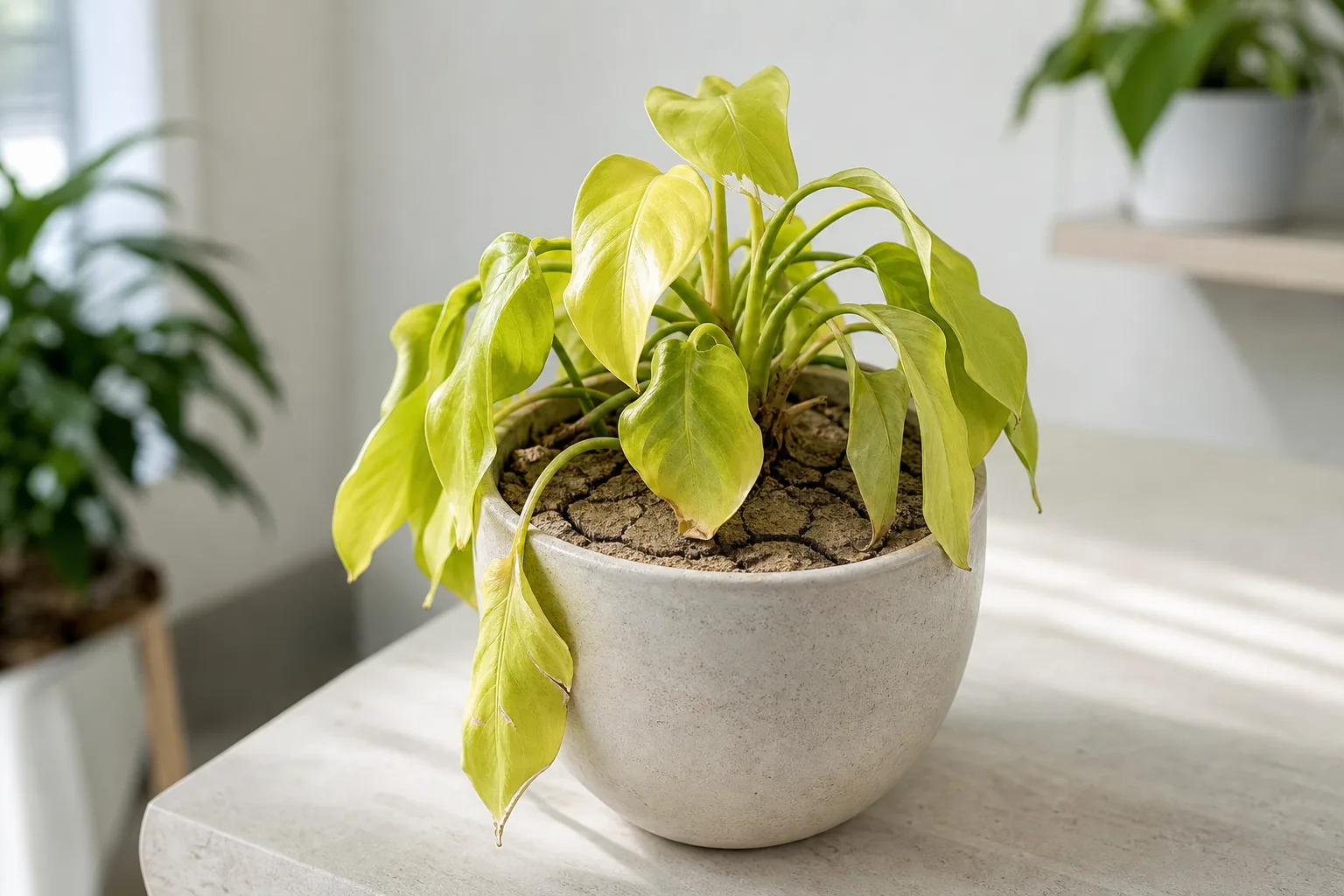
Underwatering on Philodendron Lemon Lime dries fine roots and makes thin chartreuse leaves wilt and crisp at edges. First step: check soil 3–5 cm deep and pot weight-if dry throughout, give one thorough soak until runoff; leaves often perk within hours.
Underwatering on Philodendron Lemon Lime: Causes, Checks & Fixes
This guide covers underwatering on Philodendron Lemon Lime. See also the general Underwatering guide, watering, and light pages for this plant.
Underwatering on Philodendron Lemon Lime: Causes, Checks & Fixes
Quick answer
Underwatering on Philodendron Lemon Lime (Philodendron hederaceum ‘Lemon Lime’) dries fine feeder roots and strips turgor from thin chartreuse leaves-vines hang limp, color dulls from bright lemon-lime toward pale yellow-green, and oldest foliage may crisp at the margins. Unlike overwatering on Lemon Lime, drought usually comes with a light pot and dry mix 3–5 cm down, not yellow soft leaves on heavy wet soil.
First step: check soil moisture at depth before you pour anything. If the top 3–5 cm is dry throughout and the container feels noticeably lighter than after a good drink, give one slow, thorough watering until water runs from the drainage holes-or bottom-water 20–30 minutes if water channels straight through shrunken, hydrophobic peat. Leaves often perk within hours on firm roots.
Scope note: This page is for confirmed or likely drought-dry soil plus limp chartreuse vines. For the wet-soil wilt paradox (limp leaves on damp mix), start with wilting or drooping leaves. For your normal soak-and-drain rhythm, see the Lemon Lime watering guide. For species background and light needs that change dry-down speed, see the overview.
NC State lists ‘Lemon Lime’ among cultivars with bright yellow to chartreuse foliage on a rapidly growing trailing vine that prefers moist soil with a winter slowdown on watering-bone-dry cycles stress it faster than growers expect from a plant marketed as easy care.
When to use this page
Use this guide when you suspect thirst, not rot: the pot feels light, soil is dry several centimeters deep, and chartreuse leaves have gone soft or thin without a sour smell from the drainage hole. If your main symptom is acute plant-wide collapse without a clear dry check yet, read wilting first-it walks the dry-vs-wet fork step by step. If vines have been limp for days and you are unsure whether the problem is frequency or root health, drooping leaves covers sustained slack. Chronic soggy mix with mushy roots belongs on root rot, not here.
What underwatering looks like on Philodendron Lemon Lime
On healthy Lemon Lime, underwatering rarely starts with the soft yellow pattern that usually means too much water. Drought on this cultivar tends to look like this:
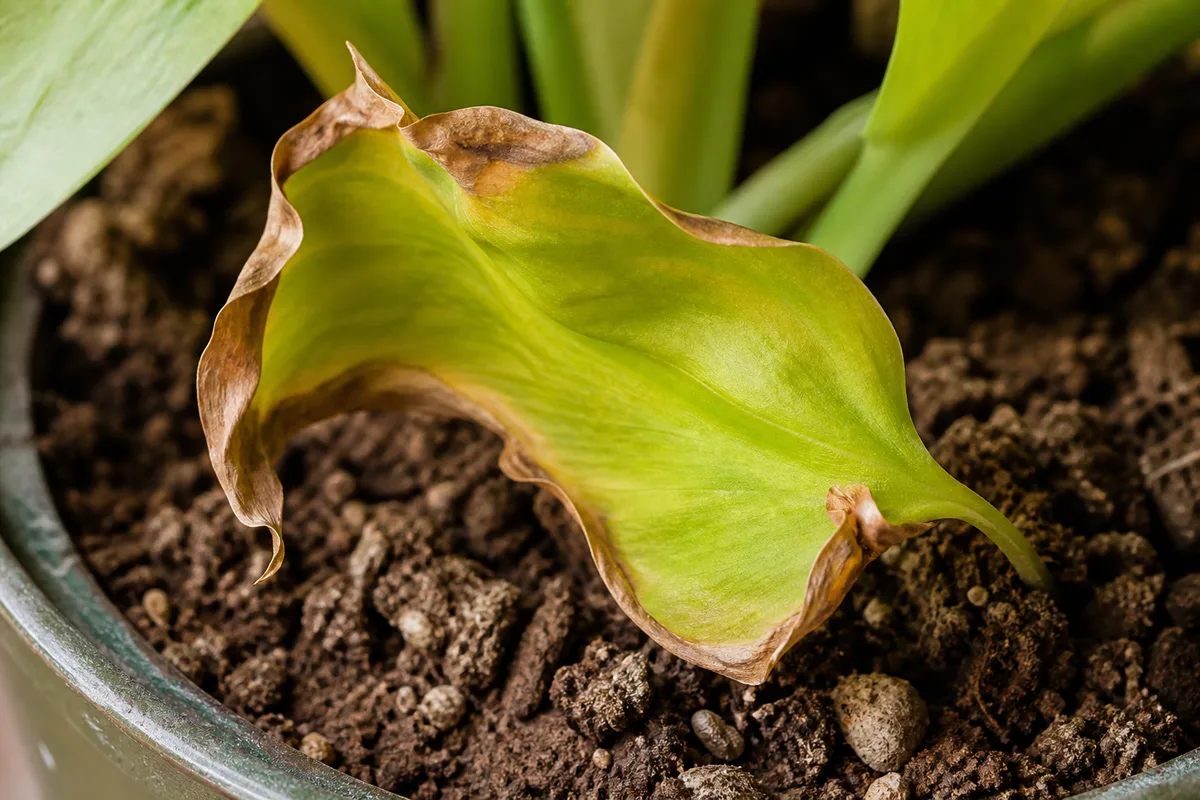
Underwatering symptoms on Philodendron Lemon Lime - compare with healthy tissue on the same plant.
- Limp, drooping chartreuse leaves that hang flat along the vine instead of holding a slight forward arch
- Leaves that feel thin and papery, sometimes with crisp brown tips or margins on the oldest foliage at the base of long trailers
- Dull, pale yellow-green color-the electric chartreuse fades before edges brown
- Dry potting mix that is light in color, dusty on top, or pulled away from the pot wall
- A pot that feels feather-light when lifted compared to right after watering
- Lower leaf yellowing and drop on bone-dry soil without sour smell or mushy stems
The signature Lemon Lime clue: wilting leaves that perk back up after a thorough soak. That rebound within hours is one of the clearest signs you were dealing with drought, not root failure on wet soil.
Chartreuse wilt vs crisp edges vs yellow on dry soil
Soft wilt on dry mix is the classic drought signal-leaves lose turgor but stay mostly green-chartreuse. Crisp brown edges on older leaves mean tissue has already desiccated; those margins will not green again even after recovery. Yellow on bone-dry soil often follows prolonged drought as older leaves senesce-unlike the soft yellow on damp mix that points to overwatering.
Trailing vine and hanging-basket patterns
Long cascading stems complicate the picture. A mature Lemon Lime in a hanging basket may look fine at the crown while outer trailing tips wilt first-the longest stems lose water fastest and sit farthest from the root mass. UF/IFAS notes heartleaf philodendron should be watered when the top inch of soil becomes dry; in a shallow basket that dry zone can reach the whole column in five to seven days of bright summer light while the surface still looks slightly pale.
Small nursery pots and cachepots without drainage also dry unevenly-the center may be parched while a decorative outer pot traps humidity at the rim. Lift the inner pot and probe depth rather than trusting the top crust alone.
Why Philodendron Lemon Lime gets underwatered
Several Lemon Lime-specific factors push pots dry faster than a calendar schedule suggests:
Fear of overwatering after a rot scare. Because yellow leaves on philodendrons usually mean too much water, cautious growers sometimes skip drinks until vines collapse-swinging past the safe dry side into real drought. Iowa State Extension frames the rule as evenly moist but not wet; waiting until every leaf droops means the root ball has already been dry too long.
Bright-light dry-down. Lemon Lime holds its color in medium to bright indirect light. In a sunny kitchen or east window, the same plant may need water every 7–10 days in summer while a dim-corner green heartleaf might go two to three weeks. Watering both on the same Sunday schedule underwatering the bright chartreuse one.
Rapid summer growth. NC State describes P. hederaceum as a rapid grower that uses water quickly when warm and bright. Trailing biomass increases transpiration surface area-a full basket drinks more than a freshly propagated cutting in the same pot size.
Hydrophobic aged peat mix. Peat-heavy soil that stays dry for weeks can repel water on the surface while the interior root ball stays bone dry. Lemon Lime in old mix may get a splash on top every few days while the center never rehydrates-you think you watered; the plant stays thirsty.
Environmental pull. Heat vents, air conditioning, and low winter humidity increase water loss from thin chartreuse leaves. A plant that thrived on a 14-day rhythm in October may need water weekly by June without any change in your habits.
Root-bound instant-drainage trap. Aggressive roots circle the bottom and displace soil; water runs through in seconds without soaking the mass. Growers keep watering, see instant drainage, assume the plant is wet, and vines wilt anyway.
How to confirm the cause
Use this order so you do not treat rot with more water or drought with a dry wait:
- Pot weight - Lift the container. Light and airy means dry; heavy means moisture remains.
- Finger or skewer test - Push into the mix 3–5 cm deep. Dry at that depth with limp chartreuse leaves supports underwatering.
- The wet-soil paradox - Dry soil + drooping = underwatering. Wet soil + drooping = overwatering or root rot. Wilted leaves may indicate soil that is too dry or too wet.
- Drainage check - Pour a small amount of water. If it exits the bottom instantly and the top stays pale and dry, suspect hydrophobic mix or root binding-not adequate watering.
- Leaf color and texture - Soft limp chartreuse on dry soil fits drought. Yellow lower leaves on damp soil with firm stems often fit overwatering.
- Smell and stem firmness - No sour odor; stems firm at the soil line. Mushy base on wet mix is not thirst.
- Root spot-check (if still unsure) - Slide the plant out. Firm white or tan roots in a light dry pot mean drought; mushy brown roots on wet soil mean rot.
Wet vs dry decision table
| Signal | Underwatering (this page) | Overwatering / root rot |
|---|---|---|
| Soil 3–5 cm down | Dry, dusty, crumbly | Wet, clings to finger days after watering |
| Pot weight | Noticeably light | Heavy for days |
| Leaf pattern | Thin, limp chartreuse; crisp edges on oldest leaves | Soft yellow lower leaves; dull color on wet mix |
| Stem at soil line | Firm | May soften |
| Smell from drainage hole | None | Sour or musty |
| After one deep soak | Perks within hours | Stays limp; may worsen if you keep watering |
| Next step | Thorough soak; resume watering rhythm | Stop watering; inspect roots → overwatering |
If soil is moist 3–5 cm down and leaves remain wilted after 24 hours, stop adding water and inspect roots for rot or binding.
First fix for Philodendron Lemon Lime
Rewet the entire root ball with one slow, thorough watering session.
Take the pot to a sink or tub. Water evenly across the surface until water runs freely from the drainage holes-then wait two minutes and water once more so dry pockets absorb moisture. If water channels through immediately without darkening the mix, switch to bottom watering: set the pot in 3–5 cm of room-temperature water for 20–30 minutes until the top inch feels moist, then lift it out and let it drain completely.
Missouri Botanical Garden warns that overwatering after drought can shock roots-one proper soak solves most mild Lemon Lime drought; do not drench daily for a week afterward.
Do not fertilize, repot, or prune heavily on day one. After draining, return the plant to bright indirect light and recheck leaf turgor in a few hours. Wear gloves when handling stressed tissue; heartleaf philodendron contains calcium oxalate crystals toxic to cats and dogs.
Step-by-step recovery
If a single soak does not fully rehydrate the plant, continue in this order:
- Repeat bottom watering once if the mix still feels dry at depth after top watering-especially when soil has shrunk from the pot edge.
- Break surface tension on hydrophobic mix - After bottom watering, poke a few shallow holes in the dry crust with a chopstick so the next drink penetrates. If water still will not absorb, plan to refresh the mix within the next week.
- Trim only fully crisp leaves - Brown dead edges will not recover. Removing them is optional cosmetic work, not the primary fix.
- Repot if root-bound - If roots fill the pot and water never lingers, move to a container one size up with fresh well-draining aroid mix. Water once after repotting, then resume the top 3–5 cm dry-down rhythm per the watering guide.
- Adjust placement temporarily - Move severely wilted plants out of hot direct sun until turgor returns; bright indirect light reduces further water loss while roots catch up.
- Hold fertilizer - Wait until leaves firm up and new chartreuse growth appears before feeding. Salts on drought-stressed roots can burn tender tissue.
- Watch for pests - Monitor for aphids, spider mites, and mealybugs on drought-stressed Lemon Lime, which is more vulnerable when weakened.
Recovery timeline
Mild drought: Leaves often regain turgor within 2–4 hours of a thorough watering and look composed by the next morning.
Moderate drought (dry several days, some crisp edges): Vines stabilize in 1–3 days. Old damaged margins stay brown; watch for firm leaf blades and upright petioles.
Severe or repeated drought: Fine root tips may die back. New growth at vine nodes may take 1–3 weeks to resume. Full lush chartreuse appearance rebuilds over the growing season as you replace damaged leaves through normal growth.
Signs recovery is working: Leaves feel thick again, stems lift without flopping, and new unfurling leaves at tips are bright chartreuse and turgid.
Signs the problem is worsening: Continued collapse after properly moist soil, spreading yellow leaves on damp mix, sour smell, or soft stems-these point to rot, not ongoing underwatering.
Crispy margin tissue will not turn green again. Judge success by new chartreuse growth at vine tips, not by old blemishes fading.
Lookalike symptoms
| Pattern | Key signs | Soil check | Next step |
|---|---|---|---|
| Underwatering | Soft wilt, thin chartreuse leaves, crisp edges | Light pot; dry 3–5 cm down | Thorough soak; resume dry-down → this guide |
| Overwatering / root rot | Wilt on wet soil, yellow lower leaves, mushy stems | Heavy pot; damp at depth days after watering | Stop watering; inspect roots → overwatering |
| Wilting (acute) | Sudden plant-wide collapse | Dry or wet-check both | Dry-vs-wet fork → wilting |
| Drooping (chronic) | Slow slack on one or two vines | Variable | Sustained limpness → drooping leaves |
| Low humidity brown tips | Crisp margins with firm, turgid leaves | Evenly moist soil | Humidifier or grouping; not more drenching |
| Direct sun scorch | Bleached or brown patches facing window | Wet or dry | Move out of direct sun |
| Root-bound thirst | Wilt returns every 2–3 days despite frequent watering | Instant drainage; dense roots | Repot one size up |
Root rot can occur in overly wet soil on P. hederaceum-the opposite fix from drought.
What not to do
Do not water a little every day after one dry spell-that shallow-sips pattern never rewets a dry root ball and can invite fungus gnats on surface moisture.
Avoid drenching daily for a week after drought-that swings to overwatering and yellow leaves on philodendron.
Do not assume all drooping is underwatering without checking soil depth-the most common Lemon Lime killer is still too much water.
Skip fertilizer on a collapsed plant until it rehydrates.
Do not mist instead of watering soil-roots need moisture in the mix, not a brief leaf surface film.
Avoid leaving the pot in a full saucer after recovery watering; empty standing water once drainage finishes.
Do not confuse chartreuse dulling from low light with drought-if the pot stays heavy for ten or more days, improve light before watering more.
How to prevent underwatering on Philodendron Lemon Lime
Build a rhythm around how the pot dries in your home, not a generic weekly alarm:
- Check the top 3–5 cm before every major watering-roughly 7–10 days in bright light, 10–14 days in moderate light, faster in summer and slower in winter. Full workflow: Lemon Lime watering guide.
- Weigh the pot when freshly watered versus dry; the difference becomes obvious within a few weeks on trailing baskets.
- Refresh peat-heavy mix that will not absorb water instead of fighting it with daily splashes.
- Repot when roots circle the bottom and water races through-typically every one to two years for fast-growing Lemon Lime.
- Keep trailing plants in pots with drainage holes; cache pots should be emptied after watering.
- In hanging baskets, check outer vine tips first-they wilt before the crown on a dry basket.
Regular watering in the growing season means consistent soak-and-drain cycles when the surface dries-not bone dry for weeks between drinks.
When to worry
Treat same-day if the entire plant is flat, soil has been bone dry for two weeks or more in active growth, or vines feel brittle rather than soft. Lemon Lime rarely dies from one missed week, but repeated drought in summer can strip a hanging basket faster than you expect.
Escalate to root inspection if leaves stay wilted 24 hours after the mix is evenly moist-persistent wilt on wet soil is not underwatering.
If more than half the vines are crisp and brown with a dry, dense root ball that smells stale, take healthy stem cuttings from firm upper growth as backup while you rehydrate the parent-nodes root readily per the overview propagation notes.
Act immediately when soil has pulled away from the pot wall-rewet with bottom watering before the next top soak so water does not run down the gap without touching roots.
Conclusion
Underwatering on Philodendron Lemon Lime is a dry-soil problem with a fast fix when you catch it early: confirm dryness at depth, rewet the whole root ball once, and wait for chartreuse leaves to firm up. The cultivar forgives drought more willingly than soggy roots, but long bare vines, hydrophobic mix, and root-bound pots can keep it thirsty no matter how often you splash the surface. Check weight, water when the top 3–5 cm dries per the watering guide, and let new turgid chartreuse growth-not old crisp edges-tell you recovery worked. If wilt persists on moist soil, pivot to overwatering, wilting, or root rot triage instead of another soak.
Author: sai-ananth · Reviewed by: LeafyPixels Review Board · Reviewed: 2026-06-17 · Recommendations cross-checked against NC State Extension P. hederaceum culture notes (Lemon Lime cultivar, moist soil preference, pest monitoring), UF/IFAS heartleaf philodendron guidance, Iowa State Extension philodendron indoor growing guidance, Missouri Botanical Garden heartleaf philodendron record and overwatering-after-drought guidance, ASPCA heartleaf philodendron toxicity, and LeafyPixels sibling guides for overview, watering, overwatering, root rot, drooping leaves, and wilting.