Fungus Gnats on Philodendron Micans: Causes, Checks & Fixes
Quick answer
Fungus gnats on Philodendron Micans almost always mean the top layer of soil stays wet too long - often because owners water to protect velvet leaf tips while trailing stems shade the soil line. First step: let the top 2–3 cm of mix dry completely before the next watering and set a yellow sticky trap at soil level beneath the cascade.
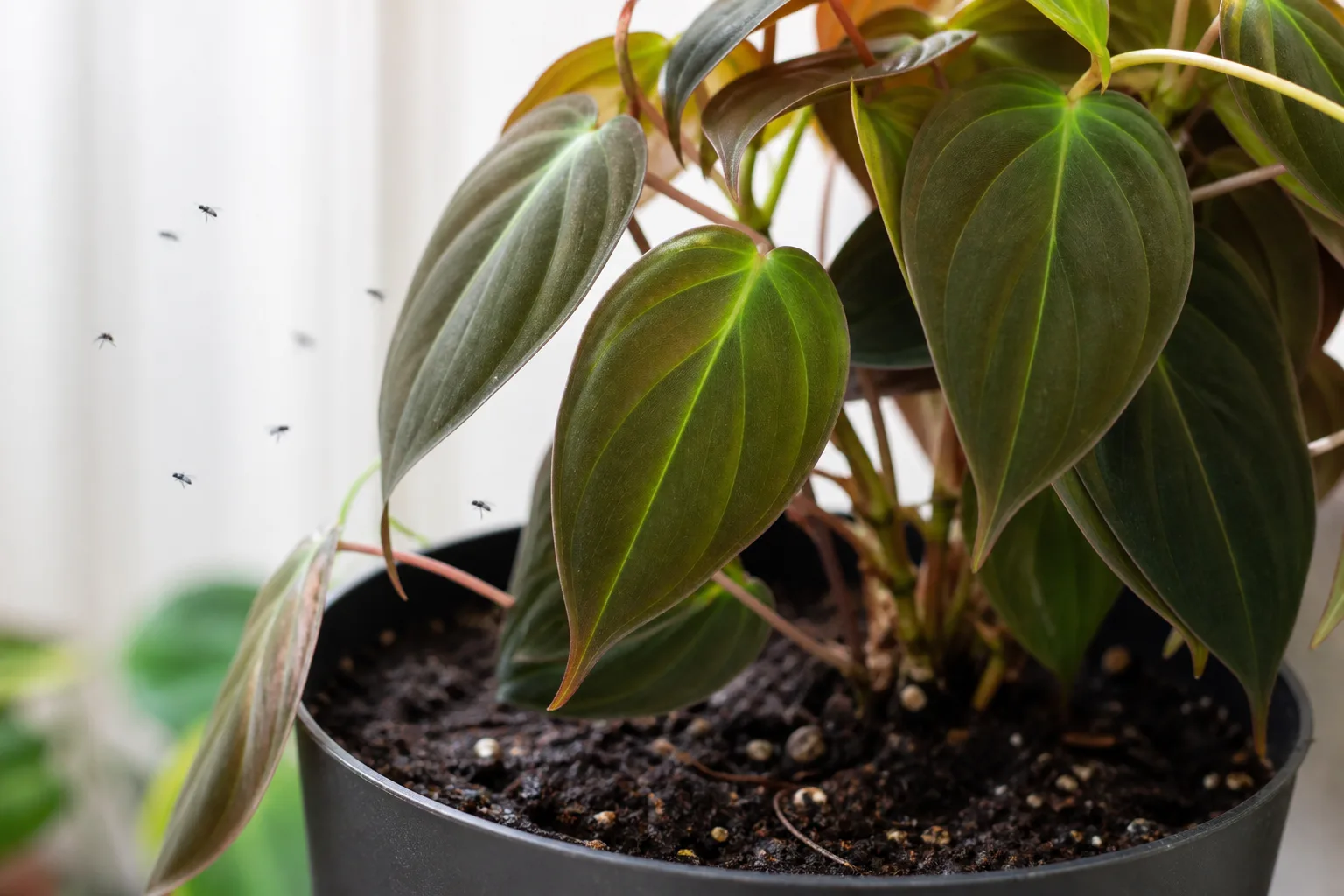
Fungus Gnats on Philodendron Micans: Causes, Checks & Fixes
This guide covers fungus gnats on Philodendron Micans. See also the general Fungus Gnats guide, watering, and light pages for this plant.
Fungus Gnats on Philodendron Micans: Causes, Checks & Fixes
Quick answer
Fungus gnats on Philodendron hederaceum ‘Micans’ - the velvet-leaf trailing philodendron - almost always mean the top layer of potting mix stays wet too long, even when the cascade of bronze-green foliage above looks healthy. Adults are tiny dark flies that rise when you water or brush trailing stems; larvae live in the moist upper inch of organic mix.
First step: let the top 2–3 cm (about 1 inch) of mix dry completely before the next watering, and place a yellow sticky trap horizontally at the soil line beneath the vine. Gnats signal a watering and drainage problem, not a leaf disease. Spraying velvet foliage misses larvae in soil.
The most common Micans trigger is watering to prevent dry velvet tips while the trailing canopy shades the pot rim - so the surface never dries even when you think you are being moderate. The watering guide calls for a full soak only after the top 3–5 cm dries; chronic surface wetness breaks that rhythm and breeds gnats while deeper roots still hold moisture.
What fungus gnats look like on Philodendron Micans
Adult flies:
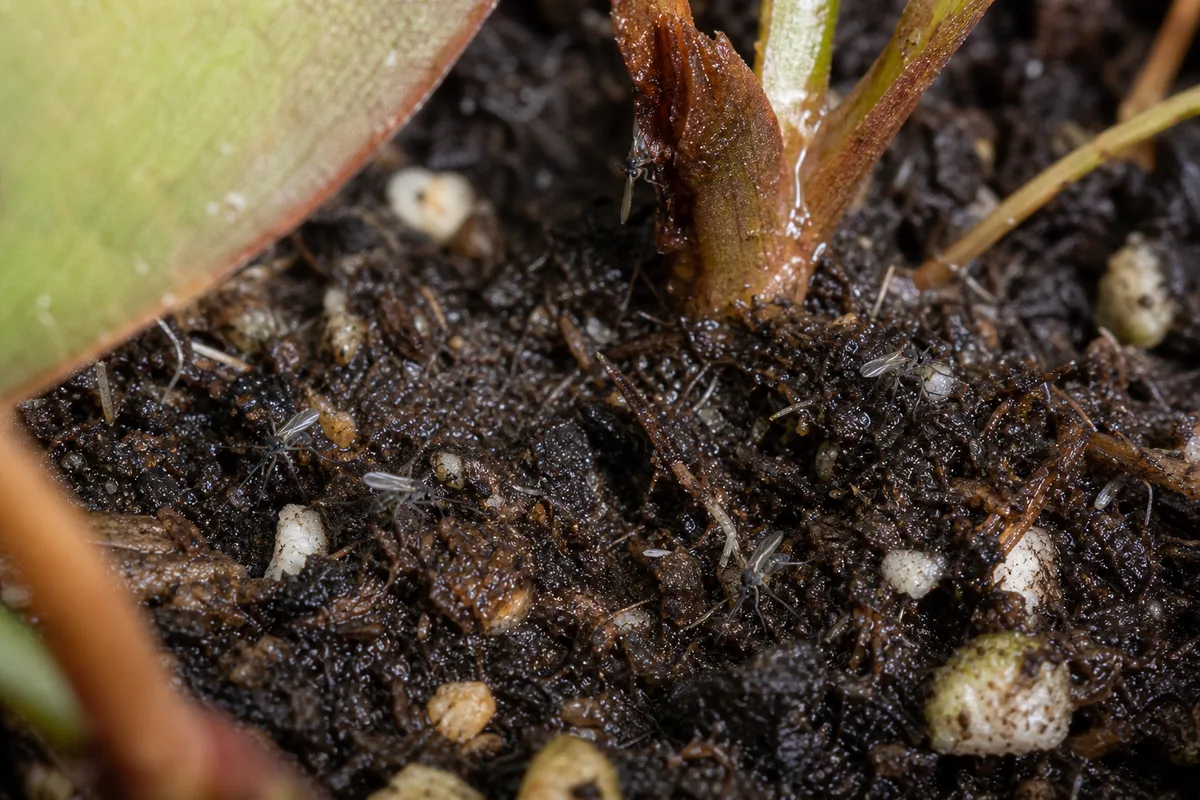
Fungus Gnats symptoms on Philodendron Micans - compare with healthy tissue on the same plant.
- Small, delicate, mosquito-like insects, roughly 1/8 inch long, with long legs
- Rise in a cloud when you water, bump a hanging-basket liner, or scrape the soil - not when you shake mature canopy leaves
- Rest on moist soil, the pot rim, or the basket liner after watering
- Do not feed on or damage plants - adults are a cosmetic nuisance; larvae cause any root stress
Larval stage in soil:
- Glossy, translucent worm-like larvae with dark head capsules in the top 2–3 cm of mix
- Visible when you scrape back wet surface soil gently beside a trailing stem
- Often paired with white or gray mold on soil or green algae on a constantly wet surface
Micans-specific presentation:
- Clouds of tiny flies rising from the pot rim or hanging-basket liner when soil is disturbed - common on wall-mounted trailing baskets where saucers hold standing water
- Yellowing lower leaves or stalled new velvet growth in heavy infestations while upper cascade still looks fine
- Flies on sticky traps near the pot base but not on fruit in the kitchen - helps separate them from fruit flies
Healthy Micans velvet leaves are unrelated to gnat presence. Do not mist more to “help” the plant while the soil surface stays soggy. The issue is below the foliage, in the wet top layer under the trailing shade.
Why Philodendron Micans gets fungus gnats
Fungus gnat adults lay eggs in cracks of moist organic growing media. Larvae feed on fungi, decaying matter, and sometimes fine roots in the upper mix. Penn State Extension notes larvae live in the top 2 to 3 inches of soil. On Micans, several habits create that habitat even when the grower is attentive:
Velvet-tip fear and calendar watering. Owners see crisp bronze margins and add another top watering before the surface dried - Iowa State Extension notes philodendrons need evenly moist but not wet soil. Micans watered every seven days regardless of season, light, or pot size often receives water before the top layer dries. A glossy heartleaf philodendron on the same shelf may stay gnat-free because its smooth leaves do not trigger the same overwatering reflex and its shorter stems cast less shade on the rim.
Trailing cascade shade on the wet soil line. Full trailing vines hang over the pot edge and block air and light from the surface. Water runs down stems and pools at the rim. The top centimetre stays dark and damp for a week while deeper roots still have moisture - perfect gnat habitat.
Wall-mounted and ceiling-hung baskets with standing saucer water. Micans displayed high on a wall often sits in a liner or saucer that never gets emptied. Minnesota Extension states fungus gnats love moisture and overwatered plants are especially vulnerable. A basket watered from above on a fixed schedule while runoff collects below is one of the most common Micans gnat scenarios in dim corners.
Winter slowdown with unchanged summer rhythm. Micans in a dim corner uses water slowly through winter, but the same summer watering cadence keeps the surface wet for ten to fourteen days. UC IPM advises that because gnats thrive in moist conditions, allowing container surface soil to dry between waterings is core management.
Surface organic matter feeding larvae. White or gray mold on wet potting mix is saprophytic fungus breaking down peat and bark. University of Maryland Extension warns that fungal mats on moist media attract fungus gnats whose larvae can feed on roots and stunt growth. Fallen velvet leaves in the pot add decaying matter on the surface.
Contaminated mix and new plants. NC State Beaufort County Extension notes gnats enter through contaminated soil or new plants and breed in consistently wet mix. Bagged soil stored damp outdoors or nursery pots brought home without quarantine can introduce eggs - but eggs only explode when Micans watering keeps the surface wet.
High humidity targets for velvet foliage (50–60% in many homes) are not the same as a wet soil surface. You can run a humidifier for leaf quality while still drying the top 2–3 cm between drinks per the watering guide.
How to confirm the cause
Work through these checks in order. Gnats need moisture evidence, not fly sightings alone.
- Surface moisture - Push your finger into the top 2–3 cm. If it is wet days after watering, gnats have habitat regardless of fly count. Compare against the Micans watering dry norm.
- Fly behavior - Fungus gnats hover near soil and run across the surface; fruit flies prefer kitchens and ripening produce.
- Sticky trap test - Place a yellow sticky trap horizontally at the pot rim for 48 hours. Multiple small dark captures confirm active adults breeding in that Micans pot.
- Larva check - Scrape aside a small section of top soil beside a trailing stem. Translucent worm-like larvae confirm breeding in the pot.
- Pot weight and smell - A heavy pot with neutral smell suggests chronic wetness; sour odor means investigate roots for root rot.
- Light and watering history - Recent increase in watering frequency, a move to a dimmer spot, or watering because velvet tips looked dry often precede outbreaks.
Lookalike symptoms to rule out
| Symptom pattern | Likely cause | Key check |
|---|---|---|
| Tiny flies from soil when watering | Fungus gnats | Wet top 2–3 cm; larvae in mix |
| Small flies near kitchen fruit or compost | Fruit flies | Breeding site away from pots |
| Sturdier flies on algae-heavy wet surface | Shore flies | More common in greenhouse benches |
| White fuzzy clusters on leaf joints | Mealybugs | Insects on stems, not soil flies |
| Fine webbing on velvet undersides | Spider mites | No consistent soil flies - see spider mites |
| Yellow lower leaves, heavy wet pot, sour smell | Overwatering / root stress | Mushy roots possible - see overwatering |
| White or gray fuzzy mat on soil, few flies | Surface mold | Scrape test; see mold on soil |
First fix for Philodendron Micans
Let the top 2–3 cm of soil dry completely before the next watering, and set one yellow sticky trap at soil level beneath the trailing stems.
Minnesota Extension recommends letting the top 1–2 inches dry completely to disrupt the gnat life cycle because larvae cannot survive in dry surface soil. For Micans, that usually means extending the interval between waterings and checking pot weight rather than watering on habit or because velvet tips looked slightly dry.
Immediate steps after the dry-and-trap start:
- Pause top watering until the upper mix is dry; water thoroughly only when that layer has dried per the watering guide, then empty the saucer within 30 minutes.
- Scrape visible surface mold or algae with a spoon and discard the top centimetre if fuzzy mats are present - same wet surface feeds both gnats and mold on soil.
- Apply Bti drench if larvae persist - soak Mosquito Bits or similar Bti-labeled product in water and apply to soil weekly for three to four weeks. UMN Extension lists Bti as an effective larval treatment.
- Optional surface barrier - Wisconsin Horticulture suggests a half-inch layer of coarse sand or fine gravel to keep the surface drier and less attractive for egg-laying.
Bottom-watering can hydrate roots while the surface stays drier - useful when top watering soaks the whole egg zone every time on a hanging basket. Virginia Tech Extension notes cultivating the top layer to expose eggs and larvae to air can help alongside moisture management.
Do not pour pesticides on stressed Micans until watering is corrected - dry soil is the main treatment.
Step-by-step recovery
Week 1–2:
- Dry the top 2–3 cm between waterings and deploy sticky traps at soil level beneath the cascade.
- Scrape away visible mold or algae; replace with dry coarse top dressing if needed.
- Move Micans to brighter indirect light if the pot has been drying too slowly - see the light guide for placement.
Week 3–4:
- Apply first Bti soil drench if larvae were confirmed; mark the calendar for weekly repeats.
- Keep traps in place, replacing when 50–60% coated so you can monitor remaining adults.
- Water thoroughly only when the top 3–5 cm is dry, using well-draining mix per the soil guide.
Week 5+:
- When traps stay nearly clean for two weeks and surface dry-down is consistent, resume normal Micans watering - still probing the top 3–5 cm first.
- If gnats return immediately, refresh degraded mix when aged peat holds surface moisture for a week indoors.
Treatment observation (indoor hanging Micans)
In a documented indoor case - 10-inch trailing Micans in a wall-mounted basket, peat-heavy mix, watered weekly on calendar because velvet tips looked dry - a horizontal sticky trap at the soil line caught roughly 35 adults on day 1 after the surface had stayed damp for nine days. Holding the top 3 cm dry between drinks, scraping surface mold, weekly Bti drenches, and emptying the saucer after every watering dropped counts to about 5 adults by week 3; a new velvet leaf unfurled at week 4 once trap captures stayed low and surface dry-down held for seven consecutive days. Your timeline will vary with light, basket size, and room humidity, but falling trap counts plus consistent surface dryness are the reliable progress markers.
Recovery timeline
With consistent surface dry-down, adult counts on traps usually drop within one to two weeks. Larvae in deeper wet pockets may need three to four weeks and a second Bti application. Micans should produce normal new velvet leaves within that window if roots stayed firm. If yellowing continues after flies disappear, unpot and inspect for root damage or root rot.
Gnats can linger in a humid room even after one basket is fixed - check neighbor pots on the same shelf before declaring victory.
What not to do
- Do not water more because gnats appeared and you assume the plant is thirsty - wet surface caused the problem.
- Do not rely on neem or soap sprays alone without drying soil; Penn State Extension notes short-residual sprays miss emerging adults.
- Do not mist Micans heavily while fighting gnats; extra surface moisture extends the cycle.
- Do not repot into an oversized pot; extra wet soil volume slows drying.
- Do not ignore a few flies while soil stays soggy - gnats warn that Micans is one step from overwatering stress and possible root injury.
- Do not compensate for yellow leaves with extra water while fighting gnats.
Philodendron Micans care cross-check during treatment
While correcting gnats, align pot moisture with what Micans needs - leaf humidity and soil-surface dryness are separate variables:
| Factor | Gnat-friendly mistake | Micans target |
|---|---|---|
| Water timing | Calendar watering when velvet tips look dry | Top 3–5 cm dry before soak - watering guide |
| Trailing shade | Cascade blocks rim from drying | Lift stems briefly to check surface; brighter filtered light |
| Saucers / liners | Standing water in wall-mounted basket | Empty within 30 minutes of every drink |
| Humidity | Misting soil because leaves need moisture | Humidifier or grouping for leaves; dry soil surface between drinks |
| Mix | Dense peat without perlite | Standard potting plus 20–25% perlite per soil guide |
| New plants | Hung beside main vine immediately | Quarantine two weeks with soil-level trap |
How to prevent fungus gnats next time
Water Micans when the top 3–5 cm of mix is dry, not on a fixed calendar. Use standard potting mix plus 20–25% perlite so water moves through rather than pooling at the surface. Give enough indirect light that the pot dries within seven to ten days in summer and ten to fourteen in winter for most homes.
Quarantine new plants two weeks and inspect soil before purchase. Pour off saucer runoff after every watering. If surface mold appears, scrape it and dry the top layer promptly - UMD Extension management starts with letting the surface dry between waterings. Weekly sticky-trap checks during heating season catch reinfestation early.
Gnats vs. mold on soil - which page do you need?
Both problems share chronically wet surface mix on Micans, and they often appear together on the same overwatered basket.
| Your main complaint | Start here | Sibling page |
|---|---|---|
| Tiny flies rising when you water; larvae in top soil | This page (fungus gnats) | - |
| White/gray fuzzy layer on soil; few or no flies yet | Mold on soil | Scrape-and-dry workflow |
| Yellow leaves, heavy pot, sour smell - flies optional | Overwatering | Root inspection |
| Mushy roots, soft stems at base | Root rot | Same-week unpot |
Fix surface dry-down for gnats and mold together. If stems soften or soil smells sour, escalate to root-rot guidance even if fly counts are moderate.
When to worry
Escalate if:
- Flies persist after four weeks of proper dry-down and Bti treatment
- Lower leaves yellow rapidly and stems soften at the base
- Soil smells sour or roots feel mushy on spot-check - possible root rot overlap
- New velvet leaves stay small and distorted despite pest control
Heavy gnat loads on chronically wet Micans can chew fine root hairs; treat the moisture problem as seriously as the insects. NC State Plant Toolbox notes root rot can occur in overly wet philodendron soil.
If decline continues after dry-down, Bti drenches, and drainage correction, contact your local cooperative extension office before you water again.
Pet safety note
Philodendron species contain insoluble calcium oxalate crystals toxic to cats and dogs if chewed - oral irritation, drooling, and vomiting are common signs. Gnats themselves are not a pet hazard, but keep sticky traps and soil drenches out of reach of curious animals. Bti drenches are low-risk around pets when used on the label, but discourage soil chewing.
Related Philodendron Micans problems
- Micans overview - species hub: light, water, humidity, trailing display
- Watering - top 3–5 cm dry-down rhythm for trailing baskets
- Soil - perlite ratios and drainage for hanging pots
- Overwatering - wet-soil signs when gnats are a moisture alarm
- Mold on soil - surface fungi on persistently damp peat
- Root rot - mushy roots and sour-soil escalation
- Spider mites - webbing on velvet undersides, not soil flies
This URL is the fungus-gnat and wet-surface hub for the Micans cluster. Sibling pages go deeper on one cause; start here when tiny flies rise from a damp trailing basket after velvet-tip overwatering.
FAQs
Are these fungus gnats or fruit flies on my Micans?
Fungus gnats rise from damp potting mix when you water or disturb the soil and resettle near the rim - not on kitchen fruit. Fruit flies hover around ripening produce and drains. On a trailing Micans basket, tap the pot; if tiny dark flies burst from the soil line while velvet leaves look fine, fungus gnats are the match.
Does fungus gnats on Micans mean my bag of potting soil was contaminated?
Contaminated or outdoor-stored bagged mix can introduce eggs, but chronic surface wetness is what lets them explode on Micans. A healthy basket in bright light with fast-draining mix rarely hosts large populations unless watering ignores dry-down. Quarantine new plants two weeks with a soil-level trap before hanging them beside your main vine.
Will damaged Philodendron Micans leaves recover from fungus gnats?
Gnat larvae rarely kill healthy Micans outright, but heavy infestations can stunt new velvet leaves and yellow lower foliage as fine roots are chewed. Existing leaf damage stays cosmetic; recovery means no new flies after two to three weeks, firm roots on spot-check, and clean new growth unfurling normally.
When are fungus gnats urgent on Philodendron Micans?
Escalate when flies swarm every watering, larvae cover most of the pot surface, lower leaves yellow while soil smells sour, or stems soften at the base - signs wet soil may have progressed toward root rot. A few gnats in winter on one overwatered basket are annoying but not an emergency if you dry the surface immediately.
Is fungus gnats on Micans the same problem as mold on soil?
They share the same root cause - a surface that stays wet too long - and often appear together. Mold on soil is the fuzzy white or gray layer on the mix; fungus gnats are the tiny flies breeding in that damp organic layer. Fix surface dry-down for both; use the mold-on-soil page if scraping fuzzy mats is your main task.
When to use this page vs other Philodendron Micans guides
- Philodendron Micans watering guide - Use for routine moisture checks before assuming fungus gnats is the main issue.
- Philodendron Micans problems hub - Browse all 10 common issues on this species.
- Root Rot on Philodendron Micans - Different entry point when symptoms overlap with fungus gnats.