Fertilizing Philodendron Silver Sword: Schedule, NPK & Burn
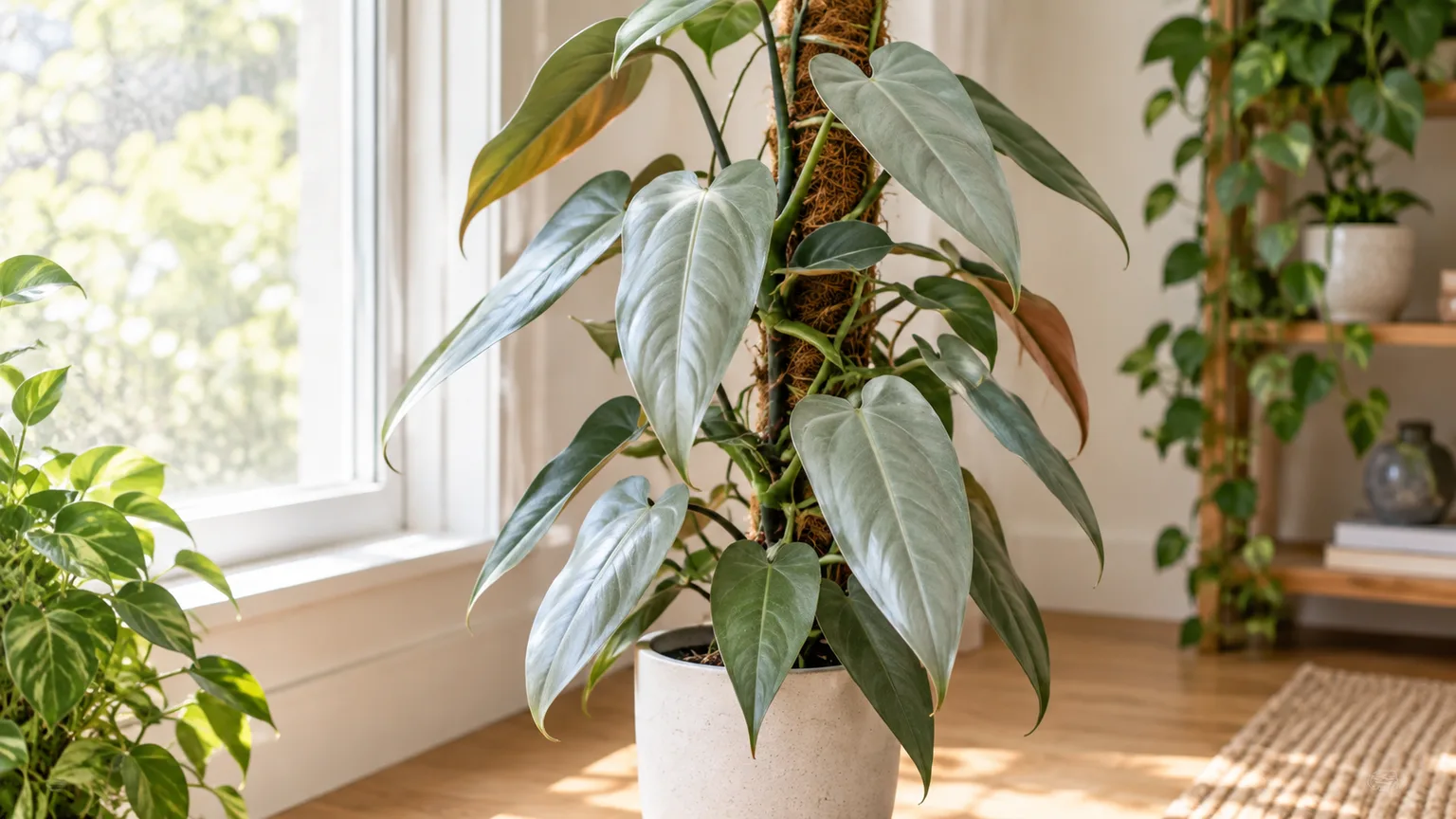
Fertilizing Philodendron Silver Sword: Schedule, NPK & Burn Prevention
Fertilizing Philodendron Silver Sword: Schedule, NPK & Burn Prevention
Philodendron Silver Sword fertilizer decisions start with one biological fact: this is a fast climbing aroid, not a slow rhizome crawler. Philodendron hastatum — the species behind the Silver Sword trade name — is a tropical climbing vine native to Southeast Brazil whose metallic silver-blue arrow leaves elongate as the vine ascends a moss pole. That growth pace means nutrient demand sits higher than slow crawlers like Philodendron Gloriosum but still far below the reckless monthly full-strength schedules copied from fast pothos vines. Feed it before light and support are correct, or pour fertilizer onto stressed wet roots, and you will see crispy silver margins, white salt crust, and a climber that suddenly stops producing new blades along the pole.
The goal is check-based, half-strength feeding: balanced liquid every month during active growth, pause in winter, never feed dry soil, and flush salts in spring if you fed regularly through summer. This guide covers why climbing hastatum needs a different rhythm than crawlers, when the vine actually wants nutrients, NPK and dilution choices, application steps, success and burn signs on silver foliage, seasonal rules, post-repot timing, and the mistakes generic philodendron articles miss.
Quick answer: feed active climbers lightly
Feed Philodendron Silver Sword with balanced liquid fertilizer at half the label strength, roughly once per month during active spring and summer growth when the vine is producing new leaves along a moss pole. RHS recommends applying a balanced liquid fertilizer monthly when P. hastatum is in growth, and watering sparingly at other times. Pause feeding from late autumn through early spring unless the plant sits under strong grow lights with continuous new leaf production.
Do not feed when: the top 3–5 cm of mix is dry, the plant was recently repotted, no new growth has appeared for several weeks in dim winter light, or you already added slow-release granules to the pot this season. Fertilizer supports growth that light, watering, and support already enable — it cannot replace them. See the Silver Sword overview guide for whole-plant context and the light guide when silver tone fades before you reach for the bottle.
Why Silver Sword fertilizer is climber work, not crawler work
Most philodendron fertilizer articles assume either a self-heading rosette or a horizontal rhizome crawler. Silver Sword is a clinging climber that can reach 10–15 feet indoors when supported. Leaves start arrow-shaped and become tri-lobed and elongated with maturity as the vine climbs — each new node along the pole represents fresh tissue that draws nitrogen, potassium, and micronutrients from the root column and aerial roots.
Vine metabolism vs Philodendron gloriosum
Philodendron gloriosum advances one velvet heart leaf every four to eight weeks from a creeping rhizome in a wide shallow pot. Silver Sword can push several nodes per season in bright filtered light with a moist moss pole. That faster leaf turnover justifies a monthly half-strength feed during active growth rather than gloriosum’s leaner 4–6 week interval — but it does not justify full-strength monthly doses copied from fertilizing calendars designed for fast juvenile pothos.
Same Araceae family — different geometry. Salt crust in a deep vertical pot concentrates at the upper root zone where aerial roots emerge; on gloriosum it sits across a wide surface where the rhizome tip rests. The Gloriosum fertilizer guide explains crawler salt dynamics; this page applies vertical-vine logic.
Moss pole, light, and feed demand
NC State lists P. hastatum as needing bright indirect light, moist well-drained rich soil, and a moss pole or trellis. Juvenile silver tone dulls in low light before the plant needs more feed — adding nitrogen to a leggy vine in a dim corner burns margins without restoring metallic colour. Bright filtered light preserves blade sheen and tightens internodes; only then does monthly feeding translate into longer silver leaves climbing the pole.
A moist moss pole lets aerial roots absorb water separately from the pot. That can slightly increase total water and nutrient use in bright rooms without changing the half-strength monthly baseline. Pair feeding rhythm with the watering guide and soil guide — chunky bark-heavy mix in the slightly acidic range (pH 5.5–6.5 per LeafyPixels plant data) affects nutrient uptake even when fertilizer concentration is correct.
When to fertilize Philodendron Silver Sword
Feed during active spring and summer growth when the vine is advancing nodes and at least one leaf is unfurling or recently hardened along the moss pole. RHS philodendron guidance recommends feeding during the growing season from April through September with a general houseplant fertiliser — adjust for your room’s light and heat rather than treating those months as automatic feed dates.
Do not feed when:
- The top 3–5 cm of mix is dry — fertilizer on dry substrate concentrates salts at the root zone
- The plant is stressed from recent repotting, pest treatment, or drought
- No new growth has appeared for six or more weeks in dim winter conditions
- You already applied slow-release granules in the mix this season — Penn State advises not combining slow-release with soluble fertilizer
- Roots are recovering from overwatering — feeding a rotting root system worsens salt damage
Resume feeding when you see a firm climbing stem, moist soil from a normal watering cycle, and visible new leaf production at the vine tip.
Active growth vs winter rest
In winter, shorter days and cooler rooms slow node production to a crawl. The plant is resting, not starving. Pausing fertilizer prevents salt accumulation on a vine that cannot use nutrients. Exception: Silver Sword under strong grow lights with continuous new leaves may need one half-strength feed every 6–8 weeks through winter — still leaner than summer, and only when new blades are actually opening.
How often, how much, and which NPK
Default schedule: balanced liquid fertilizer (10-10-10 or 20-20-20) at half the label strength, once per month during active growth, applied to already-moist soil after a normal watering cycle.
Clemson HGIC recommends fertilizing philodendrons regularly with dilute water-soluble houseplant fertilizer — half strength translates that “dilute” guidance into a measurable indoor routine. Higher nitrogen is not required for silver leaf colour; metallic tone comes from light and maturity on a climbing vine, not heavy nitrogen pushes that can curl and brown leaf tips when over-applied.
Slow-release vs soluble: pick one
Penn State Extension warns that improper slow-release use combined with soluble fertilizer concentrates salts. Many commercial potting mixes include starter fertilizer. If you top-dressed slow-release granules at repotting, skip liquid feed for the season or leach thoroughly before resuming. Do not stack delivery methods on a collector philodendron in a 15–20 cm pot.
Organic options — diluted liquid fish emulsion, worm-casting tea, or a light top-dressing — work if applied sparingly. Slow-release organic pellets in small pots can still burn when the mix stays wet; treat them like slow-release synthetics and avoid doubling with monthly liquid.
Step-by-step application on moist mix
- Confirm soil is moist at 3–5 cm depth — not soggy, not bone dry
- Dilute balanced fertilizer to half strength in your watering can
- Apply slowly across the pot surface, avoiding a direct pour onto the moss pole base if it sits in standing water
- Water until a small amount drains from the bottom; empty the saucer within 30 minutes
- Mark the date and watch the next two leaves’ margins for two weeks
Penn State recommends adding enough liquid fertilizer that roughly 10% leaches from the container — a practical guard against salt buildup in pots that are watered infrequently. If white crust appears on the mix surface between feeds, flush with plain room-temperature water until it runs freely, then empty the saucer. Repeat once within three days before the next scheduled feed.
Signs you are feeding correctly
Success on Silver Sword shows in leaf quality along the climbing stem, not explosive size overnight:
- New arrow-shaped leaves unfurl fully without stuck tips or torn silver tissue
- Metallic silver-blue tone stays even across the blade — not washed-out yellow-green
- Internodes stay relatively tight under bright filtered light as the vine ascends the pole
- Steady node production — several new leaves per active season in good conditions
- No white crust accumulating on the mix surface between feeds
- Petioles stay rigid without sudden yellowing within a week of feeding
If the next leaf after feeding is longer and firmer with clean margins, the dose matched vine speed. If tips crisp within ten days, skip the next scheduled feed and consider a salt flush.
Signs of over-fertilizing and salt burn
Penn State lists crust of fertilizer on the soil surface, browning of leaf tips and margins, and wilting despite wet soil as over-fertilization symptoms. On Silver Sword’s metallic foliage, burn shows clearly:
- Crispy brown tips and margins on one or more leaves within 1–2 weeks of feeding
- Bleached or dull silver patches where thin tissue scorches first
- White or tan crust on mix surface, pot rim, or clay pot exterior
- Wilting with damp soil when salts damage fine roots
- Sudden pause in node production along an otherwise firm climbing stem
First actions: stop all fertilizer, flush the pot with plain water twice over three days, empty saucers, and wait for the next leaf to unfurl before reconsidering feed. Do not repot immediately unless roots are actively rotting — repotting adds stress on top of salt shock.
Common Silver Sword fertilizer mistakes
- Monthly full-strength feed copied from generic houseplant calendars. Fix: half strength only, and skip months with no new leaves.
- Feeding dry soil after a missed watering. Fix: water first on the next cycle, or skip feed until mix is moist at 3–5 cm.
- Slow-release spikes plus monthly liquid in the same pot. Fix: choose one delivery method per season.
- Winter feeding in a dim room with no new nodes. Fix: pause until spring growth resumes along the pole.
- Chasing silver colour with extra nitrogen. Fix: improve light and install or extend the moss pole; nitrogen excess burns margins without restoring metallic tone.
- Feeding immediately after repotting. Fix: wait 4–6 weeks until roots explore fresh mix and new growth appears — many mixes include starter fertilizer.
- Ignoring salt crust because the vine “still looks fine.” Fix: flush before the next feed; crust precedes tip burn on thin silver leaf edges.
Seasonal and environmental adjustments
Spring and summer bring faster dry-down, more new leaves along the pole, and the monthly half-strength rhythm RHS describes for P. hastatum in growth. Autumn and winter slow all three — especially for plants within one metre of cold glass or in rooms with shorter daylight.
Under grow lights running 12+ hours with visible node advance, a single half-strength feed mid-winter may be appropriate. Otherwise treat winter as rest. When moving a plant from a bright summer window to a dimmer spot, Penn State advises leaching excess fertilizer before slowing growth conditions so accumulated salts do not damage roots that are already working harder in lower light.
After repotting into fresh chunky mix, wait 4–6 weeks before resuming liquid feed. Fresh roots need time to explore new bark and perlite without salt stress. If you propagated recently, see the propagation guide — cuttings rooting in moss should not receive full-strength fertilizer until established in soil.
Pet safety when storing and applying fertilizer
Like all philodendrons, Silver Sword contains insoluble calcium oxalate crystals that irritate mouth and digestive tissues. The ASPCA lists philodendron as toxic to cats and dogs. Fertilizer does not change toxicity, but salt crust, spilled liquid, and stored bottles attract curious pets. Wipe saucers after feeding, store concentrates out of reach, and call ASPCA Animal Poison Control at 888-426-4435 plus your veterinarian if ingestion is suspected.
When to use this page vs other Philodendron Silver Sword guides
- Philodendron Silver Sword overview — Start here for whole-plant identity, moss-pole setup, and toxicity before deep-diving feeding.
- Philodendron Silver Sword watering — Fix moisture rhythm before changing fertilizer; limp leaves with wet soil rarely need more feed.
- Philodendron Silver Sword light — Silver tone and internode spacing track light before nutrient demand shifts.
- Philodendron Silver Sword soil — Chunky mix and pH affect uptake; dense peat-heavy substrates rot before fertilizer helps.
- Philodendron Silver Sword repotting — Timing fresh mix and post-repot feed pause live here, not on this page.
Related Philodendron Silver Sword guides
- Philodendron Silver Sword overview
- Philodendron Silver Sword watering
- Philodendron Silver Sword light
- Philodendron Silver Sword soil
- Philodendron Silver Sword repotting
- Philodendron Silver Sword propagation
Conclusion
Philodendron Silver Sword fertilizer succeeds when you match dose to climbing vine speed, not to a generic houseplant calendar or a slow crawler’s lean schedule. Feed half-strength balanced liquid once per month during active leaf production along a moss pole, never on dry soil, pause in winter, and flush salts in spring if you fed through summer. Longer silver blades with clean margins and steady node advance mean your schedule works. Crispy tips, white crust, and wet-soil wilt mean stop, flush, and wait for the next unfurling leaf before you feed again.