Philodendron Silver Sword Pruning: When, How, and Mistakes
Philodendron Silver Sword Pruning: When, How, and Mistakes to Avoid
Philodendron Silver Sword Pruning: When, How, and Mistakes to Avoid
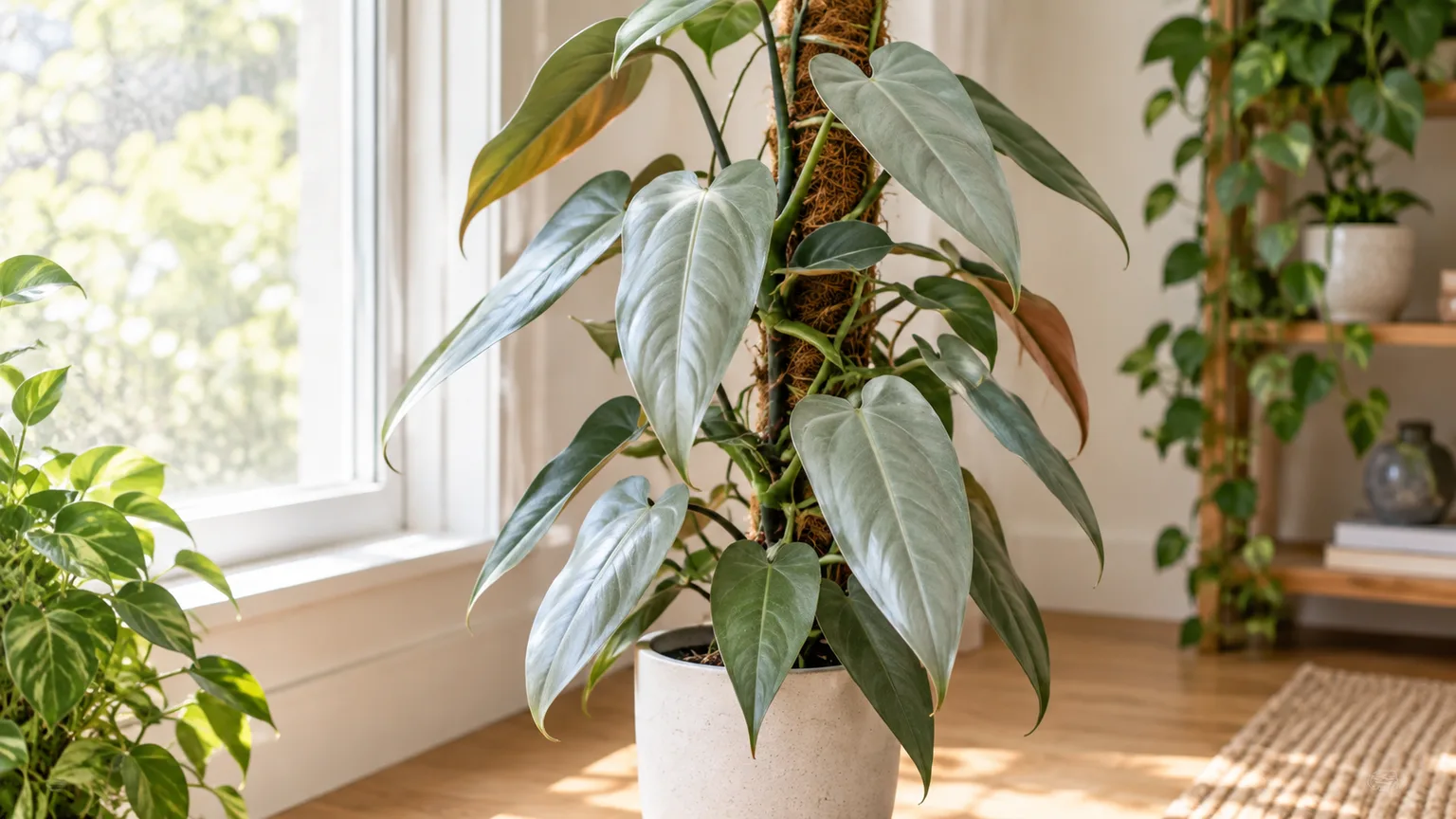
Philodendron Silver Sword (Philodendron hastatum) is a climbing aroid, not a crawler like Philodendron gloriosum. Its metallic silver-blue arrow leaves elongate on a vertical vine with nodes spaced along the stem, and new growth emerges from those nodes when the apical tip is removed or when side buds break after a cut. Philodendron Silver Sword pruning is mostly grooming and vine management — removing failing tissue, shortening stretched runners, and harvesting propagation sections — not shaping a rosette or rhizome. First, inspect the plant and remove only dead, yellow, or heavily damaged leaves by cutting each petiole cleanly where it meets the stem, without slicing into the node ring below. That one step clears pest habitat and lets you read the vine honestly before any structural cut.
For whole-plant context — climbing habit, moss pole setup, and silver-tone light needs — start with the Philodendron Silver Sword overview. The sections below walk through inspection, timing, node placement, safe removal limits, propagation harvests, and recovery specific to this Southeast Brazil climber.
Why Silver Sword Pruning Is Vine Work, Not Crawler Grooming
Climbing philodendrons produce new stems and leaves from nodes — the slightly swollen rings where petioles attach and aerial roots often emerge. Silver Sword behaves as a clinging climber whose juvenile arrow leaves mature into longer blades as the vine ascends a support. Mid-stem cuts just above a node can redirect growth: the bud at that node may push a new shoot, and the section below often keeps its existing leaves.
That is fundamentally different from gloriosum culture, where a horizontal rhizome advances from a single forward tip and mid-rhizome parent cuts do not branch. If you are coming from gloriosum pruning, do not treat hastatum like a surface crawler — every meaningful cut decision starts with finding the node on a vertical stem.
What Pruning Can and Cannot Fix
Pruning can remove yellow or pest-harboring foliage, shorten leggy internodes after you improve light, supply stem cuttings for propagation, and reduce overall vine length on a supported plant. Pruning cannot restore silver tone on old leaves, compensate for a missing moss pole, or replace brighter filtered light placement. Large sword-shaped mature leaves follow the vine upward on a moist pole — not from cosmetic leaf trimming.
If internodes are already long and new blades look small and pale, read the Philodendron Silver Sword light guide before structural cuts. Topping a stretched vine without brighter placement often produces another stretched runner.
Inspect Before You Cut
Before any blade touches healthy stem tissue, read the vine from soil line to growing tip:
- Growing tip condition — firm cataphyll and active leaf, or stalled brown tip?
- Node spacing — wide gaps signal past low light; note where aerial roots already formed
- Petiole bases — any fully yellow leaves, torn blades, or pest coating?
- Stem firmness — soft mushy sections near the soil mean rot, not a shaping problem
- Unfurling leaves — a new silver blade mid-unfurl is fragile; defer cuts nearby
- Support contact — is the moss pole moist enough that aerial roots are attaching?
If the lower stem is soft or the mix stays wet many days after watering, fix watering rhythm and chunky mix drainage before aggressive pruning. Wet anaerobic mix plus fresh stem wounds is how climbing philodendrons develop basal rot.
When to Prune Silver Sword
Routine Leaf Grooming — Any Stable Day
Remove fully yellow, scorched, or pest-damaged leaves whenever you spot them on a stable plant. Older lower leaves yellow naturally as the vine extends upward — clearing them reduces mealybug and scale hiding spots without stressing active growth.
Structural Cuts — Spring Through Early Summer
Shorten leggy vines, balance uneven side growth, or reduce total height during spring through early summer when Silver Sword is actively pushing new leaves. That timing matches climbing philodendron culture indoors: warm bright months give nodes below a cut the best chance to break before winter slowdown.
Hold major reshaping when:
- A new leaf is unfurling — vibration and airflow changes tear thin silver blades easily
- The plant is in winter slowdown with no new growth for weeks
- You repotted within the last two weeks — stacked stress slows recovery
- The vine is already wilted from chronic overwatering
Emergency Removal — Rot or Pest Damage
Cut out confirmed soft brown stem sections immediately, even off-season. Make one clean cut back to firm tissue, let the wound dry briefly, and repot into fresh airy mix if the root zone was involved. That is surgery, not optional grooming.
Tools, Sap Safety, and Pet Precautions
Use sharp bypass pruners or floral snips for petioles and slender stems. Dull blades crush aroid tissue and slow healing. Wear gloves — philodendron sap contains calcium oxalate crystals that irritate skin and mucous membranes. The ASPCA lists philodendron as toxic to cats and dogs if chewed; bag trimmings and wipe sap from floors in pet households.
Disinfect blades before you start and between plants if you prune multiple philodendrons. Iowa State Extension recommends wiping cutting surfaces with 70% isopropyl alcohol — effective, inexpensive, and no prolonged soak required. If you trim rot or pest-infested tissue, sanitize before moving to healthy stems on the same plant.
The First Cut: Removing Damaged Foliage
Trace each damaged petiole down to where it meets the stem. Cut cleanly through the petiole base without nicking the node ring directly below — that node is future propagation material and potential regrowth tissue.
Do not trim brown tips cosmetically on otherwise healthy silver blades unless the damage is minor and you have already fixed the cause — usually low humidity, salt buildup, or inconsistent watering. Small edge blemishes are less visible than permanent scissor marks on metallic foliage. If more than half the blade is damaged, remove the entire leaf at the petiole.
When a lower leaf turns fully yellow, remove it promptly. A yellow blade no longer photosynthesizes effectively — it only holds moisture against the stem and attracts pests.
Where to Cut on a Climbing Vine
Every structural cut on Silver Sword belongs just above a node, not through random internode tissue between leaves. On a supported vine, feel for the slight ridge where the petiole attached — often with a cataphyll scar and sometimes a pale aerial root pointing toward the pole.
For size control, choose a node one or two leaves below where you want the vine to restart, angle the blade slightly, and make one decisive snip. The bud at that node may produce a new shoot within weeks during active growth.
For leggy vine reset, you can remove a long bare internode section entirely — but the cutting must include at least one node if you plan to propagate it. A bare stem chunk without a node will not root.
When shortening, leave at least two to three healthy leaves on the parent section unless you are deliberately harvesting the top for propagation and the base still has adequate foliage below.
Shaping and Size Control on a Moss Pole
Silver Sword looks best climbing a moist moss pole or trellis, not sprawling across a shelf. Pruning supports that habit:
- Tip pinching — remove the soft newest inch above the top node during active growth to slow vertical stretch without a dramatic height change
- Side-branch shortening — cut individual uneven runners above their lowest healthy node to balance the silhouette on the pole
- Leggy reset — remove the stretched top section above a mid-vine node, reroot the cutting, and tie the remaining vine back to the pole
After structural cuts, retie stems loosely at nodes with aerial roots facing the pole. Keep the pole moist when you water so new roots attach quickly. Without support, pruned vines often produce smaller juvenile arrow leaves on horizontal runners — fine for backup stock, frustrating if you pruned for display foliage.
How Much Foliage Is Safe at Once
Limit removal of healthy leaves and live stem length to about one-third per session. Silver Sword replaces leaves steadily on a supported vine but not instantly — expect one new blade every two to four weeks in favorable indoor conditions, sometimes slower in winter.
Fully dead or completely yellow leaves do not count toward the one-third limit. If pest damage or a watering crisis took multiple leaves, stage cleanup across two sessions two to three weeks apart rather than stripping the plant in one afternoon.
Propagation Cuts From Pruning Trimmings
Most Silver Sword propagation happens from stem sections harvested during pruning, not from detached leaves. Select firm cuttings with at least one node and one healthy leaf. Cut just below the node, callous the wound a few hours, then root in moss or water per the Philodendron Silver Sword propagation guide.
When refreshing a long leggy vine, you can take multiple single-node cuttings from one runner rather than one oversized section with long bare internodes — bare internode tissue rots instead of rooting.
Top cuttings with the growing tip root fastest because they carry forward momentum. Mid-vine single-node sections work but may need an extra week or two under warm bright conditions.
What Not to Cut
Avoid these high-risk targets:
- A detached leaf without stem and node — it will never become a plant
- Every aerial root — they anchor the vine to the pole; remove only dried dead ones
- Healthy stem mid-internode expecting a new shoot — cuts belong above nodes
- The only remaining leaf on a stressed vine unless rot makes it unavoidable
- Cosmetic slices through metallic blades — silver foliage scars permanently
Do not apply gloriosum rhizome-shortening logic to hastatum. There is no surface rhizome to slice — only vertical stem with nodes.
Recovery and Aftercare
After grooming or structural cuts, keep care boring and consistent:
- Allow the top 3–5 cm of mix to dry between waterings — wet mix on a fresh stem wound invites rot
- Maintain bright filtered light on the pole assembly so new leaves emerge firm and silvery
- Keep humidity moderate to high (55–70%) without blasting an unfurling leaf with dry AC airflow
- Pause fertilizer until you see a new leaf harden off unless the plant was already on a light active-growth schedule
Signs pruning worked: firm stem tissue at the cut, a new cataphyll or leaf spike within a normal interval, and yellowing stopped spreading up the vine. Signs pruning was too aggressive or badly timed: soft stem at the cut zone, stalled tip with no new cataphyll, or wilt that persists after the mix dries appropriately.
Mistakes That Stall Silver Sword Vines
Pruning for shape before fixing light. Leggy pale stems return quickly in a dim corner even after a hard trim.
Skipping the moss pole after a reset. Horizontal runners produce juvenile leaves; mature sword blades need vertical support.
Cutting mid-internode. No node means no reliable regrowth or propagation success.
Cosmetic tip trimming on scorched leaves. Fix light or watering first; half-trimmed silver blades look worse than one removed leaf.
Heavy cuts during unfurling. New silver leaves tear easily from handling and airflow shifts.
Pruning without gloves in pet households. Sap irritates skin; cuttings are toxic to pets.
Skipping tool sanitation after pest or rot cuts. Spreads pathogens to healthy tissue on the same vine.
When to use this page vs other Philodendron Silver Sword guides
- Philodendron Silver Sword overview — Start here for whole-plant context before deep-diving this topic.
- Philodendron Silver Sword light — Escalate here when leggy stretch is the root cause, before structural cuts.
- Philodendron Silver Sword watering — Escalate here when wilt or yellowing suggests soil moisture failure, not a pruning need.
- Philodendron Silver Sword propagation — Use when your pruning trimmings include viable nodes to root.