Philodendron Verrucosum Care Guide: Light, Humidity &
Philodendron verrucosum
Philodendron verrucosum needs bright indirect light, 60–80 % humidity, watering every 7–10 days when top 3–5 cm is dry, moss pole support, and chunky aroid mix. Toxic to pets.
Philodendron Verrucosum Care Guide: Light, Humidity & Climbing
Start with wateringThe most common care mistake for Philodendron VerrucosumWatering guide →Philodendron Verrucosum care essentials
Light
Water
Every 7–10 days in summer - allow top 3–5 cm to dry. Every 10–14 days in winter.
Soil
Chunky well-draining aroid mix: potting mix + perlite + orchid bark. pH 5.5–6.5.
Humidity
Temperature
Fertilizer
Feed lightly during active growth with balanced liquid fertilizer monthly in spring and summer, and stop if the plant is stressed, newly repotted, or not actively growing.
About Philodendron Verrucosum
Philodendron Verrucosum has a upright growth habit. It is also known as Ecuador Philodendron and Verrucosum Philodendron.
| Detail | Information |
|---|---|
| Also known as | Ecuador Philodendron, Verrucosum Philodendron |
| Growth habit | Upright |
| Scientific name | Philodendron verrucosum |
Philodendron Verrucosum Care Guide: Light, Humidity & Climbing
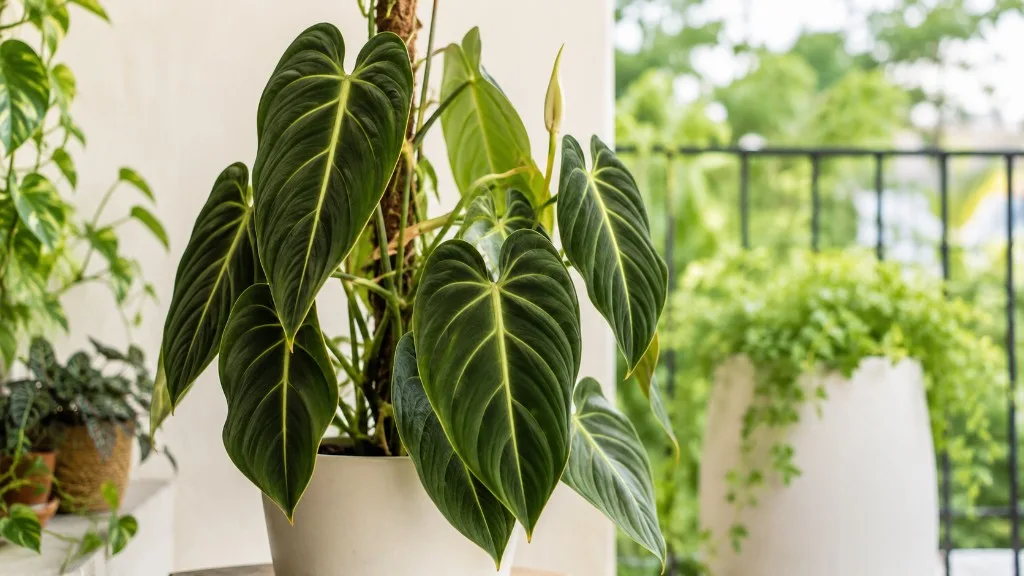
You bought Philodendron verrucosum for velvety heart-shaped leaves and the red, warty petioles that flash against green blades. A few months later the same plant may still be putting out small bronzy hearts on a tangled vine — and that is usually not a mystery disease. Philodendron verrucosum is an Andean velvet climber that sizes up foliage only when bright filtered light, high humidity, chunky draining mix, and a moist moss pole arrive together. Treat it like a trailing pothos or a horizontal gloriosum crawler and you still have a living philodendron, just not the mature specimen collectors chase.
This overview covers identity, native ecology, how verrucosum differs from Philodendron Gloriosum, light and watering rhythm, humidity, soil, pole setup, feeding, repotting, propagation, pet toxicity, common failures, and buying acclimation. For step-by-step topic guides, use light, watering, soil, fertilizer, repotting, and propagation.
What Philodendron Verrucosum Actually Is
Philodendron verrucosum is an evergreen vine in the Araceae family, first published by L. Mathieu ex Schott in 1856. The species name verrucosum refers to warty texture on the petioles — the hallmark red, bristled leaf stalks — not to “black gold” coloration (that belongs to Philodendron melanochrysum, a different velvet climber). NC State Extension lists it as Ecuador Philodendron among rare vining philodendrons in the trade.
In cultivation, verrucosum is a scandent climber with pubescent, heart-shaped leaves and contrasting pale veins. Young leaves often emerge bronzy or salmon before hardening to deep velvety green. Mature supported blades can exceed 30 cm across indoors when aerial roots grip a moist vertical support — RHS plant profiles describe mature heart-shaped foliage at that scale on forest-tree trunks in nature.
The plant is hemiepiphytic: it may start on the forest floor or on a branch, then climb toward brighter filtered light while aerial roots attach to bark. That habit is the operating manual indoors. A verrucosum trailing from a shelf will survive, but leaves typically stay juvenile-sized and internodes lengthen. A verrucosum with aerial roots rooted into a moist textured pole produces the long velvety foliage the species is grown for.
Native Range and Cloud-Forest Climbing Ecology
Kew’s Plants of the World Online places the native range from Costa Rica to Peru, including Colombia, Ecuador, and Panamá, in the wet tropical biome. RHS describes evergreen vines climbing rainforest tree trunks across Central America and the northern Andes. Indoors, translate that ecology as warm stable temperatures, humidity well above dry-office air, bright but filtered light on the climbing stem, and substrate that holds moisture yet drains fast — bark in nature dries between showers; peat-heavy pots do not.
Cold is the silent killer. The RHS philodendron guide recommends keeping philodendrons above 15°C (59°F). Avoid winter window ledges that drop colder overnight, air-conditioning vents, and front-door drafts. Velvet leaf surfaces hold moisture longer than glossy philodendron leaves, so gentle airflow matters as much as raw humidity percentage.
Red Warty Petioles and Velvet Heart Leaves
The fastest ID check at any plant size is the petiole, not leaf size alone. True verrucosum carries reddish-green stalks with soft pale bristles and a warty texture — the feature the species name describes. Blades are velvety (pubescent) with bright contrasting veins on the upper surface and often reddish tones beneath. Handle minimally; velvet marks easily and hard-water spots rarely wipe clean.
Velvet texture is functional, not just decorative. Fine hairs reduce glare in dappled forest light and hold a thin humid micro-layer at the leaf surface. The same texture makes verrucosum more sensitive to direct sun scorch, pesticide burn, and misting in cool stagnant air than smooth-leaved philodendrons. A soft dry brush beats a wet cloth for dust.
Philodendron Verrucosum vs Gloriosum
Misidentification is common because juvenile verrucosum and Philodendron gloriosum both produce small bronzy heart-shaped leaves. Shops also label anything velvety as “philodendron verrucosum.” Care diverges enough that ID matters: gloriosum is a terrestrial crawler; verrucosum is a vertical climber.
| Feature | Philodendron gloriosum | Philodendron verrucosum |
|---|---|---|
| Growth habit | Horizontal rhizome crawler | Scandent climber on trees/poles |
| Support | Wide shallow pot; no moss pole | Moss pole, plank, or coco column |
| Petioles | Green to reddish, smooth | Red, warty, bristled stalks |
| Leaf texture | Velvet heart, white veined | Pubescent velvet, strong vein contrast |
| Humidity | 60–70% target; tolerates average homes | 60–80%; struggles long-term below ~50% |
| Propagation | Rhizome sections | Stem cuttings with nodes |
Philodendron ‘Splendid’ is a popular hybrid of verrucosum × melanochrysum, combining large climbing growth with melano-style dark velvety blades — not a synonym for either parent species.
Climber vs Crawler: Why the Moss Pole Matters
If you have grown gloriosum successfully in a wide shallow pot, remember that verrucosum does not advance on a horizontal rhizome. Copying gloriosum’s pot geometry without vertical support leaves verrucosum with long internodes and small leaves even beside a bright window. Leaf size tracks light plus aerial-root attachment to a moist support — physiology copied from tree trunks, not optional styling.
Juvenile Lookalikes and Splendid Hybrid Notes
On young plants, compare stem thickness, vein contrast, and petiole texture after the second or third leaf flush — not a single bronzy heart photo from a listing. Tissue-culture juveniles can resemble gloriosum for the first leaves; warty red petioles confirm verrucosum once the plant matures slightly. When buying online, request photos of nodes, petioles, and the active growth tip, not only a mature greenhouse leaf.
Light for Velvet Climbers Indoors
Philodendron verrucosum wants bright, indirect light for most of the day — the light quality on a rainforest tree trunk below the canopy, not the open sky at noon. Indoors, place the moss pole within roughly 1–2 metres of an east-facing window, or behind sheer curtains on south- or west-facing glass. A few hours of gentle morning sun is tolerable on acclimated plants; midday direct sun bleaches velvet and produces permanent crisp patches.
Insufficient light shows as long internodes, small new leaves, and a vine that searches toward glass without sizing up. Fertilizer does not fix etiolation — increase filtered brightness first, acclimate over a week, then evaluate. Full detail on windows, grow lights, and scorch recovery is in the verrucosum light guide.
Best Windows and Grow-Light Basics
A practical test: on a clear day, hold your hand between the plant and the window. A soft shadow with readable edges usually signals the right zone; faint or absent shadow means too dim for mature foliage. Full-spectrum LEDs at 10–12 hours daily work in dim rooms — keep fixtures 30–45 cm above the top supported leaves and raise them if the velvet surface feels warm. Rotate the pot weekly so the pole does not tangle into walls or shelves.
Watering: Pot, Pole, and Drainage Together
Watering calendars fail because large velvet leaves transpire heavily in bright warm air but cool dim corners dry slowly. The reliable rule: water when the top 3–5 cm of mix is dry, soak until runoff, empty the saucer within 30 minutes, and hydrate the moss pole in the same session so aerial roots do not desiccate. Many homes land near every 7–14 days in active growth and longer in winter — but the pot weight and finger probe tell the truth, not the schedule.
Clemson HGIC groups philodendrons with pothos and monsteras as aroids needing well-drained, organic-rich media; root rot follows when mix stays soggy or watering outpaces evaporation. Always check soil before watering rather than soaking on autopilot. Step-by-step soak-and-drain rhythm is in the watering guide.
Overwatering and Underwatering Patterns
Overwatering in low light or oversized pots: yellowing lower leaves, soft stems, sour-smelling mix, black mushy roots — see root rot if several signs stack. Underwatering: limp but dry pot, crispy brown edges, stalled cataphylls. Velvet leaves dull before they wilt dramatically. When unsure, a brief dry spell is safer than another soak on already-wet roots. Use filtered or rain water in hard-water areas; mineral spots on pubescent leaves are nearly permanent.
Humidity and Temperature
Verrucosum is honest about humidity. Target 60–80% relative humidity for clean cataphyll unfurling and strong velvet texture — LeafyPixels and RHS both note this species prefers higher atmospheric humidity than many philodendrons. It may tolerate 40–50% briefly with excellent light and careful watering, but stuck leaves, torn cataphylls, brown tips, and desiccated aerial roots are common at the low end. Below ~40% for long stretches, spider mites appear with depressing regularity.
Raise humidity with a small humidifier near the plant — most reliable — or grouped plants on a pebble tray where the pot sits above water, not in it. Misting does not substitute for ambient humidity and can spot velvet overnight in cool corners. Temperature comfort aligns with indoor living: about 18–27°C (65–80°F) with best growth in the low-to-mid 20s°C. Pair high humidity with gentle room airflow, not stagnant damp shelves.
Soil, Pots, and Chunky Aroid Mix
Verrucosum is an epiphytic aroid, not a mud lover. Use chunky, airy mix: quality potting soil plus perlite and orchid bark in roughly equal parts, with optional horticultural charcoal. The handful should loosen immediately after a squeeze — not hold a brick imprint. Target pH 5.5–6.5; most peat- or coir-based aroid blends land there without chasing numbers.
Drainage holes are mandatory. Terracotta dries faster in humid rooms; plastic retains moisture in dry climates. Choose a pot only slightly larger than the root ball — oversized pots stay wet in the centre while the surface looks dry. Refresh mix every 1–2 years as bark breaks down. Mix ratios and refresh timing: soil guide.
Moss Pole Support and Mature Leaf Size
If you remember one sentence: Philodendron verrucosum sizes its leaves to how it grows. Supported stems with rooted aerial roots produce progressively larger foliage; trailing stems produce smaller hearts and tangles. Supports that work: sphagnum moss poles, coco-fiber columns, cork or tree-fern panels, and hardwood planks. Smooth bamboo gives lift but does not feed roots; textured moist surfaces perform better.
The RHS notes climbing philodendrons can be trained onto moss poles they eventually root into if kept moist — that rooting triggers mature leaf morphology in verrucosum.
Installing a Pole While the Plant Is Still Small
Install support before the vine wraps shelves. Set the pole firmly without spearing major roots. Tie stems loosely at nodes with soft ties in a figure-eight so pressure sits on the tie, not the petiole. Orient aerial roots toward damp moss and water the column whenever you water the pot. If internodes stretch and leaves shrink despite a pole, light is still too low — fix brightness before adding fertilizer. Leggy growth with a moist pole usually means light, not support failure.
Fertilizer During Active Growth
Fertilizer supports growth; it does not replace light, humidity, or healthy roots. Feed monthly in spring and summer with balanced liquid fertilizer at half or quarter label strength on already-moist soil, matching University of Maryland Extension indoor guidance. Pause in late autumn and winter unless grow lights keep continuous new leaves emerging. Never feed a newly repotted, shipped, or stressed plant — salt burn on velvet shows as crisp margins and stalled roots. Dilution detail: fertilizer guide.
Repotting and Root Health
Repot every 1–2 years, or when roots circle the surface, water runs straight through, or the plant dries within a day of watering. Spring or early summer is ideal. Move up one pot size only. Healthy aroid roots are firm, white to tan, and flexible; trim black mushy roots with sterile shears and let severe root-loss plants rest slightly drier for a week. Do not fertilize for four to six weeks after repotting. Reinstall the moss pole in the same orientation to avoid twisting the vine. Step-by-step timing: repotting guide.
Propagation From Stem Cuttings
Propagation works when the parent is healthy. Take a stem cutting with at least one node and preferably one aerial root, cut just below the node, and let the wound callus a few hours. Root in moist sphagnum, perlite with a humidity dome, or water with the node submerged. Bright indirect light and 22–28°C typically yield roots in two to four weeks. Pot into chunky mix when roots hold the medium on a gentle tug and keep humidity high for the first month. Clemson HGIC confirms philodendrons propagate readily from stem cuttings. Full protocols: propagation guide. Do not propagate plants with active root rot or pest infestations.
Toxicity to Pets and People
Philodendron verrucosum is toxic to cats, dogs, and other pets if chewed. Like all Araceae, it contains insoluble calcium oxalate crystals that irritate mouth tissues on contact. The ASPCA lists philodendrons among houseplants that cause oral irritation, drooling, vomiting, and difficulty swallowing in pets. Keep vines on high shelves or in pet-free rooms — trailing stems enter browsing range quickly. ASPCA Animal Poison Control: 888-426-4435 (US).
Sap may irritate skin and eyes during pruning; wear gloves and wash hands after handling. This is not a pet-safe velvet alternative to gloriosum — both are toxic Araceae.
Common Problems and Quick Fixes
Most failures trace to humidity, light, or root moisture — diagnose in that order before repotting, fertilizing, and moving all at once.
Small new leaves: insufficient light, no usable pole, or both — not hunger. Brighten filtered light and moisten the pole before feeding. See not enough light and thin stems.
Stuck cataphylls: low humidity or dry growing tip — raise humidity, keep the pole moist, wait patiently. Low humidity guide covers triage.
Brown tips and edges: dry air, underwatering, or salt buildup — humidifier first, then water quality, then flush the pot. Brown tips.
Yellow lower leaves: one old leaf may be normal turnover; multiple yellow leaves with wet mix mean overwatering — yellow leaves and overwatering.
Pests: spider mites in dry winter air; mealybugs at nodes. Dark velvet hides infestations until damage advances — quarantine and treat early.
Buying, Quarantine, and the First Month
Buy for active nodes and firm new growth, not a single oversized leaf on a weak stem. Inspect leaf undersides, warty petioles, and the growing tip for mites. Juvenile leaves are smaller and less velvety — reject damaged tips or sour-smelling mix, not normal bronzy first leaves.
Quarantine two to three weeks away from other aroids. Do not repot day one unless mix is failing or rot is obvious. The first month should be boring: stable placement, consistent moisture checks, humidity support, and a pole installed early. Avoid changing water rhythm, pot size, and window placement in the same week. Week one in bright indirect quarantine; weeks two–three inch toward the target window while watching the newest cataphyll for bleach or crisp edges.
Conclusion
Philodendron verrucosum is one of the most striking velvet aroids you can grow indoors without a greenhouse — if you treat it as a climbing Andean rainforest plant, not a trailing gloriosum. Wire the basics through the light, watering, and soil guides, keep humidity honest, install a moist moss pole early, and let the first month after purchase stay stable. Mature leaves size up on their own schedule once light, humidity, and aerial-root attachment match the biology.
When to use this page vs other Philodendron Verrucosum guides
- Philodendron Verrucosum overview — Canonical hub for this species; care topics and problems branch from here.
- Philodendron Verrucosum problems — Symptom-first path when you already know something is wrong.
Related Philodendron Verrucosum guides
- Philodendron Verrucosum watering
- Philodendron Verrucosum light
- Philodendron Verrucosum soil
- Philodendron Verrucosum propagation
- Philodendron Verrucosum fertilizer
- Philodendron Verrucosum repotting
- Philodendron Verrucosum pruning
- Brown Tips on Philodendron Verrucosum
- Yellow Leaves on Philodendron Verrucosum
- Root Rot on Philodendron Verrucosum
- Low Humidity on Philodendron Verrucosum
How to care for Philodendron Verrucosum?
When should you water Philodendron Verrucosum?
Every 7–10 days in summer - allow top 3–5 cm to dry. Every 10–14 days in winter.
- Check top 2 inches - Every 7–10 days in summer - allow top 3–5 cm to dry.
- Drain excess water - Empty the saucer after watering so the roots are not sitting in standing water.
What soil works best for Philodendron Verrucosum?
Chunky well-draining aroid mix: potting mix + perlite + orchid bark. pH 5.5–6.5.
- Well-draining mix - Chunky well-draining aroid mix: potting mix + perlite + orchid bark.
Grower notes for Philodendron Verrucosum
What makes Verrucosum different
Philodendron Verrucosum is a velvet hemiepiphyte with pubescent leaves and distinctive red, warty petioles — not a crawler like Gloriosum. It climbs tree trunks in cloud-forest habitat and needs vertical support indoors for mature foliage. Treating it like a terrestrial crawler or a trailing pothos is the classic mistake: without a moss pole, leaves stay juvenile and vines tangle.
Verrucosum humidity note
Target 60–80% humidity for clean unfurling and strong velvet texture. Below 50% for long periods causes brown leaf edges and stuck cataphylls. A humidifier beats misting, which spots velvet leaves and does little for ambient moisture.
Verrucosum support note
Install a textured moss or coco pole while the plant is still small. Tie stems loosely at nodes, keep aerial roots facing the support, and water the pole when you water the pot. A dry decorative stake gives shape; a moist pole that roots can grip gives the long velvety leaves collectors expect.
Verrucosum buying note
Choose plants with active growth tips and firm petioles — warty red petioles are the hallmark. Check for spider mites on leaf undersides. Juvenile leaves are smaller and less velvety; do not reject a healthy tip just because the newest leaf is bronzy and heart-shaped.
What matters most with Philodendron Verrucosum
Bright indirect light, high humidity, moss pole, chunky mix, careful watering. Velvet leaves mark easily — handle minimally. In practice: check the top 3–5 cm of mix before every soak, keep humidity above average household levels, and avoid changing water rhythm, pot size, and placement all at once.
Best placement in a real home
Bright bathroom, cabinet, or terrarium-adjacent spot with humidifier. Water when top 3–5 cm dries. 18–27°C preferred. If the pot stays wet longer than expected, move into better light or reassess the mix before watering again.
Before you buy this plant
Avoid crushed growth points, mite webbing, and waterlogged moss propagation cups. Cosmetic old-leaf scars on velvet are common; a damaged active tip or sour-smelling mix is a larger problem.
First month after bringing it home
Quarantine from other aroids. Do not repot on day one unless mix is failing or pests are obvious. Acclimate humidity gradually if possible. Stuck new leaves often mean low humidity or inconsistent moisture — fix the environment before stacking fertilizer or pruning.
Is it pet safe?
Philodendron Verrucosum is toxic to cats and dogs.
Toxic - calcium oxalate crystals.
Watering Philodendron Verrucosum
Every 7–10 days in summer - allow top 3–5 cm to dry. Every 10–14 days in winter.
Soil & potting for Philodendron Verrucosum
Chunky well-draining aroid mix: potting mix + perlite + orchid bark. pH 5.5–6.5.
Humidity & temperature for Philodendron Verrucosum
Fertilizer & pruning for Philodendron Verrucosum
Use feed lightly during active growth with balanced liquid fertilizer monthly in spring and summer, and stop if the plant is stressed, newly repotted, or not actively growing. for Philodendron Verrucosum.
| Detail | Information |
|---|---|
| Fertilizer type | Feed lightly during active growth with balanced liquid fertilizer monthly in spring and summer, and stop if the plant is stressed, newly repotted, or not actively growing. |
Common problems on Philodendron Verrucosum
Yellow Leaves
MediumLikely cause: Common on this plant type; confirm with recent watering, light, and root checks.
Quick fix: Inspect the plant and correct the most likely care stressor before stacking treatments.
Full fix guide →Brown Tips
MediumLikely cause: Common on this plant type; confirm with recent watering, light, and root checks.
Quick fix: Inspect the plant and correct the most likely care stressor before stacking treatments.
Full fix guide →Root Rot
MediumLikely cause: Common on this plant type; confirm with recent watering, light, and root checks.
Quick fix: Inspect the plant and correct the most likely care stressor before stacking treatments.
Full fix guide →Overwatering
MediumLikely cause: Common on this plant type; confirm with recent watering, light, and root checks.
Quick fix: Inspect the plant and correct the most likely care stressor before stacking treatments.
Full fix guide →Underwatering
MediumLikely cause: Common on this plant type; confirm with recent watering, light, and root checks.
Quick fix: Inspect the plant and correct the most likely care stressor before stacking treatments.
Full fix guide →Spider Mites
MediumLikely cause: Common on this plant type; confirm with recent watering, light, and root checks.
Quick fix: Inspect the plant and correct the most likely care stressor before stacking treatments.
Full fix guide →Mealybugs
MediumLikely cause: Common on this plant type; confirm with recent watering, light, and root checks.
Quick fix: Inspect the plant and correct the most likely care stressor before stacking treatments.
Full fix guide →Aphids
MediumLikely cause: Common on this plant type; confirm with recent watering, light, and root checks.
Quick fix: Inspect the plant and correct the most likely care stressor before stacking treatments.
Full fix guide →Leggy Growth
MediumLikely cause: Common on this plant type; confirm with recent watering, light, and root checks.
Quick fix: Inspect the plant and correct the most likely care stressor before stacking treatments.
Full fix guide →Slow Growth
MediumLikely cause: Common on this plant type; confirm with recent watering, light, and root checks.
Quick fix: Inspect the plant and correct the most likely care stressor before stacking treatments.
Full fix guide →Wilting
MediumLikely cause: Common on this plant type; confirm with recent watering, light, and root checks.
Quick fix: Inspect the plant and correct the most likely care stressor before stacking treatments.
Full fix guide →Drooping Leaves
MediumLikely cause: Common on this plant type; confirm with recent watering, light, and root checks.
Quick fix: Inspect the plant and correct the most likely care stressor before stacking treatments.
Full fix guide →Low Humidity
MediumLikely cause: Common on this plant type; confirm with recent watering, light, and root checks.
Quick fix: Inspect the plant and correct the most likely care stressor before stacking treatments.
Full fix guide →Not Enough Light
MediumLikely cause: Common on this plant type; confirm with recent watering, light, and root checks.
Quick fix: Inspect the plant and correct the most likely care stressor before stacking treatments.
Full fix guide →Fungus Gnats
MediumLikely cause: Common on this plant type; confirm with recent watering, light, and root checks.
Quick fix: Inspect the plant and correct the most likely care stressor before stacking treatments.
Full fix guide →Mold on Soil
MediumLikely cause: Common on this plant type; confirm with recent watering, light, and root checks.
Quick fix: Inspect the plant and correct the most likely care stressor before stacking treatments.
Full fix guide →