Aphids on Philodendron Verrucosum: Causes, Checks & Fixes
Quick answer
Aphids on Philodendron Verrucosum cluster on the softest new growth — unfurling leaves, shoot tips, and leaf undersides — causing curling, sticky honeydew, and stunted velvet leaves. First step: isolate the plant and rinse the whole top growth thoroughly with water, then confirm live aphids before applying insecticidal soap.
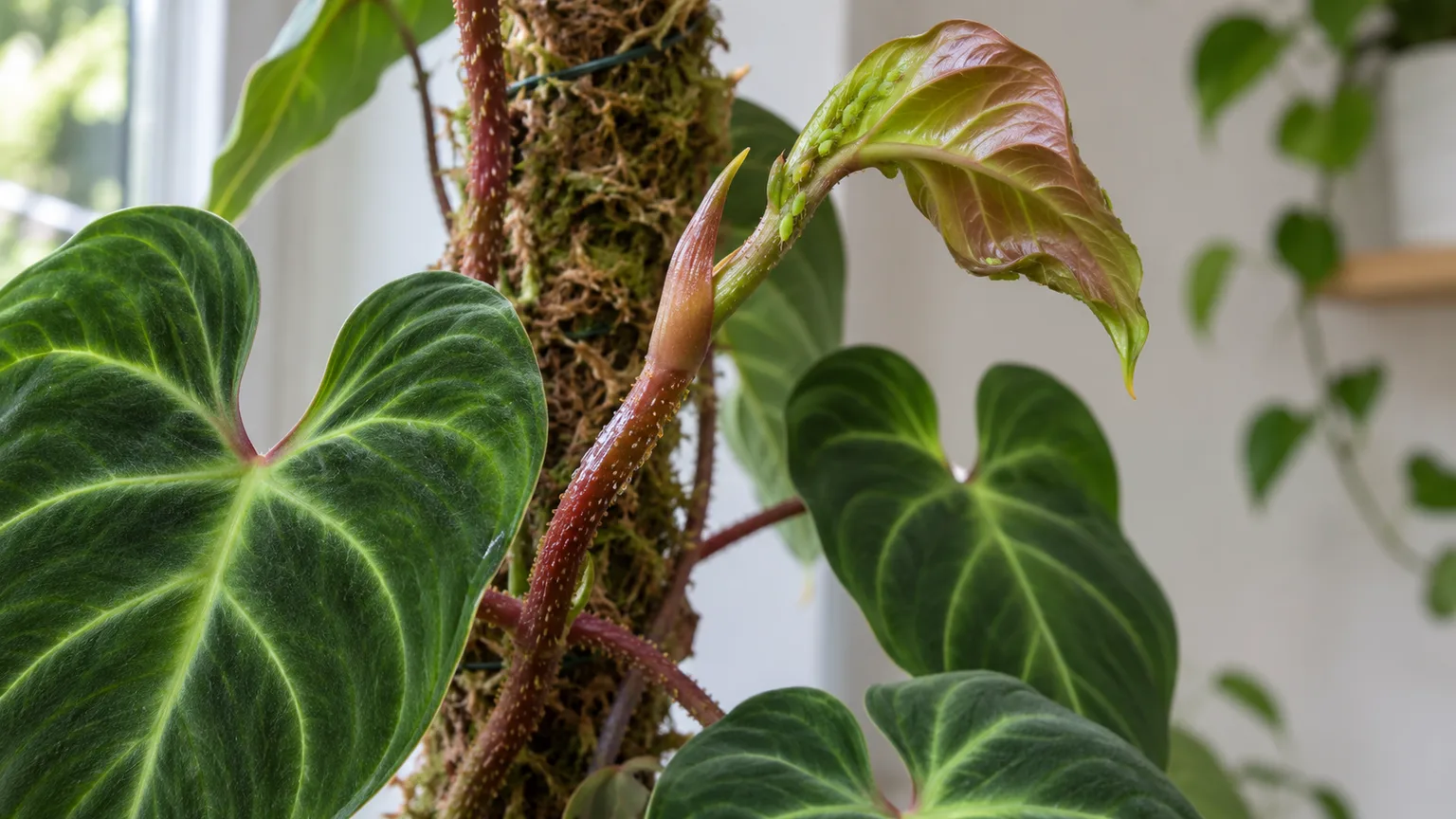
Aphids on Philodendron Verrucosum: Causes, Checks & Fixes
This guide covers aphids on Philodendron Verrucosum. See also the general Aphids guide, watering, and light pages for this plant.
Aphids on Philodendron Verrucosum: Causes, Checks & Fixes
Quick answer
Aphids on Philodendron Verrucosum gather where the plant is softest: the growth tip, unfurling leaves, flower-free shoot tips, and the undersides of the youngest velvet leaves. Leaves emerge curled or puckered, growth stalls, and you may feel sticky honeydew on leaves or the shelf below. First, isolate the plant and rinse the entire top growth thoroughly with a firm stream of lukewarm water, aiming under every young leaf. Only after rinsing should you confirm live aphids remain and treat with insecticidal soap — one step at a time, so you can see what worked.
For the general mechanics of aphid feeding and honeydew that apply to all plants, see our aphid guide. On Verrucosum, the pattern usually shows up first on velvet new growth, not old established leaves.
What aphids look like on Philodendron Verrucosum
On this plant, aphids are small (roughly 1–7 mm) soft-bodied, pear-shaped insects that form visible clusters rather than scattering singly; the RHS notes this 1–7 mm size range and that many species colonise shoot tips and the undersides of younger leaves, which is exactly where Verrucosum shows them first. Colonies favour the growth tip, the still-furled spear leaf, the underside of the newest opened heart leaf, and the junction where the warty red petiole meets the blade. Colours vary — green, black, yellowish, or pinkish — so identify by shape and clustering, not colour alone.
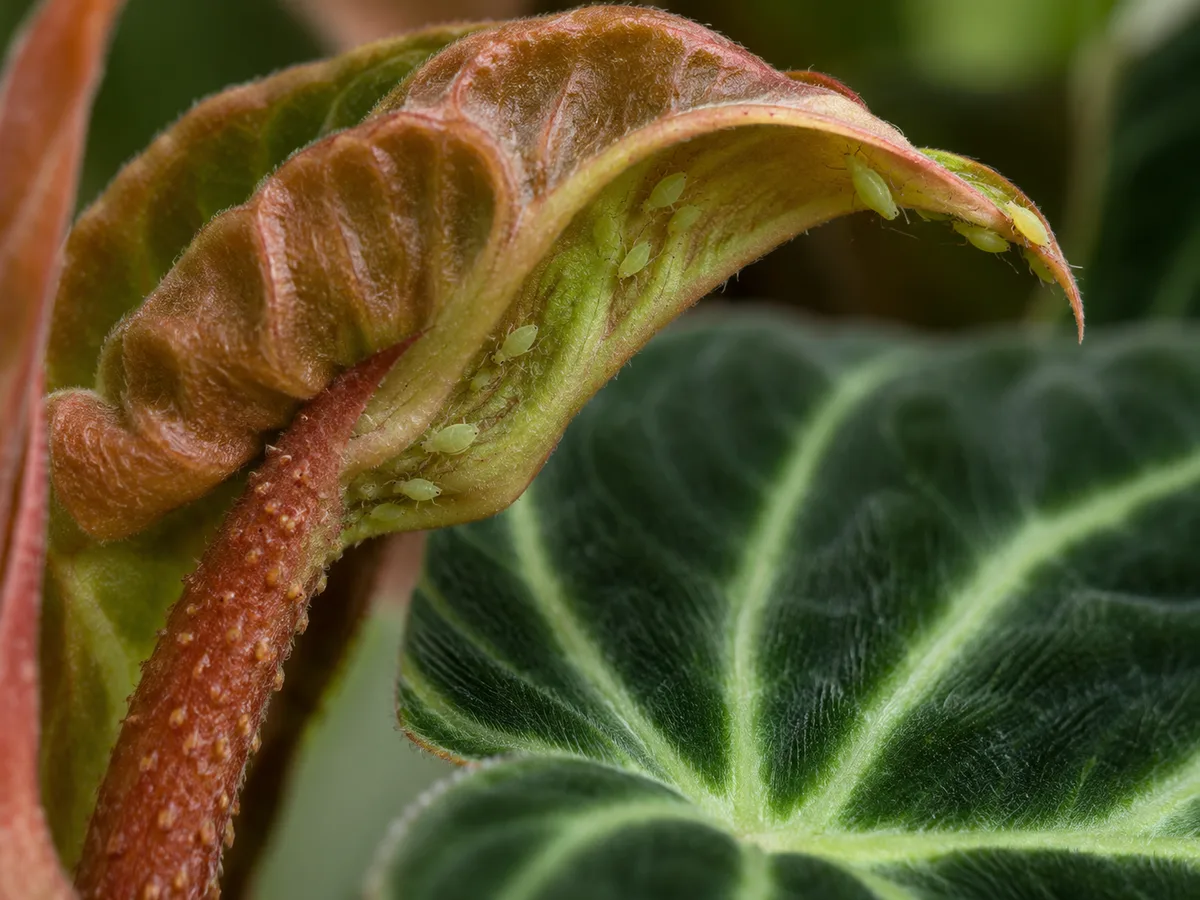
Aphids cluster on the softest growth: check the furled leaf and young-leaf undersides for pear-shaped insects.
The velvet leaf surface changes what you notice. Honeydew lands on the leaf below the colony and on the red petioles, and black sooty moulds then grow on that honeydew, dulling the velvet sheen in patches that do not wipe fully clean. You may also find tiny white cast skins shed on upper leaf surfaces, another sign the RHS lists for aphid infestations. Because Verrucosum unfurls leaves from cataphylls, a colony tucked inside a furled leaf can distort the blade before you ever see the insects — a leaf that opens rippled and undersized with no visible pest may have hosted aphids days earlier.
Why Verrucosum attracts aphids
Aphids feed on phloem sap and prefer the most tender, nitrogen-rich tissue, and Verrucosum produces exactly that in flushes: soft unfurling spears and fresh heart leaves during warm, humid, actively growing spells. A plant pushing rapid new growth under bright indirect light after a heavy feed is at peak susceptibility, because each new spear is a fresh feeding site. This matches the well-documented pattern that aphids favour fresh new growth and buds on houseplants.
Two Verrucosum-specific habits raise the odds. First, the moss pole stays damp and textured, giving crawlers a humid bridge between leaves and a hiding place at leaf-node contact points — check where aerial roots and petioles press against the pole. Second, growers who mist velvet leaves to raise humidity create constantly moist crevices around the growth tip where colonies establish undisturbed; a humidifier serving the whole spot is better for the plant and less inviting (see the humidity and watering balance for this species). Overfeeding with nitrogen-heavy fertilizer makes it worse: the Missouri Botanical Garden advises limiting excess nitrogen because it speeds aphid reproduction, and soft overfed Verrucosum spears prove the point indoors.
New plants are the usual entry route. Verrucosum often arrives from humid greenhouse cabinets where aphids reproduce year-round, and a colony hidden in one furled leaf can seed a whole collection within weeks.
How to confirm the cause
Work in this order, with a 10x magnifier or phone macro lens:
- Growth tip and newest spear. Peer into the furled leaf and around the cataphyll. Live aphids cluster shoulder-to-shoulder; look for pear shapes with legs and antennae, plus clearly visible winged adults when the colony is mature.
- Undersides of the two youngest open leaves. Turn each leaf gently — velvet blades crease if bent hard. Colonies line the midrib and veins on the underside.
- Honeydew test. Run a finger along the upper surface of a leaf below the tip and along red petioles. Fresh honeydew feels tacky, and you may notice stickiness on surfaces around the plant before spotting the insects.
- Cast skins and sooty mould. White flaky skins on upper leaves and patchy black film confirm sap-suckers have been feeding above that spot.
- Ant activity. Ants climbing the pot or pole to tend aphids confirm an established, honeydew-producing colony rather than a stray insect.
- Neighbour check. Inspect adjacent aroids the same day; winged indoor aphids colonise the next softest plant fast.
If you find stippled silvering with fine webbing on undersides instead, that is spider-mite territory, not aphids. Cottony white tufts in axils point to mealybugs. Blackened leaf edges with no insects and humidity below 50% point back to dry air — cross-check your light and placement and watering rhythm before treating anything.
The first fix to try
Isolate the plant and rinse the whole top growth thoroughly. That is the entire first fix — not rinse plus soap plus neem plus repot on the same day.
Move the Verrucosum away from other plants, ideally to a shower or sink. Run a firm stream of lukewarm water over the growth tip, into the unfurling spear (open it gently with fingertips), under every young leaf, along each red petiole, and down the moss pole surface. Support each velvet blade from below as you rinse so petioles do not snap. Let the pot drain fully; empty the saucer so the chunky mix is not left sitting wet (Verrucosum roots punish that — see the watering guide).
Wait 2–3 days, then re-inspect with the magnifier. Rinsing alone clears light infestations and buys clean observation time. If no live aphids remain and new growth looks normal, you are done except for weekly checks. If live clusters persist, move to the next step.
Step-by-step recovery
- Spot-treat survivors by hand. Dab remaining clusters with a cotton swab dipped in plain water or crush them gently between gloved fingers. On velvet leaves, dab rather than scrub to protect the pubescent surface.
- Apply insecticidal soap once, correctly. If colonies persist after rinsing and hand removal, use a ready-made insecticidal soap labelled for houseplants and follow the label exactly, coating colony sites including leaf undersides. Insecticidal soap is formulated to kill soft-bodied insects without harming plants when label directions are followed, and reapplication every few days until control is achieved is the standard indoor rhythm. Test one leaf first; velvet foliage can spot with any spray, so mist lightly and keep the plant out of direct sun until dry.
- Reserve neem oil for stubborn cases. If two soap rounds plus rinsing still leave live aphids, a labelled neem oil spray for indoor plants is the next rung — not a day-one add-on. Neem oil suits persistent indoor aphid infestations but needs patience and repeat applications.
- Prune only the worst tip if it is hopeless. A growth tip encased in distorted tissue and honeydew that shelters colonies through two treatments can be snipped back to the next healthy node; moderate pruning that removes infested fresh growth is a recognised aphid-pressure reducer. Never defoliate the plant — Verrucosum recovers through its tip, so keep every viable leaf.
- Hang a yellow sticky trap nearby. Yellow sticky traps catch winged adult aphids and slow spread between plants while you treat. It monitors, not cures — keep inspecting the plant itself.
Do not repot during treatment unless the mix is clearly failing (sour smell, waterlogged for days). Root disturbance plus pest stress stalls Verrucosum far longer than aphids alone; repotting guidance lives in the soil and potting guide for when the plant is stable.
Recovery timeline
With early treatment, colonies collapse within 1–2 weeks and the next spear emerges flat and clean. Judge progress by new growth, not old damage: distorted blades will not un-curl, and sooty film on velvet rarely restores its original sheen — those leaves are history, and that is fine. What matters is that each newer leaf opens larger, flatter, and stick-free.
If new spears keep emerging stunted after three weeks of correct treatment, re-check for hidden colonies inside furled leaves and on the pole, and confirm the plant is actually growing (warmth, appropriate light, and a sensible feeding pause while stressed). A Verrucosum that is cold or light-starved cannot outgrow pest damage; fix the environment alongside the insects.
Mistakes to avoid
- Spraying before rinsing. Coating honeydew and cast skins with soap without removing them first wastes product and risks leaf spotting on velvet.
- Stacking soap, neem, and repotting in one weekend. You will not know what worked, and the combined stress can stall the growth tip for a month. Sequential single steps win.
- Feeding a stressed plant. Fertilizer pushes the soft growth aphids love and cannot help leaves already distorted; hold feed until clean new growth holds for two weeks.
- Misting velvet leaves to “wash” pests. Misting spots the pubescent surface and barely dislodges aphids; a directed rinse does the real work.
- Pruning every affected leaf. Verrucosum needs its leaf area to fund recovery. Remove only hopeless tips, and shape later with the pruning guide once growth resumes.
How to prevent it next time
Quarantine every new plant — especially greenhouse-grown aroids — for 2–3 weeks in a separate spot and inspect new growth twice in that window; indoor aphids stay active all year in warm homes. Make weekly underside checks part of watering day: tip, newest spear, petiole junctions, pole contact points. Feed modestly during active growth rather than pushing flush after flush of soft tissue, since excess nitrogen accelerates aphid buildup. Keep steady warmth with gentle airflow around the leaves so the growth tip dries between humid spells, and refresh or rinse the moss pole surface occasionally — it is part of the plant’s habitat, so treat it as inspection territory. General indoor-pest hygiene such as isolating newcomers and checking buds and shoot tips regularly is also the core advice UMN Extension gives for houseplant insects.
When to use this page vs other Verrucosum guides
This page covers sap-sucking aphid colonies on soft new growth. If your plant shows cottony white clusters in leaf axils instead, that is a mealybug problem; fine webbing with stippled undersides means spider mites; tiny black flies over the mix with no leaf colonies means fungus gnats. Curling without any insects, honeydew, or skins belongs with environmental causes — re-check water, humidity, and light first. The Verrucosum overview maps the full problem list when you are unsure which guide fits.
Related tool
Use the Pest Identifier Tool to narrow causes for aphids on this plant before changing multiple variables at once.