Low Humidity on Philodendron Verrucosum: Causes, Checks &
Quick answer
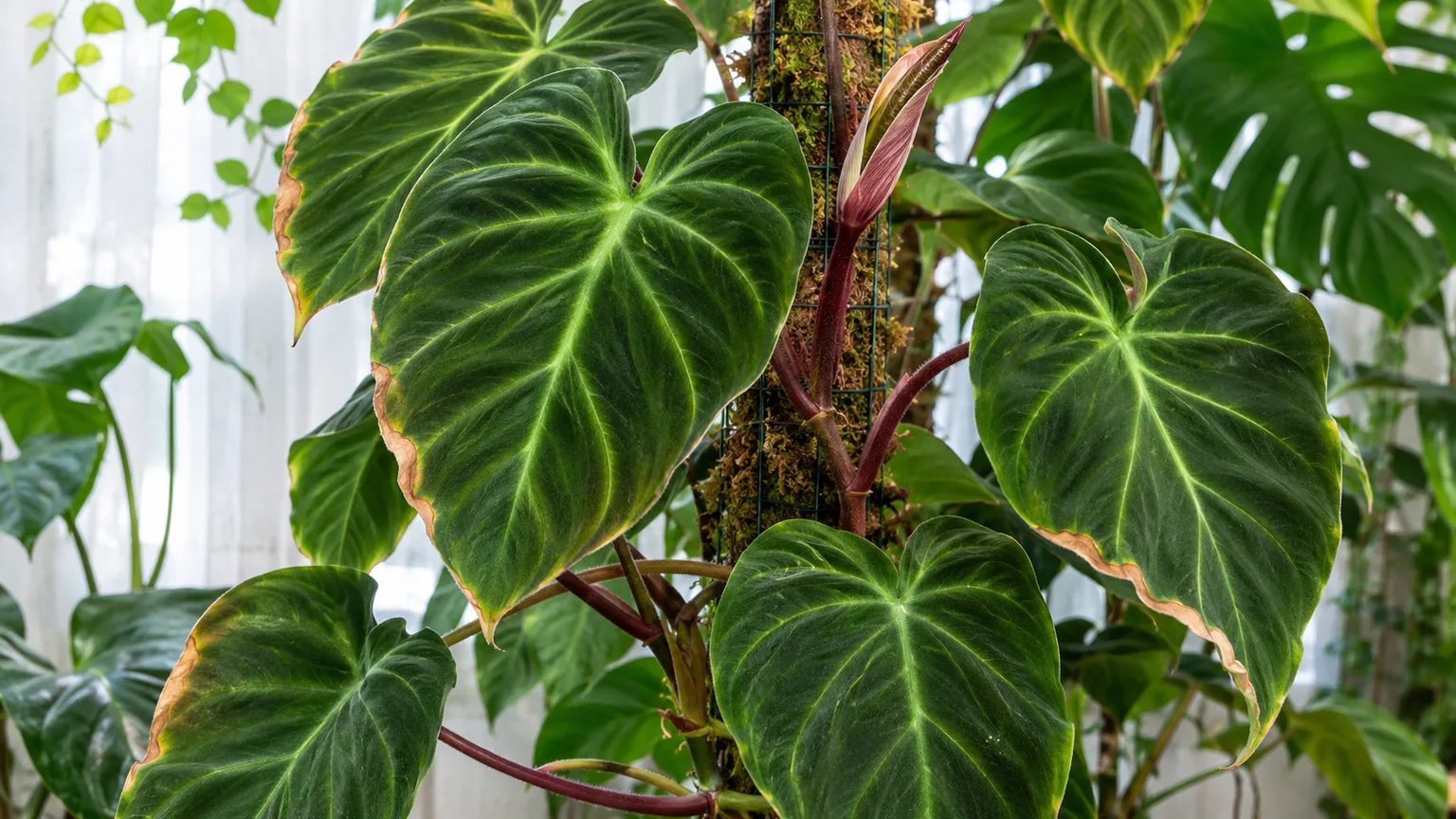
Low humidity shows on Philodendron Verrucosum as crispy brown leaf edges, a dull or cracked velvet surface, and new leaves that stick in their sheaths. First step: move the plant out of dry airflow and run a humidifier to hold air above 60% for one week before changing anything else.
Low Humidity on Philodendron Verrucosum: Causes, Checks & Fixes
This guide covers low humidity on Philodendron Verrucosum. See also the general Low Humidity guide, watering, and light pages for this plant.
Low Humidity on Philodendron Verrucosum: Causes, Checks & Fixes
Quick answer
Low humidity is one of the most common reasons a Philodendron Verrucosum looks rough indoors. This Ecuadorian cloud-forest climber grows soft velvet leaves built for near-constant moist air, and a typical heated home sits far drier than it tolerates. The signature pattern is papery brown edges and tips, a dull or cracked velvet surface, and new leaves that stall inside their sheaths or open already browned at the margins.
For how dry air stresses houseplants in general, see our low humidity guide. On verrucosum, read the air first: a hygrometer at leaf level and the plant’s distance from heat sources tell you more than the watering can.
First step: move the plant out of dry airflow and hold humidity above 60% for one week. Shift it away from radiators, vents, and air-conditioner drafts, run a humidifier nearby, and change nothing else until you see whether the decline stops.
Why Philodendron Verrucosum suffers in dry air
Verrucosum evolved as a climbing hemiepiphyte in humid Central and South American cloud forest, where its velvet leaf surface stays hydrated by near-constant ambient moisture. Thin pubescent blades lose water through transpiration faster than thick glossy philodendron leaves — and when air humidity is low, plants transpire quickly and risk wilting faster than their roots can resupply them. The farthest tissue from the veins — edges and tips — desiccates first.
The numbers explain why ordinary homes fail this plant. Experienced growers advise keeping verrucosum above 60% humidity for vigorous growth, and 60–80% is the working target for clean unfurling and strong velvet texture. Winter makes it worse: a heating system blowing hot air around the home can drag room humidity into the 30–40% range, exactly when the plant is already growing slowly and cannot outgrow the damage.
What low humidity looks like on verrucosum
Dry air writes a consistent signature on this species. Low humidity can cause browned edges and cracked leaves, and new leaves may struggle to unfurl properly and emerge distorted or already browned at the margins. Watch for this combination:
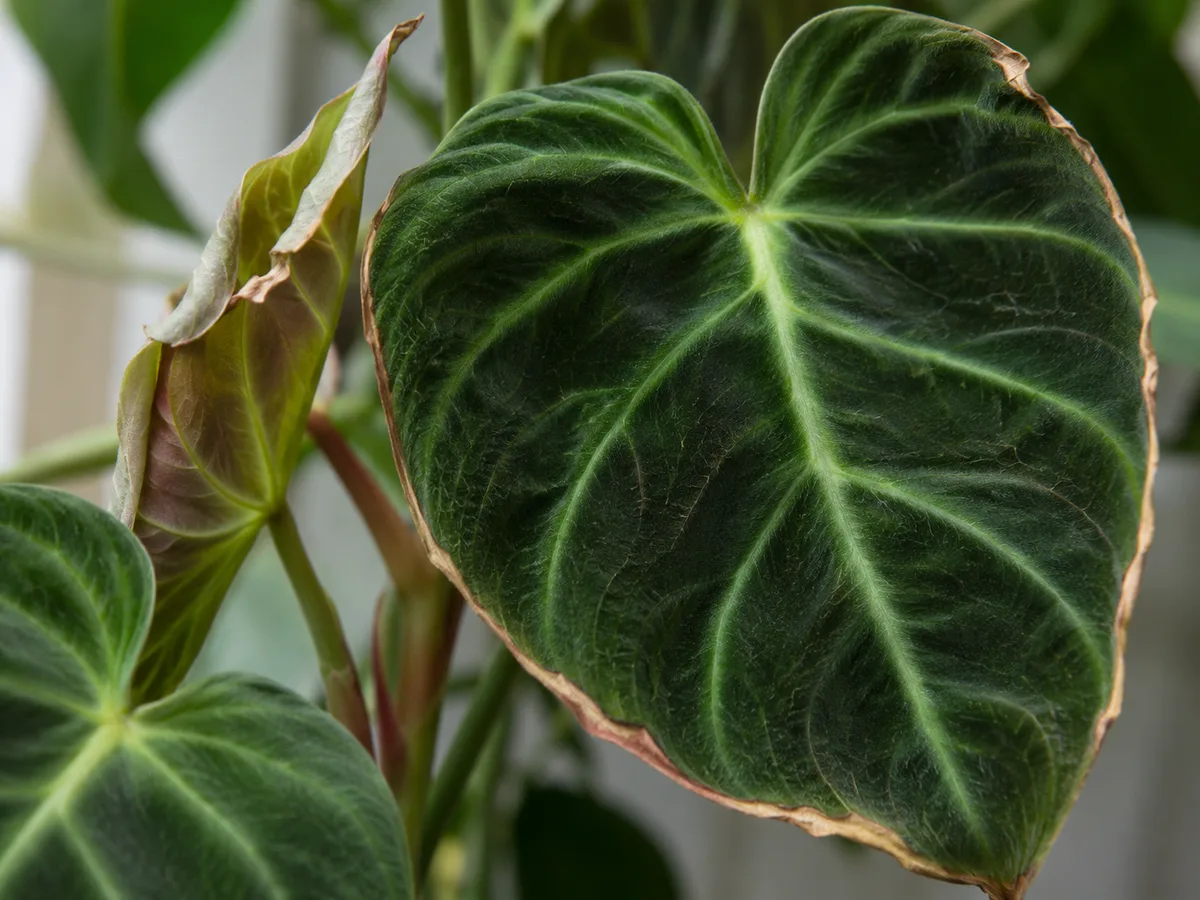
Low humidity dries the thin leaf edges first, leaving tan papery margins while the rest of the leaf remains green.
- Tan, papery edges and tips on otherwise healthy leaves
- A dull, rough, or finely cracked velvet surface instead of soft sheen
- New leaves stuck inside their cataphyll sheaths, tearing as they force their way out
- Smaller new leaves with shorter petioles than the previous ones
- Drooping foliage even though the mix is appropriately moist
Whole leaves yellowing from the base upward point at watering or root trouble instead, and bleached patches facing a window mean direct sun. Dry-air damage stays at the margins and the unfurling tip.
How to confirm the cause
Work through these checks in order before changing anything.
Humidity and airflow check
Put a cheap hygrometer at leaf level for a day — an inexpensive hygrometer measuring relative humidity settles the question fast. Readings below 50% with crispy edges point firmly at dry air; 60–80% with the same symptoms sends you to the soil and feeding history instead. Note the plant’s position: within a few feet of a heater, radiator, fireplace, or air-conditioner draft counts as dry airflow even if the room average reads moderate.
Soil moisture check
Push a finger 3–5 cm into the chunky aroid mix and water only when the potting mixture feels dry to the touch. A plant sitting in dry air also drinks faster — a warm, dry location needs more frequent watering than a cool, humid one — so dry air plus a missed watering compounds into dramatic crisping. If the pot is heavy and wet many days after watering, though, the problem wears a humidity disguise over a root-zone problem; review the Philodendron Verrucosum watering guide before blaming the air.
Light and temperature check
Confirm bright indirect placement per the Philodendron Verrucosum light guide — direct sun through glass scorches velvet into bleached patches and compounds dry-air damage. Keep the plant above 15°C (59°F) and away from cold drafts; cold injury collapses whole leaf sections into soft dark tissue rather than papery edges.
Confirmed dry-air stress: crispy tan margins, firm red warty petioles, an active growth tip, stuck or slow unfurling, hygrometer readings under 50–60%, and a clear trigger such as heating season, a nearby vent, or a move to a drier room.
First fix for Philodendron Verrucosum
Run a humidifier next to the plant and keep it out of dry airflow for one week. Move it away from every heat source and draft, set the humidifier to hold the air around the leaves above 60%, and change nothing else. A pot set on a tray of pebbles and water adds a useful buffer if you have no humidifier yet. Do not mist the velvet leaves, do not repot, and do not fertilize — you are testing one variable so the next new leaf can tell you whether dry air was the cause.
Step-by-step recovery
After the humidifier-first week, continue in this order:
- Lock in the humidity target — Verrucosum likes over 70% humidity with cooler stable temperatures, so keep the humidifier running near the plant rather than treating it as a one-week rescue. Grouping plants together and a pebble tray underneath both lift the microclimate around the leaves.
- Stabilize watering — Water thoroughly when the top 3–5 cm dries, until water flows freely from the drainage holes, then empty the saucer. Steady moisture keeps the roots supplying the leaves while the air heals around them.
- Humidify the air, never the leaves — Misting is generally not advised for large velvet leaves: droplets sit on the pubescent surface, spot the foliage, and do almost nothing for ambient moisture. A humidifier beats misting every time on this species.
- Moisten the moss pole — Keep aerial roots facing a damp moss pole per the Philodendron Verrucosum soil and potting guide. A climbing plant with gripped, hydrated roots drinks more steadily, which smooths the wet-dry swings that show at the margins.
- Consider a cabinet or terrarium for chronic cases — If your home cannot hold 60% through winter, an enclosed cabinet or terrarium does it effortlessly. This is normal long-term housing for verrucosum, not a failure.
Recovery timeline
One to two weeks after the fix, existing browning should stop advancing — the tan edge stays the same size instead of creeping inward, and foliage feels less brittle. Three to five weeks later, the next new leaf should unfurl cleanly with intact velvet margins; that leaf is your success marker, since dead tissue never revives and trimming only tidies appearance.
Worsening signs: browning that spreads from edges into whole blades within days, new leaves emerging brown, soft or mushy stems, or a sour-smelling root zone. Those mean the problem was never just dry air — inspect roots and review watering depth and drainage immediately.
Lookalike symptoms
| Pattern | More likely | Next step |
|---|---|---|
| Papery edges, stuck unfurling, dry room air | Low humidity (this page) | Humidifier plus airflow fix |
| Crisp edges plus wilt between waterings, light pot | Underwatering swings | Deep soak rhythm, watering only when the top 3–5 cm dries |
| Yellow lower leaves, heavy wet mix, soft stems | Overwatering or root stress | Drainage and root inspection first |
| Brown edges right after feeding, white crust on mix | Fertilizer or hard-water salts | Leach pot, pause feeding, review the fertilizer guide |
| Bleached patches facing a window, not just edges | Direct-sun scorch | Move to bright indirect light |
| Soft dark collapse after a cold night | Cold damage | Warmth and draft protection, not humidity tweaks |
| Stippled undersides with fine webbing | Spider mites | Leaf-underside inspection before any spray |
What not to do
Do not mist velvet verrucosum leaves to fix dry air — it marks the foliage and invites leaf-spot trouble without lifting ambient moisture. Do not fertilize a stressed plant to strengthen it; unused salts burn margins further. Do not repot on day one unless the mix is waterlogged or sour — repotting adds root stress on top of margin stress. Do not set the pot directly in a pebble tray’s water; the pot must sit above the waterline or the roots suffocate. Do not tear stuck new leaves free by hand — raise humidity and let them release on their own. And do not stack a humidifier, repot, heavy prune, and fertilizer dose in the same weekend; you will never learn which one worked.
How to prevent it next time
- Hold 60–80% humidity with a humidifier, especially through heated winter months.
- Keep a hygrometer at leaf level so seasonal drops show up before the leaves do.
- Water by feel, not calendar — top 3–5 cm dry, then a full soak with free drainage.
- Keep the plant out of vent blasts, off radiators, and away from air-conditioner drafts.
- Maintain a moist moss pole so the climbing vine roots steadily and drinks evenly.
- Keep bright indirect light and steady 18–27°C warmth; avoid direct sun and cold drafts.
When to worry
Escalate beyond humidity care when stems soften near the base, the mix smells sour, browning consumes whole leaves in days, every new leaf fails, or pests show on leaf undersides. A firm plant with an active tip and damage confined to edges is a stable patient — fix the air and the watering rhythm, and let the next leaf confirm it. See the Philodendron Verrucosum overview for baseline care to measure against.
Conclusion
Low humidity on Philodendron Verrucosum is usually a mismatch between a cloud-forest climber and dry room air — with watering swings as the frequent accomplice. Lift the humidity first with a humidifier, verify the soil rhythm, keep moisture off the velvet leaves and in the air where it belongs, and trim only dead tissue. The next cleanly unfurled leaf is the verdict that matters.
Related Philodendron Verrucosum guides
- Philodendron Verrucosum overview — baseline care to measure this problem against.
- Philodendron Verrucosum watering — use when soil moisture swings or heavy pots share the blame with dry air.
- Philodendron Verrucosum light — use when bleaching or window-facing damage suggests scorch on top of dry air.
- Philodendron Verrucosum soil — use when dense mix or poor drainage keeps roots too wet to supply the leaves.
- Philodendron Verrucosum fertilizer — use when crusty mix or a recent heavy feed points at salts alongside dry air.
Related tool
Use the Humidity Calculator to narrow causes for low humidity on this plant before changing multiple variables at once.