Caterpillars on Heartleaf Philodendron: Causes, Checks &
Quick answer
Caterpillars on Heartleaf Philodendron chew irregular holes through glossy heart-shaped leaves and leave dark pellet-like frass, usually after patio time, nursery hitchhikers, or moth eggs near open windows. First step: isolate the plant and inspect at night with a flashlight, then hand-pick every larva before treating foliage.
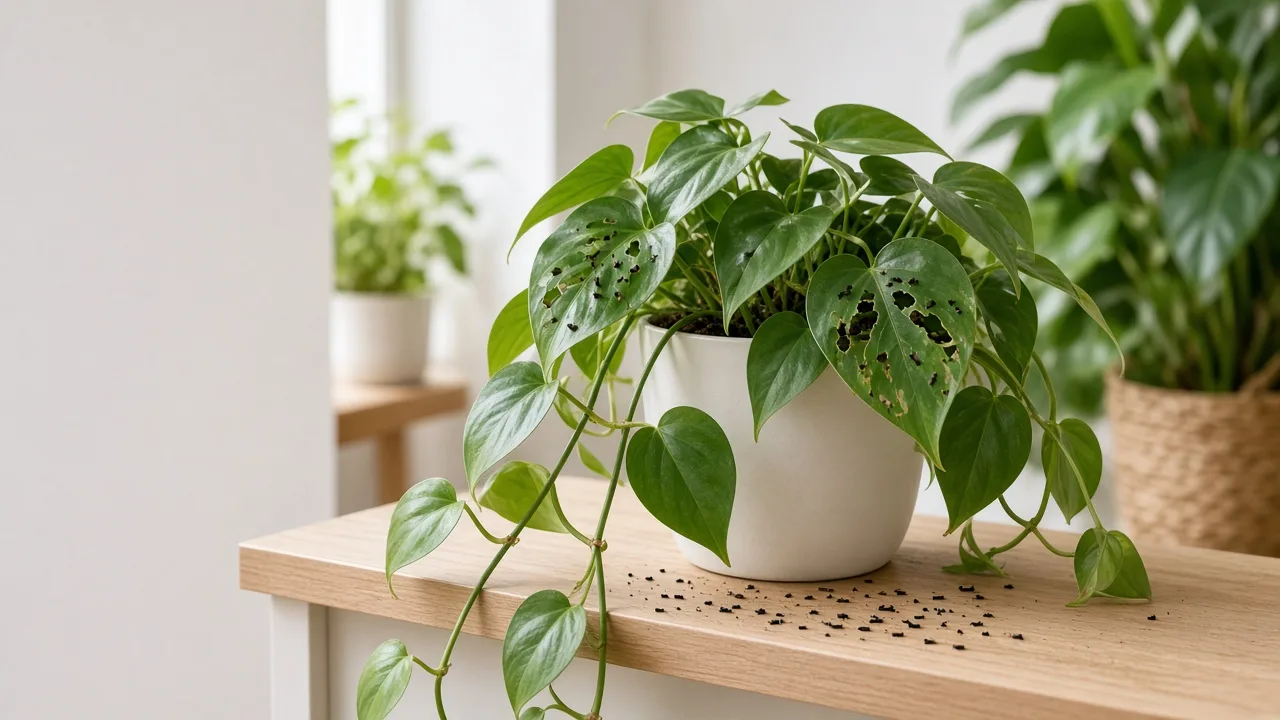
Caterpillars on Heartleaf Philodendron: Causes, Checks & Fixes
This guide covers caterpillars on Heartleaf Philodendron. See also the general Caterpillars guide, watering, and light pages for this plant.
Caterpillars on Heartleaf Philodendron: Causes, Checks & Fixes
Quick answer
Caterpillars on Heartleaf Philodendron (Philodendron hederaceum) chew ragged holes through glossy heart-shaped leaves along trailing vines and leave dark pellet-like frass on foliage or the shelf below. Indoor cases are uncommon compared with aphids, spider mites, mealybugs, and scale on this species, and usually trace to hitchhiking larvae after patio season, nursery stock, open windows, or moth eggs in potting media.
For general caterpillar biology and control options, see our caterpillars guide. On Heartleaf Philodendron, larvae often concentrate on soft unfurling tips still wrapped in stipules and in the tight axils where smooth non-grooved petioles meet the stem—places a quick glance during a watering check never sees on a hanging basket.
First step: isolate the philodendron and inspect at night with a flashlight, then hand-pick every caterpillar into soapy water before treating foliage.
When to use this page vs other Heartleaf Philodendron guides
| Pattern | Read next |
|---|---|
| Ragged holes with frass pellets and visible larvae | This page |
| Clean one-time tear, no frass, no spread | Holes in leaves (mechanical) |
| Pale winding tunnels inside the blade | Leaf miners |
| Silvery streaks and black specks, no through-holes | Thrips |
| Fine stippling and webbing on leaf undersides | Spider mites |
| White cottony clusters in leaf axils | Mealybugs |
| Torn tissue at pet height on accessible lower vines | Pet chewing — relocate plant; philodendron is toxic to cats and dogs |
What caterpillars look like on Heartleaf Philodendron
Caterpillar damage is easy to miss on a trailing philodendron because larvae feed at night and hide along stems and leaf backs during the day. On P. hederaceum, the symptom signature is ragged holes chewed through glossy heart-shaped blades—not the bordered internal tunnels of leaf miners or the stippling of sap feeders.
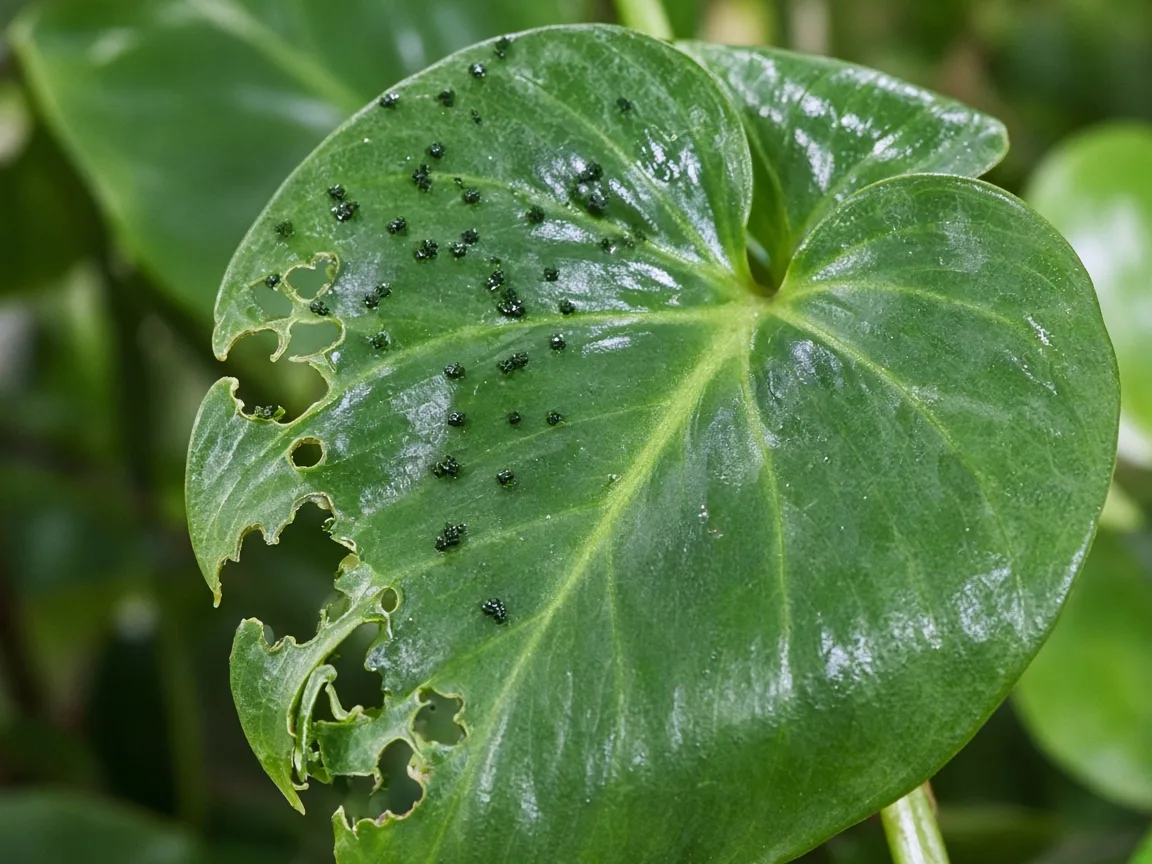
Irregular chew marks and dark pellet-like frass on a heart-shaped philodendron leaf—compare with intact tissue on the same vine.
Chewed holes and ragged margins:
- Irregular holes punched through glossy heart-shaped leaves on cascading stems—edges look torn inward, not cleanly snapped
- Ragged notches on soft unfurling tips before the new leaf fully opens
- Dark pellet-like frass on leaf surfaces, trailing petioles, pot rims, or the shelf below hanging vines
Larva signs (when you can see them):
- Green, brown, or patterned caterpillars tucked inside partly rolled new leaves, along smooth petiole joints, or on leaf undersides
- Visible chewing on the highest vine tip before damage spreads down long trailing stems
- Unlike leaf miners, damage goes through the leaf—not inside a bordered tunnel visible when backlit
Growth impact on philodendron:
- Stalled or shredded unfurling tips when feeding is heavy on the active vine end
- Stripped soft tissue on new growth while older heart-shaped blades lower on the vine look untouched until larvae move down
Unlike spider mites, caterpillars do not produce stippling or webbing. Unlike thrips, no silvery scrape marks appear—only open chewing wounds and frass.
Why Heartleaf Philodendron gets caterpillars
Caterpillars are far less common indoors than sap-sucking pests like spider mites or fungus gnats. NC State lists aphids, mealybugs, and scale as the usual insect issues on P. hederaceum, not caterpillars—so when chew damage appears, suspect a recent introduction rather than chronic indoor pressure.
Outdoor patio hitchhikers. Philodendron summered outdoors or near open windows can pick up moth or butterfly eggs on leaf undersides. Pests arrive on nursery stock and outdoor plants and continue feeding indoors where predators are absent.
Soft unfurling tips with stipules. Heartleaf Philodendron pushes new glossy leaves from vine tips wrapped in conspicuous stipules on new growth. Caterpillars prefer soft, expanding tissue—one larva can shred an unfurling blade before you notice holes on mature lower foliage.
Trailing basket blind spots. Long cascading vines hide leaf undersides from room-level sight lines. Larvae tuck into the groove where each smooth non-grooved petiole meets the stem—a detail that distinguishes philodendron from grooved-petiole pothos when you are hunting pests.
Spring growth flushes. Fast summer growth on a plant in bright indirect light produces tender new heart-shaped leaves where generalist moth larvae concentrate. Damage can appear suddenly across several new leaves during active trailing growth.
Eggs in potting media. Ask Extension notes that caterpillar eggs can be present in soil or potting media used to pot the plant—hand-picking visible larvae may not finish the job if unhatched eggs remain near the soil line.
Stipule-covered new growth: where philodendron hides caterpillars
This is the Heartleaf Philodendron inspection pattern generic caterpillar pages miss. Before you spray anything, work the vine tip where philodendron biology creates perfect larval shelter:
- Find the active tip — Follow the longest trailing stem to the end where the newest leaf is still partly rolled and stipules cling to the petiole.
- Gently peel the stipule sheath — Do not yank; unfold the soft leaf enough to see inside the cylinder. Caterpillars often feed here without touching mature blades below.
- Scan smooth petiole axils — Unlike pothos, philodendron petioles are entire and not grooved. Larvae wedge into the tight joint where petiole meets stem on every node down the vine.
- Lift hanging strands — On basket plants, rotate the pot and inspect undersides of heart-shaped leaves that face the wall or ceiling.
- Night pass — Repeat with a flashlight after dark when many caterpillars feed more openly.
If you find a live larva plus frass on philodendron foliage, caterpillars are confirmed. Yellowing lower leaves without holes or frass points to overwatering or low light—not caterpillars.
How to confirm the cause
Work through these checks before reaching for sprays:
- Follow fresh damage — New holes appearing over two to three days point to active chewing, not old physical tears.
- Hunt frass — Look for dark pellet droppings on leaves and surfaces below the plant. Frass plus holes strongly confirms caterpillars.
- Inspect at good light — Lift trailing stems and check leaf undersides, nodes, and partly opened new leaves where larvae hide.
- Shake test — Hold white paper under a vine and tap the stem. Caterpillars drop as slow-moving worms; thrips jump quickly.
- Night check — A quick look with a phone flashlight can reveal larvae you missed by day.
- Recent history — Note outdoor time, new purchases, open windows, or winter bring-ins in the past month.
- Rule out pets — Cat or dog chew marks are usually clean tears on accessible lower vines without frass pellets. Philodendron is toxic to cats and dogs if ingested, so investigate pet access if tears appear at nose height.
First fix for Heartleaf Philodendron
Move the philodendron away from other plants, then handpick every caterpillar into a cup of soapy water.
Wear gloves when handling heavily chewed philodendron—sap contains calcium oxalate crystals that irritate skin, and the plant is toxic to cats and dogs if chewed. Check every leaf axil along trailing vines and inside partly unfurled stipule-covered tips; caterpillars tuck into the groove where smooth petioles meet the stem.
After handpicking, shake the plant over white paper to dislodge any larvae you missed. Wipe frass off leaves with a damp cloth so you can spot new pellets if feeding continues.
This single step solves most indoor philodendron cases because populations rarely exceed a few individuals. Do not reach for broad-spectrum sprays before confirming larvae are still present—you may be treating one caterpillar that hand removal already resolved.
Do not fertilize a pest-hit philodendron hoping to push replacement growth. Tender new shoots attract the next generation faster. Do not compost chewed leaves indoors where unhatched eggs might survive.
Step-by-step recovery
After the initial handpick:
- Re-inspect daily for three to five days — Caterpillars grow quickly and one missed egg can hatch into a new feeder within days.
- Apply Bacillus thuringiensis kurstaki (Bt) if larvae persist or you find multiple worms. B.t.k. targets moth and butterfly larvae when they eat treated foliage. Coat leaf tops and undersides thoroughly. Repeat per label intervals—Bt is not absorbed into leaves, so multiple applications may be needed until larvae stop feeding.
- Prune badly shredded tips only after insects are gone. Cut back to healthy tissue above a node; philodendron branches from the joint per your normal pruning approach.
- Repot if you suspect eggs in soil — Remove old potting media, rinse roots gently, and repot in fresh mix matched to philodendron soil needs. Seal discarded soil in a bag and discard it outdoors.
- Hold isolation until you see no new holes or frass for at least two weeks.
For a severely stripped small starter plant, taking one clean cutting from an unaffected node and rooting it may be faster than fighting entrenched larvae—see propagation guidance once the parent vine is pest-free.
Recovery timeline
Hand removal shows results within a day when you catch larvae early. A Bt treatment course typically takes one to two weeks with label-interval repeats. Chewed leaves remain torn permanently; judge recovery by clean new heart-shaped foliage emerging from vine tips, not by old damaged blades.
Philodendron in bright indirect light with consistent watering rhythm often outpaces light caterpillar damage once insects are gone. New leaves unfurling within one to three weeks signal success.
Variegated cultivars: why Brasil shows damage first
On variegated Heartleaf Philodendron like ‘Brasil’, ‘Cream Splash’, or ‘Lemon Lime’, caterpillar damage often appears first on pale or chartreuse leaf sections because tissue there is thinner than on solid green blades. A larva may chew through the cream stripe on one heart-shaped leaf while leaving the dark green margin intact—making the pest look selective when it is simply feeding on the softest tissue.
This pattern is philodendron-specific: pothos variegation behaves similarly, but philodendron’s distinct stipule sheaths on new growth mean larvae on variegated tips hide inside rolled leaves where the pale tissue is most exposed. Inspect variegated vines twice as carefully at the active tip.
Lookalike symptoms to rule out
Pet or child chew damage leaves clean tears on lower, accessible vines without frass pellets. Philodendron is toxic if ingested, so investigate pet access if tears appear at nose height.
Physical snags from hangers, shelf edges, or moving trailing vines create one-time holes that do not spread. No frass, no larvae, and the hole edges look torn rather than eaten.
Slugs and snails leave irregular holes plus shiny slime trails on pots and leaves—common when outdoor plants move inside, but distinct from caterpillar frass.
Fungal or bacterial spots create brown lesions that may fall out, leaving small holes with yellow halos—not ragged edge chewing.
Spider mites cause fine stippling and webbing in dry air, not large irregular holes or pellet droppings.
Mistakes to avoid
Do not assume one caterpillar means the problem is over—eggs may remain in potting media or on hidden leaves.
Do not use homemade dish soap sprays on philodendron without understanding leaf burn risk; hand removal and labeled Bt are safer first choices for caterpillars specifically.
Do not return an isolated philodendron to your collection after a single inspection. Hold quarantine until two weeks pass without new damage.
Do not ignore open windows at night during warm months—moths enter easily and lay eggs on the nearest green foliage.
Wear gloves when pruning infested philodendron and keep trailing pots out of reach of pets during treatment.
How to prevent caterpillars on Heartleaf Philodendron
- Quarantine new plants and cuttings for at least two weeks before placing them near existing philodendron.
- Rinse and inspect patio philodendron thoroughly before bringing plants indoors for winter.
- Screen windows and doors that stay open at night, especially near plant shelves and hanging baskets.
- Inspect vine tips weekly during spring and summer when moth activity peaks.
- Check nursery purchases on leaf undersides and along stems before unwrapping at home.
- Keep growing areas clean — Remove fallen leaves and debris that can harbor larvae.
Healthy philodendron in bright indirect light with consistent watering tolerates minor pest hits better than stressed plants in dim corners—but caterpillar prevention is mostly about blocking egg entry, not optimizing fertilizer.
When to worry
Escalate treatment when:
- Fresh holes appear daily despite handpicking
- Multiple larvae are visible on one plant
- Frass accumulates on several leaves and the pot rim
- New leaves stop unfurling because tips are stripped bare
- Damage reappears within days after two Bt cycles
A single caterpillar on one leaf after a patio summer is not a lost cause—prompt isolation and hand removal usually resolves it. Consider starting fresh from a clean cutting only when the entire vine is stripped, soil may harbor eggs, and repeated treatment failed.
Conclusion
Caterpillars on Heartleaf Philodendron are rare indoors but unmistakable when frass and chew holes appear along trailing vines. Isolate, handpick every larva, and re-inspect stipule-covered new growth daily before reaching for sprays. Philodendron recovers quickly from light damage once feeding stops; focus on clean new heart-shaped foliage, quarantine discipline, and blocking moths at windows and doorways to keep caterpillars from becoming a repeat problem.
Related Heartleaf Philodendron guides
- Heartleaf Philodendron overview
- Philodendron watering
- Philodendron light
- Philodendron soil
- Philodendron problems hub
- Holes in leaves on Heartleaf Philodendron
- Leaf miners on Heartleaf Philodendron
- Thrips on Heartleaf Philodendron
- Spider mites on Heartleaf Philodendron
- Mealybugs on Heartleaf Philodendron
Related tool
Use the Plant Problem Diagnosis Tool to narrow causes for caterpillars on this plant before changing multiple variables at once.