Whiteflies on Heartleaf Philodendron: Causes, Checks & Fixes
Quick answer
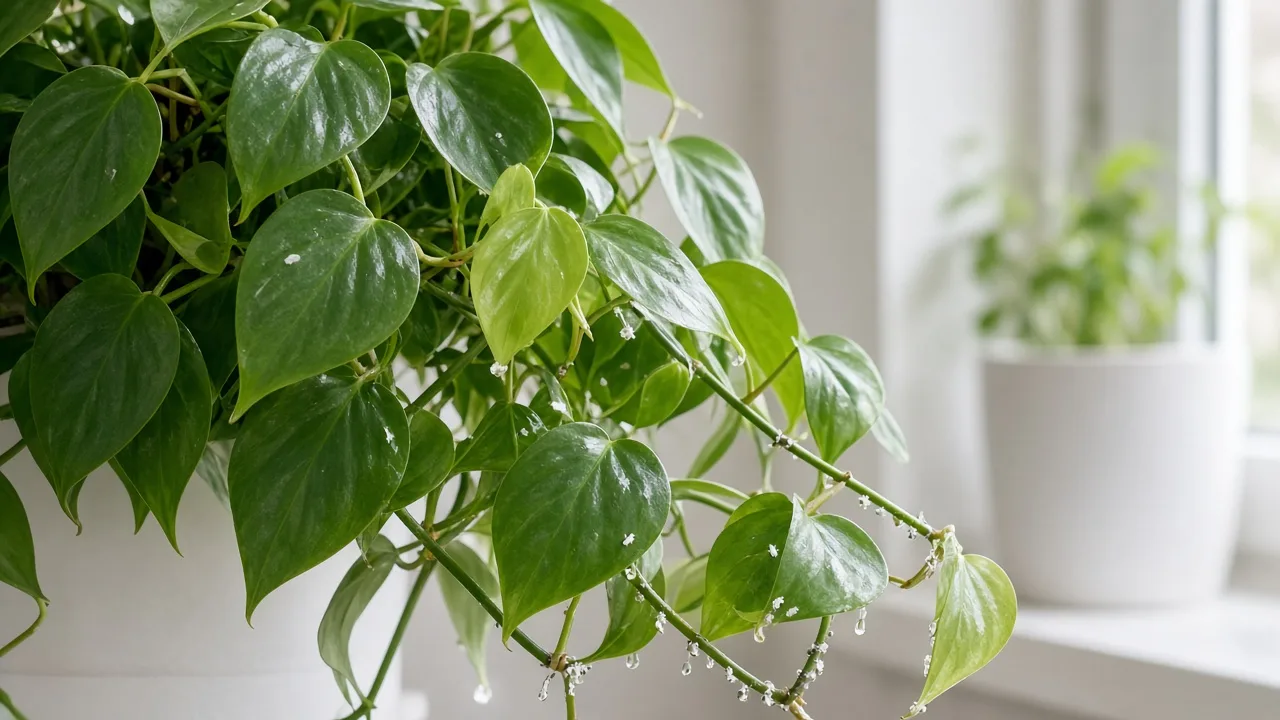
Whiteflies on heartleaf philodendron show up as tiny moth-like insects on glossy leaf undersides that flutter into a white cloud when you disturb trailing vines. First step: isolate the plant immediately and wash every leaf underside with lukewarm water to knock down nymphs.
Whiteflies on Heartleaf Philodendron: Causes, Checks & Fixes
This guide covers whiteflies on Heartleaf Philodendron. See also the general Whiteflies guide, watering, and light pages for this plant.
Whiteflies on Heartleaf Philodendron: Causes, Checks & Fixes
Quick answer
Whiteflies on heartleaf philodendron (Philodendron hederaceum) appear as tiny white, moth-like insects on the undersides of glossy heart-shaped leaves. Disturb a trailing vine and they flutter away in a white cloud before resettling-one of the clearest pest signals on a hanging aroid.
Immature nymphs look like flat disks glued to leaf undersides and do not fly. Both stages suck sap, excrete sticky honeydew, and can leave philodendron dull, yellowed, or coated in black sooty mold.
For general whitefly biology indoors, see our whiteflies hub. On heartleaf philodendron, inspect the glossy backs of leaves on the lowest hanging vine sections first-those stay shaded and rarely get wiped during quick watering.
First step: isolate the philodendron the same day you see flying white insects, then wash every leaf underside with lukewarm water.
Why heartleaf philodendron gets whiteflies
Philodendron’s trailing growth creates long runs of heart-shaped foliage whose undersides-weekly top-side glances miss-give whiteflies protected feeding sites. Warm indoor rooms let whiteflies reproduce year-round without cold breaks or natural enemies.
Common entry routes:
- New plants without quarantine
- Summer patio time picking up garden whiteflies
- Touching vines between philodendron, pothos, and monstera on shared shelves
- Over-fertilized soft new growth
- Stressed leggy vines in dim corners recovering slowly from sap loss
Iowa State Extension notes whiteflies are extremely difficult to control on houseplants once established-early isolation matters.
What whiteflies look like on heartleaf philodendron
Adults are about 1/16 inch long, white, wedge-shaped, and moth-like. Nymphs are flat pale ovals stuck to glossy undersides.
Typical signs on trailing philodendron:
- White cloud of insects when you water, mist, or move the pot
- Flat immobile specks on glossy leaf backs near nodes
- Sticky honeydew on leaves, pot rims, or shelves below
- Black sooty mold on honeydew-coated foliage
- Yellowing or stunted new heart leaves on growing tips
Unlike mealybugs, whiteflies fly when disturbed. Unlike thrips, they do not leave silvery scrape marks.
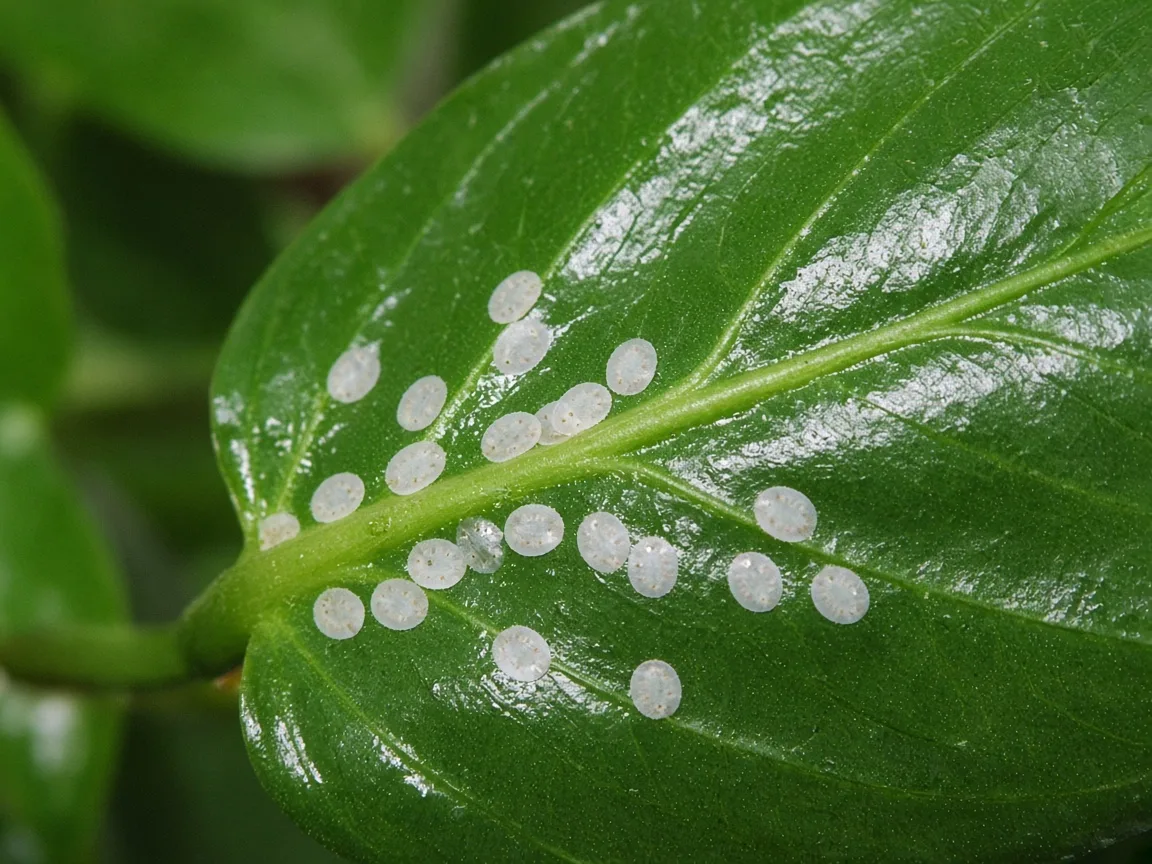
Flat pale nymph disks on a glossy leaf back—lift trailing vines and inspect the lowest sheltered layer first.
Lookalikes to rule out on heartleaf philodendron
| Sign | Likely cause |
|---|---|
| Flying white adults + flat nymphs + honeydew | Whiteflies (this page) |
| Cottony wax in axils | Mealybugs |
| Silvery streaks + frass | Thrips |
| Stippling + webbing | Spider mites |
| Uniform yellow, wet soil | Overwatering |
How to confirm the cause
- Disturbance test - Tap a vine; whiteflies fly up briefly.
- Underside inspection - Lift trailing stems; nymphs look like flat disks.
- Honeydew check - Sticky tacky residue across multiple glossy leaves supports sap feeders.
- Yellow sticky trap - Flying adults stick to yellow cards within 48 hours.
- Lifecycle timing - Eggs hatch in five to seven days; one treatment rarely clears a generation.
- Neighbor scan - Check other shelf aroids.
First fix for heartleaf philodendron
Move the philodendron away from every other plant, then wash or spray the undersides of all leaves with lukewarm water.
Iowa State Extension recommends washing leaf undersides with a moist cloth or sponge as an early step. Work systematically from soil line up each vine per Philodendron light needs.
Do not fertilize during active infestation.
Step-by-step recovery
- Set yellow sticky traps near the pot.
- Repeat washing every two to three days until nymph counts fall.
- Apply insecticidal soap labeled for houseplants; repeat every five to seven days through at least four cycles.
- Remove heavily infested leaves back to healthy nodes.
- Hold isolation until traps stay clean and undersides show no new nymphs for two weeks.
Recovery timeline
Washing shows results within days when caught early. Full soap courses take two to four weeks. Judge recovery by clean new glossy nodes, not perfect old foliage.
Lookalike symptoms
| Sign | Likely cause |
|---|---|
| Cottony wax in axils | Mealybugs |
| Silvery streaks + frass | Thrips |
| Stippling + webbing | Spider mites |
| Uniform yellow, wet soil | Overwatering |
Glossy undersides on hanging philodendron
Heartleaf philodendron’s reflective leaf backs catch honeydew shine under shelf lights-often the first whitefly clue before you see flying adults. Pull hanging baskets forward and inspect the lowest vine layer pressed against the pot rim; nymph disks cluster there on sheltered glossy tissue.
Shelf-mate scan: Whiteflies spread quickly among aroids on the same shelf. After isolating philodendron, inspect pothos, monstera, and any trailing vines that shared the same light line—flat nymph disks on glossy undersides mean the infestation is wider than one pot. Treat every confirmed host on the same repeat wash and soap schedule, not just the plant that flew first. Mark treated pots with the date of the last soap application so you do not skip a cycle on one vine while others stay on schedule—whitefly eggs hatch on a fixed interval regardless of whether you still see flying adults each day.
What not to do
- Do not fertilize during active infestation—soft new growth gives whiteflies more tender feeding sites.
- Do not spray upper leaf surfaces only—nymphs live on glossy undersides of trailing vines.
- Do not return the plant to a shared shelf early—adults fly to pothos and monstera within days.
- Do not skip repeat soap applications because adult flights slowed—eggs hatch every five to seven days.
When to worry
Treat as urgent when flying adults appear on multiple vines, honeydew coats several glossy leaves, or whiteflies spread to shelf mates. Lower urgency: a few nymph disks on one lower vine while new nodes still emerge clean.
Conclusion
Whiteflies on heartleaf philodendron are manageable when you isolate early, wash every glossy underside on repeat intervals, and judge recovery by clean new nodes. Pull hanging baskets forward during weekly care and cross-check mealybugs and thrips before treating the wrong pest.
When to use this page vs other guides
Use this page for flying white adults plus flat nymphs and honeydew. Use aphids for soft green clusters on tender shoots. Use fungus gnats for soil-surface flies, not leaf pests.