Overwatering on Pilea Moon Valley: Causes, Checks & Fixes
Quick answer
Overwatering on Pilea Moon Valley keeps the peaty mix soggy and starves roots of oxygen. First step: stop watering and do not pour again until the top 2–3 cm of mix is dry.
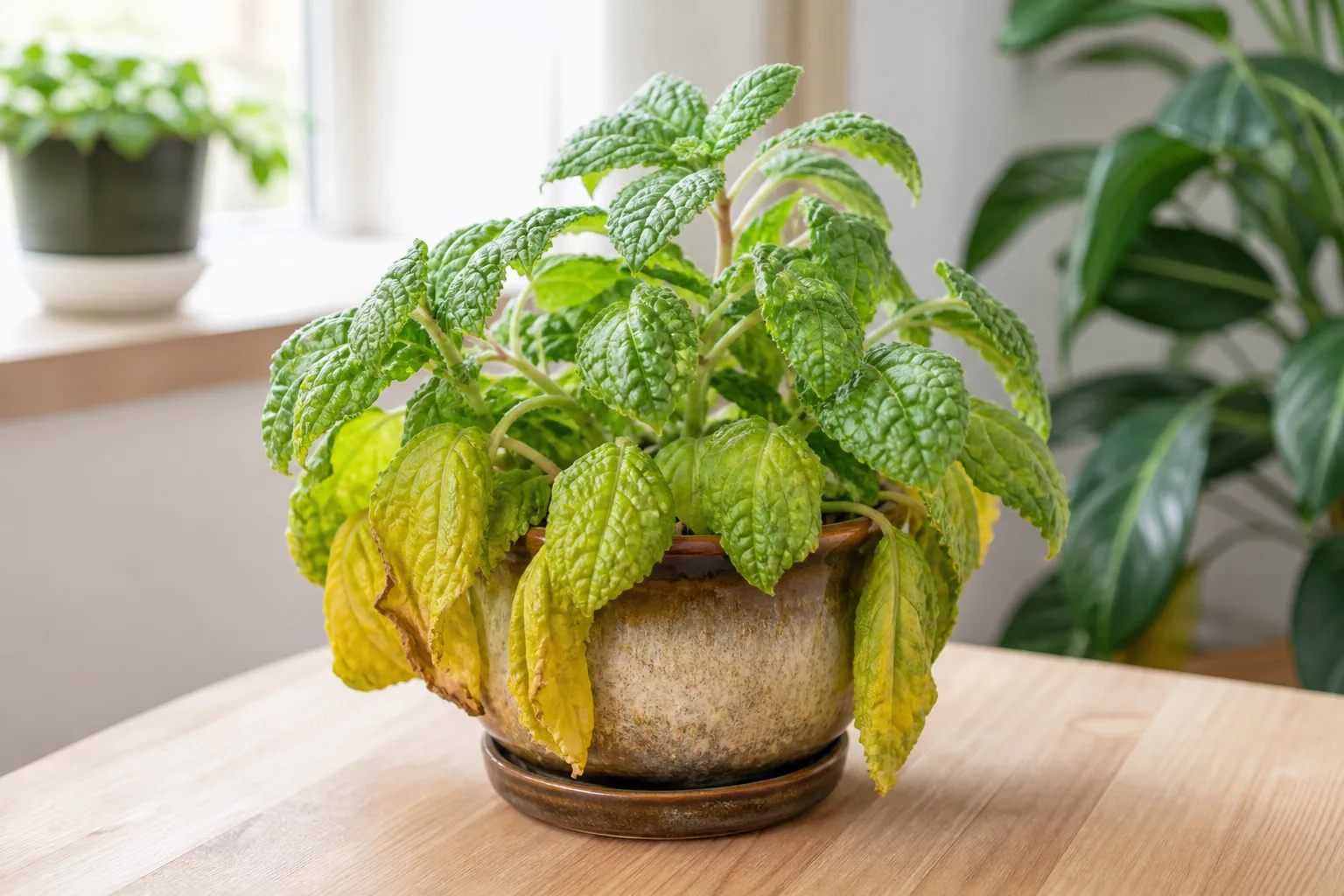
Overwatering on Pilea Moon Valley: Causes, Checks & Fixes
This guide covers overwatering on Pilea Moon Valley. See also the general Overwatering guide, watering, and light pages for this plant.
Overwatering on Pilea Moon Valley: Causes, Checks & Fixes
Quick answer
Overwatering on Pilea Moon Valley keeps the peaty mix soggy and starves roots of oxygen. First step: stop watering and do not pour again until the top 2–3 cm of mix is dry.
Moon Valley is not a succulent, but it still needs air at the roots. Its quilted bronze-green leaves can look perky while the lower mound yellows and the pot stays heavy-because the textured foliage hides stress until the root zone has been wet too long.
What overwatering looks like on Moon Valley
On Pilea mollis ‘Moon Valley’, overwatering usually shows up as a pattern, not one random yellow leaf.
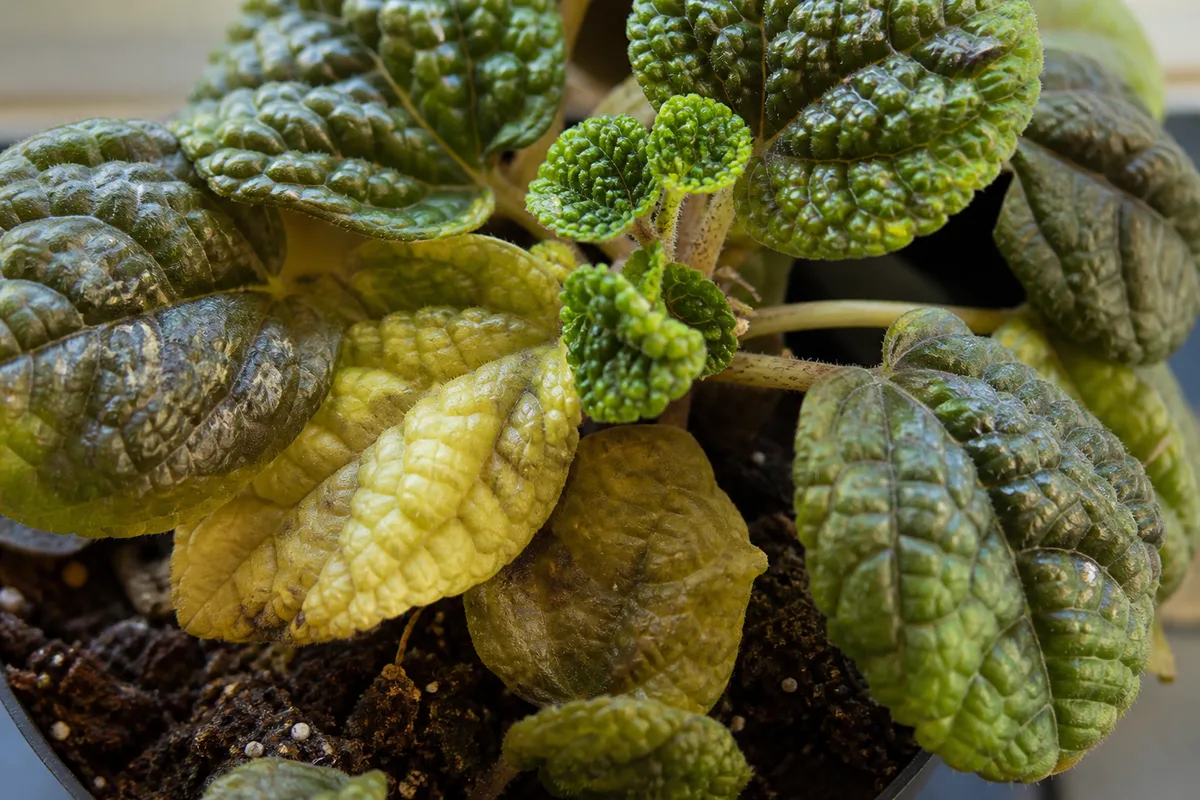
Overwatering symptoms on Pilea Moon Valley - compare with healthy tissue on the same plant.
Early signs:
- Lower quilted leaves turn chartreuse or yellow while newer tips still look puckered
- Pot feels unusually heavy days after watering
- Mix at 2–3 cm depth stays cool and wet when you expected it to dry
- Small black fungus gnats hover near the soil surface or windows
Advanced signs:
- Whole mound wilts or droops despite wet soil-the classic mismatch where roots cannot take up water
- Stems feel soft or hollow where they meet the soil line
- Sour or musty smell when you lift the pot
- White mold on the soil surface
- New growth stops; older leaves drop from the base of the compact mound
- Crown leaves collapse if water sat in the leaf cluster after top-watering
Moon Valley is grown for dense textured foliage, not a single stem with one coin leaf. When several lower leaves yellow at once while the mix stays swampy, treat it as a root-zone problem-not normal aging.
Why Moon Valley gets overwatered
Several traits make this cultivar easier to overwater than generic houseplant advice suggests.
“Evenly moist” gets misread as frequent watering. Moon Valley appreciates steady humidity around the leaves, but that does not mean the pot should never dry. Missouri Botanical Garden recommends watering moderately during active growth and reducing water in fall through late winter. Many growers keep summer frequency going into short winter days, when the plant uses less moisture.
Low light slows drying. Moon Valley wants bright indirect light indoors. In a dim shelf or terrarium corner, evaporation drops and peaty mix holds water longer. Leggy, stretched growth in shade often pairs with chronically wet soil-the plant looks thirsty while roots are drowning.
Peaty mix holds water. A peaty, well-draining potting mix with perlite is correct for Pilea Moon Valley overview, but old, compacted peat behaves like a sponge. Heavy mixes in cache pots without drainage holes are a common trigger.
Humidity efforts backfire. Grouping pots or using pebble trays helps leaf edges, but misting the quilted crown or watering on a calendar without checking soil adds surface moisture without fixing root oxygen. Water sitting in leaf craters after overhead watering can rot fragile stems.
Oversized pots and saucers. Moon Valley stays compact-about 12 inches tall at most. A pot much larger than the root ball holds excess wet mix that roots never reach. Saucers left full keep the bottom saturated.
Fragile stems hide rot until late. Stems break easily and stem rot can follow wet soil at the crown. By the time the base feels soft, damage has often moved beyond a simple dry-out fix.
How to confirm the cause
Work through these checks before Pilea Moon Valley repotting guide or feeding.
- Soil moisture at 2–3 cm - Insert a finger to the first knuckle. Wet, cold mix when you watered two days ago in a cool room confirms excess moisture. Bone dry with a light pot points to underwatering instead.
- Pot weight - Lift the container. A heavy pot days after watering means water is not moving through the profile.
- Drainage test - Water lightly and watch whether excess runs freely from holes within minutes. Blocked holes or a sealed decorative outer pot trap water.
- Stem base feel - Gently press stems where they enter the soil. Firm is good; mushy or hollow means investigate roots.
- Newest growth - Tiny, pale puckered leaves in deep shade suggest light plus moisture mismatch, not fertilizer shortage.
- Smell and pests - Sour odor or fungus gnats strongly support overwatering. Gnats breed in consistently moist organic soil.
- Recent care history - Repotting into heavy mix, moving to a darker spot, or continuing weekly watering through winter are common triggers.
If soil is wet, stems are firm, and leaves only show slight lower yellowing, a dry-out period may be enough. If stems are soft or smell is sour, plan to unpot and inspect roots the same day.
First fix for Pilea Moon Valley
Stop all watering until the top 2–3 cm of mix is dry to the touch.
That single pause breaks the cycle of saturated soil and gives roots a chance to access oxygen again. Empty any water sitting in the saucer or cache pot. Move the plant to brighter indirect light if it has been in a dim corner-better light helps the mix dry evenly without forcing you to water more often.
Do not repot on day one unless stems are already soft or soil smells rotten. Do not fertilize a stressed, waterlogged plant. Do not pour more water because leaves droop on wet mix-that worsens the problem.
After the top 2–3 cm dries, water thoroughly until a little runs from drainage holes, then discard excess from the saucer. Resume only when that depth dries again.
Step-by-step recovery
If symptoms are moderate or stems feel questionable, escalate in this order after the initial dry-out:
- Improve light and airflow - Shift to bright indirect exposure and give the mound space so leaves dry after watering. Avoid enclosed terrarium lids until soil moisture is stable.
- Inspect roots - Slide the plant out gently. Healthy roots are pale and firm. Trim brown, translucent, or mushy roots with clean scissors.
- Repot if needed - Use fresh standard potting mix with 15–20% perlite and a pot only slightly larger than the root ball. Confirm open drainage holes.
- Address fungus gnats - Let the surface stay dry between drinks. Yellow sticky traps catch adults; drying soil kills larvae.
- Hold fertilizer - Wait until new firm, textured leaves appear before feeding lightly in spring or summer.
Take one major step at a time. Moon Valley sulks when you stack repot, prune, and feed on the same day.
Recovery timeline
Minor overwatering with firm stems often stabilizes within one to two weeks once the dry-out rhythm returns. You should see new puckered leaves with clean bronze-green texture-not perfect old foliage.
Moderate root damage can take three to four weeks. Expect some lower leaves to drop; judge success by stable new growth and a pot that lightens between waterings.
Severe rot with mushy stems may require stem cuttings from clean tips above the damage. Moon Valley roots easily from cuttings when the parent mound cannot be saved.
Lookalike symptoms to rule out
Underwatering - Pot feels light, mix pulls away from the sides, and leaf edges go crispy brown. Wilt happens on dry soil, not heavy wet mix.
Low humidity - Brown, crisp tips on otherwise firm leaves with normal soil moisture. Fix humidity around the foliage, not watering frequency.
Not enough light - Small pale leaves, leggy stems, and soil that stays wet because the plant is not using water. Brighter indirect light fixes both issues.
Mealybugs or spider mites - Speckled or webbed quilted surfaces with sticky residue. Soil moisture feels normal. Inspect leaf craters and undersides before assuming water stress-mealybugs and spider mites are common on this species.
Normal lower leaf drop - One or two old bottom leaves yellowing on an otherwise healthy mound with proper dry cycles is minor. Widespread yellowing on wet soil is not normal aging.
Mistakes to avoid
Do not water on a fixed calendar-check the top 2–3 cm every time.
Do not repot into a much larger pot to “help” a struggling plant. Extra wet mix invites more rot.
Do not mist the crown instead of correcting soil moisture.
Do not leave the pot in standing water after watering.
Do not apply fertilizer to yellow leaves on soggy mix-salts stress damaged roots further.
Do not strip the entire mound at once; the plant needs some foliage to recover photosynthesis.
Do not confuse Moon Valley with Pilea peperomioides watering advice. The quilted mounding habit and peaty mix dry differently from a single-stem coin plant.
How to prevent overwatering on Moon Valley
Water when the top 2–3 cm dries, not when the surface alone looks pale. In summer that may mean every 7–10 days; in winter, stretch toward 10–14 days if the pot stays heavy.
Keep bright indirect light so the plant uses moisture at a predictable rate. Pair moderate to high humidity around leaves with a mix that drains-not with constant root soaking.
Use perlite-amended mix and pots with drainage holes. Repot every one to two years before peat breaks down into a water-retentive slab.
Reduce watering sharply in fall and winter when growth slows. Cool rooms plus wet soil yellow Moon Valley fast.
Empty saucers within 30 minutes of watering. If you use cache pots, lift the inner container to drain, then return it.
Inspect the textured leaf surface weekly during active growth-pests and moisture stress both show clearly on puckered foliage.
When to worry
Treat as urgent when stems soften at the base, soil smells sour while staying wet, the whole mound collapses on heavy mix, or blackening climbs fragile stems. Same-day root inspection and repotting may be required.
Also act quickly if fungus gnats swarm in large numbers and new growth stalls-persistent larvae in saturated soil can damage fine roots on a compact plant.
A slightly heavy pot with one yellow lower leaf and firm stems is not an emergency. Confirm moisture, pause watering, and reassess in a week.
Conclusion
Overwatering on Pilea Moon Valley is a root-oxygen problem disguised by quilted leaves that stay textured longer than the soil stays healthy. Confirm wet mix at depth, stop watering until the top 2–3 cm dries, and only then resume on a soil-based schedule-not a calendar. Brighter light, open drainage, and winter cutbacks keep this compact mound dense and puckered instead of yellow and soft at the base.
When to use this page vs other Pilea Moon Valley guides
- Pilea Moon Valley watering guide - Use for routine moisture checks before assuming overwatering is the main issue.
- Pilea Moon Valley problems hub - Browse all 4 common issues on this species.
- Root Rot on Pilea Moon Valley - Different entry point when symptoms overlap with overwatering.
- Yellow Leaves on Pilea Moon Valley - Different entry point when symptoms overlap with overwatering.