Underwatering on Pilea Moon Valley: Causes, Checks & Fixes
Quick answer
Underwatering on Pilea Moon Valley collapses the leaf mound and crisps quilted edges when the top 2–3 cm of mix stays dry too long. First step: soak the pot until water runs from drainage holes, then wait for turgor to return before adjusting your schedule.
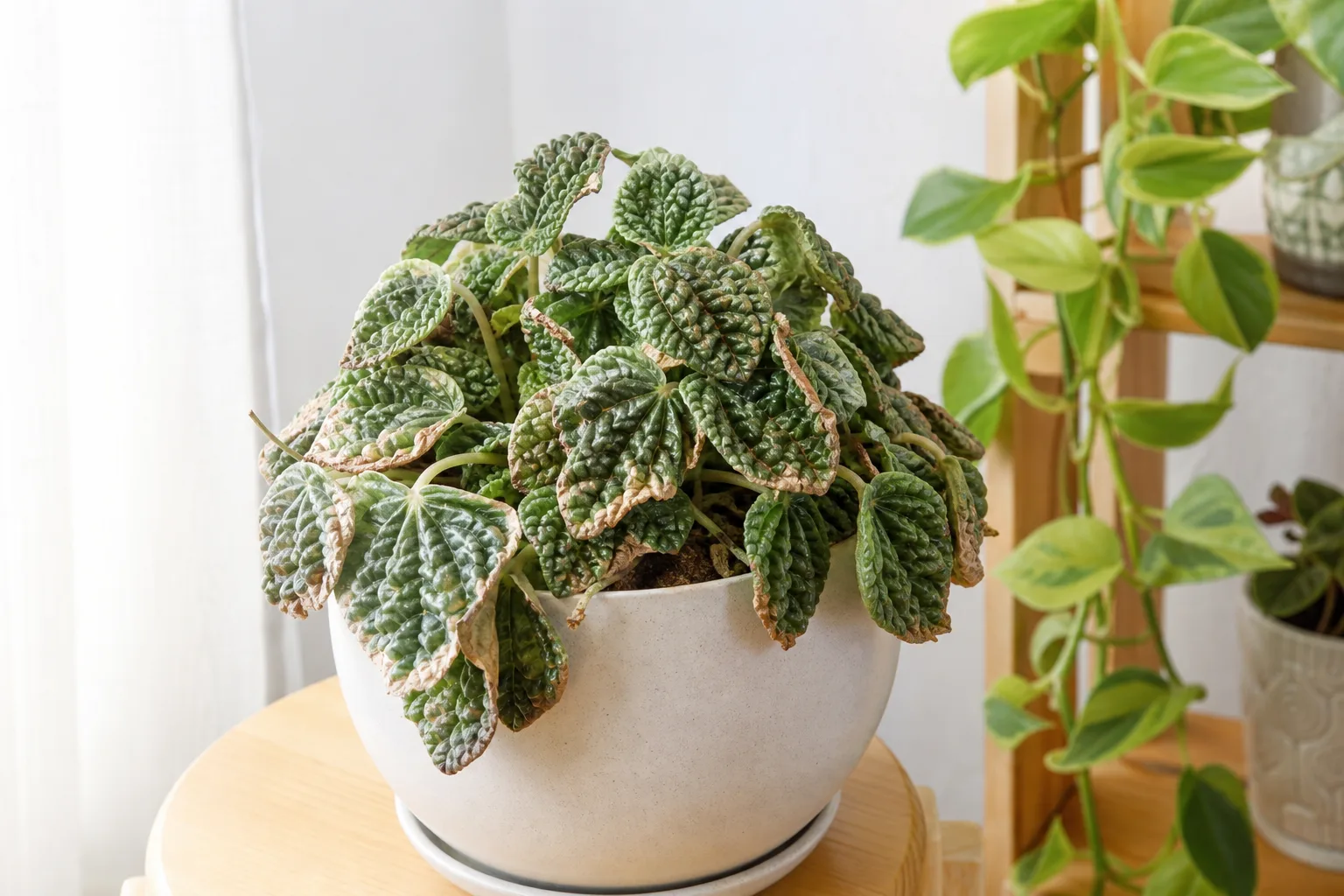
Underwatering on Pilea Moon Valley: Causes, Checks & Fixes
This guide covers underwatering on Pilea Moon Valley. See also the general Underwatering guide, watering, and light pages for this plant.
Underwatering on Pilea Moon Valley: Causes, Checks & Fixes
Quick answer
Underwatering on Pilea Moon Valley (Pilea mollis ‘Moon Valley’) shows up as a sudden slump in the leaf mound-quilted foliage loses turgor, edges turn crisp, and the whole plant looks thirsty before the surface mix looks obviously dry. Moon Valley has fine, shallow roots in a compact mound; it dries faster than many larger houseplants and recovers just as dramatically once roots get water again.
First step: soak the pot until water runs freely from drainage holes. Use a slow, thorough top watering or bottom-water for 30–45 minutes if the mix has gone hard and water runs through without soaking. Do not repot, fertilize, or mist leaves until you confirm the root zone is actually moist and turgor returns.
What underwatering looks like on Pilea Moon Valley
Moon Valley is grown for deeply puckered, bronze-green leaves with bright margins. When the root zone runs dry, that texture flattens first-you notice the mound looking soft and deflated rather than crisp and quilted.
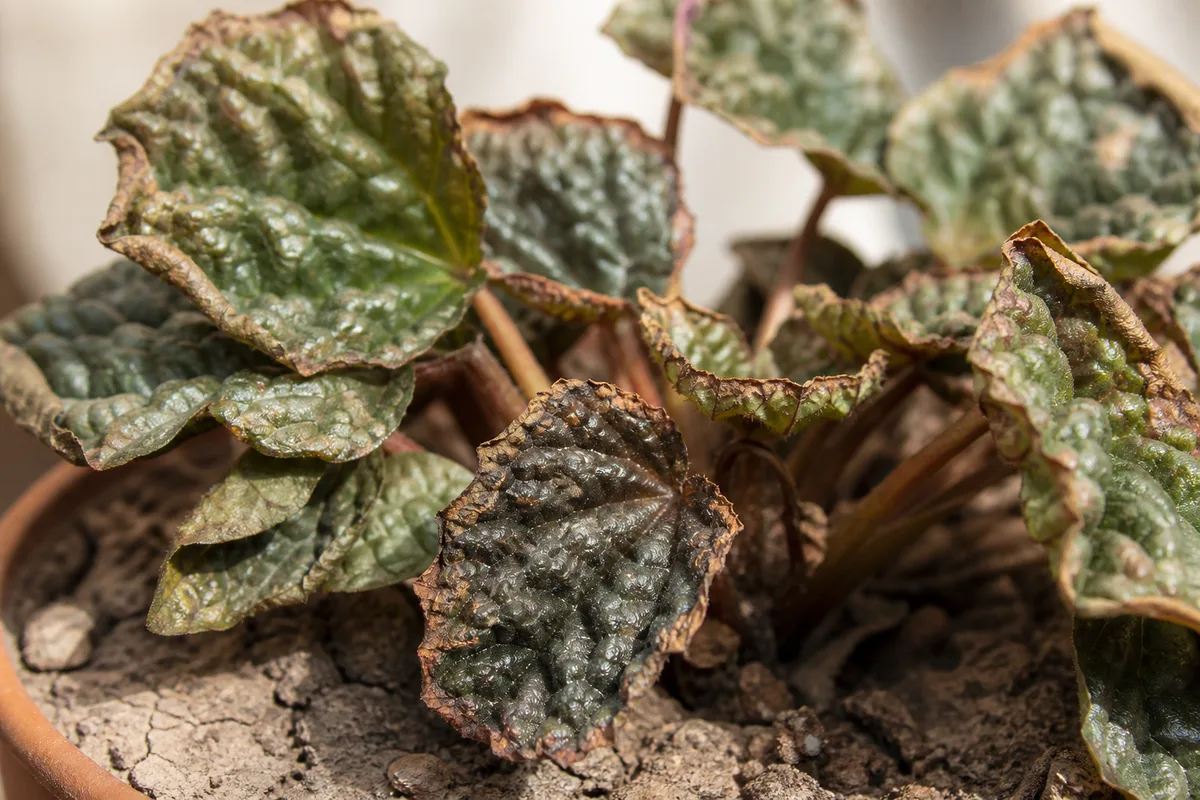
Underwatering symptoms on Pilea Moon Valley - compare with healthy tissue on the same plant.
Typical drought signs on Pilea Moon Valley overview:
- Dramatic wilting across the whole mound, often worse on outer leaves first-roots unable to supply sufficient moisture to stems and leaves
- Crisp brown edges or tips on textured foliage, especially when dry air adds edge burn
- Light pot weight compared with how the container felt after your last good watering-the mix becomes lighter in weight as it dries
- Dry mix 2–3 cm down even if the very top looks slightly damp from misting
- Soil pulling away from the pot sides when media has pulled away from the pot, or water racing through the center without wetting the root ball
- Older leaves yellowing and dropping after repeated dry cycles-prolonged drought causes yellowing and leaf drop
Healthy Moon Valley holds its mound shape. Severe underwatering can leave stems limp enough to bend when you touch them, though they are not mushy like rot.
What damaged tissue will not do: Crispy brown edges and flattened old leaves rarely plump back to their original quilted look. Recovery shows in new growth, not repaired old foliage.
Why Pilea Moon Valley gets underwatered
Moon Valley evolved for warm, humid forest floors with consistently moist-but never waterlogged-soil. It is not a drought-tolerant succulent. Missouri Botanical Garden notes that Pilea mollis wants moderate watering during the growing season and reduced watering in fall through late winter, with high humidity and Pilea Moon Valley light guide indoors.
That profile clashes with how many homes run the plant:
Small pots on bright shelves dry fast. A 10–12 cm pot in strong indirect light near a window can lose moisture in a few days during summer. Moon Valley’s shallow root mass uses water quickly when it is actively growing.
Fear of root rot on Pilea Moon Valley swings care too dry. Moon Valley is sensitive to soggy mix, so growers sometimes skip drinks until the soil bakes hard. Chronic hard-dry cycles damage fine roots and make the mix hydrophobic-water runs down the sides without rewetting the center.
Dry indoor air steals moisture from textured leaves. Moon Valley prefers 50–60% humidity and appreciates humidified rooms. Forced-air heating and air conditioning drop room humidity well below that in winter, so leaves lose water through transpiration faster than roots replace it when the mix is also dry.
Calendar watering misses seasonal change. Every 7–10 days in summer and 10–14 days in winter is a starting point, not a rule. Cooler rooms, shorter days, and slower winter growth mean the pot may need less water-but a plant pushed against a hot window still dries faster than a calendar suggests.
Root-bound pots dry unevenly. When roots fill a small container, water passes through too quickly and the center of the root ball can stay dry, mimicking underwatering even when you think you watered recently.
How to confirm the cause
Work through these checks before changing anything else:
- Soil moisture at 2–3 cm depth - Dry here with limp leaves strongly suggests underwatering. Wet deep mix with a limp plant points to rot or overwatering instead.
- Pot weight - Lift the container. A light pot after several days without water fits drought; a heavy pot that still wilts does not.
- The soak test - Water thoroughly once. If turgor returns within a few hours and stems firm up, drought was the main issue.
- Drainage and channeling - Watch whether water soaks in or runs straight through. Channeling confirms hard, dry mix or a pot-bound root ball.
- Soil gap check - Visible shrinkage away from the pot wall means the root ball dried hard and may need bottom-watering or repeated soaks.
- Smell and stem texture - Sour smell or soft, mushy stems at the soil line suggest rot, not simple underwatering. Firm but limp stems fit drought.
- Environment scan - Note direct sun, heat vents, AC drafts, and grouped terrarium humidity. High light plus dry air accelerates water loss from Moon Valley’s textured leaves.
If the mix is wet throughout and the plant still wilts, stop adding water and inspect roots before assuming underwatering.
First fix for Pilea Moon Valley
Soak the pot until water runs from drainage holes and the mix feels evenly heavy.
Place the pot in the sink and water slowly until the entire root zone accepts moisture and water comes out of the bottom of the pot. If water races through in seconds, bottom-water: set the pot halfway submerged in a basin of room-temperature water so the mix wicks moisture upward for 30–45 minutes, then let excess drain.
Do not fertilize a drought-stressed Moon Valley. Do not repot on day one unless the mix is so degraded it cannot hold water even after two soaks. Do not rely on misting-roots need soil moisture, not a damp leaf surface.
After the soak, empty the saucer so the plant is not sitting in stale water.
Step-by-step recovery
Once the first soak is done, work in this order:
- Repeat slow watering if needed - Mix that pulled away from the pot sides may need several applications of water to rehydrate the potting mix before the center rewets.
- Move out of harsh stress - Shift the plant out of direct midday sun or blasting heat vents while it rehydrates. Bright indirect light is enough during recovery.
- Raise humidity around the mound - Group Moon Valley with other plants, use a pebble tray, or run a humidifier nearby. This reduces further edge crisping while roots catch up.
- Reset your watering cue - After the pot drains, wait until the top 2–3 cm of mix dries before the next full watering. Use finger depth, pot weight, or a moisture meter-not a fixed weekday.
- Trim only fully dead tissue - Remove leaves that are entirely brown and crispy if they clutter the mound. Leave partially green leaves; they still photosynthesize while new growth emerges.
- Repot only if channeling persists - If water never penetrates the center after two good soaks, the plant may be root-bound or the mix may be exhausted. Repot into fresh, well-draining mix with 15–20% perlite at the next appropriate window-not as an emergency first response.
- Hold fertilizer - Wait until new puckered leaves appear and the plant looks stable for two weeks before feeding lightly during active growth.
Recovery timeline
Hours: Mild to moderate underwatering often shows perking within a few hours of a thorough soak when roots are still healthy. Moon Valley’s dramatic wilt can look alarming and still recover quickly.
Days to one week: New leaves should begin opening with normal quilted texture once moisture stays steady. Crisped edges on old leaves remain brown.
Two weeks and beyond: If the mound stays flat despite correct watering, inspect roots for rot damage or pest stress on the textured leaf surfaces before assuming the plant needs more water.
Lookalike symptoms to rule out
Overwatering and root rot also cause yellowing and wilt-but soil stays wet, may smell sour, and stems soften at the base. Moon Valley yellow leaves from overwatering are common; wet mix rules out simple drought.
Low humidity alone crisps leaf edges while the mound still feels firm and soil moisture is normal. Edge browning without dramatic whole-plant collapse often means humidity, not roots.
Spider mites cause stippling and fine webbing in leaf craters, not usually a light pot and bone-dry mix. Dry air favors mites, so drought and mite stress can overlap-check undersides with a lens.
Cold drafts below about 10°C (50°F) can wilt and damage Moon Valley foliage without dry soil. Confirm temperature as well as moisture.
Recent Pilea Moon Valley repotting guide shock causes temporary limpness with evenly moist new mix. Give a repotted plant several days before assuming underwatering.
Mistakes to avoid
Do not assume every wilted Moon Valley needs more water-check soil first when mix is wet.
Do not mist instead of soaking dry roots. Surface moisture does not rehydrate a shrunken root ball.
Do not water on a calendar when the pot is still moist 2–3 cm down. Moon Valley rots in soggy mix but also sulks in hard, dry peat.
Do not fertilize to “perk up” a dry plant. Salts on drought-stressed roots add stress.
Do not let the mix bake to brick-hard repeatedly. Each hard-dry cycle kills fine roots and makes the next watering less effective.
Do not repot and soak and prune the same day unless rot is confirmed. Stack stress on a wilted mound slows recovery.
Pilea Moon Valley care cross-check
Underwatering prevention on Moon Valley is mostly about matching water to how fast your pot dries:
- Light: Bright indirect light is ideal, but more light means faster drying-check soil more often in summer.
- Pilea Moon Valley watering guide: Every 7–10 days in active growth when the top 2–3 cm is dry; stretch toward 10–14 days in cooler winter rest, still using soil feel as the guide.
- Humidity: Target 50–60% so textured leaves do not crisp while you fine-tune watering.
- Mix: Standard potting mix with 15–20% perlite drains well without drying out in hours like pure succulent mix.
- Pot size: Small pots suit the compact mound but need more frequent checks than a large floor planter.
How to prevent underwatering next time
Check pot weight or soil depth every few days during hot, bright weather-not once a week by habit.
Group Moon Valley on a shelf or terrarium-style setup to buffer humidity and slow leaf-edge water loss.
Bottom-water occasionally if your mix tends to channel when it dries. A 20-minute soak from below rewets the core evenly.
Refresh exhausted peat-heavy mix that repeatedly goes hydrophobic. Old mix that shrinks from the pot wall will keep causing dry-center problems.
Adjust for AC and heating seasons when room air dries fastest. The same plant that needs water every ten days in spring may need checks every five to seven days in a sunny July window.
When to worry
Treat as urgent when the entire mound collapses, soil has pulled away from the pot, or water will not penetrate the root ball after two careful soaks. Those patterns mean roots have been dry too long or the mix has failed.
Also act promptly if stems feel brittle and brown at the base while leaves are dry-advanced drought can damage crown tissue, not just leaf edges.
Less urgent: A single afternoon wilt that resolves after one good drink, with firm stems and no sour smell, is normal Moon Valley behavior in a dry home-not a death sentence.
If turgor does not return within 24 hours despite moist mix, inspect roots for rot or pest damage before watering again.
Conclusion
Moon Valley Pilea’s quilted mound makes underwatering obvious early-and recovery straightforward when roots are still healthy. Soak thoroughly, confirm the mix rewets, then rebuild a schedule around top 2–3 cm dryness rather than a calendar. Crisp old leaves may stay blemished, but firm new puckered growth tells you the drought phase is over.
When to use this page vs other Pilea Moon Valley guides
- Pilea Moon Valley watering guide - Use for routine moisture checks before assuming underwatering is the main issue.
- Pilea Moon Valley problems hub - Browse all 4 common issues on this species.
- Brown Tips on Pilea Moon Valley - Different entry point when symptoms overlap with underwatering.
- Yellow Leaves on Pilea Moon Valley - Different entry point when symptoms overlap with underwatering.