Mealybugs on Ponytail Palm: Causes, Checks & Fixes
Quick answer
Mealybugs on Ponytail Palm appear as white cottony clusters where strap leaves emerge from the crown and in caudex crevices near the soil line. First step: isolate the plant and dab every visible colony with 70% isopropyl alcohol on a cotton swab-then inspect the crown, leaf bases, and caudex below soil before any whole-plant spray.
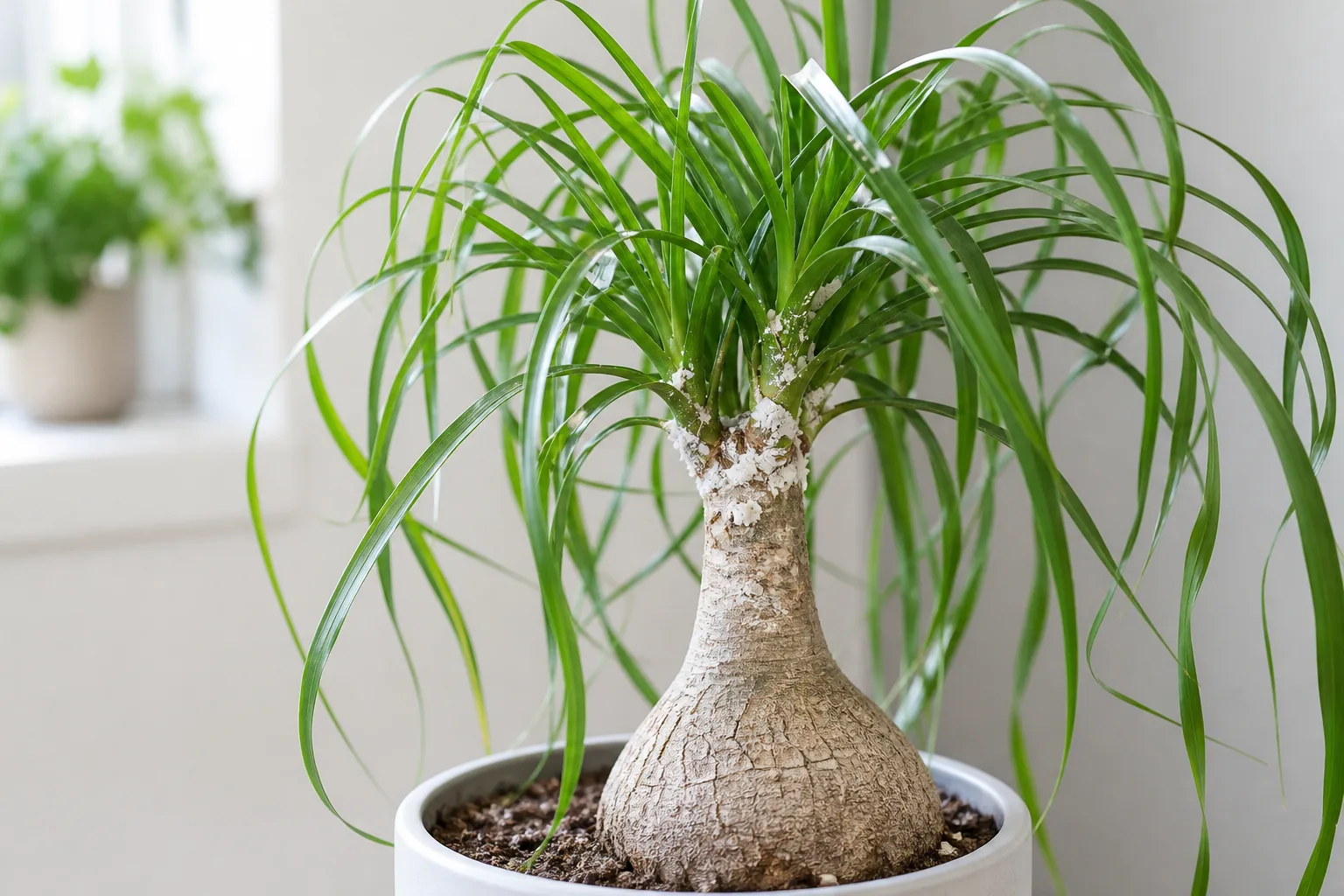
Mealybugs on Ponytail Palm: Causes, Checks & Fixes
This guide covers mealybugs on Ponytail Palm. See also the general Mealybugs guide, watering, and light pages for this plant.
Mealybugs on Ponytail Palm: Causes, Checks & Fixes
Quick answer
Mealybugs on Ponytail Palm (Beaucarnea recurvata) are sap-sucking insects that build white cottony colonies where long strap leaves emerge from the crown and in sheltered crevices on the swollen caudex. NC State Extension describes ponytail palm as a slow-growing caudiciform with narrow strappy leaves cascading from a single stem-not a true palm-so the tight leaf fountain and fissured base create hiding spots a casual rinse will miss.
First step: move the plant away from others and dab every visible colony with 70% isopropyl alcohol on a cotton swab. Target individual white masses at crown crevices, strap-leaf bases, and any wax on the upper caudex rather than misting the whole plant on day one. Alcohol kills adults on contact but does not reach eggs inside cottony sacs, so one pass is a start-not a cure. Repeat weekly until you find no new clusters for at least two consecutive inspections.
For crown-heavy infestations, plan a below-soil caudex check after the first alcohol session-mealybugs often retreat into caudex cracks near the pot rim when foliage treatment begins. Pair pest checks with your dry-down watering rhythm so you do not overwater this drought-adapted plant during recovery.
What mealybugs look like on Ponytail Palm
Mealybugs appear as white, cottony or powdery clusters, usually tucked into protected spots rather than evenly scattered across strap leaf blades. On Beaucarnea recurvata, check these locations first:
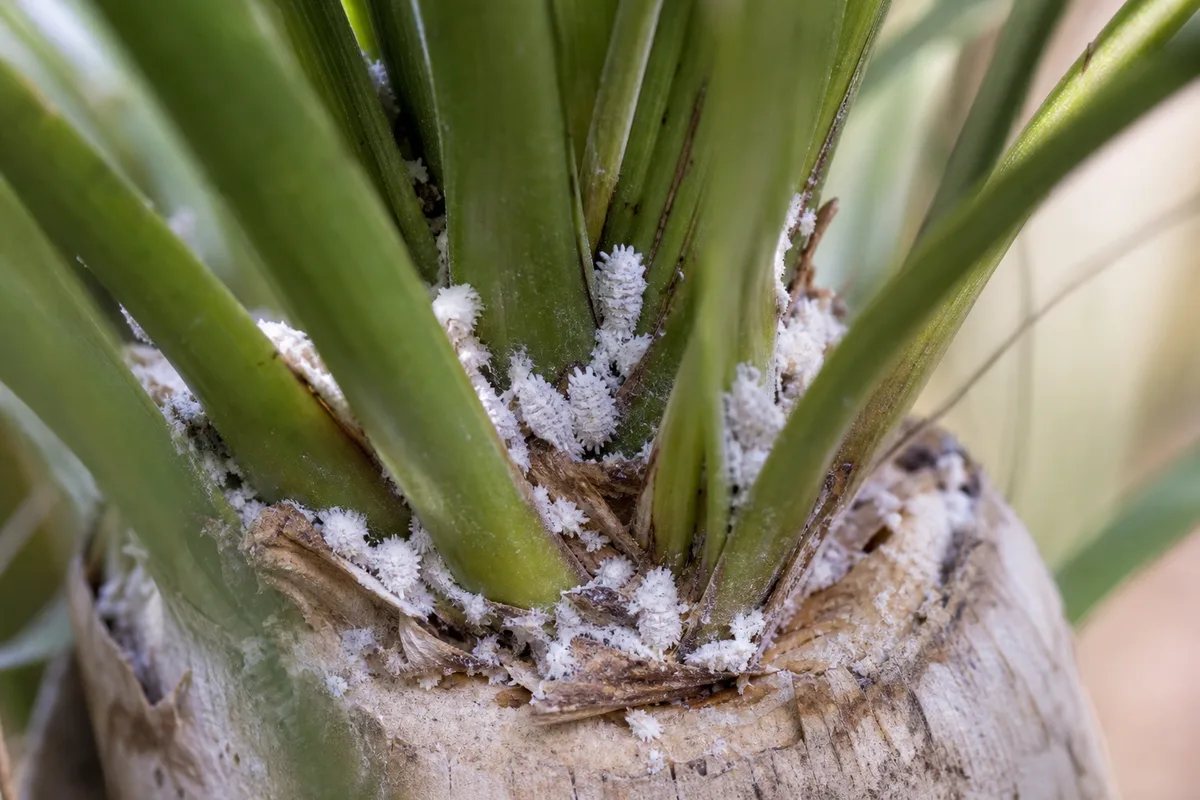
Mealybugs symptoms on Ponytail Palm - compare with healthy tissue on the same plant.
- Crown crevices - where new and old strap leaves overlap at the top of the stem; colonies often look like bits of cotton wedged into the leaf fountain
- Strap-leaf bases - each narrow leaf attaches close to neighbors, creating axils that stay shaded and hard to rinse
- Upper caudex and soil line - white wax in fissures on the swollen base just above or below the pot rim
- Leaf undersides near the crown - especially along the stiff midrib where leaves curve downward
- Pot rim and saucer - honeydew drips from feeding sites above
- Below the soil line on the caudex - less visible until you brush soil away; worth checking when crown colonies return after treatment
Individual insects are soft-bodied and oval under the wax. Newly hatched crawlers are tiny, yellow to pink, and lack wax-they walk short distances before settling and building new colonies.
Secondary signs on ponytail palm include:
- Sticky honeydew on strap leaves, the caudex, or the saucer below
- Sooty mold - black fungal growth on honeydew-coated surfaces
- Yellowing strap leaves near heavy feeding sites, sometimes mistaken for overwatering
- Stunted new center growth when feeding hits the crown during active growth
- Ants on the pot rim farming honeydew in bright windows where ponytail palms often sit
Unlike spider mites on dry strap tips, you will not see fine webbing or dusty stippling. Unlike scale insects, mealybug masses are fluffy and removable with a swab rather than hard brown shells fused to the caudex. Unlike hard-water deposits, mealybugs cluster at crown joints and smear when crushed-not as flat crust on the leaf face.
Why Ponytail Palm gets mealybugs
Mealybugs are living pests that arrive on plants, tools, or hands and then exploit sheltered anatomy. Ponytail palm is vulnerable for several overlapping reasons tied to how this species grows indoors.
Tight crown architecture. NC State Extension notes strap-like leaves cascading from a rosette atop a swollen caudex. Each strap leaf creates a base-to-crown joint that stays shaded and hard to rinse. Mealybugs prefer protected areas such as leaf axils, stem joints, and crowns-exactly where this species packs its foliage into a single leaf fountain.
Caudex crevices near soil. The water-storing caudex develops fissures as it ages, providing cracks mealybugs use when crown treatment disturbs them. Casual overhead rinsing rarely reaches wax tucked below the soil line on the upper caudex.
Indoor warmth year-round. Mealybugs thrive in mild temperatures without cold winters to knock populations back. Houseplants grown indoors can host all life stages continuously, which is why a small cluster at one leaf base can rebound within weeks if treatment stops early.
Introduction on new plants. The most common entry route is an infested nursery plant brought home without quarantine. Mealybugs spread slowly by crawling and hitchhiking on pruners or stakes-not by flying across a room-but they still reach neighboring pots on a shared shelf over time. UF/IFAS describes ponytail palm as a popular indoor container plant; inspect any new purchase before placement.
Stress and soft new growth. Chronically wet mix weakens roots on this drought-adapted caudiciform without eliminating pests. Heavy nitrogen fertilizer paired with frequent watering can also push tender new strap leaves that mealybugs favor for egg laying.
Overlooked low-level infestations. Because colonies start small and hide under the leaf fountain, many owners treat only after honeydew or mold appears-by which point crawlers have already moved to adjacent plants. Slow indoor growth means damage can accumulate for weeks before yellowing is obvious.
NC State Extension lists mealybugs among pests to monitor on Beaucarnea recurvata, alongside scale and spider mites.
How to confirm the cause
Work through these checks before committing to sprays or systemic products:
- Magnified inspection - Use a hand lens or phone macro mode on every strap-leaf base, crown crevice, and upper caudex fissure. Look for movement in pinkish crawlers or waxy filaments around white masses.
- Swab test - Touch a cotton swab to a suspicious spot at a crown joint. Mealybugs crush to a pink or orange smear. Hard water deposits wipe off as chalky white without bodies underneath. University of Wisconsin Extension notes brown strap tips from salts or drought-tip browning alone is not cottony wax.
- Honeydew check - Run a finger along the caudex below a cluster. Sticky residue that glints under light supports a sap-feeding pest, not dust.
- Pattern on the plant - Mealybugs cluster in groups along crown joints and leaf bases. Random single white dots on strap faces are more often mineral splash.
- Neighbor plants - Inspect every pot on the same surface. Matching crown clusters on a recently purchased plant strongly confirm mealybugs rather than a one-off soil issue.
- Rule out lookalikes - Hard immobile bumps are scale, not mealybugs. Stippling without cotton points to spider mites. Small flies over wet soil are fungus gnats, not crown wax.
- Watering cross-check - Confirm the pot is not staying heavy for days with sour-smelling mix. Root rot from overwatering causes yellowing and collapse without cottony wax at crown joints.
Confirmed diagnosis requires white wax-covered insects in colonies, not sticky leaves alone-honeydew can also come from aphids or scale on other plants nearby.
Lookalike symptoms
Several harmless or unrelated issues mimic mealybugs on ponytail palm:
| What you see | Mealybugs | Scale | Mineral dust | Spider mites |
|---|---|---|---|---|
| Texture | Fluffy cotton or waxy tufts | Hard tan/brown domes | Flat chalky crust | Fine stippling, possible webbing |
| Location | Crown crevices, leaf bases, caudex cracks | Caudex, leaf bases | Strap leaf surfaces | Dry strap tips, undersides |
| Swab test | Pink smear, soft bodies | Shell loosens but stays dome-shaped | Wipes clean, no bodies | No cotton; may see tiny moving dots |
| Stickiness | Honeydew common | Honeydew possible | None | None |
- Hard water spots - Flat white crust on strap surfaces from tap water; does not cluster at crown joints and does not move
- Natural strap-tip browning - Common on Beaucarnea indoors from salts, drought, or low humidity; tips dry brown without cottony wax at the base
- Fungus gnats - Small flies over wet soil; no waxy body clusters on foliage
- Powdery mildew - Flat white powder on leaf surfaces, not cottony tufts in crown axils
When in doubt, isolate the plant and perform the swab test before treating.
First fix for Ponytail Palm
Isolate the plant and dab visible mealybugs with 70% isopropyl alcohol on a cotton swab.
Move the pot to a separate room or at least three feet from other plants. Work methodically:
- Dip a cotton swab in 70% isopropyl alcohol (rubbing alcohol).
- Press directly onto each white cluster-crown crevices, strap-leaf bases, upper caudex fissures, and any wax on leaf undersides-until the wax dissolves and the insect is gone.
- Wipe adjacent areas where honeydew collected on strap leaves or the caudex.
- Discard swabs in the trash, not the compost bin indoors.
- Wash hands and any tools before touching clean plants.
Test alcohol on one strap leaf first and wait 24 hours. Ponytail palm’s long strap leaves usually tolerate targeted dabs well, but sun-stressed foliage in hot full-sun windows can show burn if alcohol pools on the surface or runs into the crown.
Do not start with whole-plant alcohol spray, neem oil, or systemic insecticide on day one. Broad sprays miss hidden crown colonies on Beaucarnea’s dense leaf fountain, and stacking products before manual removal wastes effort. One focused alcohol pass plus isolation is the correct first response.
Below-soil caudex inspection walkthrough
When crown colonies are heavy or return after treatment, check the caudex below the soil line:
- Stop watering for several days so mix is dry and the pot lifts easily-wet caudex inspection risks overwatering stress on this drought-adapted plant.
- Brush dry soil away gently from the upper one to two inches of caudex with a soft brush or dry cloth. Look for white wax in fissures and cracks.
- Use a hand lens on any suspicious flecks. Crawlers and egg sacs hide in caudex crevices where strap leaves do not block your view.
- Dab visible wax with alcohol on a swab without flooding cracks with liquid.
- Do not leave exposed caudex in wet mix - if you must unpot, work quickly, keep roots shaded, and repot into dry fast-draining mix only when root-zone mealybugs are confirmed.
- Re-cover the caudex with dry mix after inspection unless you are Ponytail Palm repotting guide for confirmed root-zone infestation.
Step-by-step recovery
If colonies remain after the first alcohol session, escalate in this order:
Week 1–3: Repeat contact treatment
Re-inspect every crown crevice and strap-leaf base weekly. New crawlers hatch on a cycle, so missing one week lets populations rebuild. Dab any fresh white spots with alcohol again. For larger infestations where many colonies are exposed at the crown, a dilute isopropyl alcohol spray can supplement swabbing-still after a patch test on one leaf.
Add insecticidal soap or horticultural oil
After manual removal reduces visible adults, spray insecticidal soap or horticultural oil to reach young nymphs with less wax. Coat strap-leaf bases, leaf undersides near the crown, and upper caudex fissures thoroughly. Repeat every five to seven days for at least three to four cycles. Soaps and oils work on contact only; they do not persist, so coverage at every crown joint matters more than product strength.
Apply in indirect light and let leaves dry before returning the plant to a bright windowsill. Avoid treating immediately after repotting or while the plant is wilted from drought. Because ponytail palm prefers soil that dries completely between soaks, treat in the morning so any runoff dries the same day.
Prune heavily infested strap leaves
If one or two outer strap leaves carry dense cottony masses and the rest of the crown looks clean, trim those leaves at the base with clean scissors. Bag the cuttings immediately. Beaucarnea tolerates light pruning; recovery comes from clean new straps emerging from the center-old damaged leaves will not re-green.
Consider systemic options only for persistent cases
Soil-applied systemic insecticides can reduce mealybug crawlers on houseplants when contact methods fail after repeated tries. Use only according to label directions, keep treated plants away from pets that chew soil, and avoid these products if you treat edible herbs on the same shelf. Systemics are a late step-not the opening move.
When to repot
Repot only if you confirm root-zone or below-soil caudex mealybugs-white wax near the soil line, decline despite clean crown foliage, or reinfestation after thorough foliar treatment. Shake old mix off roots outdoors, rinse gently, and pot into fresh sterile mix in a washed container. Ponytail palm prefers staying tight in the pot; do not jump to an oversized container during recovery. Do not repot on day one of discovery unless the soil surface is heavily infested.
Recovery timeline
Expect visible colonies to shrink within one to two weeks of consistent weekly alcohol dabs. Calling the plant clear takes longer: plan on three to four weekly passes, then two additional weeks with no new cottony spots at any crown joint or caudex crevice.
Signs treatment is working:
- Fewer white clusters each inspection around the leaf fountain
- Honeydew and stickiness drying up on strap leaves and the caudex
- New center straps emerging without wax at their bases
- No sooty mold spreading on fresh growth
- Firm caudex on appropriately dry mix per your watering guide
Signs the problem is worsening:
- Colonies appearing on new crown joints between weekly checks
- Widespread yellowing despite correct dry-down watering
- Matching infestations on neighboring plants
- Plant collapse with clean-looking foliage but failing roots-possible with root-feeding mealybugs below soil
Damaged strap leaves do not heal cosmetically. Judge success by clean new growth at the crown, not by old yellow blades turning green again. Slow growth indoors means new clean straps may take several weeks to appear even after pests are gone.
Mistakes to avoid
- Treating once and stopping - One alcohol session kills adults present today, not eggs hatching next week.
- Only spraying above the crown - Mealybugs live at strap-leaf bases and caudex crevices; mist that does not wet crown attachments leaves colonies untouched.
- Applying full-strength alcohol broadly without a test - Can burn strap leaves in hot direct sun.
- Returning the plant to the shelf too soon - Wait until two consecutive weekly inspections find zero new clusters.
- Overwatering during recovery - Wet mix stresses roots on this caudiciform and overlaps with root rot risk; keep your dry-down checks.
- Over-fertilizing during recovery - Soft new flush attracts reinfestation; hold fertilizer until growth looks normal again.
- Composting pruned infested material indoors - Crawlers can migrate from the bin to nearby pots.
- Ignoring adjacent plants - A clean ponytail palm on a dirty shelf will get reinfected.
- Confusing scale bumps for mealybugs - Wrong treatment wastes weeks; compare texture before spraying.
How to prevent mealybugs next time
Prevention on ponytail palm is mostly about inspection and quarantine, not special pesticides.
- Quarantine new plants for two to three weeks in a separate room; check every crown crevice twice weekly before placing them near your Beaucarnea.
- Inspect during watering - When you confirm the mix is dry throughout, lift strap leaves and glance at each crown joint and the upper caudex.
- Keep plants vigorous - Full sun to partial shade and watering only when the mix dries completely matches how this species stays healthy without chronic wet stress.
- Moderate fertilizer - Apply at reduced strength during active growth; avoid nitrogen pushes that produce soft, pest-friendly tissue.
- Clean leaves occasionally - A dry cloth removes dust and makes new colonies easier to spot on narrow straps.
- Isolate at first sign - One cottony dot at a crown base treated early prevents a shelf-wide outbreak.
When to worry
Most ponytail palms recover from moderate mealybug infestations if you isolate early and repeat contact treatment for a month. Consider discarding the plant-and protecting the rest of your collection-when:
- Colonies cover most crown joints despite four or more weeks of diligent weekly treatment
- The caudex is already spongy from chronic overwatering unrelated to pests
- You cannot physically reach all crown crevices on a dense specimen and reinfestation keeps returning
- Multiple high-value plants share one crowded tray and systemic treatment is not an option you want to use
- Below-soil caudex mealybugs persist after repotting and root-zone treatment
Replacing one heavily infested ponytail palm is often cheaper than losing an entire windowsill of plants to crawlers you cannot see.
Pet safety during treatment
The ASPCA lists Beaucarnea recurvata as non-toxic to cats, dogs, and horses. That addresses the plant itself-not pesticide products. Keep cats and dogs away from freshly alcohol-dabbed or sprayed foliage until treatments dry completely. Do not let pets chew wet strap leaves or soil from treated pots. Contact your veterinarian if a pet shows persistent illness after eating plant material or licking wet spray residue.
Conclusion
Mealybugs on ponytail palm are a sap-feeding pest problem, not a watering mystery. Confirm white cottony clusters at crown crevices and strap-leaf bases, check the upper caudex and below-soil fissures when colonies persist, and act by isolating, dabbing with alcohol, and repeating soap or oil sprays until two clean weeks pass. Prevent them by quarantining newcomers and inspecting every crown joint during routine dry-down checks. Judge success by firm new straps at the crown-not by old foliage returning to perfect green.
Related Ponytail Palm problems
- Ponytail palm overview - full care hub and caudex biology
- Scale insects - hard bump lookalike on caudex and strap bases
- Aphids - honeydew-producing alternative pest
- Spider mites - stippling on dry strap tips
- Watering guide - dry-down checks during weekly pest inspection
- Light needs - full-sun placement and post-treatment stability
- Root rot - overwatering risk during mealybug recovery
- Overwatering - wet-mix stress that weakens caudex health
When to use this page vs other Ponytail Palm guides
- Ponytail Palm watering guide - Use for routine moisture checks before assuming mealybugs is the main issue.
- Ponytail Palm problems hub - Browse all 5 common issues on this species.
- Yellow Leaves on Ponytail Palm - Different entry point when symptoms overlap with mealybugs.