Spider Mites on Ponytail Palm: Causes, Checks & Fixes
Quick answer
Spider mites on Ponytail Palm cause stippled, dusty strap leaves and fine webbing near the crown. First step: isolate the plant, rinse strap leaves in lukewarm water while tilting the pot so runoff drains away from the caudex, then apply horticultural oil to undersides.
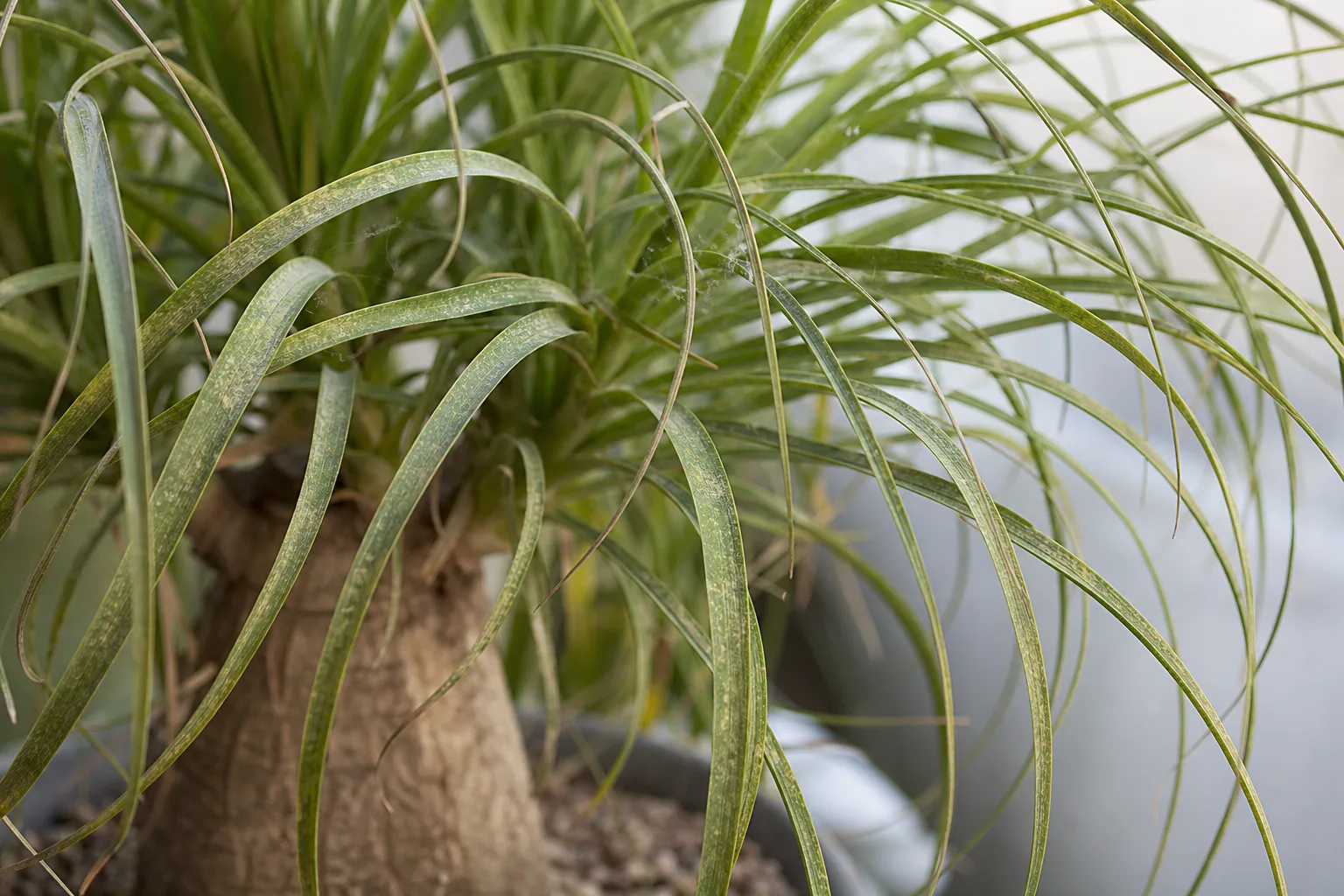
Spider Mites on Ponytail Palm: Causes, Checks & Fixes
This guide covers spider mites on Ponytail Palm. See also the general Spider Mites guide, watering, and light pages for this plant.
Spider Mites on Ponytail Palm: Causes, Checks & Fixes
Quick answer
Spider mites on Ponytail Palm (Beaucarnea recurvata) cause fine yellow or white stippling across long strap leaves, a dull dusty appearance, and silky webbing where leaves meet at the crown. The mites themselves are tiny dots on undersides-often invisible until you tap a leaf over white paper and see specks move.
First step: isolate the plant and rinse every strap leaf in lukewarm water, coating undersides while tilting the pot so runoff drains away from the swollen caudex. Do not spray oil or soap before this wash-you need to knock down the active population and confirm mites with a tap test rather than treating brown tips from dry winter air.
If you see tip burn only with a firm caudex and no webbing, start with the low-humidity guide or brown-tips page. If you see stippling plus webbing or moving specks, you are on the right page. For full caudex biology and watering rhythm during treatment, see the overview hub and watering guide.
Spider mites vs. low humidity vs. brown tips - which guide to use
Ponytail palm confuses owners because this semi-desert native tolerates dry air better than most houseplants-yet winter heating can still create the hot, dusty microclimate spider mites favor. The damage patterns are different:
| What you see | More likely cause | Next step |
|---|---|---|
| Crispy brown tips only, no speckling | Low humidity or brown tips | Move off heat vent; trim tips; no oil needed |
| Fine stippling across strap faces + webbing | Spider mites (this page) | Isolate; rinse; three-cycle oil treatment |
| Whole plant limp, very light pot, no webbing | Underwatering | Soak when mix is dry; caudex should firm up |
| White cottony clusters in crown crevices | Mealybugs | Alcohol swabs on wax; different spray focus |
| Hard brown bumps on caudex or strap bases | Scale insects | Scrape and treat shells; not stippling |
Routing rule: stippling or webbing beats tip burn alone for mite diagnosis. A tap test over white paper that shows moving specks confirms mites before you commit to weeks of treatment.
What spider mites look like on Ponytail Palm
On Beaucarnea recurvata, spider mite feeding shows up as tiny pale or silvery dots scattered across the broad faces of strap leaves-not confined to the narrow tips where low-humidity burn usually starts. As feeding continues, affected straps look dull, slightly bronzed, or dusty compared with healthy ones.
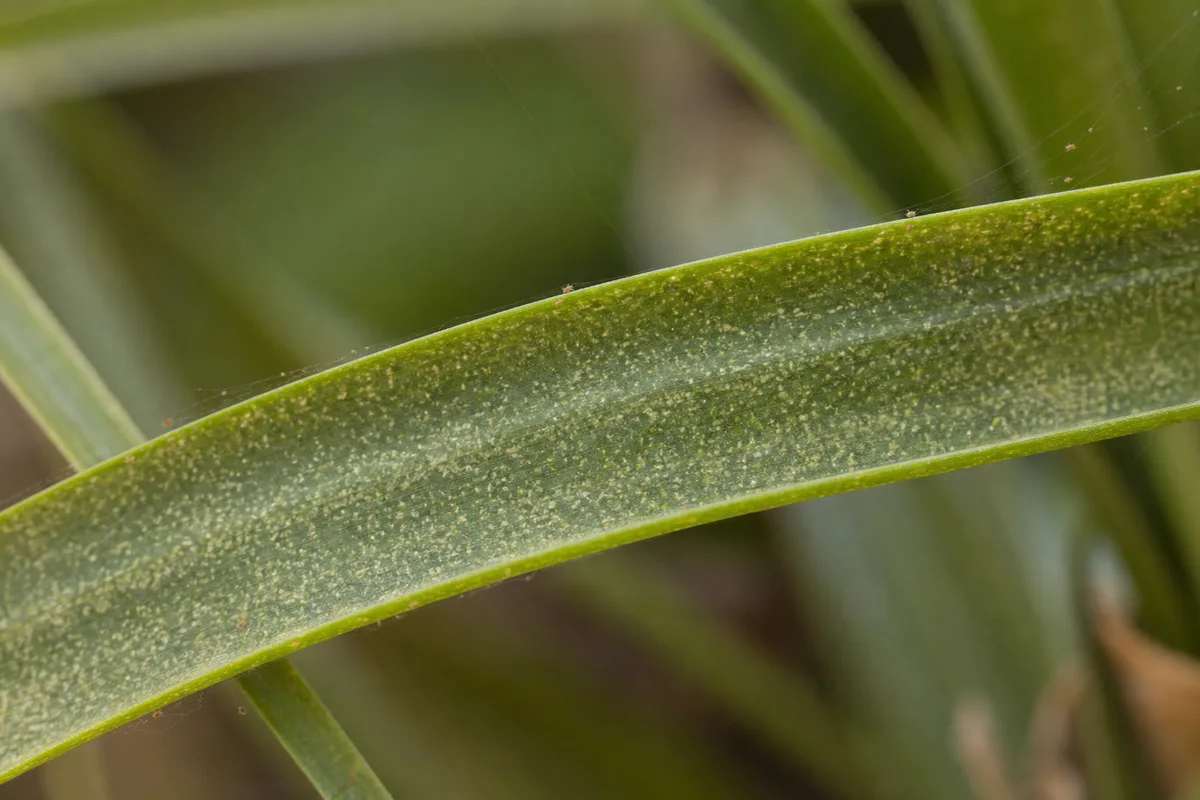
Spider Mites symptoms on Ponytail Palm - compare with healthy tissue on the same plant.
Check these locations on ponytail palm:
- Strap leaf undersides - especially on leaves arching near the crown where dust collects
- Crown crevices - fine silk webbing between overlapping straps at the top of the caudex
- Upper caudex and pot rim - webbing and mite cast skins in tight spaces on this caudiciform architecture
- Neighboring pots - mites crawl short distances or spread on air currents to shared shelves
The mites themselves are about 0.02 inch long and usually need magnification. A practical home test: hold white paper under a suspect strap, tap sharply, and watch for tiny moving specks. Amber eggs, whitish cast skins, and black fecal dots on undersides add confirmation.
Unlike mealybugs, mites do not form white cottony wax. Unlike scale insects, they leave stippling and webbing rather than hard fused bumps on the caudex.
Why Ponytail Palm gets spider mites
Spider mites are not insects-they are sap-feeding mites that reproduce quickly in warm, dry indoor air. NC State Extension notes houseplant ponytail palms can experience spider mite damage alongside mealybugs and scale, even though the species is generally low-maintenance.
Several factors make ponytail palm a common winter host:
The dry-native paradox. Beaucarnea evolved in semi-desert Mexico and handles normal indoor humidity well. Extreme winter dryness directly above a radiator-combined with dust on long cascading straps-creates the low humidity and dusty conditions that favor mite development without contradicting this plant’s drought-adapted care. You do not need tropical humidity; you need to stop the hot, dusty microclimate.
Dust on strap leaves. Long, narrow straps collect dust easily. Dusty foliage reduces plant health and gives mites shelter on a plant you may water infrequently and inspect less often than thirstier tropicals.
Crown architecture. Webbing hides in the tight leaf fountain where straps overlap above the caudex-easy to miss until stippling spreads across several visible leaves.
Slow growth masking damage. Ponytail palm grows slowly indoors. Stippling can sit on straps for weeks before the whole plant looks tired.
Collection spread. A ponytail on a sunny windowsill above a heating vent can share mites with succulents and other drought-tolerant plants on the same shelf within days.
Slight humidity increase around the plant can help discourage new outbreaks on Beaucarnea, but humidity alone will not eliminate an active infestation-you still need washing and repeat contact treatment.
How to confirm the cause
Work through this inspection order before spraying anything:
- Isolate the plant - move it away from other houseplants immediately.
- Tap-test a strap over white paper - moving specks confirm mites; static brown debris does not.
- Check for webbing at the crown - fine silk between straps strongly points to mites, not brown tips alone.
- Inspect undersides with a hand lens on the dustiest straps near the crown.
- Scan adjacent plants - especially other succulents and caudiciforms on the same shelf.
- Review placement - note heating vents, south-facing winter sun, and months since straps were wiped.
- Caudex and soil check - firm caudex on appropriately dry mix supports mite diagnosis; spongy base on wet soil points to overwatering instead.
- Rule out lookalikes - waxy clusters mean mealybugs; hard bumps mean scale; tip-only burn without speckling means low humidity.
Do not treat as spider mites until you have stippling or bronzing plus webbing, moving specks on a tap test, or visible mites on undersides.
First fix for Ponytail Palm
Isolate, rinse every strap leaf with caudex-safe drainage, and schedule repeat treatment.
Move the plant to a separate room. In a shower or tub, use lukewarm water on all strap surfaces-especially undersides-while tilting the pot steeply so water runs off the foliage and away from the swollen caudex. Soft-bodied mites can be removed by washing leaves with water. Support long straps with your hand so they do not snap.
After washing:
- Empty the saucer immediately and let foliage dry the same day in Ponytail Palm light guide-not hot direct sun while leaves are wet.
- Skip the next scheduled watering until the gritty mix is fully dry throughout per your dry-down checks.
- Apply horticultural oil or insecticidal soap labeled for houseplants, coating undersides thoroughly once foliage is dry.
Because contact sprays have no residual activity, plan to repeat every 5–7 days for at least three cycles to catch newly hatched mites. At 75°F, mites can develop from egg to adult in about two weeks-three weekly treatments cover multiple generations.
Make this single correction before Ponytail Palm repotting guide, fertilizing, or trimming heavily at the crown.
Step-by-step recovery
Once the first rinse is done, follow this sequence:
- Day 0 - isolate, shower-rinse all straps with pot tilted, let dry, apply oil or soap if using one.
- Days 5–7 - repeat rinse and spray; inspect crown with a magnifier for fresh stippling.
- Days 10–14 - third treatment cycle; check neighboring plants that sat nearby before isolation.
- Week 3 onward - if stippling has not spread and no new webbing appears, move to monthly strap wipe-downs. If mites persist, continue weekly treatments.
- Trim optional - once mites are gone, cut off badly stippled outer straps at the base for appearance; they will not green up again.
Hold fertilizer until feeding damage stops spreading and new crown growth looks clean. Coordinate rinse days with your normal infrequent watering-extra crown moisture is manageable when the mix dries fully between soaks.
Recovery timeline and what improvement looks like
Existing stippled tissue on ponytail strap leaves rarely returns to solid green. Expect visible scarring on damaged straps for months-or until you remove them.
What you should see within two to three weeks of consistent treatment:
- No new stippling on previously clean straps
- No fresh webbing at the crown
- Stable or slowly improving new strap tips emerging from the crown
Because ponytail palm grows slowly, full cosmetic recovery can take a full growing season. If three treatment cycles pass and you still see moving mites or spreading webbing under magnification, escalate treatment or consider discarding the worst-affected plant to protect your collection.
Lookalike symptoms to rule out
| What you see | More likely cause | How to tell apart |
|---|---|---|
| Brown crispy tips only | Low humidity, salts | Tips only; no stippling on strap faces; no webbing |
| Soft, spongy caudex | Overwatering / root rot on Ponytail Palm | Pot heavy and wet; base yields to pressure |
| White cottony patches | Mealybugs | Wax in crown crevices; no uniform stippling |
| Hard brown bumps | Scale insects | Shells fused to caudex or strap bases |
| Fine stippling + webbing | Spider mites | Tap-test shows moving specks |
| Whole plant limp, dry soil | Underwatering | No webbing; pot very light; caudex may wrinkle slightly |
If multiple plants on a shelf show identical stippling, mites beat individual watering mistakes as the explanation.
What not to do
- Do not soak the caudex during shower rinses-tilt the pot and empty the saucer so gritty mix does not stay waterlogged around the base.
- Do not stop after one spray - mite eggs survive a single application; repeat treatments are required.
- Do not apply soap or oil in hot direct sun - avoid applications above 90°F when possible; treat in morning or evening.
- Do not run a humidifier solely for mites on this desert native-focus on washing, dust removal, and vent placement instead.
- Do not fertilize a mite-stressed ponytail until feeding damage stops spreading.
- Do not return the plant to the main collection after one clean-looking week-hold isolation for at least three weeks with weekly checks.
- Do not confuse tip burn with mites - compare the routing table above before changing your whole care routine.
How to prevent spider mites on Ponytail Palm
Prevention on Beaucarnea is mostly inspection and environment, not routine pesticides:
- Wipe dust from strap leaves monthly-both sides when practical.
- Keep the pot away from heating vents and hot, dry window ledges in winter.
- Quarantine new purchases for at least two to three weeks before shelf placement.
- Inspect strap undersides when you water-even if that is only every two to four weeks.
- Check neighboring plants whenever you find mites on one ponytail palm.
- Maintain full sun or bright light for vigor without baking the crown in a dry heat pocket all day.
A healthy ponytail with clean straps, stable light, and normal dry-down between waterings is less likely to hide a mite colony until it becomes severe.
When to worry
Escalate quickly if:
- Webbing is visible across multiple straps or throughout the crown.
- Stippling reaches new crown growth or recently emerged strap tips.
- Mites appear on other plants that shared the same room or shelf.
- Straps are bronzing and dropping despite treatment.
- You have completed three treatment cycles and still see live mites under magnification.
At that point, heavily infested houseplants may need to be discarded-bagged before removal-to protect the rest of your collection. Ponytail palm is replaceable; spreading mites through an entire indoor collection is harder to fix.
For crown-heavy webbing on a slow-growing specimen, trimming the worst stippled outer straps after mites are gone can improve appearance-but do not prune heavily while an active infestation is still feeding on tender crown tissue.
Ponytail Palm care cross-check
Spider mites exploit care gaps more than they override good practice. Cross-check these basics while treating:
- Light - bright light supports vigor; a plant against a hot winter window loses humidity faster at the crown.
- Watering - water only when mix is dry throughout; overwatering during stress adds caudex risk without helping mites. See watering guide.
- Leaf hygiene - monthly wiping removes dust that favors mite buildup on long straps.
- Drainage - fast-draining gritty mix lets the caudex dry after treatment rinses.
- Pet safety - ponytail palm is non-toxic to cats and dogs; still keep pets away from wet foliage and fresh oil residue during treatment.
Practical checks
Urgency check
Treat as urgent when webbing is present, stippling spreads week to week, or more than one plant in the room shows the same pattern. Slow, stable stippling on one outer strap with no webbing gives you time to confirm before full treatment.
Best inspection order
For ponytail palm, inspect strap undersides at the crown, webbing in the leaf fountain, placement relative to heat sources, then neighboring plants. Confirm with a white-paper tap test before spraying.
Severity note
This issue is marked medium for ponytail palm-a triage clue, not a guarantee. A small early colony on one strap is manageable; a webbed crown with collection spread is high severity in practice.
Conclusion
Spider mites on ponytail palm are manageable when you catch stippling and webbing early, rinse straps without waterlogging the caudex, and repeat contact treatment through three mite generations. Route tip-only damage to low humidity or brown tips; route waxy or bumpy crown pests to mealybugs or scale insects. For full species care during recovery, start at the overview hub.
Related Ponytail Palm problems
- Ponytail palm overview - full care hub and caudex biology
- Low humidity - tip burn and winter dry-air routing
- Brown tips - crispy strap ends without stippling
- Mealybugs - cottony wax lookalike in crown crevices
- Scale insects - hard bump lookalike on caudex and strap bases
- Watering guide - dry-down checks during treatment rinses
- Overwatering - wet-mix stress risk when crown rinses add moisture
Related tool
Use the Pest Identifier Tool to narrow causes for spider mites on this plant before changing multiple variables at once.